Newsletter Subscribe
Enter your email address below and subscribe to our newsletter

Enter your email address below and subscribe to our newsletter
If you’ve ever tried to coordinate a group trip, you know the hardest part isn’t the travel. It’s getting everyone to agree on anything.
Someone wants a beach. Someone wants museums. Someone “doesn’t like crowds.” Someone else insists on packing a full-size hair dryer like we’re going off-grid for six months.
Now imagine a travel option where:
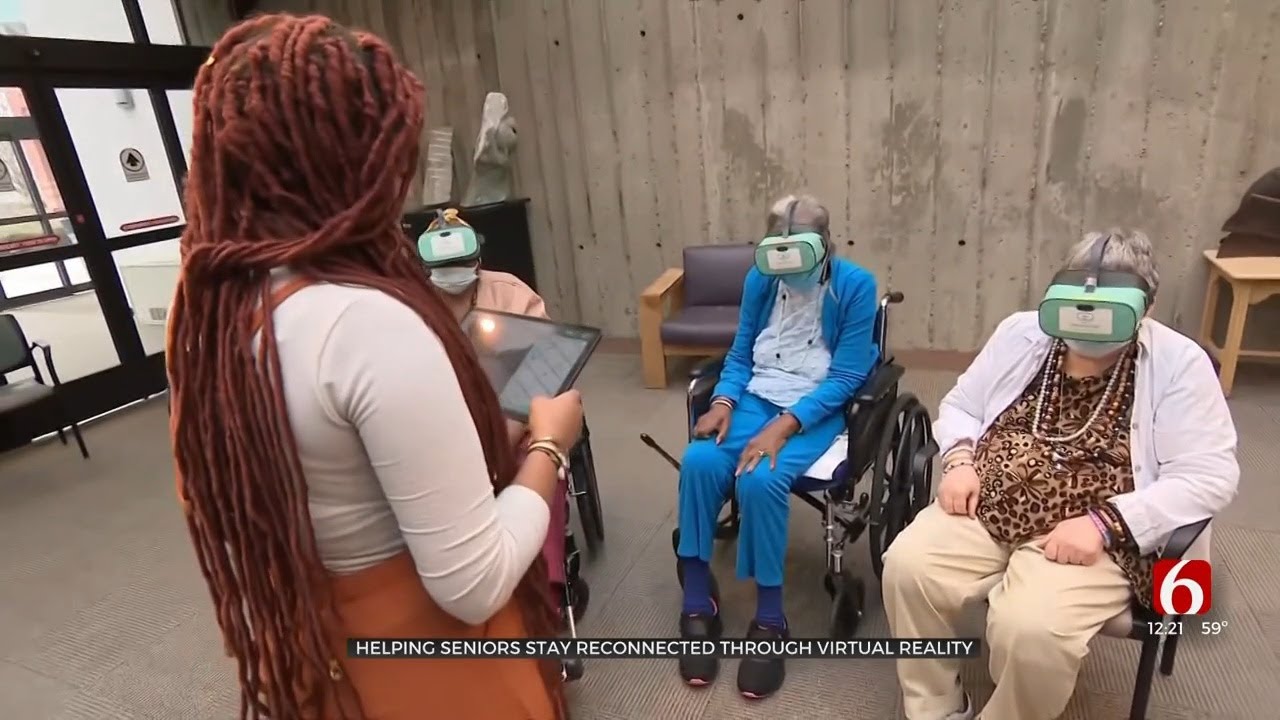
That’s what’s happening in some senior living communities right now, thanks to virtual reality (VR). Residents put on a headset, and suddenly they’re “back in Europe,” “under the ocean,” or “soaring through the sky” while sitting safely in a comfy chair next to friends.
And yes, it’s a little bit unhinged in the best way.
In places like The Terraces (a retirement community in Los Gatos, California), staff schedule VR sessions where residents take turns exploring immersive scenes and experiences together. Many residents are in their 80s and 90s, and the experiences range from calm sightseeing to “why did I agree to virtual hang-gliding.”
One resident, during a virtual hot-air balloon ride, reportedly reacted with a full-body emotional response. The kind you usually reserve for:
The VR content is curated by companies like Rendever, which focuses on group VR experiences designed for older adults.
Here’s the part that makes this story more than a gadget demo: it gets people talking.
Care staff and researchers have noticed something simple but powerful: after a shared VR experience, residents tend to keep chatting. About the place they “went,” memories it brought back, and stories they hadn’t told in years. That matters, because social isolation is one of the biggest quality-of-life issues for older adults. VR is not replacing real life, it’s sometimes acting like a bridge back into it.
In other words: the headset comes off, and the connection stays.
Nope. Travel is just the headline-friendly version.
VR programs can also take someone back to meaningful places like a childhood neighborhood or hometown (sometimes for the first time in decades), which can spark memory and emotion in a very personal way. And because sessions are often done together, it can turn into a shared event instead of a solo activity.
Sometimes tech is about faster processors, smarter AI, and screens that somehow get thinner while our patience gets shorter.
And sometimes tech is simply this:
A tool that helps someone feel more adventurous, more connected, and more like themselves again.
Not bad for a headset and a chair.