Newsletter Subscribe
Enter your email address below and subscribe to our newsletter

Enter your email address below and subscribe to our newsletter
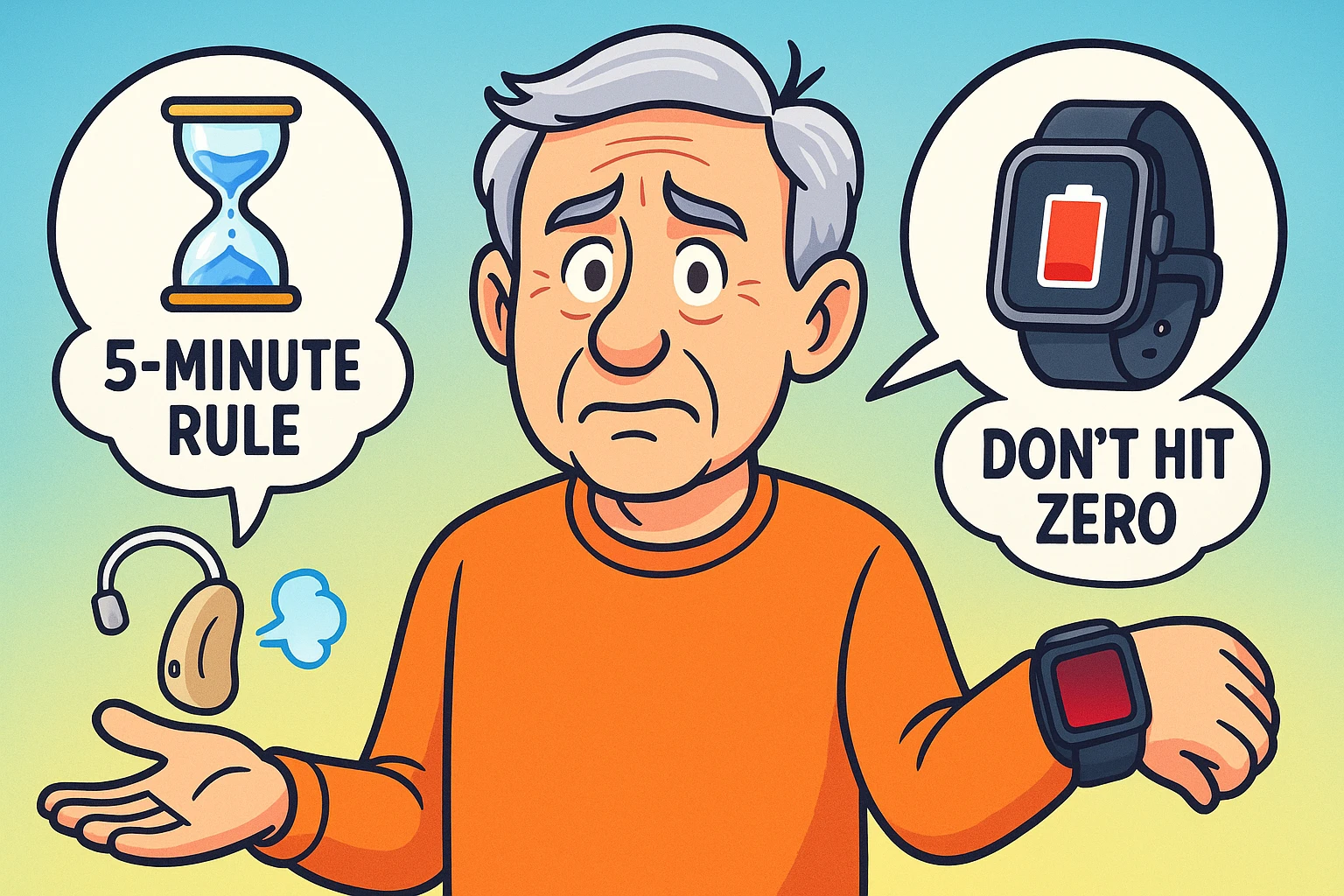
You know the sound. It’s that tiny, mournful bloop-bloop in your ear right in the middle of your granddaughter’s piano recital. Or perhaps it’s the sudden vibration on your wrist followed by a black screen just as you were about to hit your 5,000th step.
Our modern bodies are slowly becoming bionic. We have “second ears” to help us catch the punchlines of jokes, and “smart wrists” that nag us to stand up every hour. But these marvels of engineering share one fatal flaw: they are hungry little beasts. They require constant feeding, and unlike a cat, they won’t meow at you when they’re starving—they just quit.
If you feel like you are constantly swapping out tiny metal discs or hunting for charging cables, you aren’t doing it wrong. You’re just managing two very different types of chemistry. Keeping your digital life running requires understanding that your hearing aid and your smartwatch are basically an odd couple—one is an old-school air breather, and the other is a modern energy guzzler.
We’re going to look at how to keep them both happy, so you don’t end up disconnected from the world (or your step count) by lunchtime.
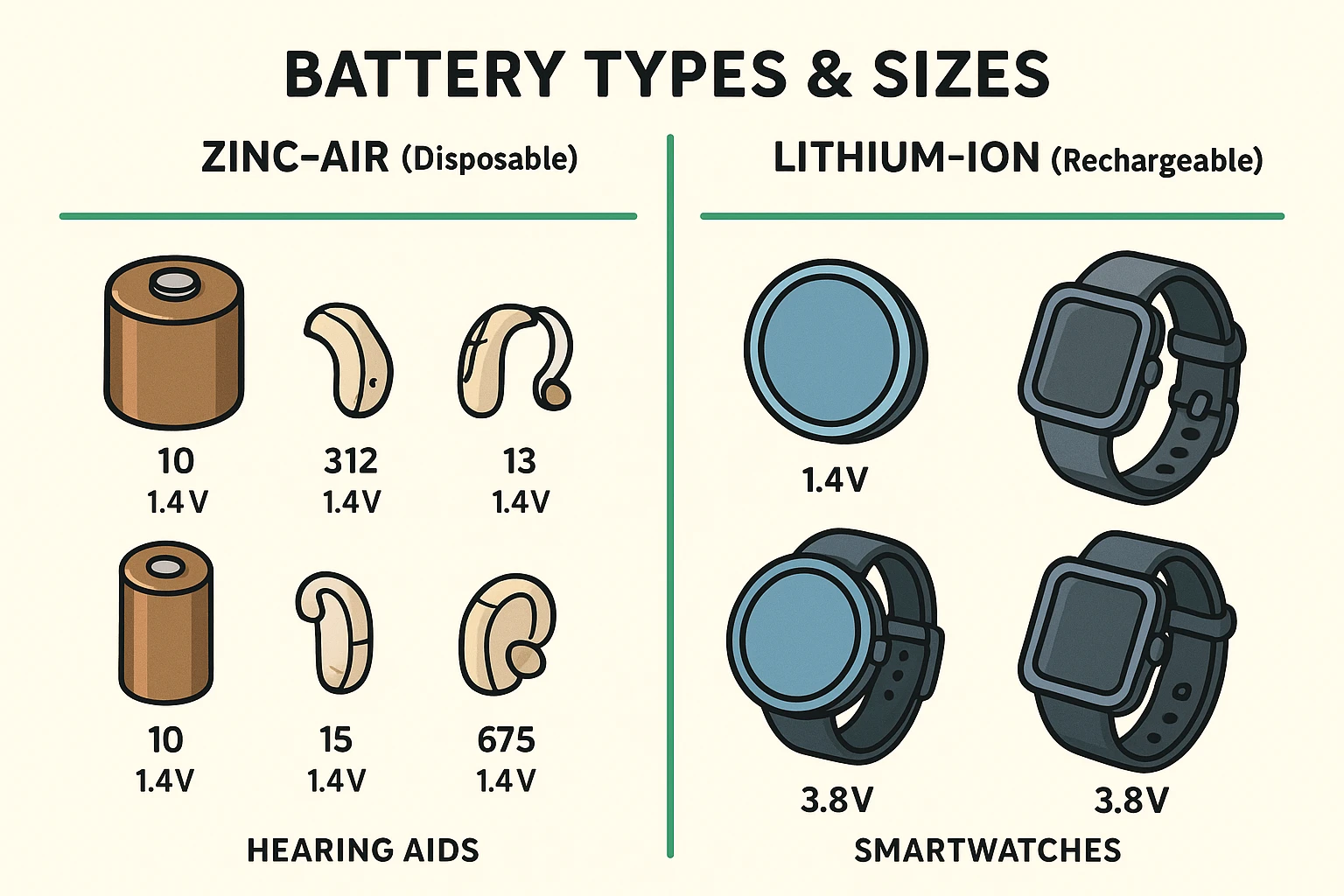
To master your battery life, you have to understand that your devices run on entirely different rules. Treating them the same is why so many batteries die young.
Most disposable hearing aid batteries are Zinc-Air. Think of these little guys like a tiny campfire inside a metal casing. A fire needs oxygen to burn, right? These batteries are exactly the same.
When you buy them, they have a little colored sticker (tab) on the back. That sticker isn’t just for decoration or to make them hard to pick up with arthritic fingers. It is an air seal. As long as that sticker is on, the battery is asleep. The moment you peel it off, air rushes in, a chemical reaction starts, and the battery wakes up.
Your Apple Watch, Fitbit, or Pixel Watch uses a Lithium-Ion battery. This is the same tech in your smartphone or an electric car. These batteries are like a tank of gas that shrinks slightly every time you let it run completely dry. They don’t need air; they need to stay in the “Goldilocks Zone”—not too full, not too empty, and definitely not too hot.
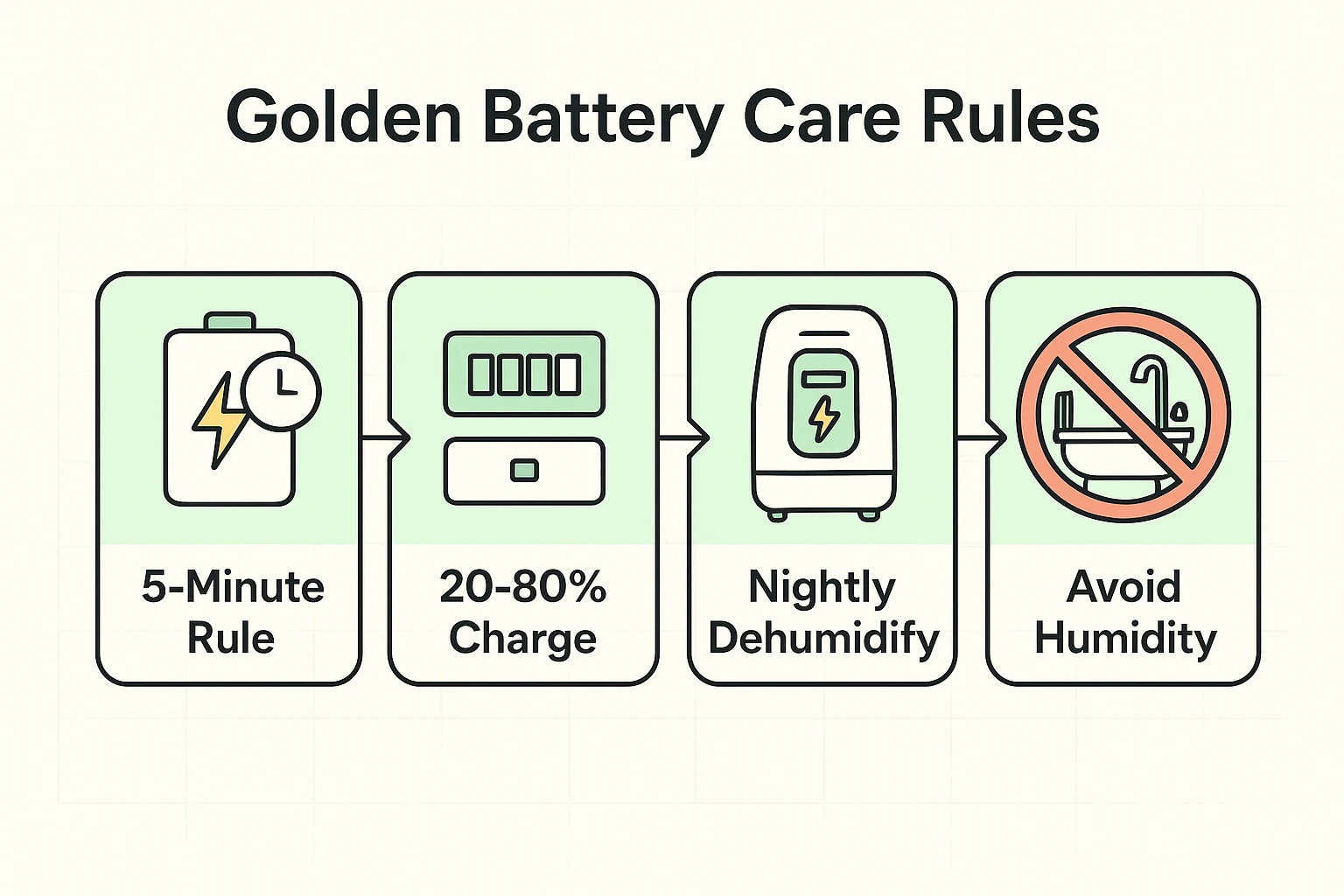
If you take nothing else away from this article, let it be these rules. These simple tweaks can squeeze significantly more life out of your devices.
This is the single biggest mistake people make with hearing aids.
Picture this: Your hearing aid dies. You grab a fresh battery, rip off the sticker, and immediately jam it into the device and close the door. You’ve just suffocated the battery.
Because zinc-air batteries need oxygen to reach their full power (1.45 volts), they need to “breathe” for a moment before going to work.
With your old nickel-cadmium batteries from the 90s, you were supposed to drain them to zero. That is now terrible advice for modern smartwatches.
Somewhere along the line, someone told us that batteries stay fresh in the refrigerator. Unless you are storing a marinated steak, please keep your hearing aid batteries out of the fridge.
Humidity is the Enemy.Zinc-air batteries have tiny holes in them (to let the air in, remember?). If you put them in the fridge, condensation forms. Water gets in those holes and ruins the chemistry.
The Nightly RitualFor hearing aids, moisture from your skin is a killer. When you take them out at night, open the battery door completely. This shuts the device off (saving power) and lets moisture evaporate. Better yet, invest in a small dehumidifier jar for your nightstand. It’s like a spa day for your electronics.
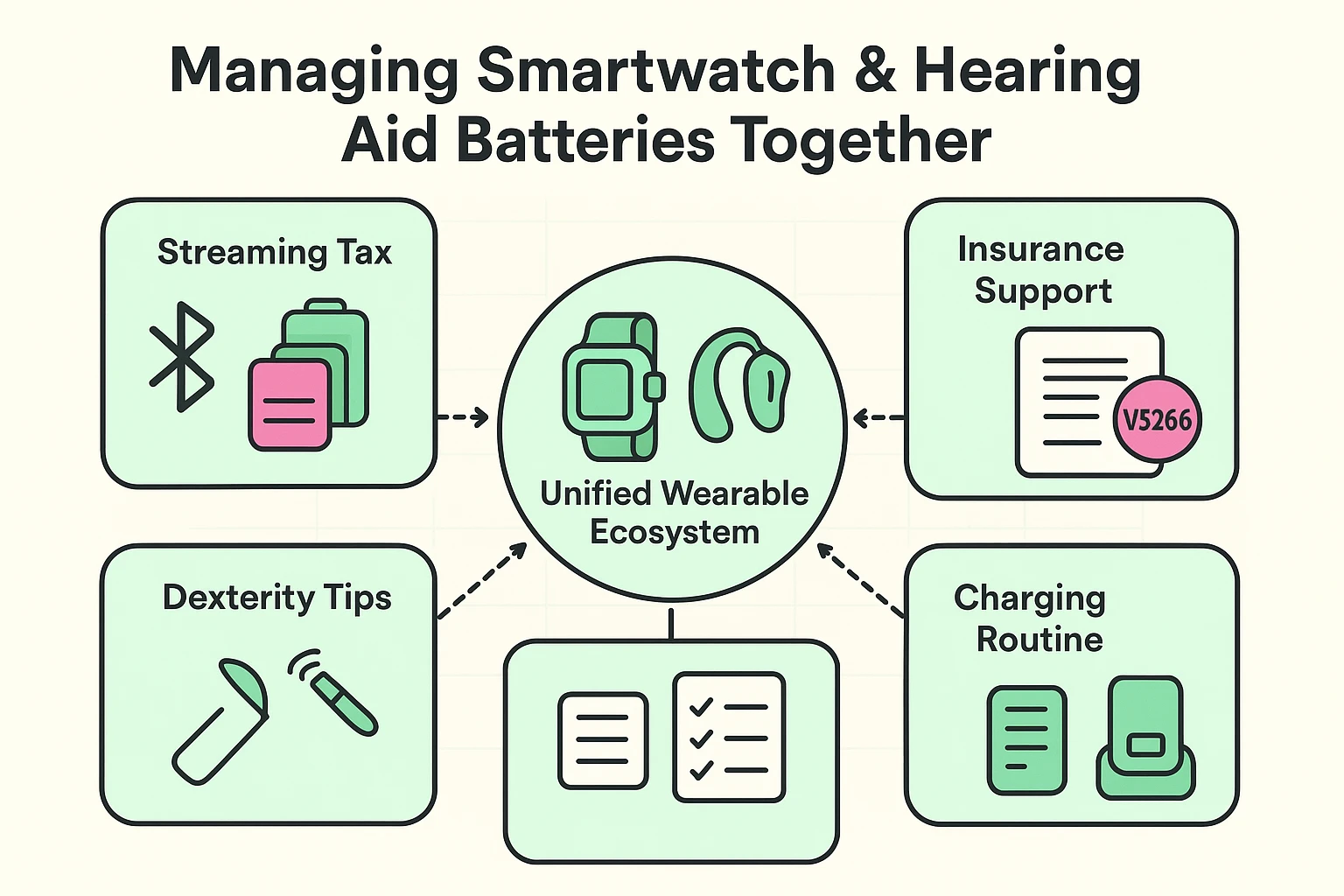
Here is where the two worlds collide. Modern hearing aids can pair with your smartphone or smartwatch via Bluetooth. This is magical—you can hear a phone call or music directly in your ears without fumbling with the phone.
However, this magic comes with a cost: The Streaming Tax.
When your smartwatch is streaming music to your hearing aids, both devices are working overtime. The watch is broadcasting, and the aids are receiving and processing.
Batteries are expensive. If you go through a fresh set every 5 to 7 days, that adds up to a nice dinner out by the end of the year.
Most people don’t know that many insurance plans (and sometimes Medicaid) offer reimbursement for hearing aid batteries, but you have to ask for it specifically.
Did you test it immediately after pulling the sticker? Remember the 5-Minute Rule! A zinc-air battery shows low voltage until it has had time to breathe. Wait five minutes and test again.
No. Zinc-air batteries can leak and corrode if left unused inside the device for long periods. If you aren’t wearing them for a few days, take the batteries out entirely.
Thank goodness for color coding. No matter the brand, the colors always correspond to the size:
Check your screen brightness and “Always On” display settings. Often, a software update will reset these to maximum brightness, which drains the battery significantly faster.
Managing the batteries in your wrist-to-ear ecosystem doesn’t require an engineering degree. It just requires a little patience. Give those hearing aid batteries five minutes to wake up, keep your watch out of the “red zone,” and keep everything dry.
By treating these devices with a little respect for their chemistry, you ensure they’ll be ready to work when you are—whether that’s listening to a concerto or just trying to find your phone which is, inevitably, buried between the couch cushions.