
Newsletter Subscribe
Enter your email address below and subscribe to our newsletter

Enter your email address below and subscribe to our newsletter
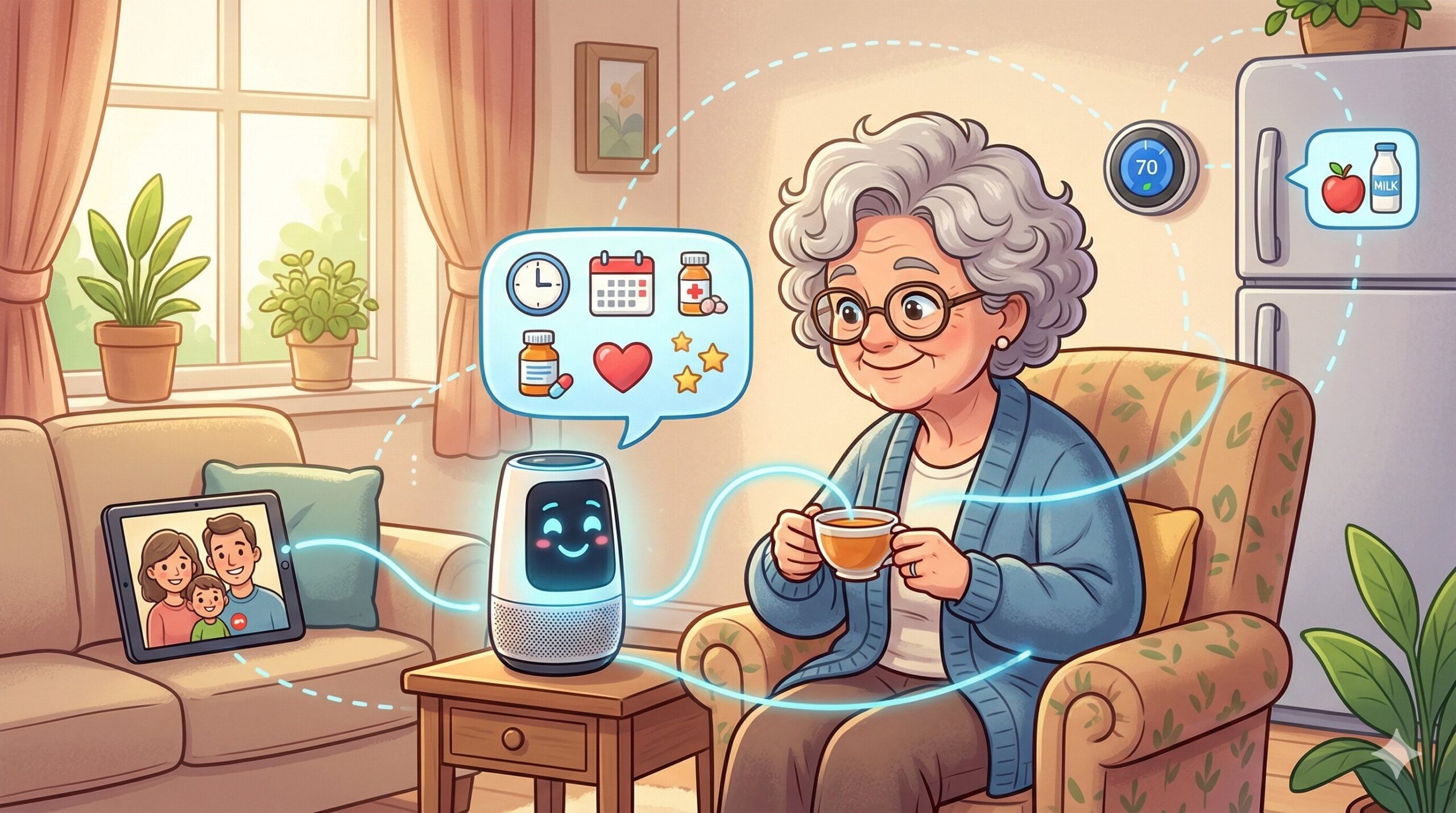
Have you ever found yourself shouting at your kitchen counter, demanding to know how many ounces are in a cup, only to be answered by a glowing cylinder that suddenly starts playing polka music? Welcome to the modern age. We were promised flying cars and robot butlers, but what we got was a digital tube that occasionally misunderstands the word “timer” as “buy more toilet paper.”
If this sounds familiar, don’t worry. You haven’t lost your mind, and you are certainly not alone in this technological standoff. A few years ago, these devices were little more than glorified, voice-activated egg timers. Today, however, the technology has taken a massive leap forward into something genuinely useful.
We are now entering the era of AI companions—devices designed to offer real conversation, cognitive support, and actual daily assistance. We’ll explore what these new digital sidekicks can do, compare the top options, and help you figure out if inviting a friendly robot into your living room is the right move for you.
You might be wondering why tech companies are suddenly so focused on creating digital companions for older adults. The answer comes down to simple math and the reality of aging in today’s world. Back in 2010, the ratio of available family caregivers to seniors was a comfortable 7 to 1. By the year 2030, that number is expected to drop drastically to just 4 to 1.
Because of this caregiver shortage, artificial intelligence is stepping up to fill the gaps. And seniors are fully on board. Believe it or not, 78% of adults 55 and older are already using AI-powered chatbots daily. Even better, 80% of those users report improved mental health and a noticeable decrease in feelings of loneliness.
This isn’t just a passing fad; it’s a massive shift in how we manage our homes and our health. The AI elderly care market is projected to skyrocket from $67.56 billion in 2026 to a whopping $158.49 billion by 2030. That means we are going to see a flood of new gadgets hitting the shelves, making it crucial to know exactly what you’re buying.
When evaluating these devices, it helps to understand that not all smart assistants are created equal. Some are designed purely for utility, while others are built to be conversational partners. Let’s break down the main categories so you can compare your options without needing a PhD in computer science.
Devices like Amazon Echo (Alexa), Google Nest, and Apple’s HomePod fall into this category. They are fantastic for hands-free tasks, like setting medication reminders, calling family members, or turning off the lights when you’re already snug in bed. Think of them as highly efficient, slightly literal-minded digital butlers. However, they aren’t great at holding a real back-and-forth conversation.
This is where things get interesting. New AI companions are specifically programmed to converse with you, remember your past conversations, and engage you in cognitive exercises. They might ask how your grandkids are doing or prompt you to play a memory game. It’s the difference between looking up a word in the dictionary and having a pen pal who checks in on you daily.
By 2027, experts predict we will see the rise of “Agentic AI” in senior care. While it sounds like a sci-fi movie villain, Agentic AI simply means the device can take action on its own without you nagging it. Imagine a system that notices you haven’t opened your smart refrigerator all morning and automatically sends a gentle text to your daughter to check in.
Picking the right device is only half the battle; the other half is getting it to work without throwing it out the nearest window. When comparing your options, prioritize devices that clearly advertise themselves as “ready out of the box” or offer dedicated phone support for setup. You shouldn’t have to decipher a manual written in tiny font and confusing tech jargon.
Start by identifying your biggest daily friction point. If you constantly misplace your grocery list or forget when to take your pills, a basic smart speaker is a great, inexpensive starting point. If your goal is to combat quiet afternoons and keep your mind sharp with interactive stories or trivia, investing in a dedicated AI conversational companion is the better route.
Once you get it home, tackle the setup in baby steps. First, plug it in and connect it to your Wi-Fi (usually done through an app on your smartphone). Then, just try one command, like asking for the time. Master one feature a day, and before you know it, you’ll be ordering groceries by yelling at the living room wall like a true tech pro.
At Senior Tech Cafe, we don’t blindly cheerlead for Big Tech. We know that bringing an internet-connected microphone into your home comes with serious privacy strings attached. It is entirely valid to wonder, “Is this thing spying on me?”
The truth is, traditional smart speakers are always listening, but mostly just for their “wake word” (like “Alexa” or “Hey Google”). However, to protect your privacy, you should routinely go into the device’s companion app and delete your voice recording history. Furthermore, look for devices that have a physical “mute” button, allowing you to cut the microphone’s power when you want absolute privacy.
There is also an ethical consideration when it comes to AI emotional support. These bots are getting incredibly good at mimicking human empathy. While it’s wonderful that they can ease loneliness, it’s important to remember they are essentially very advanced, polite calculators. Enjoy the conversation and the cognitive benefits, but keep your real-world social connections active, too.
It’s crucial to understand that AI companions are not meant to replace human caregivers. Instead, they are designed to be a powerful supplement. By taking over the repetitive tasks—like answering “What time is my doctor’s appointment?” for the fifth time today—AI reduces the burden on family members.
This blend of human and artificial support creates a safer, more independent environment for seniors. Caregivers can use the companion apps to remotely check if medications were logged or if the home’s temperature is safe. It provides immense peace of mind without requiring a human to hover over your shoulder 24/7.
For the initial setup, yes, almost all of these devices require a smartphone or a tablet to connect to your home’s Wi-Fi. However, once the device is up and running, you interact with it entirely using your voice, and you rarely need to touch the phone app again. If you don’t have a smartphone, a family member can usually set it up for you using theirs.
Your AI companion isn’t sitting in the corner plotting identity theft. However, because it connects to your internet and potentially your Amazon or Google accounts, it holds sensitive data. You can protect yourself by turning off “voice purchasing” in the settings so nobody can order 400 rolls of paper towels by accident, and always use strong, unique passwords for the companion apps.
Simply put, your smart assistant becomes a very modern, very useless paperweight. These devices rely entirely on cloud servers to process your voice and answer questions. When the internet returns, the device will automatically reconnect, but you should never rely on them as your sole method of contacting emergency services.
Deciding to bring an AI companion into your home doesn’t have to be intimidating. Start by evaluating what you actually need: are you looking for a glorified alarm clock to keep your schedule straight, or are you craving an interactive conversationalist to keep your mind sharp?
Take a look at your home’s Wi-Fi setup, sit down with a family member or trusted tech-savvy friend, and review the options using the checklists provided above. Technology should work for you, not the other way around. With the right AI companion, you can enjoy a safer, more connected, and highly entertaining digital life—polka music and all.