Newsletter Subscribe
Enter your email address below and subscribe to our newsletter

Enter your email address below and subscribe to our newsletter
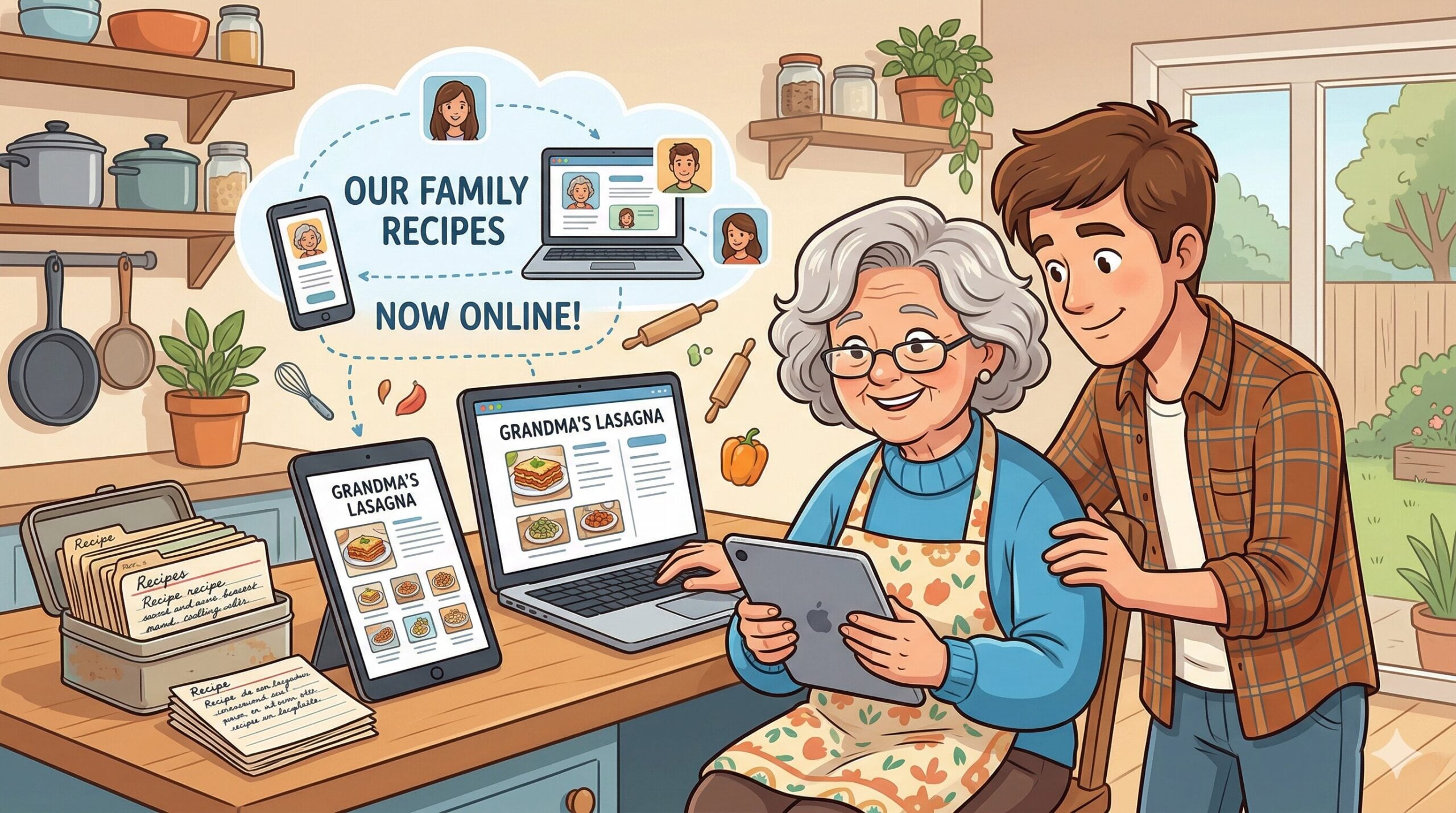
Let’s talk about your family’s recipe box. You know the one. It’s that wooden or tin box stuffed with index cards that have survived decades of kitchen warfare. The cards are covered in mysterious splatters that could be dried gravy, vanilla extract, or possibly motor oil. The measurements are wonderfully vague, relying on terms like “a pinch of salt,” “a handful of flour,” or “bake until it looks right.”
If your house were ever to catch fire, this box is probably the second thing you’d grab, right after your spouse (and depending on how good the lasagna recipe is, maybe the first). But here is the terrifying truth: that box is fragile. Paper fades, index cards get lost, and there is only one physical copy of your legendary meatloaf recipe in existence. If it goes missing, your grandkids are doomed to a lifetime of eating dry, flavorless imposters.
For years, the only way to preserve these recipes was to either pay a fancy printing company thousands of dollars to bind them in leather, or hand-copy them until your wrist cramped up. But today, there is a much easier way to fireproof your family history. You can create a collaborative digital family cookbook—a living, breathing online document where the whole family can contribute, laugh, and cook together.
Back in the day, if you wanted to learn how to make the traditional holiday roast, you had to stand in the kitchen and watch closely. If you moved away, you were out of luck. Today, the tech world is filled with complex recipe apps that require you to fill out endless, frustrating forms just to save a simple soup recipe.
But a collaborative digital cookbook isn’t about using fancy apps. It’s about using a simple shared document—like a digital piece of paper—that everyone in the family can access from their own computers, tablets, or phones. It acts as a “digital firebox,” ensuring that even if the physical card gets lost behind the stove, the memory is preserved forever in the digital cloud.
More importantly, it solves the problem of “the secret ingredient.” You know, the little tweaks you make that aren’t actually written down anywhere. By moving these recipes online, you can finally document the stories, the techniques, and the history behind the food before they are forgotten.
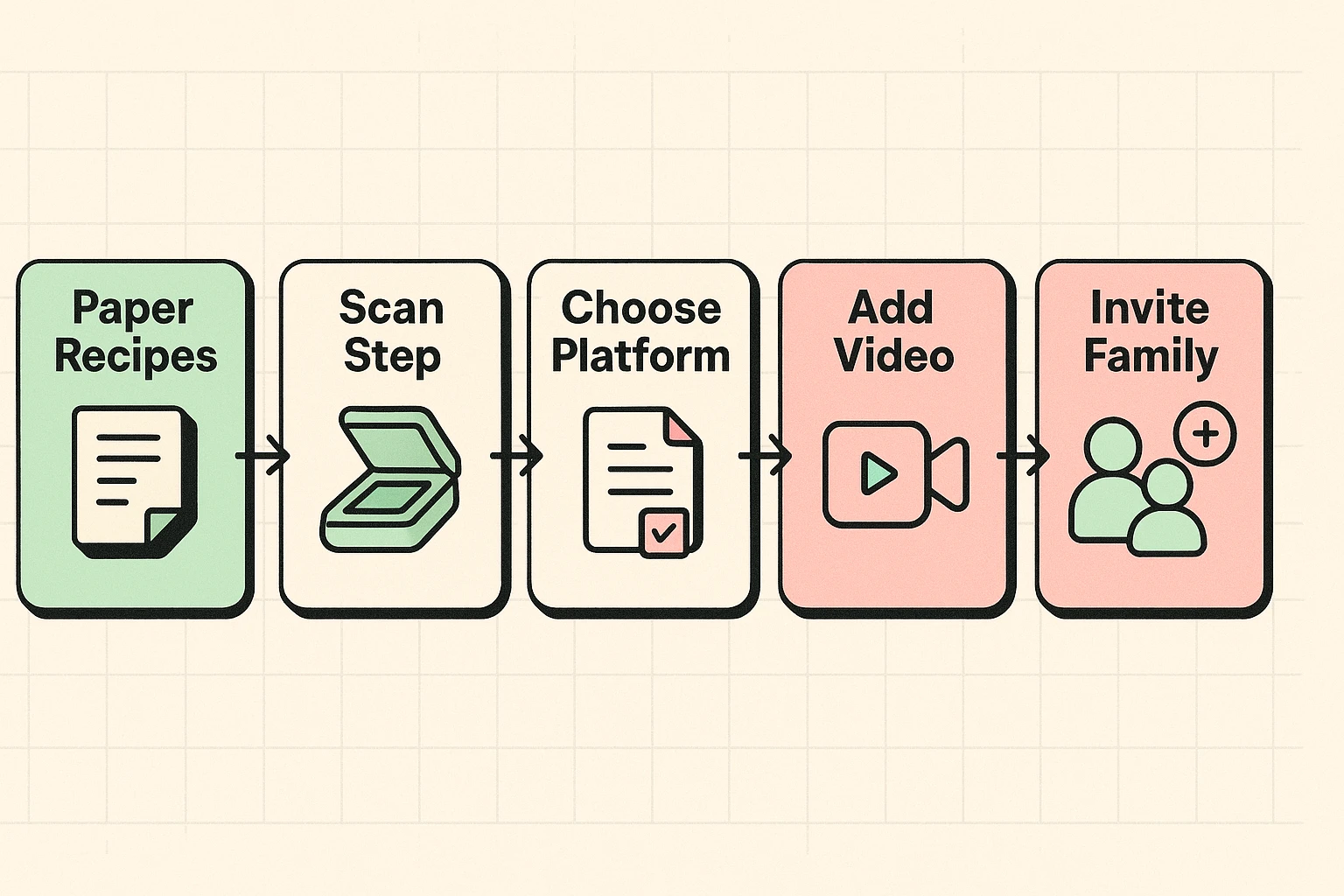
You don’t need to be a computer hacker to pull this off. Think of building your digital cookbook exactly like organizing a real kitchen. You just need the right space, the right tools, and a little bit of teamwork.
Skip the complicated recipe software. For a family project, you want tools that are free, simple, and probably already on your computer. Google Docs is fantastic because it’s basically an endless sheet of paper you can share with a simple web link. If you prefer something organized like a physical binder with tabs, Microsoft OneNote is a brilliant choice.
A quick tip for the elders: Make sure whoever sets this up uses large, readable fonts and clear headings. There is no point in digitizing your recipes if you need a magnifying glass to read them on your iPad while covered in flour. Accessibility is key!
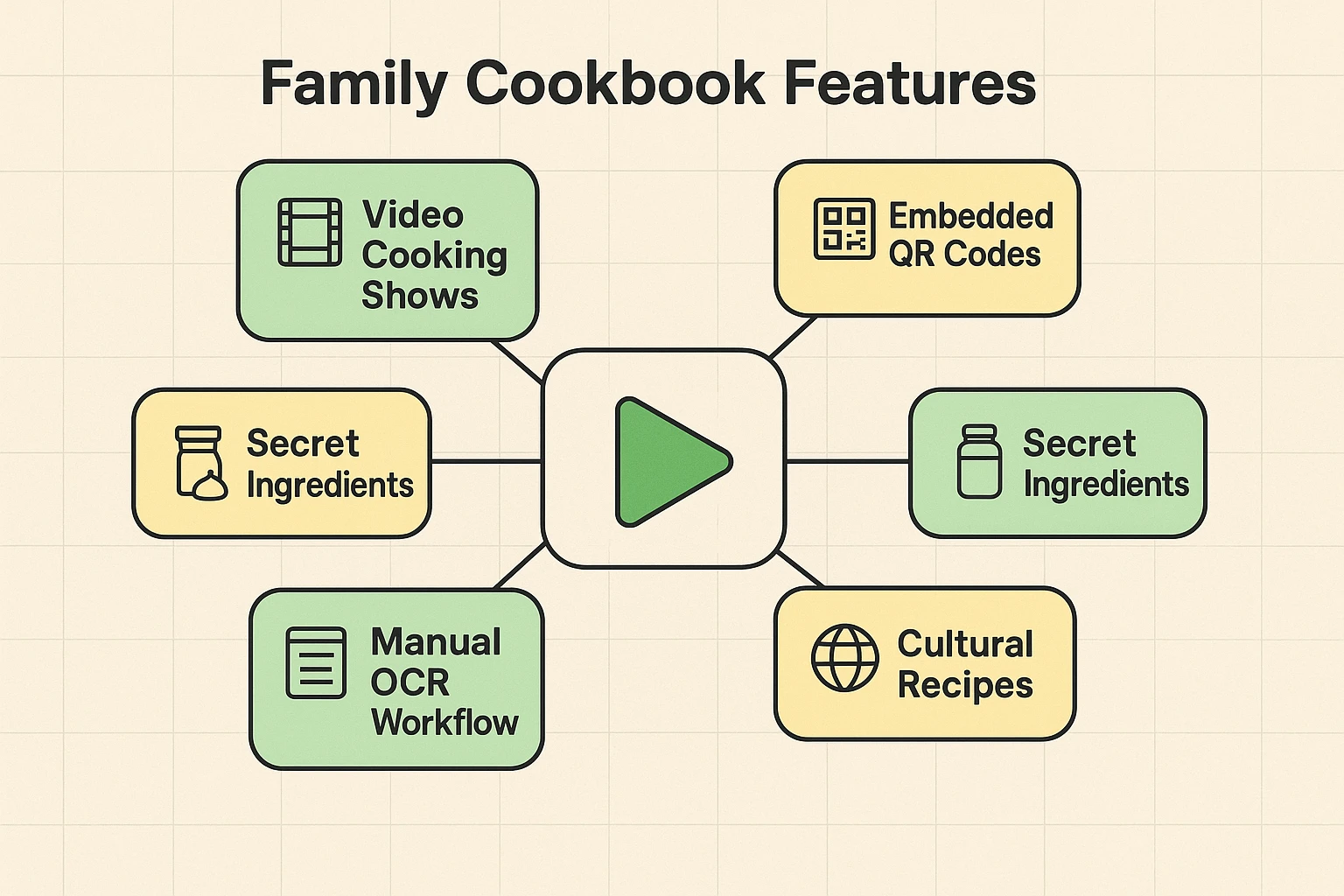
Tech companies love to brag about “OCR,” which stands for Optical Character Recognition. It’s a tool that supposedly reads handwriting and turns it into typed text. Let me save you some frustration: OCR looks at your grandmother’s elegant, faded cursive and translates “add two eggs” into “alien boulder.”
Instead of fighting with robots, use the “Hybrid Approach.” Use your smartphone to snap a picture of the original, gravy-stained recipe card and paste that photo directly into your digital document. Then, simply type the plain text underneath it. You preserve the nostalgic beauty of the handwriting, but you also get clear, readable instructions.
Here is the most important rule of the digital family cookbook: You do not have to do all the typing yourself. In fact, you shouldn’t. This is where you employ what we call the “Grandma UX” (User Experience).
Your job is the story work; let the grandkids do the tech work. Have them come over, sit at the computer, and do the typing while you dictate and tell the stories behind the meals. It bridges the generational gap perfectly. They get a masterclass in family history, and you get out of doing data entry.
Some family traditions—like the exact way to shape Jameed, or how to properly prep meat for a Churrascaria—rely entirely on “feel.” You can’t write down “knead the dough until it feels like a soft earlobe” and expect a 20-year-old to know what that means.
This is where a digital cookbook flexes its muscles. Because the document lives online, you aren’t limited to text. The next time you’re making your famous pie crust, have a family member record a short video of your hands on their smartphone.
You can upload that video privately to YouTube or Vimeo, and paste the link right next to the recipe in your Google Doc. Suddenly, your grandkids aren’t just reading instructions; they are watching their own private episode of “Grandma’s Cooking Show.” You are preserving your voice, your technique, and your kitchen wisdom all in one place.
Don’t send out a mass email saying, “Please send me recipes.” It’s too overwhelming. Use the “Specific Recipe Hook.” Send a text to your nephew saying, “Hey, I’m putting together the family cookbook online. Can you type up your famous chili recipe by Tuesday?” People respond much better to specific, flattering requests.
Yes! If you use platforms like Google Docs or OneNote, your cookbook is not floating around the public internet for anyone to see. You control the guest list. You only share the link with family members, meaning your rival at the neighborhood bake sale will never get their hands on your secret ingredient.
Embrace the vagueness! Add a “Secret Ingredient” or “Grandma Says” callout box in your digital document. If the recipe calls for “a glug of olive oil,” write exactly that. The goal is to preserve the authenticity of your cooking, not to sound like a sterile restaurant manual.
Starting a family cookbook from scratch can feel like trying to eat an elephant—overwhelming and entirely unappetizing. So, don’t try to digitize the whole box at once.
Start with just three recipes. Pick your absolute favorites, the ones your family begs for at every gathering. Set up a blank digital document, type them out (or make a grandkid do it), and send the link to your children with a note asking them to add their favorite.
Technology is often blamed for pulling families apart, with everyone staring silently at their own screens. But when used right, technology can be the exact thing that brings a family together. By moving your recipe box to the cloud, you aren’t just saving ingredients; you’re building a living legacy that will keep your family sitting at the same table for generations to come.