Newsletter Subscribe
Enter your email address below and subscribe to our newsletter

Enter your email address below and subscribe to our newsletter
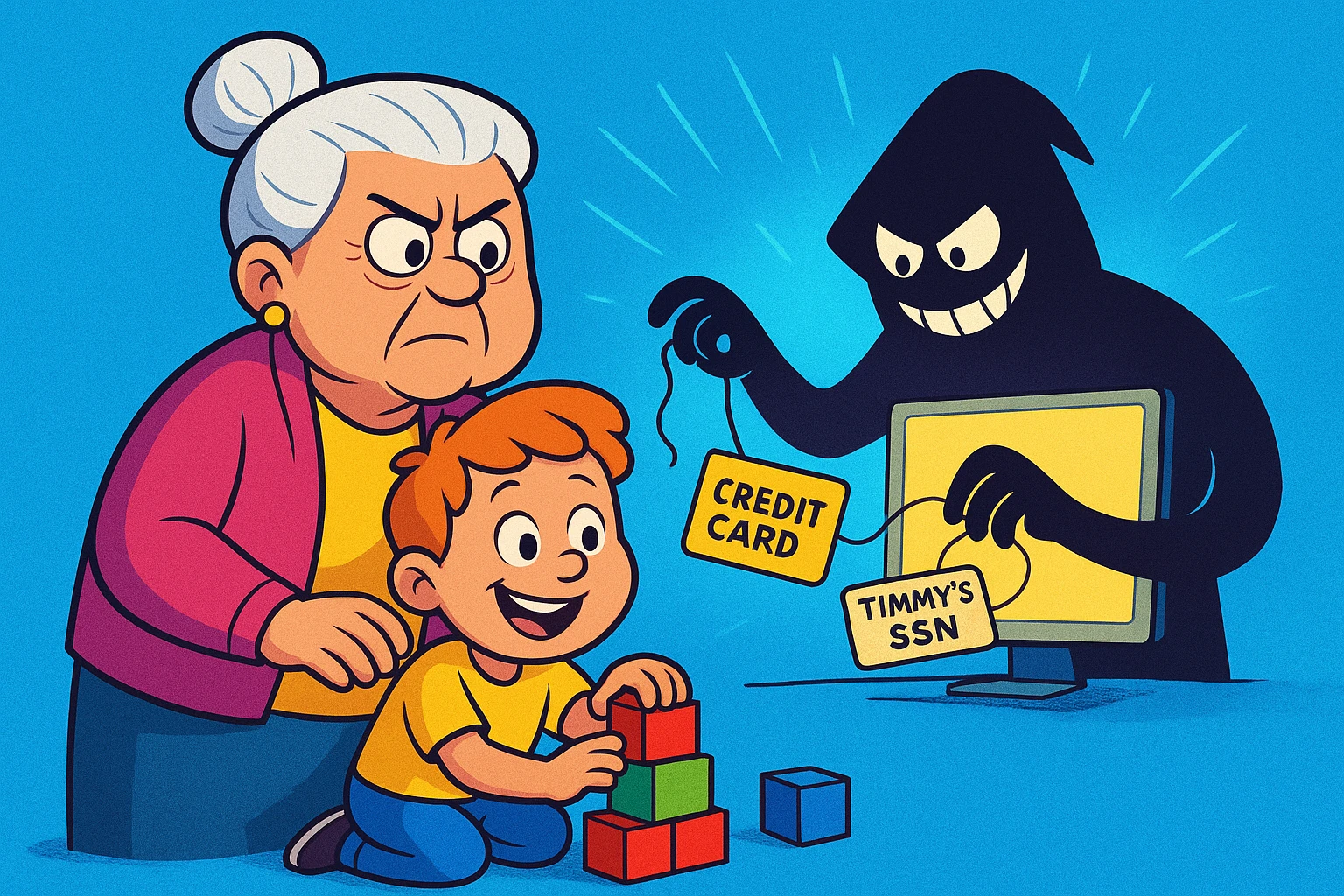
Remember when the biggest threat to your grandchild’s future was swallowing a rogue Lego or giving themselves a “stylish” new haircut with safety scissors? Those were simpler times. Today, the modern grandparent has to worry about entirely invisible threats.
Instead of chasing off neighborhood bullies, you find yourself worrying about a hacker named “DarkLord99” sitting in a basement halfway across the world, trying to apply for a mortgage using six-year-old little Timmy’s Social Security number. It sounds like a bad science fiction movie. Why on earth would a criminal want to steal the identity of a first-grader whose primary source of income is the Tooth Fairy?
As it turns out, children are an absolute goldmine for digital thieves. It’s a uniquely modern headache, right up there with trying to figure out which of your five remotes turns on the television. But the good news is that you don’t have to be a computer whiz to help protect your family.
You might be thinking, “My granddaughter doesn’t even have a smartphone, how can her data be breached?” Most seniors assume data breaches only happen to people who spend too much time on TikTok or buying questionable gadgets on the internet.
In reality, your grandkids’ data is sitting in filing cabinets and servers all over town. Think about the local pediatrician’s office, the little league sports sign-up sheet, or the massive software systems used by local schools (like PowerSchool, which holds data for millions of students). When these places get hacked, your grandchild’s Social Security number gets swept up in the net.
According to research from Carnegie Mellon, children are a staggering 51 times more likely to be victims of identity theft than adults. Why? Because of the “Clean Slate” concept. A child’s credit history is a beautifully blank canvas.
Hackers use a sneaky tactic called “Synthetic Identity Theft”—which is really just a fancy term for Frankenstein Fraud. They take your grandchild’s real Social Security number, stitch it together with a fake adult name and a fake birthday, and boom! They’ve created a brand new person who can apply for credit cards, rent apartments, and completely dodge paying the bills.
As a grandparent, your instinct is to fix things. If a toy is broken, you glue it. If a knee is scraped, you bandage it. So, if a school sends a letter saying your grandchild’s data was in a breach, your first instinct is likely to call the credit bureaus and give them a piece of your mind.
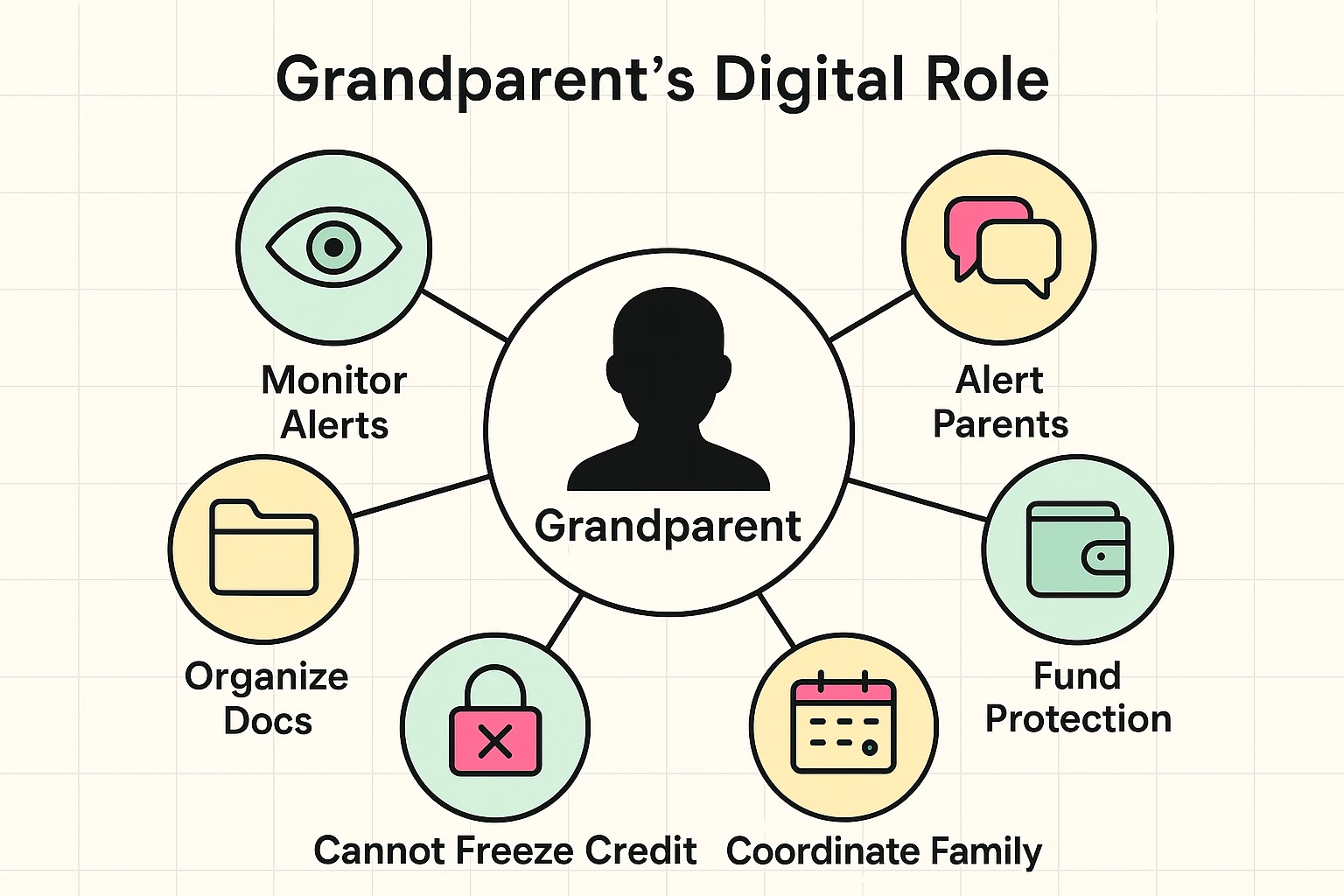
Unfortunately, legally speaking, your hands are tied. You cannot call up Equifax and say, “I need to freeze my grandson’s credit, and while you’re at it, tell him to eat his vegetables.” Only a parent or legal guardian has the legal authority to freeze a minor’s credit profile.
But don’t toss your computer out the window just yet. While you can’t sign the final paperwork, you can become the family’s “Digital Sentinel.” Busy parents are often overwhelmed with carpools, making lunches, and surviving the work week. You can step in as the Project Manager. You do the research, print the forms, and hand your adult children a ready-to-sign packet.
Before we get to the action plan, there is one crucial concept you need to understand: The Ghost Credit Report.
When you or I check our credit reports, we expect to see a long, boring list of our mortgages, credit cards, and car loans. But when you ask a credit bureau to check a child’s Social Security number, you are praying for a “no record found” response.
If you get a letter back saying there is no credit file for little Susie, pop a bottle of sparkling cider and celebrate! That is the exact result you want. If a credit file actually exists for a seven-year-old, it is a massive, glowing red flag that someone has been using her identity.
Alright, so the dreaded day has arrived. Your adult child calls you, or you see a news report, stating that your grandchild’s school or hospital has suffered a data breach. Here is your plain-English, 48-hour plan to lock down the digital vault.
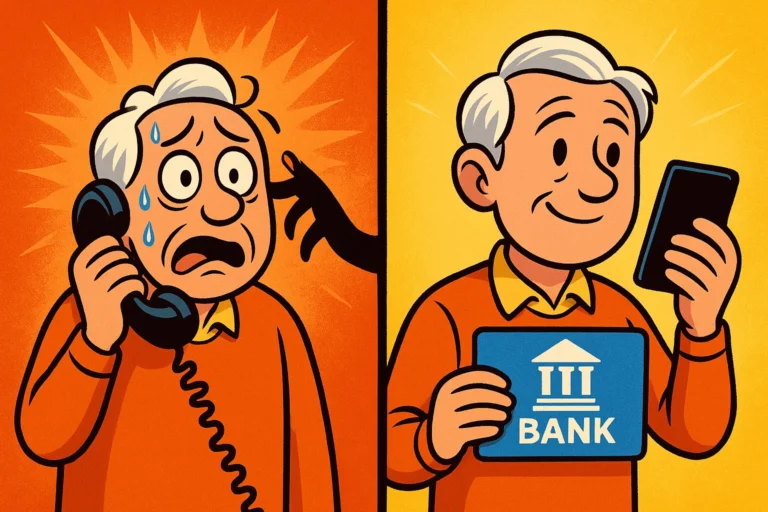
First, let’s make sure this isn’t a scammer trying to trick you. If you get an email or a text claiming “Your grandchild’s data is at risk, click here!”—stop immediately. Do not click the link. Scammers love to use scary messages to make you act without thinking. Instead, go directly to the school or hospital’s official website, or call them using a trusted phone number, to verify if a breach actually happened.
Call your adult child and casually bring it up. Don’t panic them with tales of financial ruin. Say something like, “I saw the news about the school data breach. I know you’re swamped, so I downloaded the forms we need to check the kids’ credit. Let’s get together this weekend and I’ll help you fill them out.” You’ll look like a superhero.
To make this “Parent Packet,” you’ll need the parents to gather a few physical documents: the child’s birth certificate, the child’s Social Security card, and the parent’s government-issued ID.
Next, help the parents ask the three major credit bureaus (Equifax, Experian, and TransUnion) to do a manual search for the child’s Social Security number. You can find the specific forms for a “Minor Credit Check” on each of their official websites. Remember, we are hoping for that glorious “Ghost Report” with zero records found.
Whether the report comes back clean or not, the final step is to put a Security Freeze on the child’s credit. Think of this as putting a giant, heavy padlock on their digital vault. It is completely free to do. Once the credit is frozen, even if a hacker has the child’s Social Security number, they won’t be able to open any new accounts.
Protecting your grandkids’ identity shouldn’t be a one-time panic event. Try to make it an annual tradition. Just like you might send them a birthday card with a crisp $20 bill inside, use their birthday as a reminder to check in with their parents about their digital security.
You don’t need to be a cybersecurity expert to be the family’s digital sentinel. You just need a little patience, a good sense of humor, and the willingness to help navigate the paperwork. You’ve protected them from hot stoves, steep stairs, and questionable fashion choices—protecting their digital future is just the next chapter in the grandparenting handbook.
Technically, no. A child shouldn’t have a credit score because they aren’t old enough to enter into legally binding contracts like credit cards or loans. If a child does have a credit score, it almost certainly means their identity has been stolen and used fraudulently by an adult.
Not at all! A credit freeze is entirely temporary and does absolutely no damage to a child’s future credit. When your grandchild turns 18 and is ready to apply for a student loan or their first apartment, they (or their parents) can simply contact the credit bureaus to “thaw” or lift the freeze using a secure PIN number.
This is the most common misconception. Hackers aren’t necessarily targeting your grandchild’s iPad. They are targeting the massive databases at your local school district, the pediatrician’s office, or even the summer camp database. Any organization that requires a Social Security number for enrollment is a potential target for a data breach.