Newsletter Subscribe
Enter your email address below and subscribe to our newsletter

Enter your email address below and subscribe to our newsletter
Have you ever found yourself in a standoff with your own television? You just want to watch that new documentary about garden gnomes, but your screen looks like the Las Vegas strip—a dizzying grid of apps you’ve never heard of, all shouting for your attention. You pick up the remote, a device with more buttons than a 747 cockpit, and start a desperate game of button-mashing whack-a-mole.
You click on “YipYap,” which turns out to be a streaming service for competitive dog grooming. You try “Zanzibar+,” a channel dedicated entirely to 1970s Swedish polka music. Before you know it, you’ve accidentally subscribed to three new services, changed the TV’s language to Klingon, and completely forgotten what you wanted to watch in the first place.
If this sounds even remotely familiar, you’re not alone. The promise of the “smart TV” often feels more like a threat. But what if your TV wasn’t just smart, but also wise? What if it could learn what you like, hide all the confusing junk, and make finding your shows as easy as it was in the good old days? The good news is, it can. The secret ingredient isn’t magic; it’s a clever bit of tech called AI personalization.
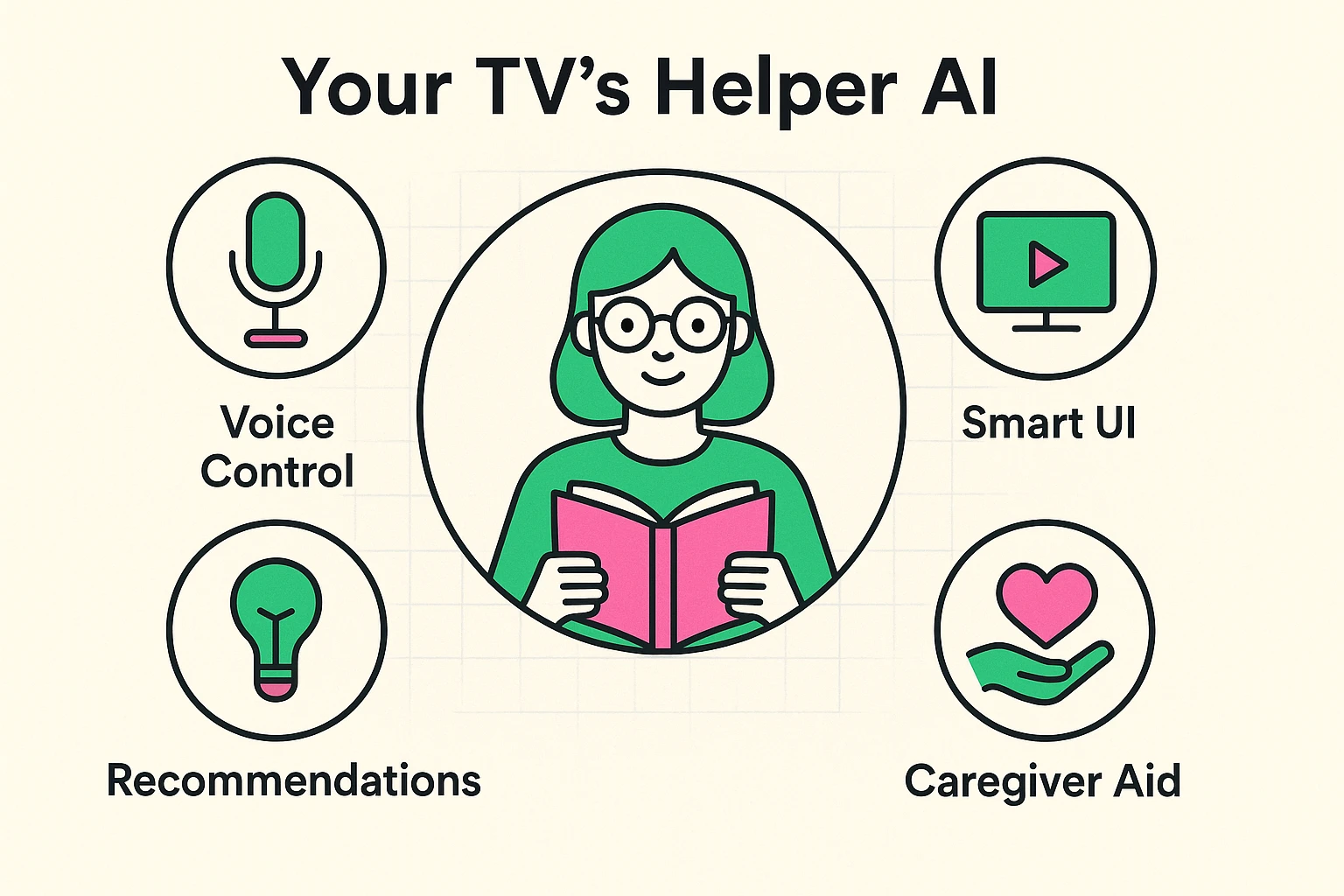
Before your eyes glaze over at the mention of “AI,” let’s clear something up. AI, or Artificial Intelligence, isn’t some scary robot overlord from a science fiction movie. In your smart TV, it’s more like a helpful librarian who gets to know you.
Imagine you walk into a library. A good librarian doesn’t just point you to a 500-foot-long wall of books. They ask what you like. If you say you enjoy historical dramas, they’ll bring you the best ones, put them on a table right up front, and maybe even suggest a new author you’d love. They hide the books on quantum physics and motorcycle repair because they know that’s not what you’re here for.
That’s exactly what AI personalization does for your TV. It quietly pays attention to what you watch, which apps you use, and what you search for. Then, it uses that information to tidy up the chaos and put your favorite things front and center. It’s not about making the TV more complicated; it’s about using technology to make it dramatically simpler.
This isn’t just a vague concept. AI works in very specific, practical ways to cut down on your frustration. Think of them as the three main magic tricks your TV has up its sleeve.
Tired of pecking out movie titles with a clunky on-screen keyboard? Voice control is your new best friend. By simply pressing a button on the remote and speaking, you can tell your TV exactly what you want.
Instead of navigating through five different menus to find Casablanca, you can just say, “Play the movie Casablanca on Netflix.” The AI understands your request, finds the movie, and starts playing it. It’s the difference between looking up a number in a phone book and just asking your friend to dial it for you.
Remember that cluttered home screen that looked like a digital flea market? AI personalization tidies it up automatically. If it notices you only ever use Netflix, YouTube, and the PBS app, it will move those icons to the very beginning of the list.
Apps you never touch, like “Competitive Yodeling TV,” get pushed to the back or hidden altogether. Over time, your home screen transforms from a confusing mess into a simple, clean menu of your personal favorites.
The biggest challenge with modern TV is the sheer volume of choices. It can lead to “decision paralysis,” where you spend more time scrolling than actually watching.
This is where your TV’s AI acts like a personal movie critic. Based on the fact that you’ve watched every season of The Great British Baking Show, it might suggest a new documentary about French pastry chefs. It learns your taste and serves up suggestions you’re likely to enjoy, saving you from wading through thousands of titles you couldn’t care less about.

Your TV’s AI is smart, but you can make it even smarter. You can actively “teach” it your preferences to get better, faster results.
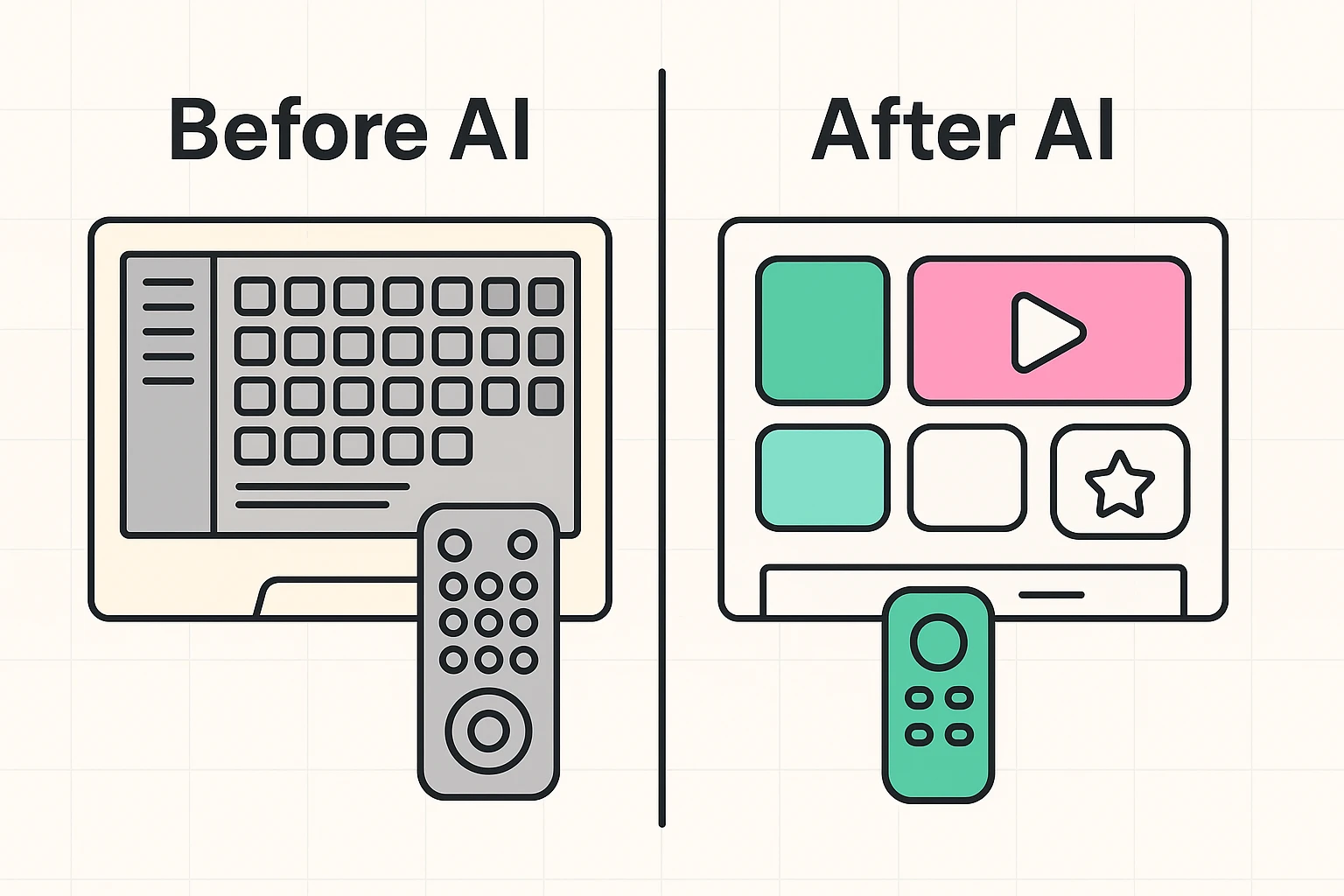
It’s one thing to talk about a simpler menu, but it’s another to see it. A standard smart TV often presents a wall of options, treating every app as equally important. But an AI-personalized screen is a breath of fresh air—it’s your TV, tailored for you.
Think of it as a computer program designed to learn and adapt. It’s not “thinking” like a person. It’s just very, very good at recognizing patterns in your viewing habits and using those patterns to organize information in a more helpful way.
This is a valid concern! Smart TVs do collect data on what you watch to make these features work. Reputable brands anonymize this data, meaning they know someone watched a show, but not necessarily that John Smith at 123 Maple Street did. It’s always a good idea to review the privacy settings on your TV when you first set it up. The goal of the data collection is typically to improve recommendations and sell ads, not to pry into your personal life.
Not at all! This is the best part. Most modern smart TVs from major brands like Roku, Samsung, LG, and Google TV have these AI features built right in. The myth is that you need a special, stripped-down “senior” device. The reality is that a good mainstream smart TV can be made incredibly simple just by using the powerful personalization tools it already has.
It can take a little practice! Try to speak clearly and at a normal pace. The more you use it, the better the system gets at understanding the unique sound of your voice. Also, make sure you’re speaking into the microphone on the remote, which is usually a tiny hole near the top.
The beauty of a smart TV isn’t about having a million options; it’s about having the right options at your fingertips. AI personalization is the key that unlocks this simplicity. It turns a frustrating, complicated gadget into a helpful companion that learns from you, adapts to you, and ultimately, just gets out of the way so you can enjoy your shows.
So the next time you sit down in front of your TV, remember that you have a helpful librarian on your side, ready to cut through the clutter and bring you exactly what you want.