
Newsletter Subscribe
Enter your email address below and subscribe to our newsletter

Enter your email address below and subscribe to our newsletter
Have you ever stood in front of an open refrigerator, staring at its contents with the intensity of a bomb disposal expert, and had absolutely no idea what to make for dinner? The carrots look sad. The chicken is… well, it’s chicken again. And the lone yogurt cup in the back seems to be judging your life choices.
This daily ritual, the “What’s for dinner?” dilemma, can feel like a full-time job you never applied for. It’s a relentless cycle of planning, shopping, and trying to remember if you’re supposed to be eating more fiber or less salt this week. It’s enough to make you want to throw in the towel and declare a box of crackers an official food group.
But what if you had an assistant? Not a fancy, high-priced chef, but a helper who could brainstorm ideas, organize your shopping list, and remember that your grandson Timmy absolutely, positively will not eat anything green. That’s where AI, or Artificial Intelligence, comes in. Think of it not as a robot overlord, but as your new kitchen sous chef—eager to help, full of ideas, but still waiting for you, the head chef, to give the final say.

Before your eyes glaze over, let’s be clear: you don’t need a degree from MIT to use this stuff. At its core, an AI meal planner is simply a computer program you can talk to. You give it instructions, and it gives you ideas back. It’s like having a conversation with the world’s biggest, fastest cookbook.
There are generally two types you’ll run into:
For today, we’ll focus on using the general-purpose tools, because they’re a great, free way to get your feet wet.
Here’s the most important thing to know: the quality of the meal plan you get depends entirely on the quality of the instructions you give. Your AI sous chef is very literal. It won’t guess that you’re on a low-sodium diet or that you hate cilantro unless you tell it.
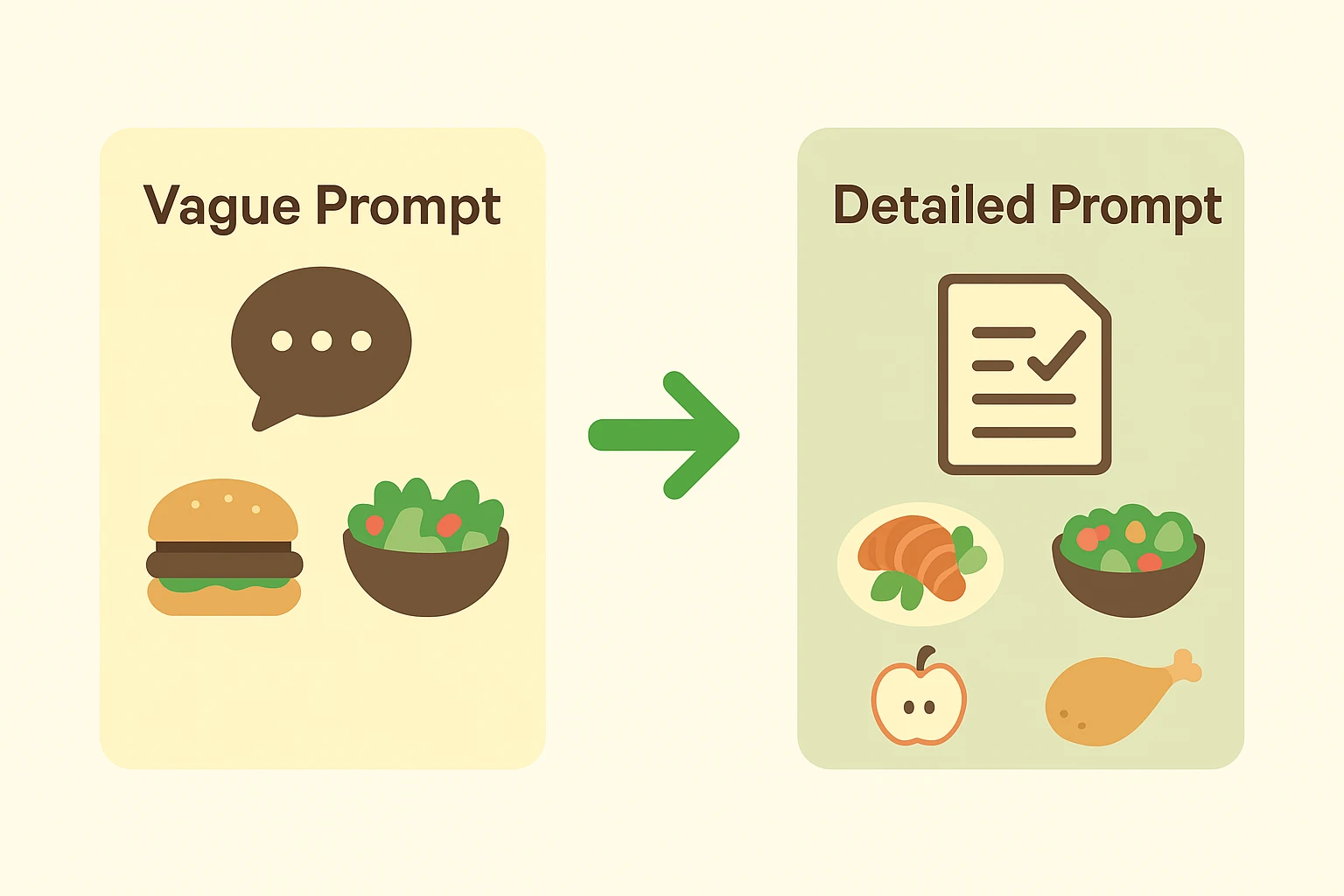
Giving a vague command like “Give me a meal plan” is like telling a decorator to “put stuff on the walls.” You might end up with priceless art, or you might end up with a framed photo of a squirrel eating a hot dog. You have to be specific!
This is where “prompt engineering” comes in, which is just a fancy term for giving good instructions. A good prompt is the difference between a random list of foods and a meal plan that actually works for your life.
Let’s look at an example. A vague prompt gets you a vague, unhelpful answer. A detailed prompt gets you a plan you can actually use.
To make things easier, here are a few copy-and-paste prompts you can use as a starting point. Just fill in the blanks with your own details!
The “Budget-Friendly” Prompt: “Create a 5-day dinner plan for two adults that is budget-friendly. Please use common and affordable ingredients like chicken thighs, ground beef, beans, and seasonal vegetables. We enjoy comfort foods, and one of us is not a fan of spicy dishes. Include a grocery list organized by store section (produce, meat, dairy, pantry).”
The “Picky Eater” Prompt: “I need a 7-day meal plan for a household with two adults and one picky 8-year-old grandson who visits on weekends (Saturday and Sunday). The adults eat anything, but the grandson will only eat chicken nuggets, pasta with butter, and plain cheese pizza. Please create dinners for Saturday and Sunday that are ‘deconstructed’—where the adults can have a full meal, but the components can be served separately for the grandson.”
The “Clean Out the Fridge” Prompt: “I need three dinner ideas to help me use up ingredients I already have. I have: two chicken breasts, a half-used bag of spinach, some baby carrots, a can of cannellini beans, and some leftover rice. I also have a well-stocked pantry with standard spices, oils, and onions. What can I make?”
The “Specific Diet” Prompt: “Generate a 7-day meal plan for one person following a low-sodium, diabetic-friendly diet. The meals should be easy to prepare in 30 minutes or less. I prefer fish and chicken over red meat. Please provide breakfast, lunch, and dinner ideas and a complete shopping list.”
Your AI sous chef is incredibly smart, but it has never actually tasted food. It can sometimes make… interesting suggestions. This is what the tech folks call “hallucinations,” which is a polite way of saying the computer made something up. It might suggest an ingredient that’s impossible to find or a cooking combination that sounds just plain weird.
That’s why you, the head chef, must always give the plan a final review before you head to the store. Don’t just blindly trust the output.
Before you commit to a plan, run it through this simple checklist. This ensures the meals are practical, balanced, and something you’ll actually want to eat.
Ask yourself these questions:
Ready to give it a try? The easiest way to start is with a free tool like ChatGPT. Open it up, choose one of the prompts from our library above, and paste it in. Tweak it with your own food preferences and family size, then see what it comes up with!
Don’t worry about getting it perfect on the first try. The goal is just to see how it works. You might be surprised at how much of the mental heavy lifting it can do for you.
You should never share sensitive personal health information with a public AI chatbot. Frame your requests generally, like “a diabetic-friendly meal plan,” rather than sharing your specific medical details. Think of it as public advice, not a private consultation.
Not at all. If you can write an email or a text message, you can write a prompt. It’s just about having a conversation and giving clear instructions.
Think of the AI as a source of endless ideas, not a Michelin-star chef. The recipes it generates are usually solid starting points. You might need to adjust seasonings or cooking times based on your own experience and taste.
Absolutely! After it gives you a meal plan you like, you can simply type a follow-up command like: “This looks great! Now, please create a consolidated shopping list for this entire meal plan, organized by grocery store aisle.”
Using AI for meal planning isn’t about letting a computer run your life. It’s about taking one of the most tedious weekly chores off your plate so you can free up brain space for more important things—like enjoying your meals, video-calling the grandkids, or finally figuring out how to get the perfect crust on that banana bread.
So go ahead, hire your new sous chef. It works for free, never complains, and is ready to help you finally answer that age-old question: “What’s for dinner?”