Newsletter Subscribe
Enter your email address below and subscribe to our newsletter

Enter your email address below and subscribe to our newsletter
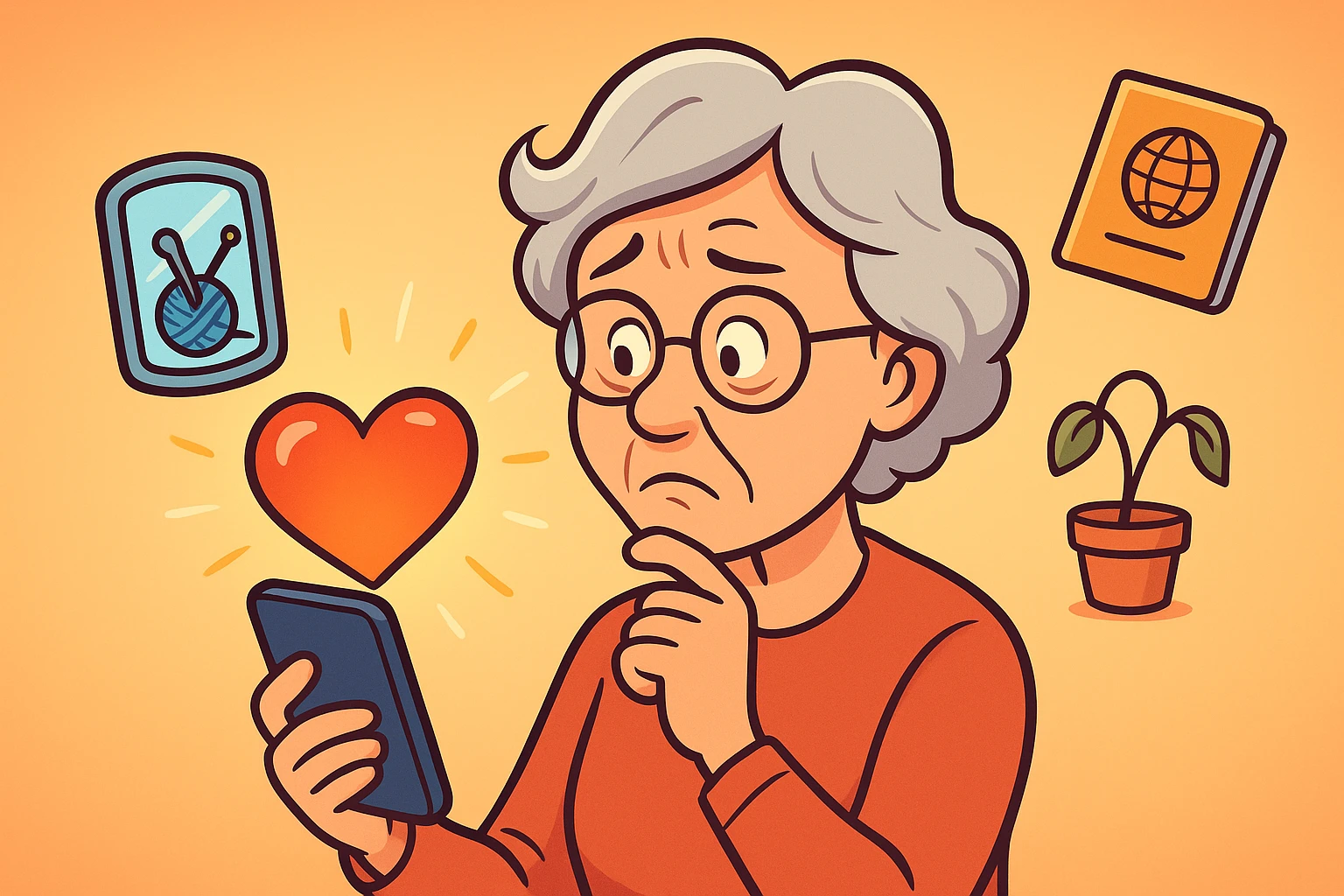
Back in the good old days, if you wanted to meet a potential sweetheart, you had to attend a church picnic, eat three scoops of potato salad, and try to figure out if your date’s weird uncle was a dealbreaker. It was a slow, sometimes awkward process. Today? We have the internet. You can swipe your finger across a glass screen, and suddenly you’re chatting with an incredibly handsome engineer, doctor, or international man of mystery who thinks you are the most fascinating human to walk the earth since Cleopatra.
It feels absolutely wonderful, like starring in your very own Hallmark movie. But here’s the thing about fairytales: they usually involve a troll hiding somewhere under a bridge. For many seniors, online dating is a fantastic way to find genuine companionship. But for professional scammers, dating apps are essentially a hunting ground, and their weapon of choice isn’t a computer virus—it’s your heart.
Most tech guides will simply tell you, “Never send money to someone you haven’t met.” That’s great advice, but it completely misses the point. By the time a scammer asks for a loan, they’ve already spent weeks or months hacking your emotions. Today, we are going to play detective and look at the psychological red flags that pop up long before a single dollar is ever mentioned.
Your phone pings. It’s a message from your new online companion: “Good morning, my queen. I couldn’t stop thinking about you all night.” Reading that feels fantastic, doesn’t it? That warm, fuzzy feeling is a chemical called dopamine flooding your brain.
It’s the same biological rush you get from eating a warm chocolate chip cookie, but for your ego. Scammers know exactly how this works. They aren’t just sweet-talking you; they are intentionally creating a dopamine dependency. They shower you with constant attention so that you get used to the “high” of their messages.
When your brain is swimming in feel-good chemicals, it becomes incredibly difficult to think logically. Psychologists call this an “amygdala hijack.” Your emotional brain takes the steering wheel, and your logical brain is shoved into the trunk. If you find yourself checking your phone every five minutes waiting for their message, step back. Try a 24-hour “dopamine detox” where you step away from the chat to clear your head.
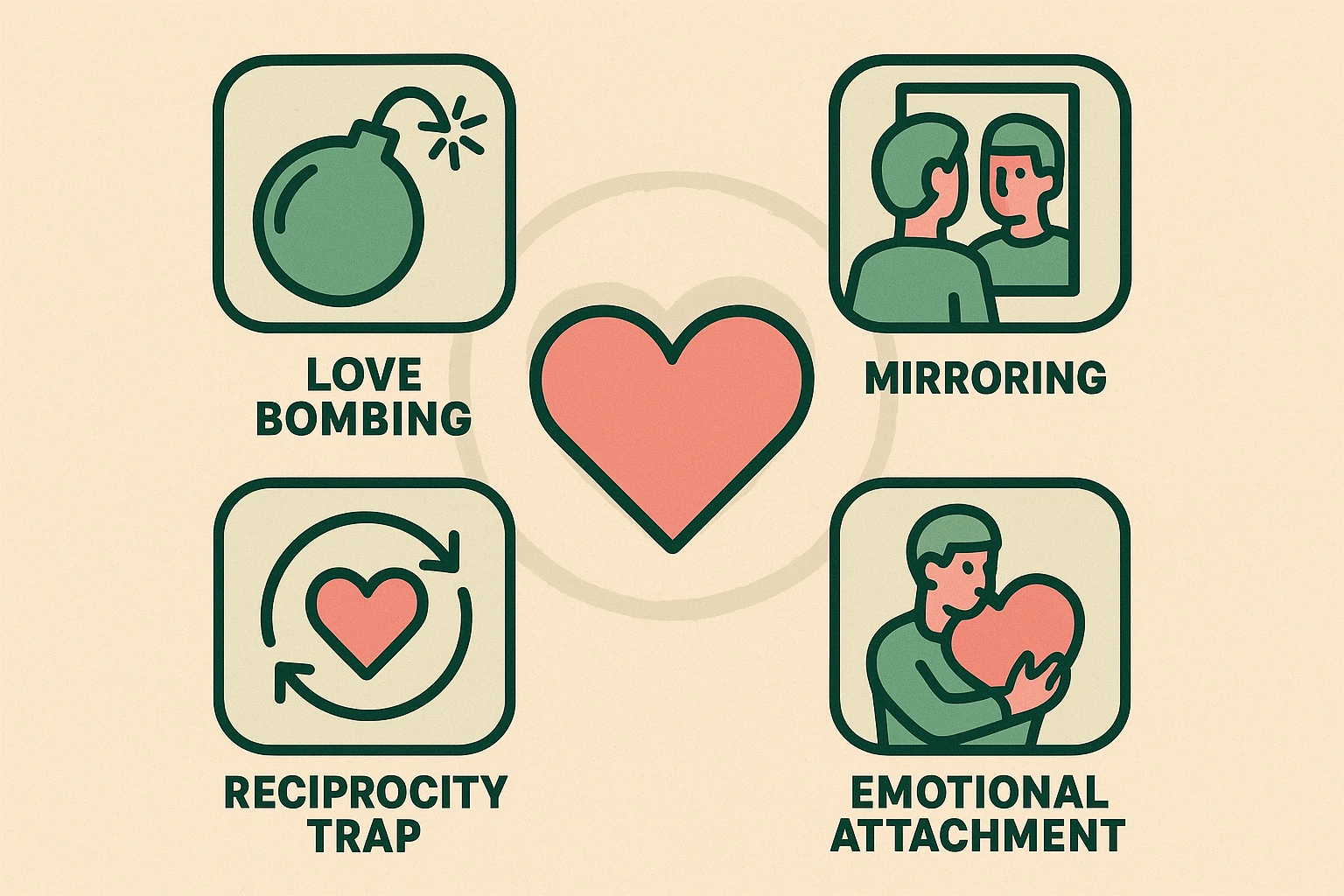
Real, lasting love is a lot like making a good pot roast—it takes time, patience, and simmering. Scammers, on the other hand, prefer to use a microwave. They employ a tactic called “Love Bombing,” which means they declare deep, soulmate-level love within days of meeting you.
If someone claims that “fate brought us together” or that they’ve “never felt this way about anyone before” after trading three messages about the weather, your radar should go up. They are working from a script designed to overwhelm you.
Another favorite trick in their script is called “Mirroring.” Have you ever noticed that your new sweetheart has the exact same obscure hobbies as you? You love rescuing golden retrievers? What a coincidence, they grew up on a golden retriever farm! You enjoy knitting? They just bought a yarn factory!
The Mirroring Check: Try seeding a fake interest to test them. Casually mention that you’ve recently gotten really into “competitive extreme ironing” or “collecting vintage doorknobs.” If they suddenly claim to be passionate about that too, you’re not talking to a soulmate. You’re talking to a mirror.
Let’s say you met this charming stranger on a popular dating site or Facebook. Within the first few days, they will almost always suggest moving your conversation to WhatsApp, Google Chat, or text messages. They’ll give you a flattering reason, like, “I hardly use this app and I want to focus just on you.”
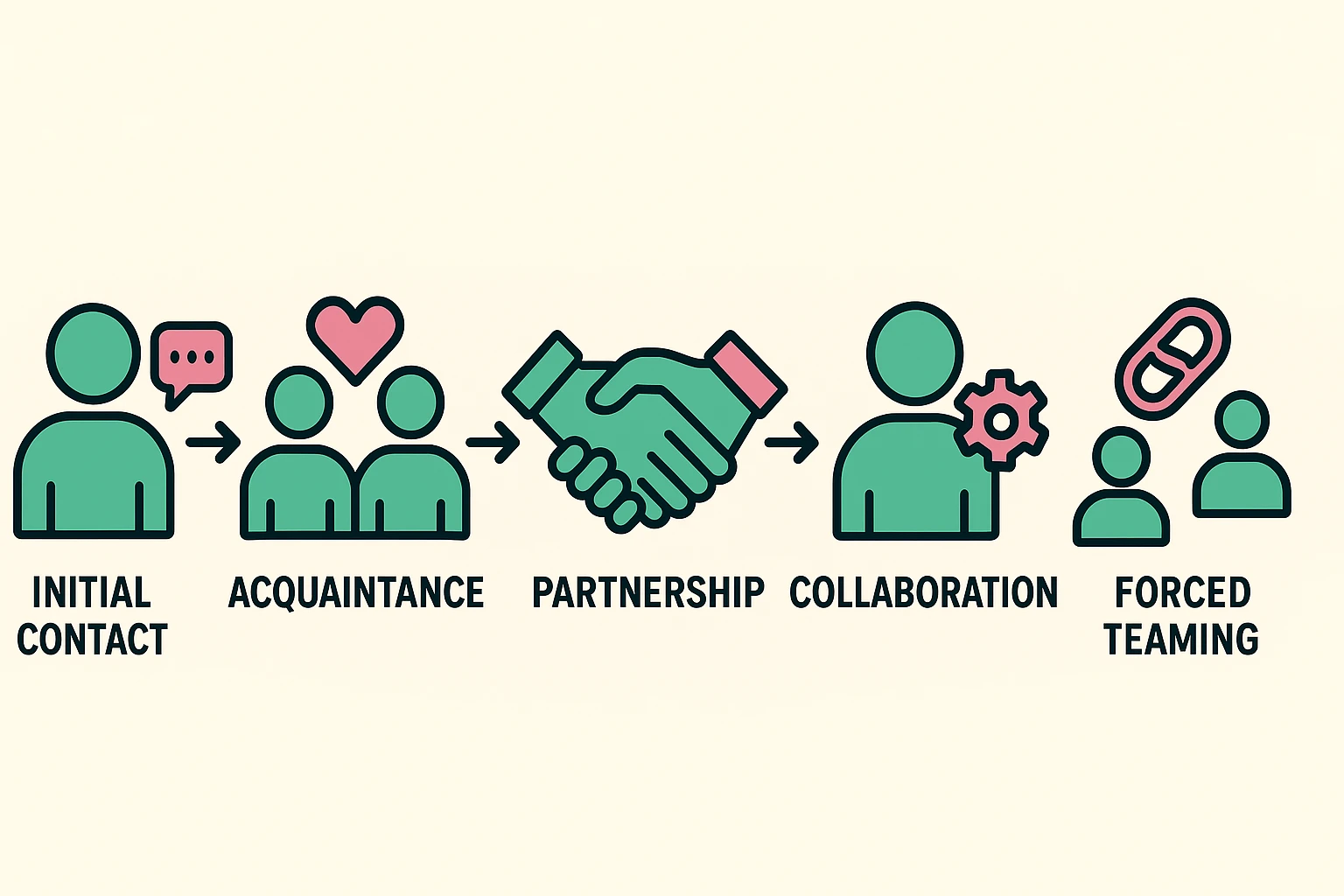
How romantic, right? Wrong. This is the Isolation Phase. Dating apps and social media platforms have security teams and algorithms looking for scammers. By moving you to a private texting app, they are dragging you out of the brightly lit grocery store and into a dark alley.
Once they have you isolated, they start a psychological game called “Forced Teaming.” They’ll use phrases like, “It’s just us against the world.” Slowly, they might start subtly putting down your friends or family. They want to become your sole source of emotional support, removing the safety net of loved ones who might point out red flags.
A professional predator rarely starts by asking for a $10,000 wire transfer. That would scare you off! Instead, they build what we call an “obligation muscle” using the Reciprocity Trap.
They will ask for a tiny, non-financial favor. “My internet is acting up, could you check my email for me?” or “Could you log into this account to see if my package shipped?” If they claim they are a business owner having an emergency, they might even ask you to check their website to see if it’s loading. By doing these small favors, you subconsciously start feeling invested in their life and their problems.
This leads directly into the “Artificial Crisis.” Before the big money request, there is always a smaller emergency that tests your empathy. A lost passport. A sick pet. A frozen bank account overseas. They won’t ask for money directly at first; they will just tell you how stressed they are, waiting for you to offer help.
So, how do you know if your new digital sweetheart is the real deal or a predator in sheep’s clothing? You run the boundary test.
Say “no” to something small. If they want to text all night, tell them you have to go to sleep. If they want you to check an email for them, say you aren’t comfortable doing that.
A legitimate partner might be slightly disappointed, but they will respect your boundary. A scammer will immediately change their tune. The sweet-talking will vanish, replaced by guilt-tripping. “I thought you cared about me,” or “I guess I was wrong to trust you.” If setting a gentle boundary causes a dramatic tantrum, congratulations! You just dodged a very expensive bullet.
While instant connections do happen, deep love takes time to build. If someone is declaring you are their soulmate within days or weeks of chatting—especially if you’ve never met in person or over a video call—this is a major red flag known as “love bombing.”
Scammers use artificial crises to keep you in a state of high emotion. When you are panicked about their sick dog or their seized passport, you aren’t thinking logically. Constant, dramatic emergencies are a manipulation tactic designed to test your empathy and prepare you for a financial ask.
You can use a simple safety script: “I really enjoy our conversations, but I have a strict personal rule against mixing finances or accounts with online relationships.” If they are a genuine person, they will respect this rule. If they vanish or get angry, they were never truly interested in a relationship to begin with.
Absolutely not. Trust your gut. Taking things slow, asking questions, and refusing to be isolated from your friends and family isn’t paranoia—it’s smart digital citizenship.
Looking for love and companionship online can be a wonderful, enriching experience. Just remember that you hold the keys to both your heart and your bank account. Keep them safe, take your time, and don’t be afraid to put that pot roast on a slow simmer.