Newsletter Subscribe
Enter your email address below and subscribe to our newsletter

Enter your email address below and subscribe to our newsletter
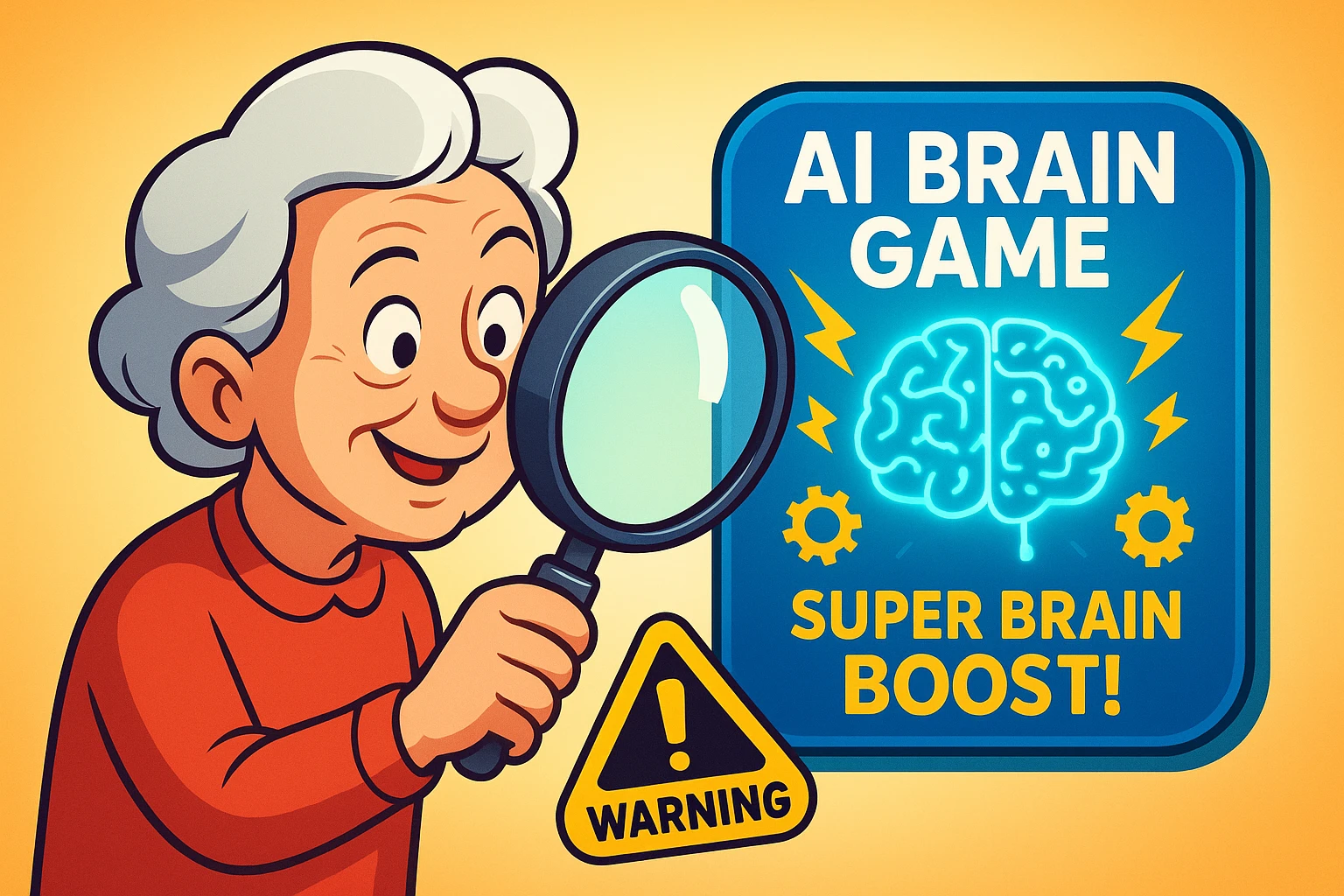
Have you seen the ads? They pop up on your screen with the subtlety of a marching band in a library. An app, glowing with futuristic promise, claims it can sharpen your mind, boost your memory, and turn your brain into a supercomputer that can recall not just your grocery list, but also the name of your third-grade teacher’s pet hamster.
It sounds fantastic. It also sounds suspiciously like those late-night infomercials for gadgets that can supposedly julienne fries, detail your car, and walk your dog, all for three easy payments of $19.99.
You’re right to be skeptical. In a world full of digital snake oil, it’s hard to tell what’s a genuine tool for self-improvement and what’s just a clever way to part you from your money. So, let’s put on our detective hats, grab a magnifying glass, and figure out if these AI-powered brain games are a smart investment in your cognitive health or just a high-tech scam.
Before we can judge them, let’s understand what these apps are trying to do. At their core, they’re based on a fancy concept called “neuroplasticity.”
Don’t let the jargon scare you. Neuroplasticity is just a scientific way of saying your brain is adaptable. Think of it like a muscle. If you do bicep curls, your biceps get stronger. The idea behind these games is that if you “exercise” specific parts of your brain—like memory, attention, or problem-solving—those areas will get stronger, too.
These apps use Artificial Intelligence (AI) to create a series of puzzles and challenges that adapt to your performance. If you’re acing the memory game, the AI makes it tougher. If you’re struggling with a logic puzzle, it might ease up a bit. The goal is to keep you in that sweet spot where you’re challenged but not overwhelmed, supposedly giving your brain the perfect workout.
This is where the debate gets heated. You’ll find experts on both sides, and the truth, as it so often is, is lurking somewhere in the middle. Let’s look at the evidence.
Supporters of brain games point out a few key benefits. First, playing these games demonstrably makes you better… at playing the games. If you consistently practice a pattern-matching game, your score will go up. This sense of progress can be motivating and, frankly, pretty fun.
Some studies suggest that this improvement isn’t just about the game itself. They argue that consistent training can lead to modest improvements in the specific cognitive skill being practiced. For example, a game focused on attention might help you focus a bit better. For many users, the daily challenge is an engaging way to keep their minds active, which is a positive thing in itself.
Here’s the big catch, and it’s a big one. Critics, including many neuroscientists from institutions like Harvard and Stanford, point to the problem of “transfer.” Getting really good at a digital card-matching game on your phone doesn’t necessarily mean you’ll be better at remembering where you parked your car at the mall. The skills just don’t “transfer” to the real world in a meaningful way.
The skepticism isn’t just academic. In 2016, the company behind Lumosity, one of the most popular brain training apps, was hit with a $2 million fine by the Federal Trade Commission (FTC) for making unsubstantiated claims that their games could delay age-related memory loss and protect against conditions like Alzheimer’s. They simply couldn’t prove their marketing hype was true.
So, are they a scam? Not entirely. They are legitimate games designed to be engaging. But the claims about them can be misleading.
Think of brain training apps like a vitamin supplement. They aren’t a replacement for a healthy diet, but they can be a small part of an overall wellness routine. These apps are not a magic pill that will prevent cognitive decline. However, if they get you to think actively, solve problems, and you find them enjoyable, they can be a worthwhile mental activity. Just don’t expect them to single-handedly turn back the clock.

If you decide you want to give one of these apps a try, you need to be a smart shopper. Here are some green flags to look for and red flags that should have you running for the hills.
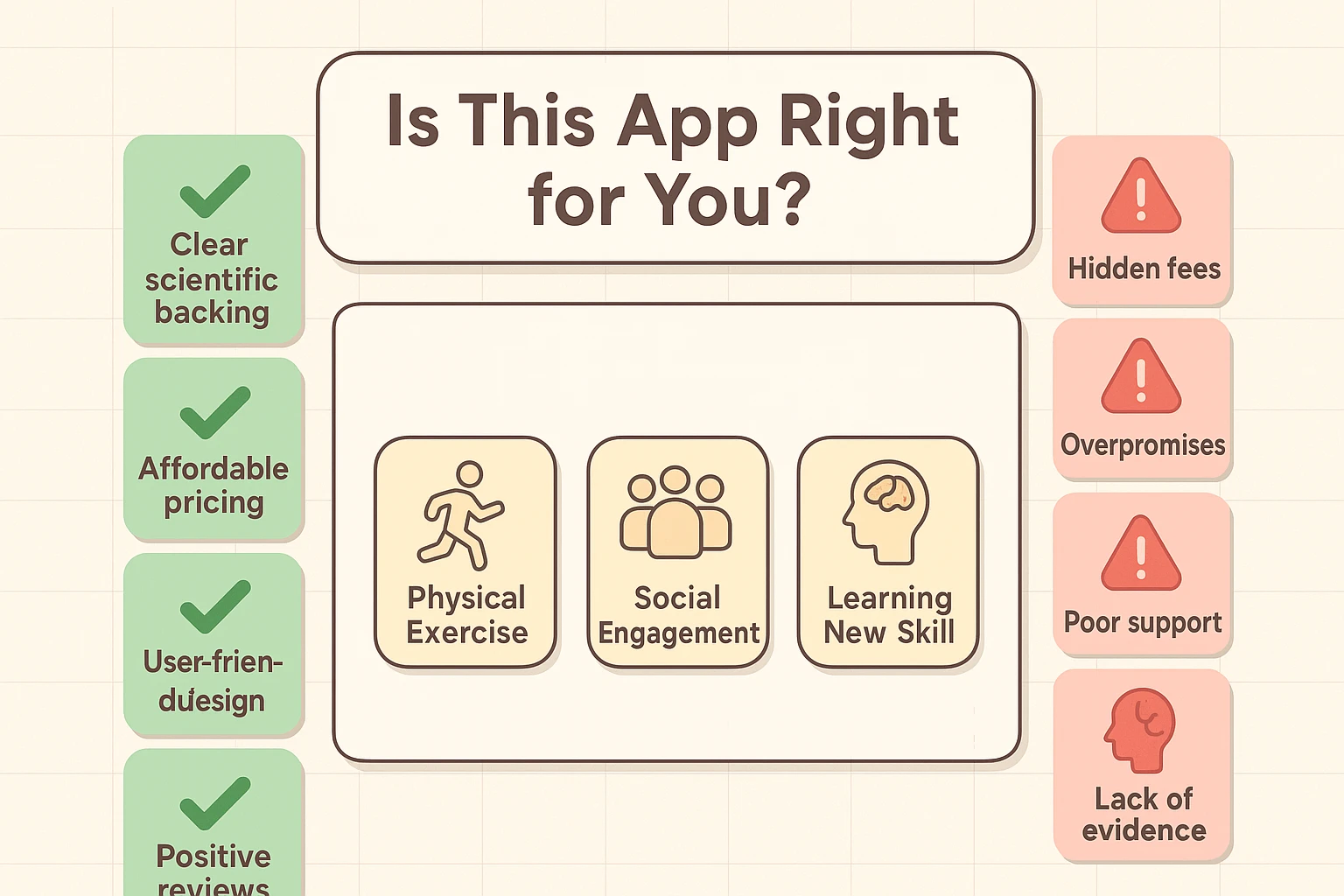
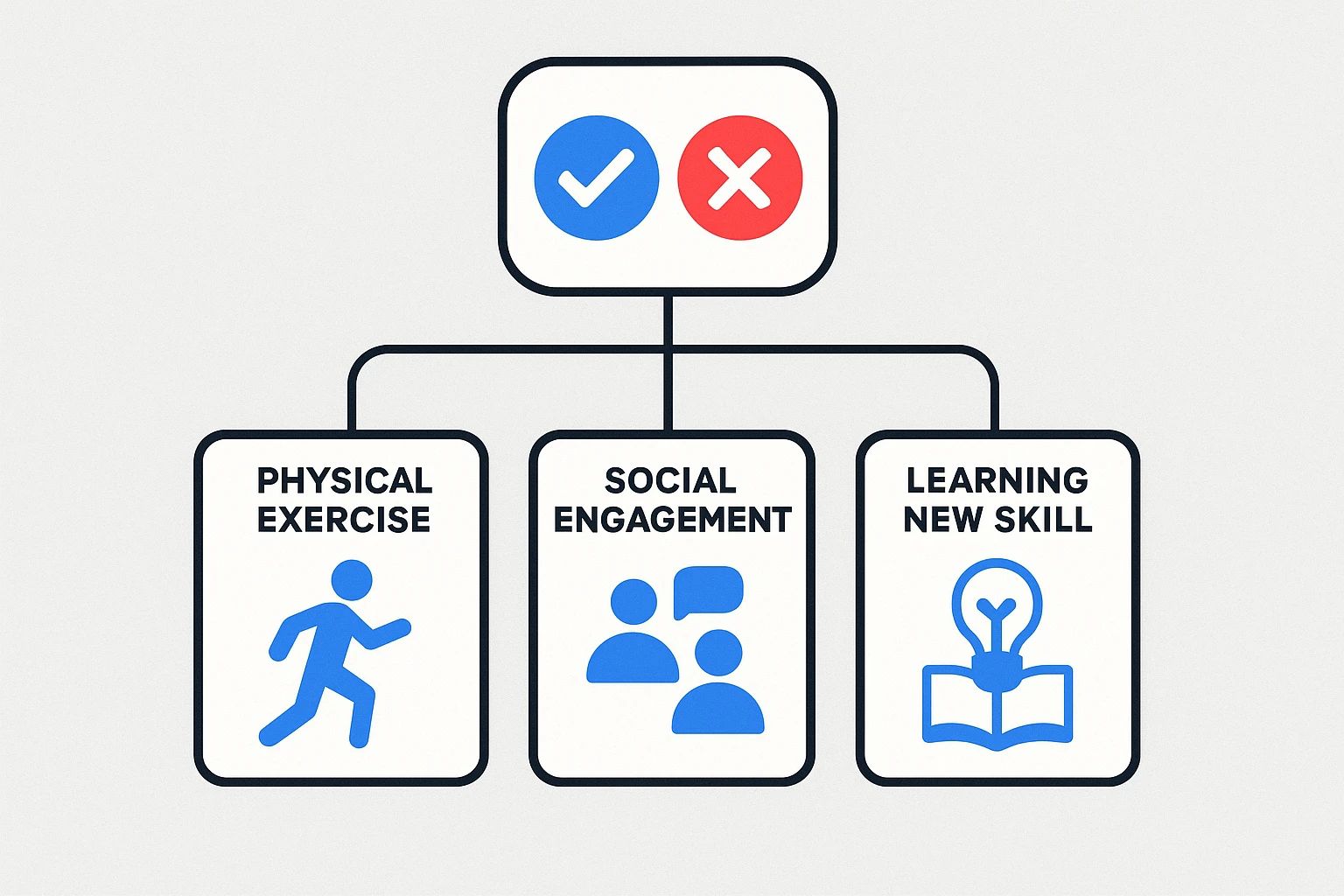
Here’s the secret the brain game companies don’t want to advertise: the most scientifically proven methods for maintaining cognitive health have nothing to do with your smartphone. They’re the same things that are good for your heart and the rest of your body.
They work at making you better at the games themselves. Evidence that they improve your overall cognitive function in daily life is weak and highly debated.
An emphatic no. According to the vast majority of scientific research, there is no evidence that any commercially available app can prevent, delay, or cure Alzheimer’s disease or other forms of dementia.
If you choose to use one, most experts suggest that 10-15 minutes a day, a few times a week, is plenty. Consistency is more important than long, infrequent sessions.
Yes, many popular apps like Lumosity and CogniFit offer a limited number of free games each day. This is a great way to try them out without committing to a subscription.
Ultimately, the decision is yours. If you view a brain training app as a source of fun, engaging puzzles that help keep your mind active, then it can be a smart and enjoyable investment of your time.
But if you’re looking for a silver bullet to protect your brain health, save your money. The best investment you can make is in a life filled with movement, learning, and laughter with people you care about. No app, no matter how clever its AI, can ever replace that.