Newsletter Subscribe
Enter your email address below and subscribe to our newsletter

Enter your email address below and subscribe to our newsletter

Have you ever had a telehealth appointment that felt a little… futuristic? You upload a photo of a weird rash, and five minutes later, your doctor says, “The preliminary analysis flags it for a closer look.” You’re left wondering, who—or what—did this “preliminary analysis”? Was it a new intern who drinks too much coffee and can spot a pixel out of place from a mile away?
If you’ve felt a bit lost in the high-tech shuffle, you’re not alone. The new assistant in your doctor’s office isn’t a person; it’s Artificial Intelligence (AI). And before you start picturing a robot from The Jetsons wearing a stethoscope, let’s clear the air. These AI tools aren’t here to replace your doctor. They’re here to give your trusted physician a set of superpowers, like a high-tech magnifying glass that can spot things the human eye might miss.
But knowing that doesn’t stop it from feeling like a black box. What does it mean when an “algorithm” analyzes your results? How can you trust a diagnosis that started with a computer? Let’s pull back the curtain, explain what’s really going on in plain English, and turn you into the most informed patient in the virtual waiting room.
Let’s get one thing straight: there is no “AI doctor.” There is your doctor, who is a human being with years of training and experience, and there is AI, which is a very sophisticated tool they use. Think of it this way: your carpenter has a hammer, a saw, and a level. Now, imagine they get a new laser measuring tool that’s accurate down to a millimeter. The laser doesn’t replace the carpenter; it just makes their work more precise. That’s what AI is for your doctor.
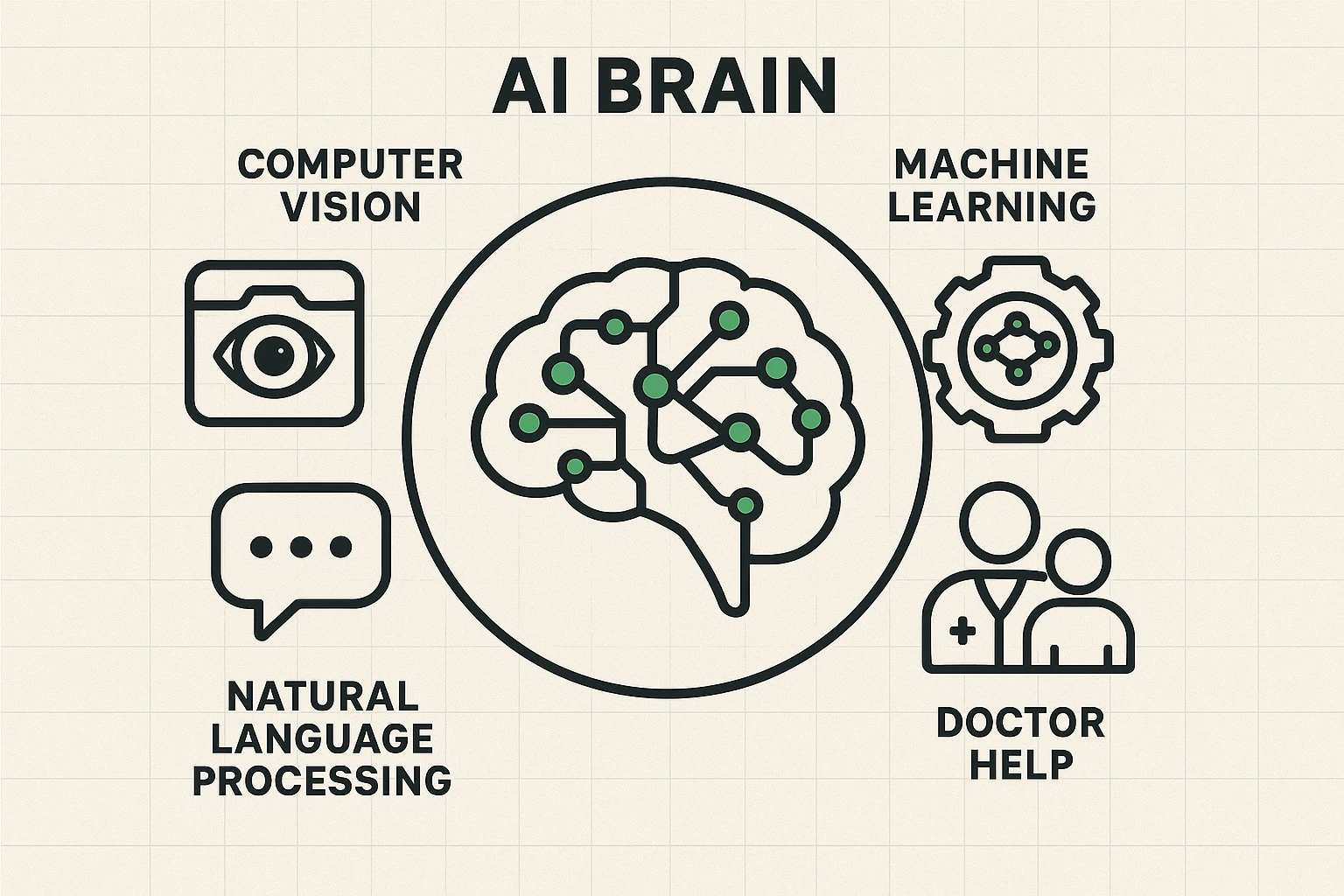
These tools are built on a few key ideas:
The key takeaway is that these are pattern-finding machines. They are incredibly good at sifting through mountains of information to flag things that look unusual.
This technology isn’t some far-off fantasy. It’s being used right now in ways that are particularly helpful for health issues that many of us face as we get older.
For individuals with diabetes, regular eye exams are crucial to catch something called diabetic retinopathy. Now, AI can analyze a photo of the back of your eye (the retina) and spot the tiniest, earliest signs of damage, prompting your doctor to take action long before you might notice a change in your vision.
You notice a new mole and, naturally, you worry. Instead of waiting three months for a dermatology appointment, you snap a photo and send it through a patient portal. An AI tool can instantly compare your photo to a database of millions of images, flagging it if it has characteristics that warrant a closer look from the dermatologist. This helps doctors prioritize patients who need to be seen right away.
Irregular heartbeats, like Atrial Fibrillation (AFib), can be tricky to detect. Some modern smartwatches and portable EKG devices use AI to analyze your heart rhythm in real-time. The device can alert you to an irregularity and generate a report you can send directly to your cardiologist, which is a lot more convenient than wearing a bulky monitor for two weeks.

This is the most important question, and it’s perfectly normal to be skeptical. It’s your health, after all. Let’s tackle the biggest myths head-on.
Myth: The AI makes the final diagnosis and decides my treatment.
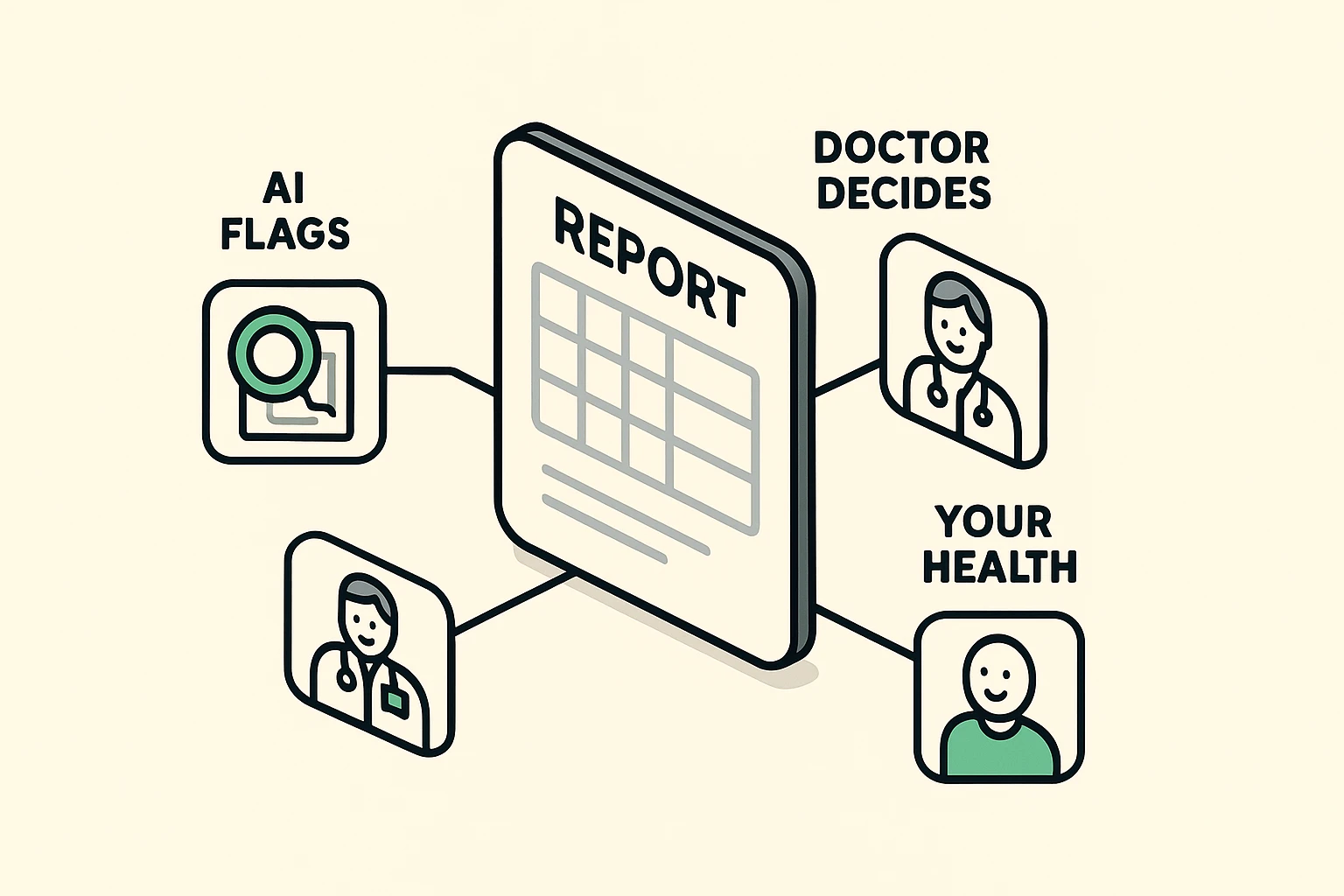
Fact: Absolutely not. Your doctor always makes the final call. The AI provides a suggestion, a red flag, or a piece of data. Think of it as a medical report. Your doctor reads the AI’s report just like they’d read a blood test result. They combine that information with your medical history, your symptoms, and their own professional judgment to make a diagnosis.
Myth: The AI is going to replace my doctor.
Fact: The goal is to give your doctor more time and better tools, not a pink slip. By handling some of the initial analysis, AI frees up doctors to focus on the most human parts of medicine: talking to you, understanding your concerns, and creating a treatment plan that fits your life. It’s about making healthcare more efficient and accessible, not less human.
So, you get a message from your doctor’s office. It might say something like, “The AI analysis of your skin lesion indicated a 92% probability of atypical characteristics.” Your first reaction might be panic. 92%?! That sounds terrifyingly specific!
Here’s how to translate that from computer-speak into plain English.
Knowledge is power. The next time you’re in a telehealth visit, you don’t have to just nod along. Being an active participant in your care builds confidence. Here are a few simple questions you can ask:
New technology can feel intimidating, especially when it involves something as personal as your health. But AI diagnostic tools aren’t something to fear. They are powerful new instruments in your doctor’s toolkit, designed to help them catch problems earlier and more accurately than ever before.
By understanding what they do—and what they don’t do—you can go from being a confused passenger to a confident co-pilot in your healthcare journey. After all, the most advanced technology in the room is still the same as it’s always been: a well-informed patient working with a caring doctor.