Newsletter Subscribe
Enter your email address below and subscribe to our newsletter

Enter your email address below and subscribe to our newsletter
Learn why draining batteries fully is outdated and how to keep modern batteries healthy.
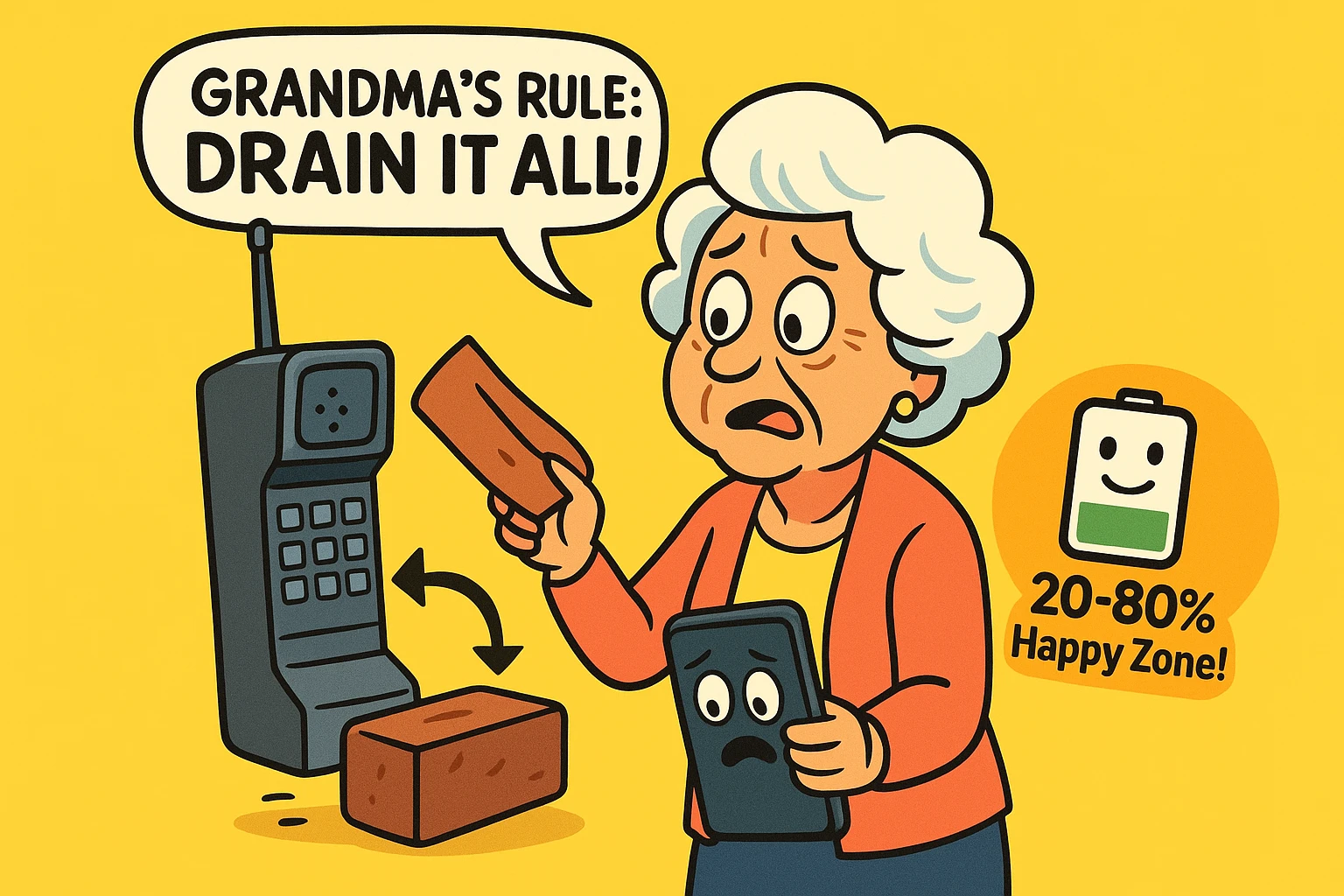
Remember the old cordless phone? The one that weighed as much as a brick and had an antenna you could probably use to contact Mars? If you wanted that phone to work for more than ten minutes, you had to follow The Sacred Rule: run the battery completely, utterly dead before plugging it back in.
Your grandma swore by it. Your dad lectured you on it. It was a piece of technological wisdom passed down through generations, right alongside “give the TV a good whack if the picture gets fuzzy.”
Well, I’m here to tell you that, just like whacking your flat-screen TV, this advice is now officially terrible. Following it today is like putting leeches on your smartphone—it does way more harm than good. The batteries in our modern gadgets are a completely different beast, and they have a new set of rules for a long and happy life.
The old “drain it all” rule existed for a good reason. Early rechargeable batteries, called Nickel-Cadmium (NiCd), suffered from something called the “memory effect.”
Think of it like a fussy cat. If you only ever filled its food bowl halfway, the cat would eventually decide that “halfway” was the new “full” and refuse to eat any more, even if you topped it off. NiCd batteries were similar; if you repeatedly charged them from 50%, they’d “forget” they had that bottom 50% of capacity, effectively shrinking your battery life. Draining them completely was the only way to remind them of their full potential.
But today, virtually every gadget you own—from your iPhone to your laptop to your wireless earbuds—uses a modern Lithium-ion battery. These are the sophisticated, kale-smoothie-drinking cousins of those old batteries. They have no memory effect. Zero. Zilch.
In fact, they absolutely despise being drained to zero. For a lithium-ion battery, hitting 0% is a stressful, traumatic event, like running a marathon and then being told you have to swim the English Channel immediately after. Doing it repeatedly causes permanent damage and shortens its lifespan.
So if draining is bad, what’s good? The answer is simple: think like Goldilocks. Not too empty, not too full.
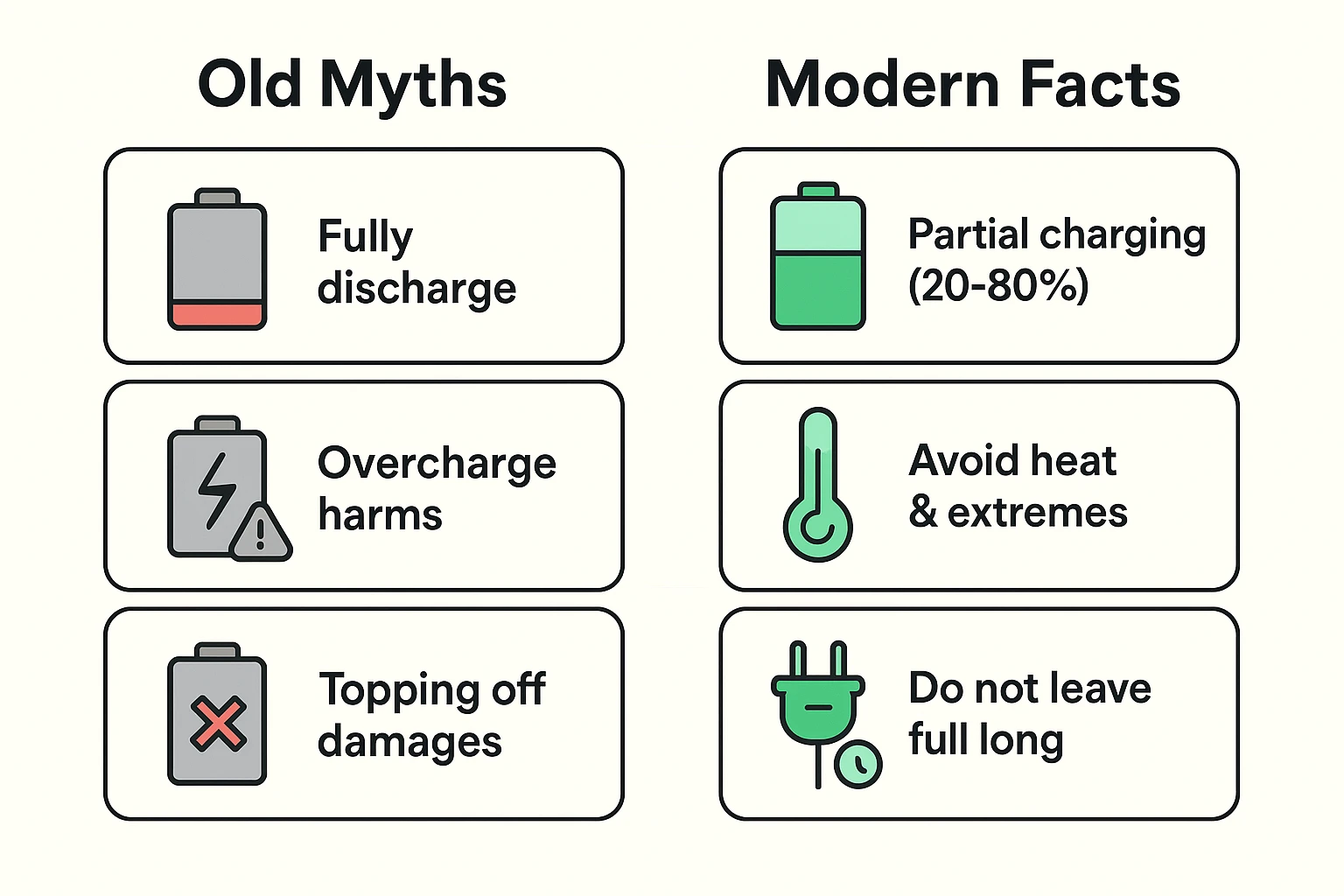
The sweet spot for a modern lithium-ion battery is to stay between 20% and 80% charge.
Think of it like the gas tank in your car. You don’t wait until you’re sputtering on the side of the highway to refuel (that’s 0%). And you don’t try to keep pumping gas after the nozzle clicks off (that’s 100%). You just top it off when it gets a little low.
Keeping your battery in this “happy zone” reduces stress on its internal components. According to the experts at Battery University, a leading source on battery tech, this simple habit can significantly increase the number of charge cycles your battery can handle before it starts to fade. In other words, your phone will last longer.
This doesn’t mean you have to panic if your phone hits 19% or 81%. It’s about the habit, not perfection. Just try to plug it in before it gets critically low and unplug it before it sits at 100% for hours on end.
Besides draining it to zero, lithium-ion batteries have one other mortal enemy: heat.
Heat is to your battery what kryptonite is to Superman. It degrades the battery’s insides faster than anything else. Leaving your phone to bake on a car dashboard in July is a death sentence for its battery.
The same goes for charging. Ever notice your phone gets a little warm when it’s plugged in? That’s normal. But charging it under your pillow or in a thick, unventilated case can trap that heat, cooking the battery and shortening its life.
Simple Rule: If your device feels hot to the touch, get it to a cooler spot.
Ah, the age-old ritual of plugging your phone in at bedtime. Is it bad? Well, it’s not the catastrophe it used to be.
Modern smartphones are smart. They know when they’ve reached 100% and will stop charging to prevent “overcharging.” The real, minor danger isn’t blowing it up; it’s the stress of keeping the battery at that fully-charged 100% state for hours, which, combined with a little heat, isn’t ideal for long-term health.
Many new phones even have an “Optimized Charging” feature that charges to 80% quickly, then cleverly waits to charge the final 20% until just before you usually wake up. If your phone has this, turn it on!
Feeling overwhelmed? Don’t be. Just remember these simple tips:
Try to avoid it. But if it happens occasionally, don’t lose sleep over it. Modern devices have safety circuits to minimize the damage from a single deep discharge. It’s the repeated habit of draining it to 0% that really hurts it.
It’s incredibly unlikely. Your phone and its charger are full of safety features to prevent this. The real concern with leaving it plugged in all the time is the minor stress of keeping the battery at 100%, not a fiery explosion.
It’s always the safest bet. But if you need a replacement, a reputable third-party brand (like Anker or Belkin) is perfectly fine. Just please, avoid those anonymous, no-name chargers you find in a bucket at the gas station. They can be unreliable and unsafe.
These tips can’t reverse the wear and tear that’s already happened, but they will help you squeeze every last drop of life out of your current battery from this point forward. It’s like starting to brush your teeth regularly—it won’t fill existing cavities, but it will definitely help prevent new ones.
It turns out, the best way to care for a modern battery is to treat it like a delicate houseplant: give it a little juice when it’s thirsty but don’t drown it. Keep it out of direct sunlight (heat) and generally don’t ignore it for months on end.
So, the next time someone offers that well-meaning advice to “drain it all the way,” you can smile, thank them, and know that you—and your much happier phone battery—are officially living in the future.