Newsletter Subscribe
Enter your email address below and subscribe to our newsletter

Enter your email address below and subscribe to our newsletter
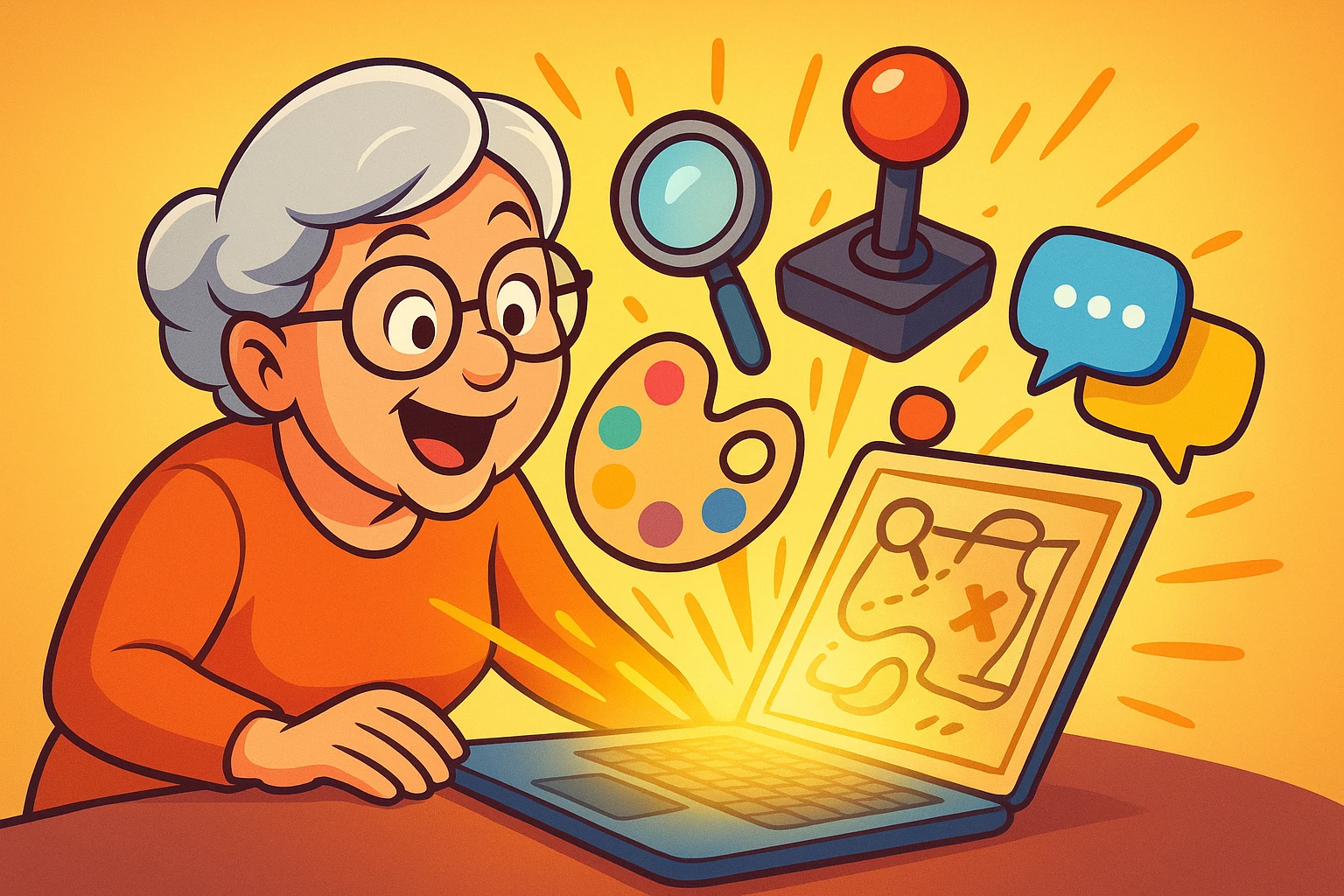
Remember retirement? That golden era you spent forty years dreaming about? You probably pictured yourself sipping margaritas on a pristine beach, finally writing that novel, or perhaps mastering the art of French cooking.
But the reality? You’ve reorganized the linen closet three times, the cat is starting to look at you with genuine concern, and you’ve watched enough cable news to believe that the world is ending next Tuesday at 2:30 PM.
Here is the good news: The computer—that glowing rectangle you mostly use to check the weather and delete emails from Nigerian princes—is actually a gateway to doing cool stuff. We aren’t talking about “surfing the web” (a phrase that went out of style along with dial-up tones). We are talking about genuine, brain-expanding, soul-satisfying hobbies.
Whether you want to trace your family tree back to Charlemagne or learn how to keep a houseplant alive for more than a week, the digital world is your oyster. And don’t worry—you don’t need a degree in computer science to open this oyster. You just need a little curiosity and a guide to show you which buttons not to press.
Before we start clicking randomly, we need a plan. Psychologists and hobby experts (yes, that’s a real job) often refer to the “4 Cs” of a balanced leisure life. Think of this as a balanced diet for your brain so you don’t just consume digital calories (like cat videos) all day.
Most people get stuck on “Consume”—passively reading news or watching videos. But the real magic happens when you mix them. We are going to look at platforms that help you do exactly that, without the headache.
The internet is like a grocery store with 400 billion aisles. It’s overwhelming. If you type “learn gardening” into Google, you’ll get everything from scientific botany papers to a teenager on TikTok yelling about dirt.
When evaluating where to spend your time (and potentially your money), you need to look at three things: Usability (Can I read the font?), Community (Are the people nice?), and Cost (Is it free, or do they want my firstborn?).
If you want to dig into the past or the soil, specialized communities are better than general social media.
“Kanban” sounds like a villain from a sci-fi movie, but it’s actually a brilliant Japanese organization method. It’s essentially digital sticky notes.
If you are planning a garden, writing a memoir, or organizing a family reunion, you might feel scattered. Digital tools like Trello or specialized Kanban apps help you visualize the work.
Maybe you don’t just want a hobby. Maybe you want a piece of paper that says, “I know what I’m doing.”
There is a massive difference between watching a YouTube video on safety and actually getting certified. For seniors looking to volunteer, consult, or just prove a point, looking for Trust Signals is vital.
For example, if you are looking into safety training (like WHMIS) or safe environment training (like Virtus online training classes), you need to ensure the provider is accredited.
We have all been there. You join an online book club. The host asks, “So, what did everyone think?” Silence. Ten people stare at their webcams. Someone’s dog barks. It’s painful.
If you are joining or leading a group, the secret ingredient is the Icebreaker.Research from Slido and Mural.co shows that structured interaction drives engagement. It’s not about silly games; it’s about giving permission to speak.
Here is where we get a little futuristic, but stay with me. Artificial Intelligence (AI) isn’t just for writing college essays or generating weird pictures of cats in spacesuits. It can be a profound tool for seniors to capture their legacy.
For example, if you have always wanted to write your life story but get writer’s block staring at a blank page, there are tools specifically designed for this. You can use platforms like memoirmaker.ai to act as a digital interviewer. It asks you questions about your past, you answer naturally, and it helps structure those memories into a narrative. It removes the “I’m not a writer” barrier and lets you focus on the “I have a story to tell” part.
You have read the data. You have seen the options. Now, let’s get you off the starting line before you get distracted by a coupon email.
Generally, yes, if you stick to reputable platforms. However, never give out your financial information to “unlock” a prize in a gardening group. If a stranger asks for your mother’s maiden name, tell them it was “Godzilla” and block them.
For 90% of digital hobbies (writing, genealogy, forums), your current computer is fine. If you want to do high-end video editing or 3D design, you might need an upgrade. But for most things? If it turns on, you’re good.
Then you are doing it right! The joy of a hobby is being terrible at something and not caring because you’re having fun. No one is grading you.
Technology often feels like a young person’s game, designed by people in hoodies who have never had to squint to read a menu. But when you strip away the jargon, these tools are just new ways to do the things humans have always loved: learning, making, and connecting.
So, go ahead. Sign up for that class. download that Kanban board. Write that memoir. The internet is waiting, and it’s much more interesting than the linen closet.