Newsletter Subscribe
Enter your email address below and subscribe to our newsletter

Enter your email address below and subscribe to our newsletter

Learn easy steps to manage your digital wallet and build a tech budget that fits your lifestyle and keeps your money secure.
Have you ever looked at your bank statement and discovered a mysterious charge from something called “VortexFlix” or “GamerGoo Premium”? You have no memory of signing up, but there it is, siphoning $9.99 from your account every month, probably as a fee for a service that lets teenagers watch other teenagers play video games.
In the old days, a budget was simple. You had cash for groceries, a check for the phone bill, and maybe a little extra tucked away in the cookie jar. Today, our money seems to evaporate into a digital fog of automatic renewals, app subscriptions, and “one-click” purchases. It’s enough to make you want to go back to trading chickens for goods and services.
But fear not! You don’t need an accounting degree or a supercomputer to get a handle on your tech spending. All you need is a plan. Think of this as a gentle workout for your digital wallet—a few simple exercises to get your finances in shape, strengthen your control, and make sure your money is going where you want it to go.
Before we start budgeting, let’s demystify the star of our show: the digital wallet.
If you have a smartphone, you likely already have one. It’s an app, like Apple Pay or Google Wallet, that securely stores digital versions of your credit and debit cards. Instead of pulling a physical card out of your purse or wallet, you just tap your phone on the payment terminal at the store.
Think of it as your regular leather wallet that went to a fancy tech university. It holds your cards, but it’s protected by a high-tech lock (like your fingerprint or face ID) and it’s smart enough to keep your actual card numbers hidden from merchants. It’s convenient, secure, and surprisingly easy to use once you get the hang of it.
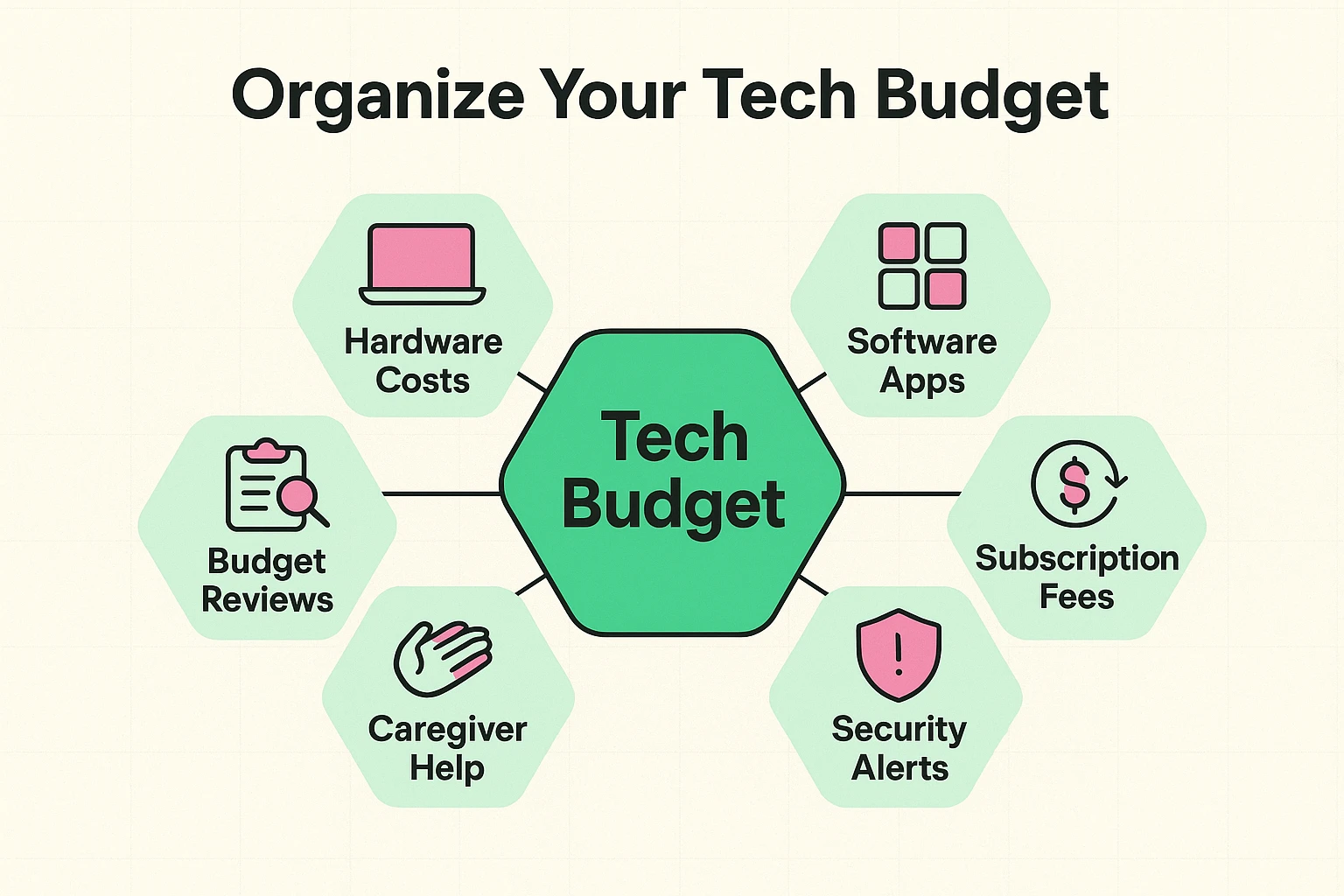
Here’s a modern truth: technology costs more than just the price of a new phone or computer. The real money drain comes from the slow, steady drip of recurring fees. Your internet bill, your cell phone plan, that streaming service you only watch for one show—it all adds up.
For those on a fixed income, these little drips can turn into a flood. A tech budget isn’t about depriving yourself of the tools that keep you connected. It’s about empowerment. It’s you, telling your money exactly where to go, instead of wondering where it went. It’s the difference between being the captain of your financial ship and being a passenger on a cruise organized by Big Tech.
Ready to whip your spending into shape? It’s easier than you think. Just follow these five simple steps. No heavy lifting required, we promise.
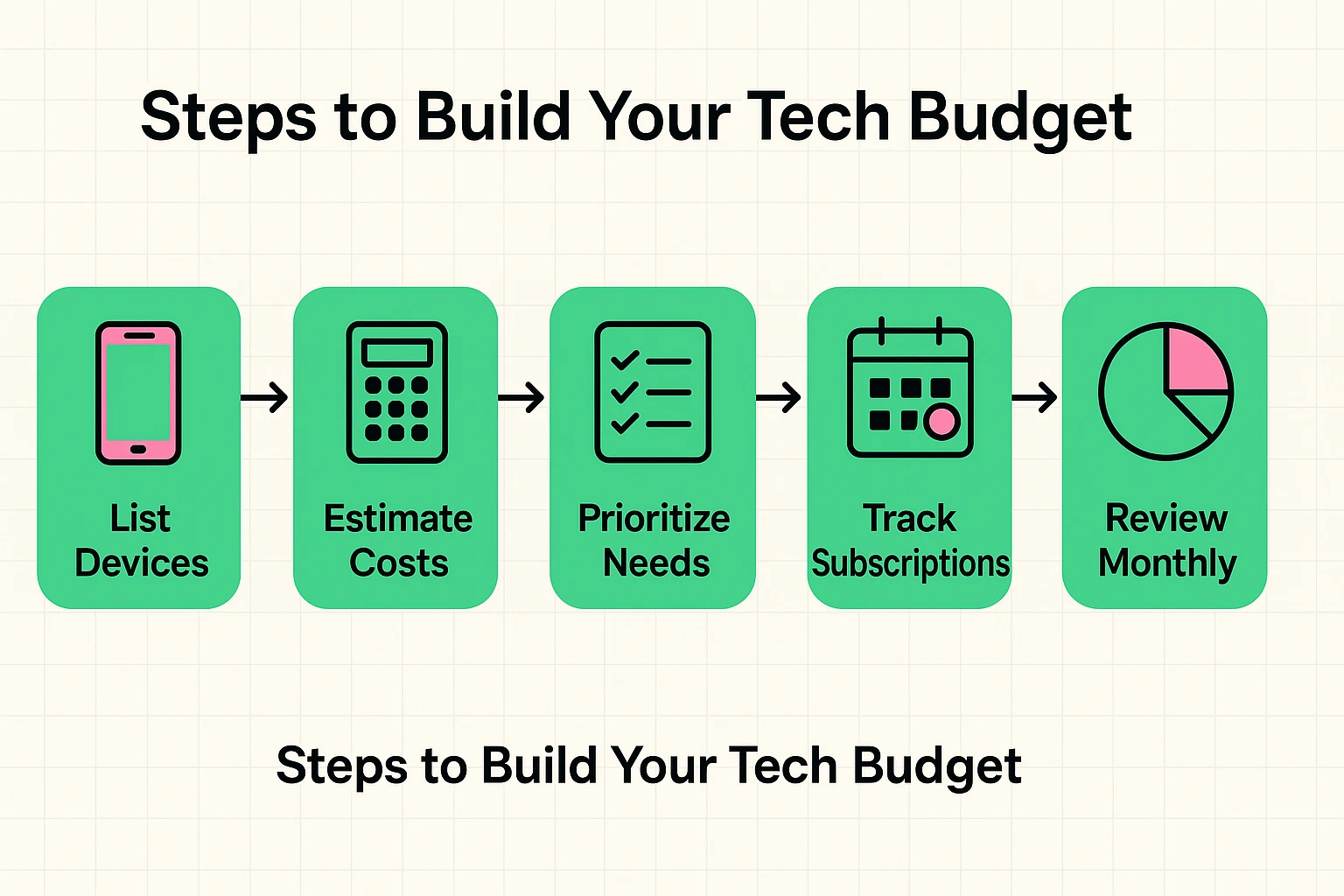
Grab a piece of paper and play detective. Write down every single tech-related thing you pay for.
Now, look at your list with the steely gaze of a seasoned bargain hunter. Your internet service is probably a “need.” But do you need four different streaming services, especially when you only watch reruns of The Golden Girls on one of them? Be honest. This isn’t about sacrifice; it’s about being intentional.
Look at your monthly income and decide on a realistic amount you can spend on technology. This number is your North Star. It helps you decide whether that shiny new gadget or tempting app subscription fits into your financial life.
This is where your digital wallet becomes your trusty sidekick. When you use it for purchases, it creates a neat, tidy list of your transactions right in the app. No more digging for crumpled receipts! You can see exactly where your money is going in real-time.
A budget isn’t a “set it and forget it” crockpot recipe. At the end of each month, take five minutes to look at your spending. Did you stick to your limit? Did any surprise costs pop up? Adjust your plan as needed. You’re in charge here.
Your digital wallet and your tech budget are a dynamic duo, like Batman and Robin or a comfortable pair of slippers. The budget sets the rules, and the digital wallet helps you follow them.
Many modern smartphones have a built-in feature to manage your app subscriptions. You can see everything you’re paying for in one place and cancel unwanted services with a single tap. It’s like having a personal financial assistant who works for free.
As you get comfortable, you’ll notice different types of digital payment options. You have the big players like Apple Pay and Google Wallet, and then there are newer services that banks are starting to offer. It’s not uncommon to get an email from your bank inviting you to use a new system, like the paze payment service, which tries to simplify online checkout. The key is to stick with what works for you and your budget.
Yes, it’s actually safer than using your physical card. When you pay, the digital wallet sends a unique, one-time code (a “token”) to the merchant instead of your actual card number. So, even if the store’s system gets hacked, your financial information stays safe and sound.
Losing your phone is a pain, but your money is still safe. Because your digital wallet is protected by your face, fingerprint, or PIN, no one can access it. Plus, you can remotely lock or even erase your phone’s data for extra peace of mind—something you definitely can’t do with a lost leather wallet.
Nope! The apps themselves, like Apple Pay and Google Wallet, are free to use. Your bank and credit card companies are already on board, so there are no extra fees for the convenience.
Take one small step. If you have an iPhone, open the “Wallet” app that’s already on it. If you have an Android, download “Google Wallet” from the Play Store. Follow the on-screen instructions to add just one card. That’s it! You don’t have to use it right away. Just setting it up is a huge victory.
See? That wasn’t so bad. Creating a tech budget isn’t about complicated spreadsheets or stressful math. It’s about taking a clear look at your spending and making conscious choices that put you in the driver’s seat. Your digital wallet isn’t some scary, complicated piece of technology; it’s a tool waiting to make your financial life a little bit easier and a lot more secure.
You’ve taken the first step just by reading this. Now, go grab that piece of paper and start your tech roundup. You’ve got this.