Newsletter Subscribe
Enter your email address below and subscribe to our newsletter

Enter your email address below and subscribe to our newsletter


Have you ever found the perfect vacation spot online? The pictures show pristine beaches, the hotel reviews are glowing, and a banner flashes a “90% OFF, BOOK NOW!” deal that seems too good to be true. It feels like you’ve hit the travel jackpot. You’re already mentally packing your bags and arguing with your spouse about who gets the window seat.
But then, a tiny voice in the back of your head, the same one that reminds you not to eat a whole pint of ice cream for dinner, pipes up. Is this for real? Are all 347 five-star reviews for “Bob’s Beachfront Bungalow & Bait Shop” written by actual, happy vacationers? Or were they written by Bob, his cousin Eddie, and a clever computer program in a basement somewhere?
In the wild world of online booking, telling the difference between a genuine gem and a clever fake can feel like a full-time detective job. The good news is, you don’t have to do it alone. You’ve now got a secret weapon on your side when looking for travel deals: Artificial Intelligence, or AI. And don’t worry, it’s not nearly as complicated as it sounds.
Think of a fake review like hiring a stranger to rave about your questionable Jell-O salad at the family potluck. Someone is getting paid to say something is wonderful when it’s… well, not. Online, companies might use these fake reviews to boost their ratings, while scammers use fake deals to get your credit card information.
This is where AI comes in. Forget about scary sci-fi robots; think of AI as a friendly, incredibly observant detective who can read a million reviews in the time it takes you to find your reading glasses. It’s trained to spot the subtle clues and weird patterns that human eyes might miss, helping you separate the truth from the tourist traps.
This matters because your peace of mind—and your wallet—are on the line. A dream vacation can quickly turn into a nightmare if the “charming seaside cottage” is actually a shed with a view of a dumpster. AI is simply a new tool in our toolbox to make sure that doesn’t happen.
You don’t need a deerstalker hat and a magnifying glass to spot a phoney, but it helps to know what you’re looking for. Both you and your new AI assistant are on the hunt for things that just don’t feel right.
Before you let the AI do the heavy lifting, you can often sniff out a fake with good old-fashioned common sense. Look for these red flags:
So, how does the AI find these fakes? It uses a fancy trick called Natural Language Processing (NLP). In plain English, that means we’ve taught computers to read and understand language like a person does, only much, much faster.
Your AI detective scans for things like:
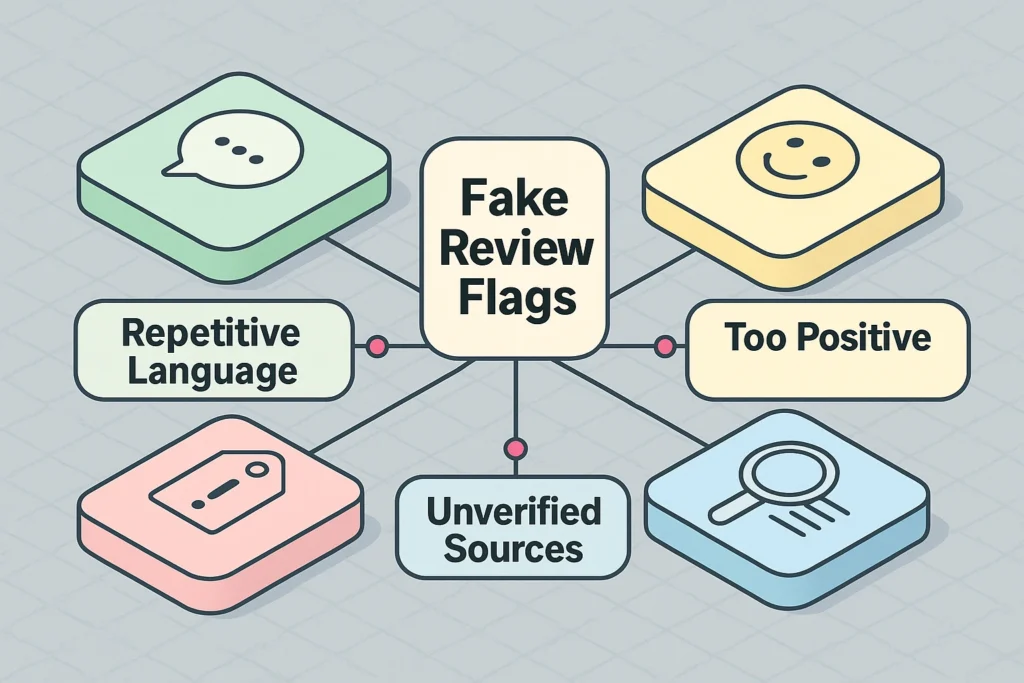
The AI isn’t magic; it’s just a master pattern-spotter. It connects the dots between thousands of data points to raise a flag that says, “Hey, you might want to look closer at this one.”
Knowing the theory is great, but how do you actually use this stuff? You’re probably already using AI without even realizing it. Many major travel sites like TripAdvisor and Google are now using AI to summarize reviews for you, giving you a quick overview of what real guests are saying.
For deals that seem fishy, your first step should be to go directly to the source. If you see a pop-up ad for a ridiculously cheap flight on “SuperFly Airlines,” don’t click the ad. Open a new window and find the airline’s official page yourself. A crucial step is to check their website to see if the deal is listed there. If it’s not, you just dodged a scam.
There are also browser extensions and websites designed to analyze reviews and website legitimacy. Think of them as a little helper that lives in your web browser and gives you a thumbs-up or thumbs-down on a site’s trustworthiness.
Feeling overwhelmed? Don’t be. Booking travel online safely just comes down to a few simple, repeatable steps.
It’s any review posted by someone who hasn’t actually used the product or service, or one that is intentionally misleading. They are created to either artificially boost or damage a business’s reputation.
AI can’t be 100% certain, but it’s an expert at playing the odds. By analyzing the language, timing, reviewer’s history, and comparing it to millions of other reviews, it can make a highly educated guess and flag suspicious content for you to review.
Absolutely not! Many businesses earn their great reviews. The trick is to look for patterns. One glowing review is nice; 500 of them that all sound the same and appeared overnight is a big red flag.
Most websites have a “report” button next to reviews. Use it! By flagging suspicious content, you’re not just protecting yourself—you’re helping the entire community of travelers.
Navigating the online world can feel like a chore, but it doesn’t have to be scary. Technology like AI is here to act as your co-pilot, helping you spot trouble long before it starts. By combining these new tools with your own life experience and a healthy dose of skepticism, you’re more than equipped to handle it.
So go on, plan that trip. Book that cruise. Visit that bizarre roadside museum you’ve always been curious about. The world is waiting, and now you have the tools to explore it safely and smartly.