Newsletter Subscribe
Enter your email address below and subscribe to our newsletter

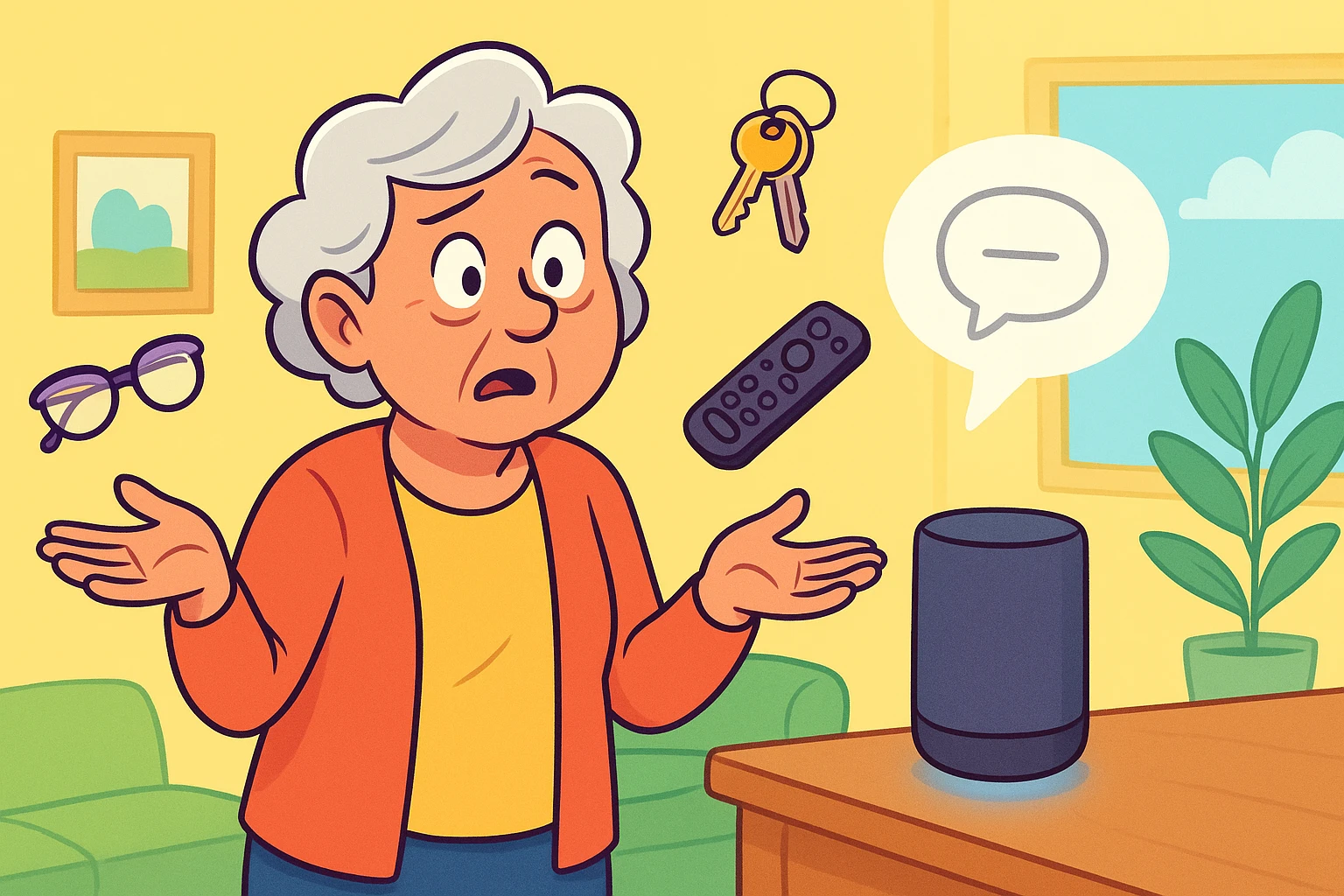
Let me paint a familiar picture. You walk purposefully into the kitchen with a clear, pressing mission. You open the refrigerator door, stare deeply into the abyss of condiments, and realize… you have absolutely no idea why you are there. Are you making a sandwich? Investigating the expiration date on the mustard? Were you simply seeking the cool, refreshing breeze of the crisper drawer?
If your brain occasionally feels like a web browser with seventy-three tabs open and the music playing from an unknown source, you are not alone. These “Oops” moments are a universal part of getting older, right alongside mystery aches and a sudden, passionate appreciation for comfortable shoes. But here is the good news: you don’t have to just accept the frustration of a misplaced thought or a forgotten name.
Enter the world of Artificial Intelligence. Now, before you roll your eyes and assume I’m telling you to invite a terrifying sci-fi robot into your living room, hear me out. We aren’t talking about the kind of AI that wants to take over the world. We are talking about gentle, friendly “Digital Sidekicks” designed to act as your personal, judgment-free memory bank.
Historically, technology has been something we had to poke, prod, and operate. If you wanted an alarm, you set a loud, obnoxious buzzer that would eventually yell at you. It was a purely reactive relationship. You had to remember to tell the machine to remind you to remember something. Exhausting, right?
The magic of modern AI is “proactivity.” Instead of a dumb, blaring beep at 9:00 AM that leaves you wondering, “Wait, is this for the oven or my blood pressure medication?” an AI assistant provides context. It chimes in with a gentle, “Good morning! You usually take your blue pill with your morning coffee, don’t forget!”
This shifts the power dynamic entirely. You aren’t constantly fighting with a gadget; you have a partner looking out for you. It’s like having a highly efficient, invisible butler who never asks for a raise and doesn’t judge you when you watch daytime soap operas.
If you’ve ever watched television for more than ten minutes, you’ve seen commercials for memory supplements. Usually, they feature a distinguished-looking gentleman confidently remembering a long list of groceries after swallowing a mysterious capsule. But let’s be real: putting all your faith in a capsule made of crushed jellyfish and ginkgo biloba is a bit of a gamble.
The National Institute on Aging (NIA) and various medical studies often categorize cognitive health into two buckets: medical interventions and daily life aids. While supplements exist in a highly unregulated gray area, Cognitive Assistive Technology (CAT) has hard, proven data backing it up.
Instead of hoping a vitamin might help you remember where you put your keys in a month, a digital brain-training game or an AI routine provides immediate, measurable support. One offers a vague promise of “mental clarity,” while the other literally tells you, “Your keys are on the kitchen counter, Barbara.”
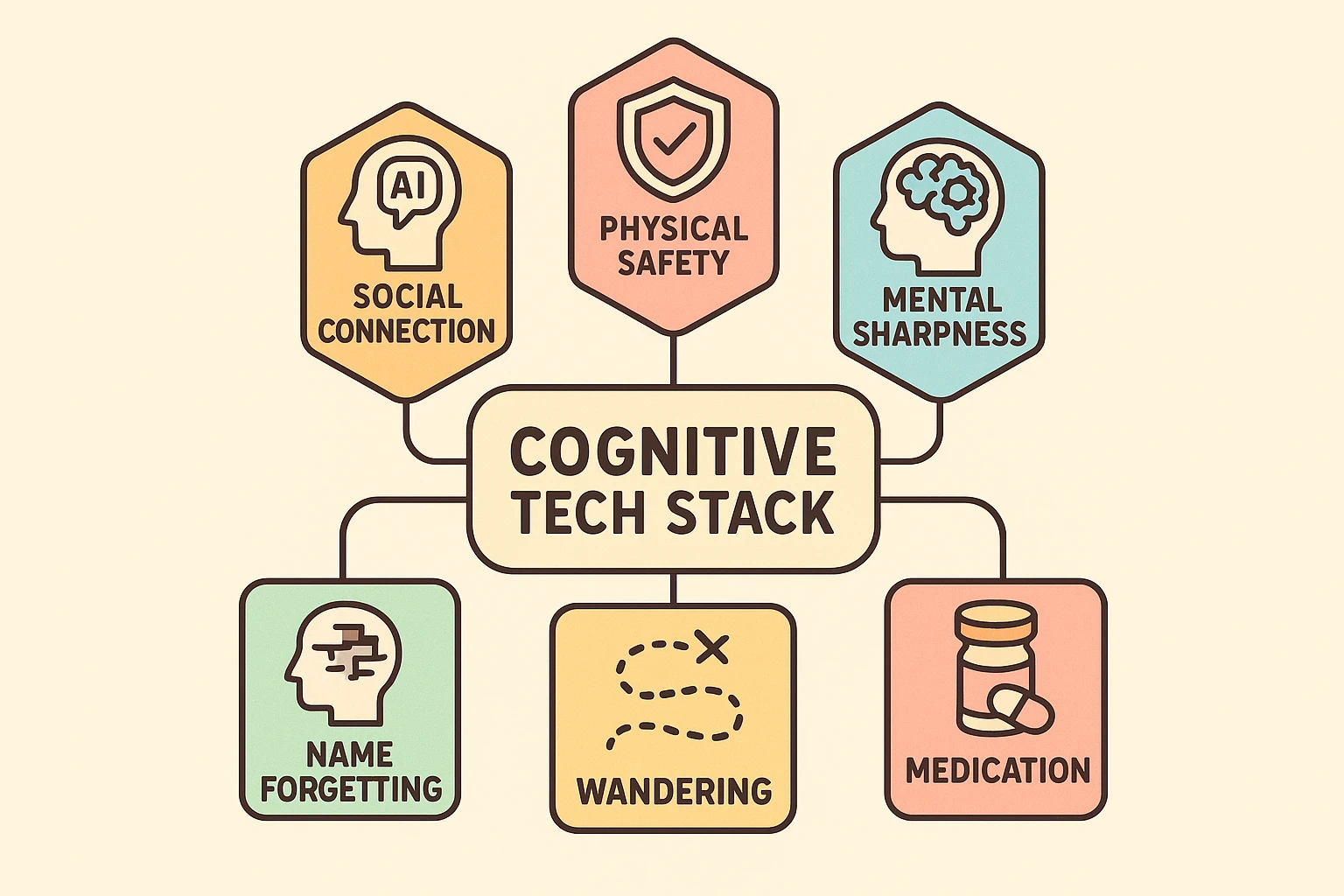
When we talk about an “AI Cognitive Toolkit,” we are really talking about three specific areas where technology can step up and make your life significantly easier.
Loneliness is terrible for cognitive health—it’s essentially rust for the brain. AI companions, like the highly praised ElliQ, are designed specifically for older adults to spark proactive conversations. They don’t just wait for you to ask a question; they might suggest playing a trivia game, tell a joke, or ask about your day. In recent studies by groups like MemoryLane, consistent use of AI companionship showed an astonishing 80% reduction in feelings of loneliness.
Worrying about a fall can keep you from enjoying your independence. Modern smart wearables have evolved way past counting how many steps you take to the mailbox. Companies like CarePredict use pattern recognition to analyze your gait (how you walk) and can detect subtle changes before a fall even happens, leading to a massive 69% reduction in actual falls. MIT’s Media Lab has even tested wearables that offer “just-in-time” memory prompts to prevent you from getting turned around or lost on a walk.
Crossword puzzles are great, but AI-powered brain training adapts to your specific skill level in real-time. If you are struggling with a particular type of memory puzzle, the AI gently adjusts the difficulty so you stay engaged without getting frustrated. It’s a personalized mental workout that helps build new neural pathways while you’re just sitting on the couch having fun.
Let’s address the elephant in the room. You want a digital sidekick, not a digital spy. The idea of a machine “learning your routine” sounds incredibly helpful right up until you wonder who else it’s sharing that routine with. Fortunately, you don’t have to choose between convenience and privacy.
Many modern AI tools use something called “local processing.” In plain English, this means the brain of the operation lives entirely inside the device on your kitchen counter, not on some massive server in Silicon Valley. To ensure your tech is respecting your boundaries, follow this Senior Privacy Bill of Rights checklist:
You don’t need to spend thousands of dollars on a high-end robot to get started. You can transform a basic smart home into a cognitive home for less than the cost of a fancy dinner.
Start with a basic smart speaker like an Amazon Echo or Google Nest Mini (usually under $50). From there, you can connect specialized, senior-focused calendar apps that allow your adult children to remotely add your doctor’s appointments to your schedule. The speaker will then announce them to you in the living room. It’s a cheap, brilliant way to dip your toes into cognitive tech without feeling overwhelmed.
Absolutely not. Think of AI as the ultimate assistant to your caregiver. It handles the repetitive, mundane tasks—like reminding you to drink water or take medication—so that when you see your human loved ones or caregivers, you can focus on meaningful connection, not logistics.
The beauty of modern AI is that you don’t need to know how to type, code, or navigate complex menus. Many of these tools are entirely voice-activated. If you know how to talk out loud, you already have the necessary skills to use them.
Tech companies love big, intimidating words. “Machine Learning” is just fancy talk for “Pattern Recognition” (the device noticing you always wake up at 7 AM). “Generative AI” is basically a “Digital Secretary” that can write a grocery list or summarize a news article for you on command.
Embracing cognitive support tools isn’t about admitting defeat to aging; it’s about using the best tools available to preserve your independence and keep your brain sharp. You wouldn’t refuse to wear glasses if your vision got a little blurry, so why refuse a digital sidekick when your memory occasionally blips?
Start small. Pick one area of your day that frustrates you—whether it’s managing your medication schedule or just wishing you had someone to play daily trivia with—and test out a single piece of tech to help. You might just find that your new digital companion is the best roommate you’ve ever had.