Newsletter Subscribe
Enter your email address below and subscribe to our newsletter

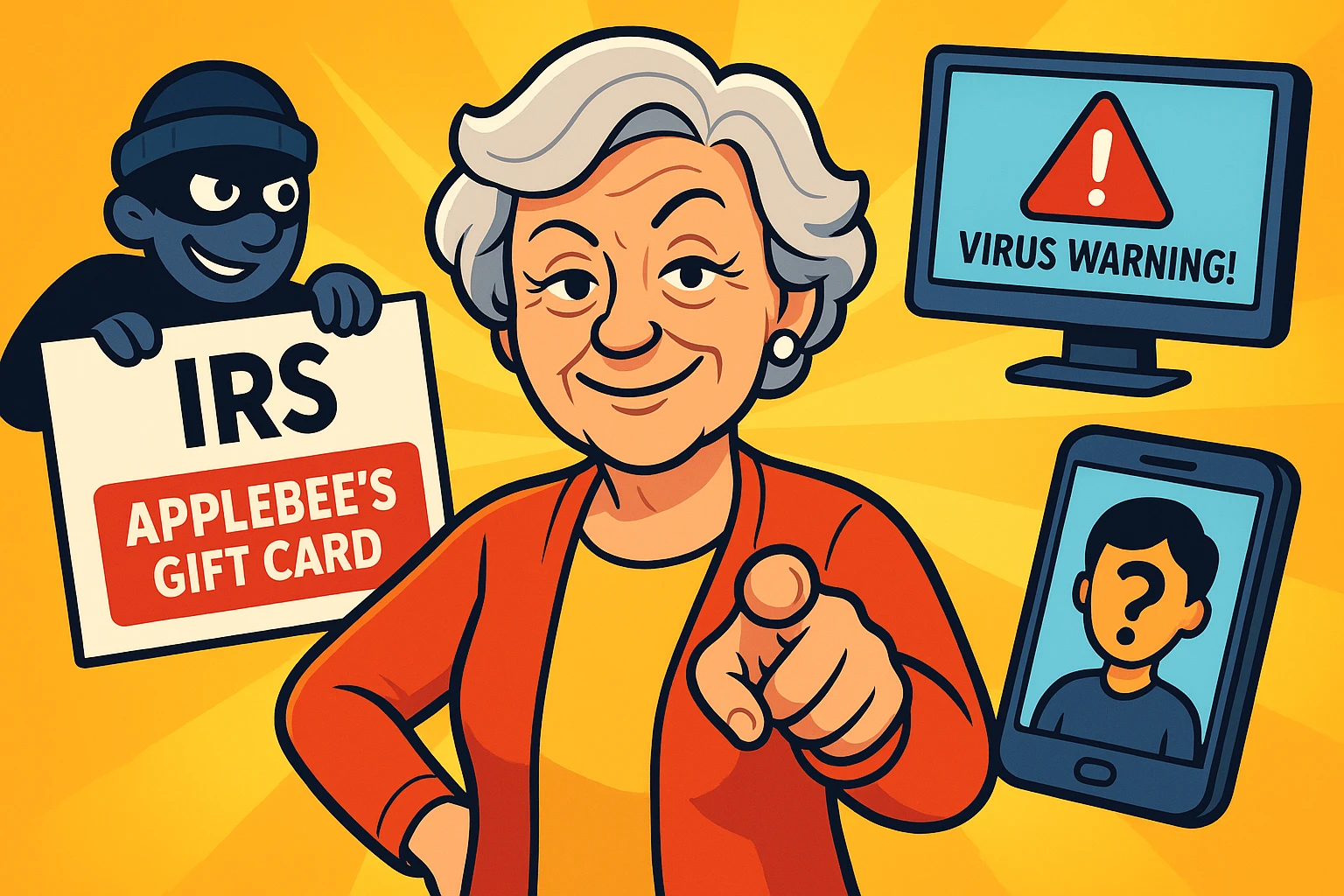
You open your email, and there it is: a very official-looking message from the “IRS.” Apparently, you owe $4,000 in back taxes, and if you don’t pay up in the next twenty minutes, a SWAT team is going to rappel through your living room skylight. The catch? The government wants you to pay this debt using Applebee’s gift cards.
Unless the federal government is running a massive promotion on half-priced appetizers, you are looking at a scam. It sounds ridiculous when you read it out loud, but in the heat of the moment, panic takes the wheel. Your heart races, your palms sweat, and logic temporarily leaves the building.
If you’ve ever fallen for one of these, or even just clicked a link you shouldn’t have, take a deep breath. You are not alone, and you have absolutely nothing to be embarrassed about.
According to the FBI’s 2025 Internet Crime Report, people aged 60 and over reported more than $7.7 billion in losses to internet crimes and scams in 2025 alone. Scammers treat fraud like a 9-to-5 job, complete with scripts, quotas, and morning coffee breaks.
The good news? You don’t need a degree in computer science to outsmart them. You just need to know their playbook. Today, we’re going to turn you into a human scam-detector, armed with the exact red flags you need to spot a con artist from a mile away.
Scammers are incredibly unoriginal. They tend to rely on the same handful of dirty tricks because, unfortunately, they work. By learning to recognize these classic routines, you can stop them before they even start.
Phishing is when a scammer sends an email pretending to be a company you trust, like your bank, Amazon, or Netflix. The email usually claims there’s a “problem with your account” and provides a handy link for you to click and log in. Once you type in your password, the scammer scoops it up and goes shopping.
Never click links in unexpected emails. If you’re worried there might actually be an issue with your account, open a fresh browser window and independently check the company’s website or app. That lets you investigate without trusting anything in the email.
You’re happily reading an article about gardening when suddenly, your screen locks up. Sirens blare from your speakers, and a giant red box appears saying your computer is infected with a fatal virus. The pop-up urges you to call a toll-free “Microsoft Support” number immediately.
Here is a comforting truth: Microsoft will not display a browser pop-up with a phone number telling you to call for help. These pop-ups are usually scary internet billboards, not proof that your computer is infected.
Never call the number, and never let the caller remotely access your computer. Try closing the browser. If it refuses to close, restart the computer. If you downloaded or installed anything, run a security scan afterward.
You get a panicked message from your “grandson” saying he’s been arrested in Mexico, or he was in a car accident and needs bail money immediately. He will also beg you not to tell his parents because he’s so embarrassed. Sometimes, scammers even use AI voice cloning to make the caller sound exactly like your real grandchild.
This is a classic emotional hijack. Before you empty your savings, hang up the phone or ignore the message. Call your grandchild or their parents directly on a number you already have saved in your contacts. You will almost always find them sitting safely on their couch playing video games.
You meet someone lovely online. They are charming, attentive, and incredibly good-looking (usually because they stole a male model’s photo). The only problem? They are always stuck overseas—usually on an oil rig or in the military—and they can’t video chat. Eventually, they will have a terrible emergency and ask you to send money.
Romance scammers are playing the long game, sometimes spending months building your trust. The golden rule here is simple: if you have never met this person in real life, do not send them a dime. True love doesn’t require a wire transfer.
Someone you’ve never met slides into your messages with the deal of a lifetime. It can’t lose.
Maybe they’ve got a genius uncle on Wall Street, or a secret crypto formula, or some clever AI that supposedly makes money while you sleep. Whatever it is, the pitch is always the same: everybody wins, and you’d be silly to sit this one out.
They point you to a slick website or app, and sure enough, your account looks like it’s growing every day. Then comes the friendly touch. They let you pull out a small amount, just to show you it all works.
See? Money in your pocket. Now you trust them.
But when you go to take out the rest, a problem appears out of nowhere. Suddenly there are taxes to pay. Or a processing fee. Or a “security deposit” you have to send before they’ll release your own money.
Here’s what’s actually happening. The profits on the screen were never there. They’re numbers on a page, about as real as a high score in a video game. The money you sent is very real, and it’s already gone.
A few rules that will save you a lot of heartache:
A real investment will still be there tomorrow. A scammer can’t afford to give you that long, because they need you to say yes before your common sense catches up.
Scammers love to pretend they are from the IRS, Medicare, or Social Security. They will threaten you with arrest, suspended benefits, or massive fines if you don’t pay up immediately. They rely on the fact that nobody wants to mess with the federal government.
Real government agencies are often slow and boring, but they do sometimes call, text, or email. What they do not do is threaten immediate arrest or demand payment by gift card or cryptocurrency. The IRS generally makes first contact about unpaid taxes through a letter or notice in the mail.
If someone claims to be an agent and asks for payment via cryptocurrency or gift cards, you are talking to a criminal.
Congratulations! You just won $5 million and a brand-new Mercedes in a lottery you don’t even remember entering! The only catch is that you need to pay a small “processing fee” or “taxes” upfront to release your winnings.
If you have to pay money to receive your prize, you didn’t win anything. Legitimate sweepstakes do not require you to send money for taxes, processing fees, or shipping before they release a prize.
You may owe taxes on real winnings later, but that is handled through normal tax reporting—not by sending money to the person who called you.
These aren’t exactly people calling you, but rather sneaky design tricks baked into websites to confuse you. It’s the microscopic “X” on a pop-up ad that actually clicks the ad instead of closing it. It’s the pre-checked box that secretly subscribes you to a $40/month newsletter.
Dark patterns are designed to make you click things you don’t want to click. To beat them, slow down. Read the fine print before hitting “Submit,” and watch out for giant, brightly colored buttons that try to rush your decision.
So, you’ve spotted a scam, or maybe you’re currently staring at an email that is giving you a bad feeling. How do you handle it without making things worse? Think of this as your digital self-defense protocol.
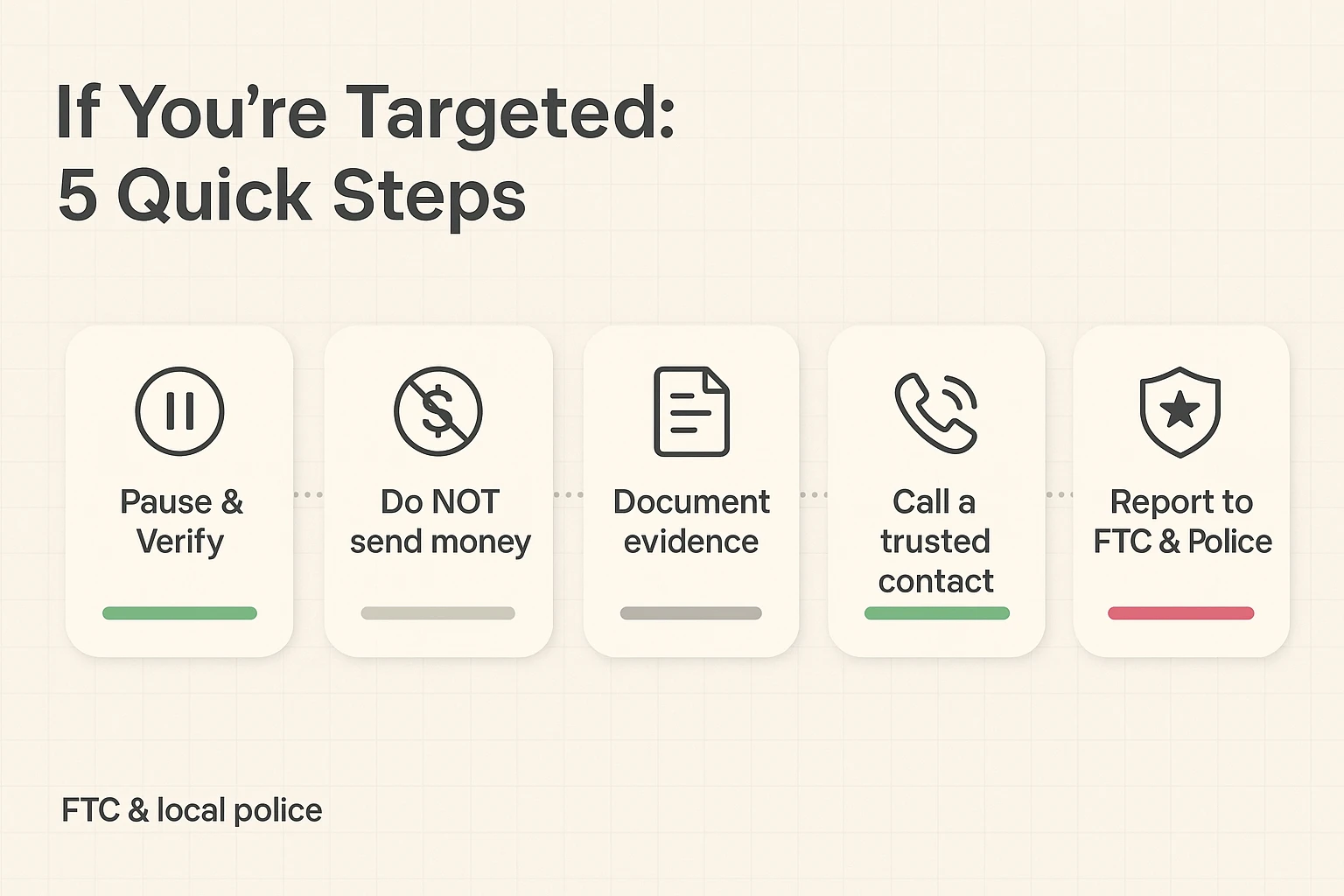
Step 1: Hit the Brakes. Scammers rely on urgency. They want you panicking and moving too fast to think straight. If anyone is demanding immediate payment or threatening consequences, stop whatever you are doing. Take a sip of water. Give yourself five minutes to think.
Step 2: Verify Independently. Never use the phone numbers or links provided in a suspicious message. If someone says they are from your bank, flip your debit card over and call the number on the back. Talk to a real, verifiable human.
Step 3: Get a Second Opinion. Scammers will often tell you to keep the situation a secret. That’s because they know your friends and family will instantly spot the fraud. Call a trusted friend, or run the suspicious message through Bitdefender Scamio for a high-tech second opinion. Just remember that no automated tool should replace contacting the company or agency directly.
Step 4: Shut the Door. Delete the email, block the sender, and close the browser window. You do not need to be polite to scammers. You do not owe them an explanation. Just digitally walk away.
If you fell for a scam, the absolute worst thing you can do is keep it to yourself out of shame. The U.S. Senate Special Committee on Aging reports that embarrassment leads to massive underreporting, which basically gives scammers a free pass to keep stealing. You aren’t stupid; you were manipulated by professionals.
If you’ve lost money, immediately contact whichever company handled the payment—your bank, card issuer, payment app, wire service, gift card company, or cryptocurrency platform—and ask whether the payment can be stopped or reversed. If you handed over sensitive personal information, visit IdentityTheft.gov for a recovery plan and consider placing a credit freeze.
Do this immediately, as time is of the essence when trying to recover stolen funds.
Next, report the crime to the authorities. You should file a report with the Federal Trade Commission (FTC) at ReportFraud.ftc.gov, and contact the FBI’s Internet Crime Complaint Center (IC3.gov).
These agencies use reports to spot trends, connect related complaints, warn the public, and build cases against scammers. By speaking up, you are actively protecting other people from falling into the same trap.
If someone contacts you unexpectedly and insists that the only way to pay a debt, fine, emergency, or prize fee is with gift cards, cryptocurrency, a wire transfer, or a payment app, treat it as a scam. A request to pay a bill or fine with gift cards is always a scam. Legitimate businesses and governments do not accept iTunes gift cards as legal tender.
First, don’t panic. A click does not automatically mean your device is infected, but don’t assume it was harmless. Close the page, check whether anything downloaded, update your security software, and run a scan. If you entered a password, change it immediately—plus anywhere else you reused it—and turn on two-factor authentication. Disconnect from the internet only if you opened a suspicious file or the device starts behaving strangely.
It’s a mix of factors. Scammers target people of every age. Older adults may have more accumulated savings, and they are hit especially hard by tech-support, prize, romance, and government-impersonation scams. But FTC data shows that older adults report losing money to fraud at a lower rate than younger adults overall. When they do lose money, however, the losses tend to be larger.
Navigating the internet today can sometimes feel like walking through a carnival funhouse where everyone is trying to pick your pocket. But by learning these basic recognition patterns, you take all the power away from the criminals.
Remember: you are in control of your devices, your money, and your personal information. If something feels off, it probably is. Keep your guard up, keep your sense of humor intact, and the next time the “IRS” asks you for Applebee’s gift cards, you’ll know exactly where to tell them to go.