Newsletter Subscribe
Enter your email address below and subscribe to our newsletter

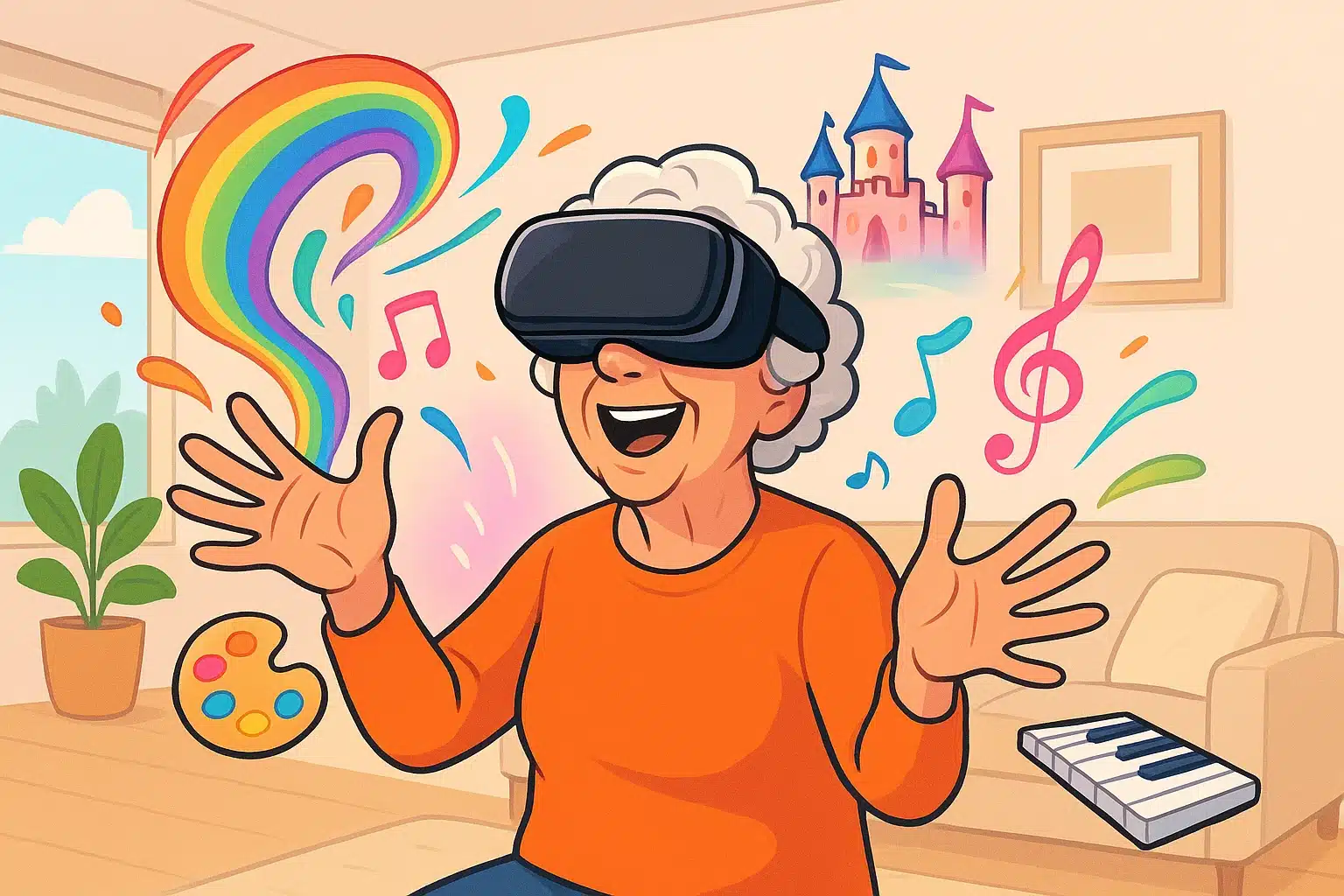
Remember the last time you decided to pick up a creative hobby? Maybe you bought a lovely set of oil paints, only to discover that “burnt sienna” looks suspiciously like something the dog left on the rug. Or perhaps you tried sculpting with clay, turning your kitchen into a dust bowl that took three days and a minor miracle to clean. Traditional hobbies are wonderful, but they come with physical clutter, expensive supplies, and the very real danger of accidentally drinking your paint water instead of your coffee.
Enter Virtual Reality (VR). Now, before you roll your eyes and assume this is just a fancy video game contraption for teenagers, let me stop you right there. VR has quietly evolved into the ultimate, mess-free creative studio. It’s a place where you can paint a masterpiece, conduct a symphony, or revisit your childhood home—all from the comfort of your favorite living room chair.
If you’ve read about VR for older adults, you’ve probably seen it described as “therapy” or a way to “fight loneliness.” While that’s nice, it makes us sound like we’re just sitting around waiting to be entertained. We are not passive observers in this digital world; we are active creators.
VR isn’t just about watching a nice travel video while someone pats your hand. It’s a fully stocked art room where the paint never dries out and the clay never hardens until you want it to. Best of all, it completely defies physical limitations. You can experience the joy of “travel without fatigue,” wandering the Louvre or painting a 10-foot mural without ever climbing a step stool or aching your knees.
Let’s address the elephant in the room: Is this thing going to make me dizzy, and can I wear it over my bifocals? The short answers are “not if you do it right” and “absolutely.” Modern headsets like the Meta Quest 3 have traded in old, clunky screens for something called “pancake lenses.” In plain English, this means better visual clarity, less eye strain, and a design that comfortably accommodates your glasses.
To make your VR studio safe, you don’t need an empty gymnasium. The best VR creative apps are actually designed to be used while sitting down. If you do prefer to stand while you create, try the “anti-fatigue mat trick.” Simply place a small kitchen rug under your feet; if you step off the rug, you know exactly where you are in the real world without taking the headset off.
Setting up your physical space should be as easy as setting up your digital one. In fact, much like learning how to use alexa for seniors to effortlessly control your lights and music, mastering your VR environment is all about simple, voice-free comfort. Once you’re settled, the real fun begins.
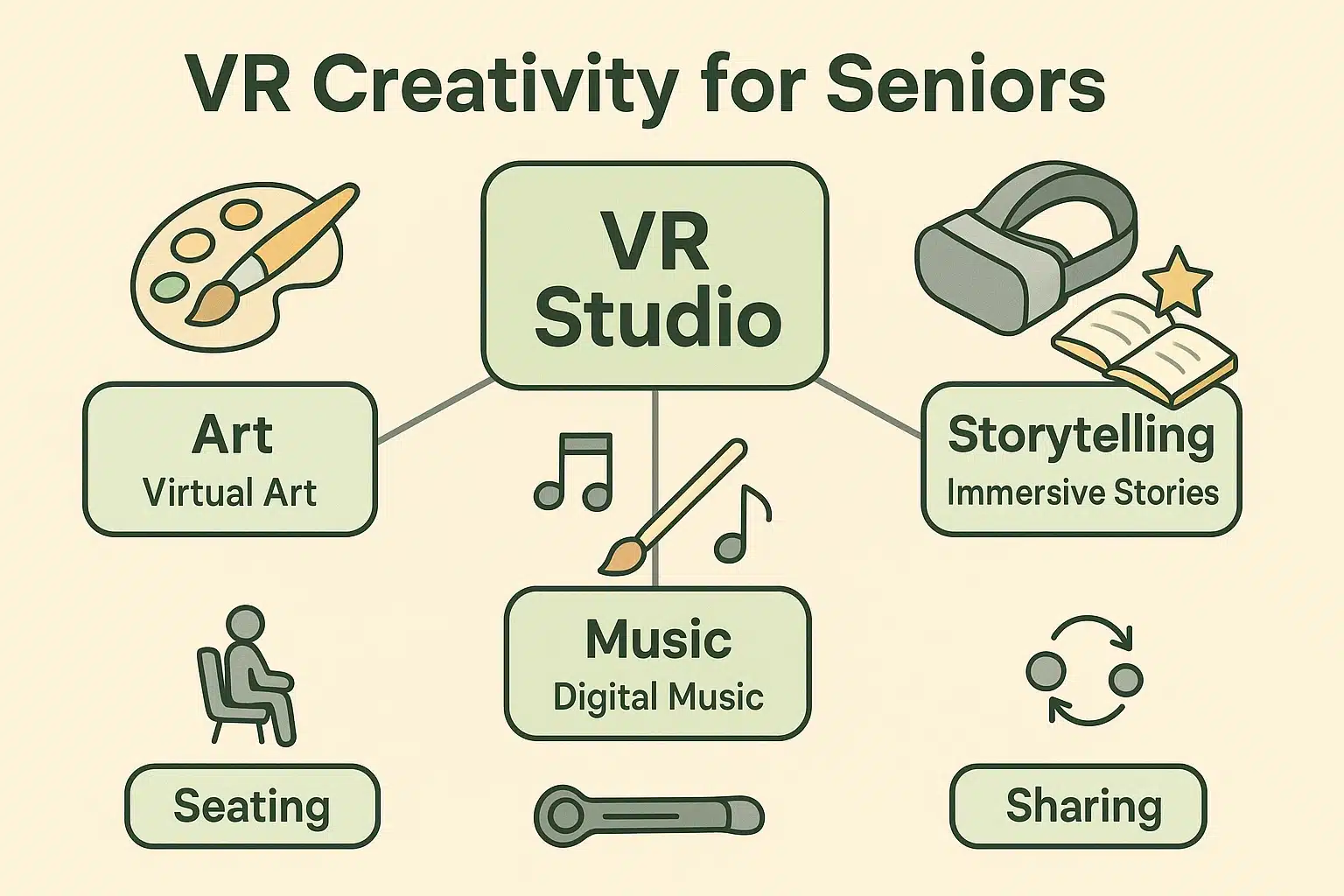
Now that you’re comfortable, it’s time to choose your medium. The VR world is packed with applications that cater to every creative itch, all without requiring you to grip heavy tools or clean brushes. Here are three incredible paths to explore.
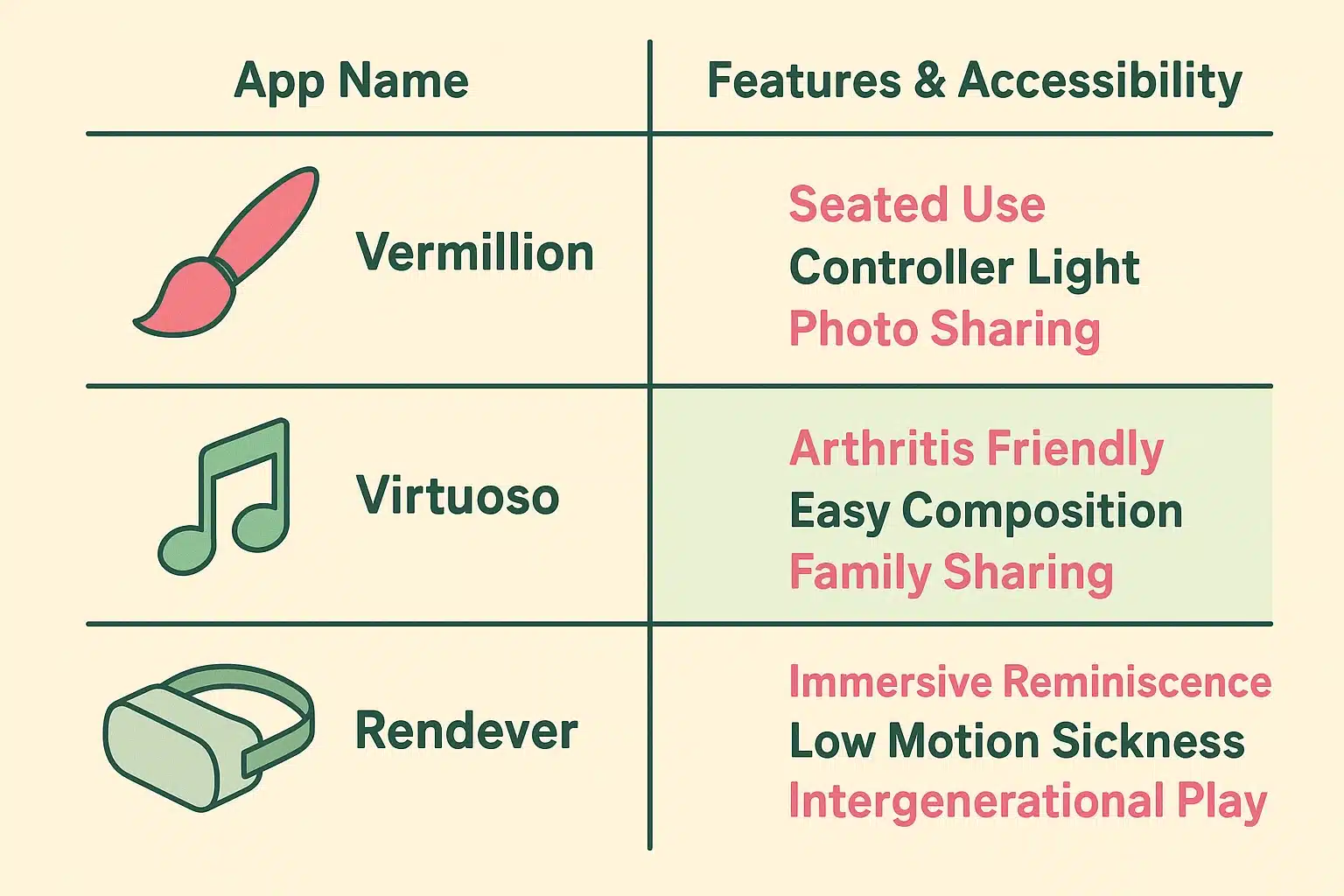
Have you ever wanted to try oil painting but didn’t want the harsh smell of turpentine in your house? An app called Vermillion is going to be your new best friend. It gives you a virtual easel, a palette with every color imaginable, and realistic brushes that mix paint perfectly.
If you want to step outside the bounds of reality, try Tilt Brush. This app lets you paint in three dimensions using neon light, fire, and stars instead of normal paint. Best of all, if you make a mistake, you don’t have to throw the canvas away; you just press the “undo” button, which is arguably the greatest invention in the history of art.
Perhaps your creative outlet is musical, but arthritic fingers make playing the piano or guitar frustrating. VR offers a brilliant workaround for that, too. Hand-tracking technology allows you to use your bare hands to interact with the virtual world—no trigger-heavy controllers required.
With an app like Maestro, you become the conductor of a full virtual orchestra, guiding the tempo and volume with natural hand movements. Or, if you want to compose your own tunes, an app called Virtuoso lets you play bizarre, wonderful virtual instruments that require zero previous musical training. You just tap the air and make beautiful music.
Storytelling is one of the most powerful forms of creativity, and VR takes it to a whole new level through “immersive reminiscence.” Using an app called Wander, which is essentially Google Street View on steroids, you can instantly teleport to the street you grew up on.
You can virtually walk down your old block, stand in front of your childhood home, and narrate your memories of the neighborhood as you look around. This isn’t just a fun trip down memory lane. It’s a way to build a rich, visual legacy and tell your stories in a way that your grandkids will actually pay attention to.
Creating art in a headset is wonderful, but half the joy of making something is showing it off. You might be wondering, “How on earth do I hang a virtual painting on my refrigerator?” Don’t worry, you don’t have to invite your neighbors over and force them to wear the headset.
Every modern VR headset has a simple “camera” feature that lets you take a regular 2D photo or video of whatever you’re looking at. With a few clicks, you can email a picture of your virtual oil painting or a video of your VR symphony directly to your family. It’s a fantastic way to bond with younger generations, proving once and for all that Grandma and Grandpa are significantly cooler than they realized.
Not at all! The vast majority of creative VR apps have a “seated mode.” You can easily adjust the virtual world so your canvas, instruments, or map are right in front of you while you relax in your recliner.
If you can operate a modern television remote or a microwave, you can handle VR. Start with “Mixed Reality” apps like First Encounters, which let you see your actual living room while playing. It’s a great way to build confidence without feeling disconnected from the real world.
They can be, which is why we highly recommend “hand-tracking.” Many new VR headsets use built-in cameras to see your actual hands. You can literally just pinch your fingers in the air to paint or play music, completely bypassing the controllers altogether.
Virtual reality is no longer just a toy for the grandkids. It is a legitimate, accessible, and deeply joyful tool for self-expression. It gives you all the mental stimulation of traditional hobbies with absolutely none of the physical cleanup.
If you’re feeling inspired, your next step is simple. Check out a headset like the Meta Quest 3, find a comfortable chair, and download a beginner app like Vermillion. Your mess-free masterpiece is waiting to be created, and your carpet will thank you for keeping the paint strictly digital.