Newsletter Subscribe
Enter your email address below and subscribe to our newsletter

Enter your email address below and subscribe to our newsletter
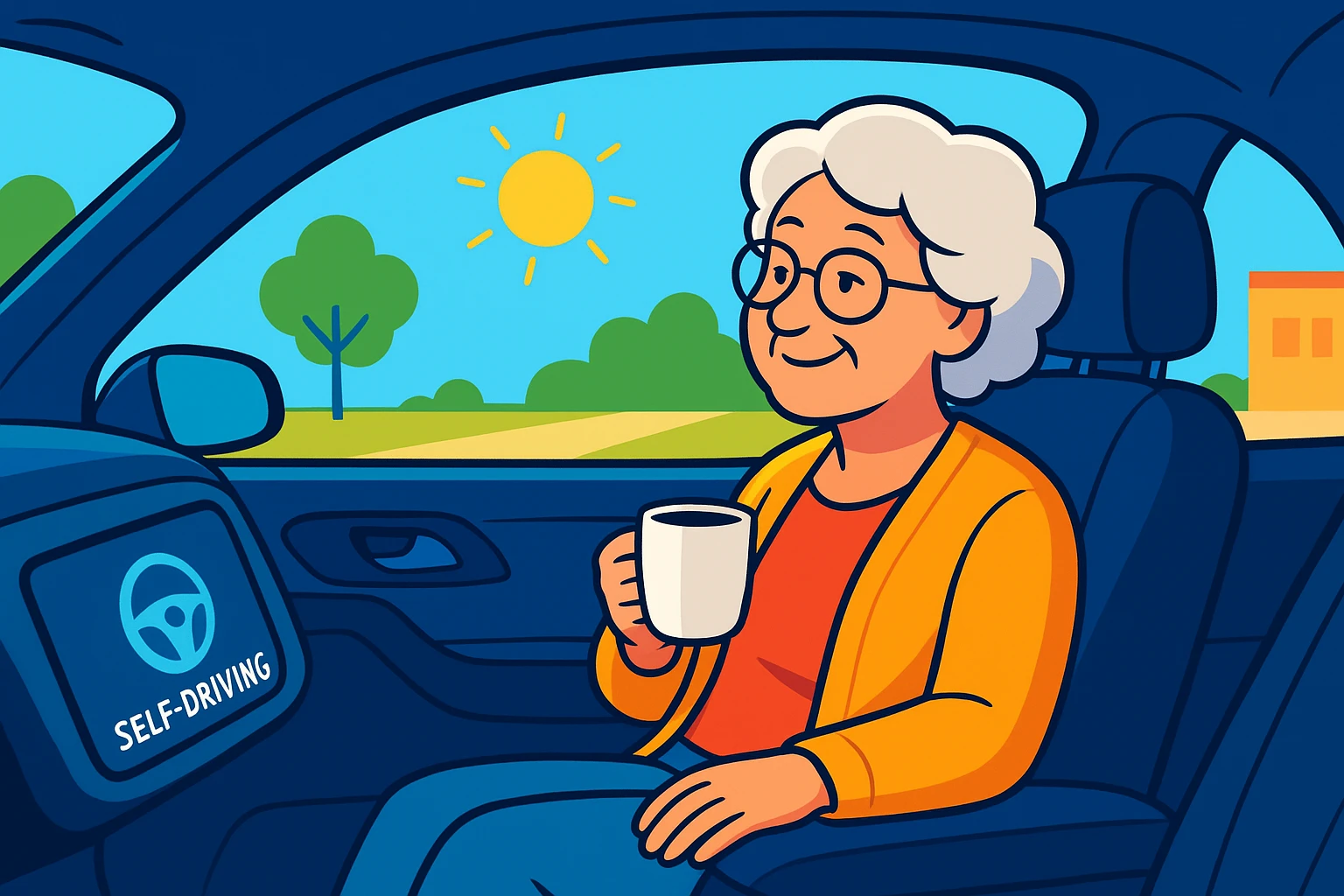
Imagine this. You’ve got a 2:00 PM doctor’s appointment, followed by a critical mission to the grocery store to secure the last loaf of your favorite pumpernickel bread. But your trusty sedan is making a noise that sounds suspiciously like a blender full of marbles. Or perhaps you’ve recently decided that squinting at poorly lit street signs and playing bumper cars in the grocery store parking lot just aren’t as thrilling as they used to be.
If this sounds familiar, you aren’t alone. For many older adults, handing over the car keys feels like handing over their hard-earned independence. It’s a frustrating tradeoff. But what if your vehicle could do the driving for you?
No, I don’t mean hiring a teenager who will inevitably change your radio presets to top-40 pop hits and eat your car snacks. I’m talking about autonomous mobility—self-driving cars, automated public shuttles, and robotic ride-sharing. It sounds like something straight out of The Jetsons, but this technology is no longer science fiction. It’s arriving in our neighborhoods right now, and it’s about to completely change how we get around.
Let’s look under the hood of this new tech. We’ll skip the engineering jargon and focus on what you actually need to know: how it works, what it costs, and whether you can actually trust a computer to take you to Bingo night.
Right now, you might be picturing a car with a robotic mannequin at the wheel, but the reality is much more subtle. Today’s autonomous vehicles (AVs) use a complex web of cameras, radar, and sensors to “see” the road, predict traffic patterns, and safely navigate from point A to point B.
And seniors are leading the charge in who will benefit most. In fact, a 2021 report from the Bureau of Transportation Statistics predicts a sharp increase in demand for these highly automated services among seniors within the next five years. Why? Because these vehicles don’t get tired, they don’t get distracted by text messages, and they don’t accidentally mistake the gas pedal for the brake.
Currently, these services are rolling out in select cities and planned communities. They usually take the form of autonomous ride-hailing services (think of it as a taxi, but the steering wheel moves by itself) or slow-moving, electric community shuttles that run along a fixed route.
Let’s address the elephant in the room. The idea of sitting in the backseat while a computer navigates a busy intersection is enough to make anyone’s blood pressure spike. It is perfectly normal to feel a healthy dose of skepticism.
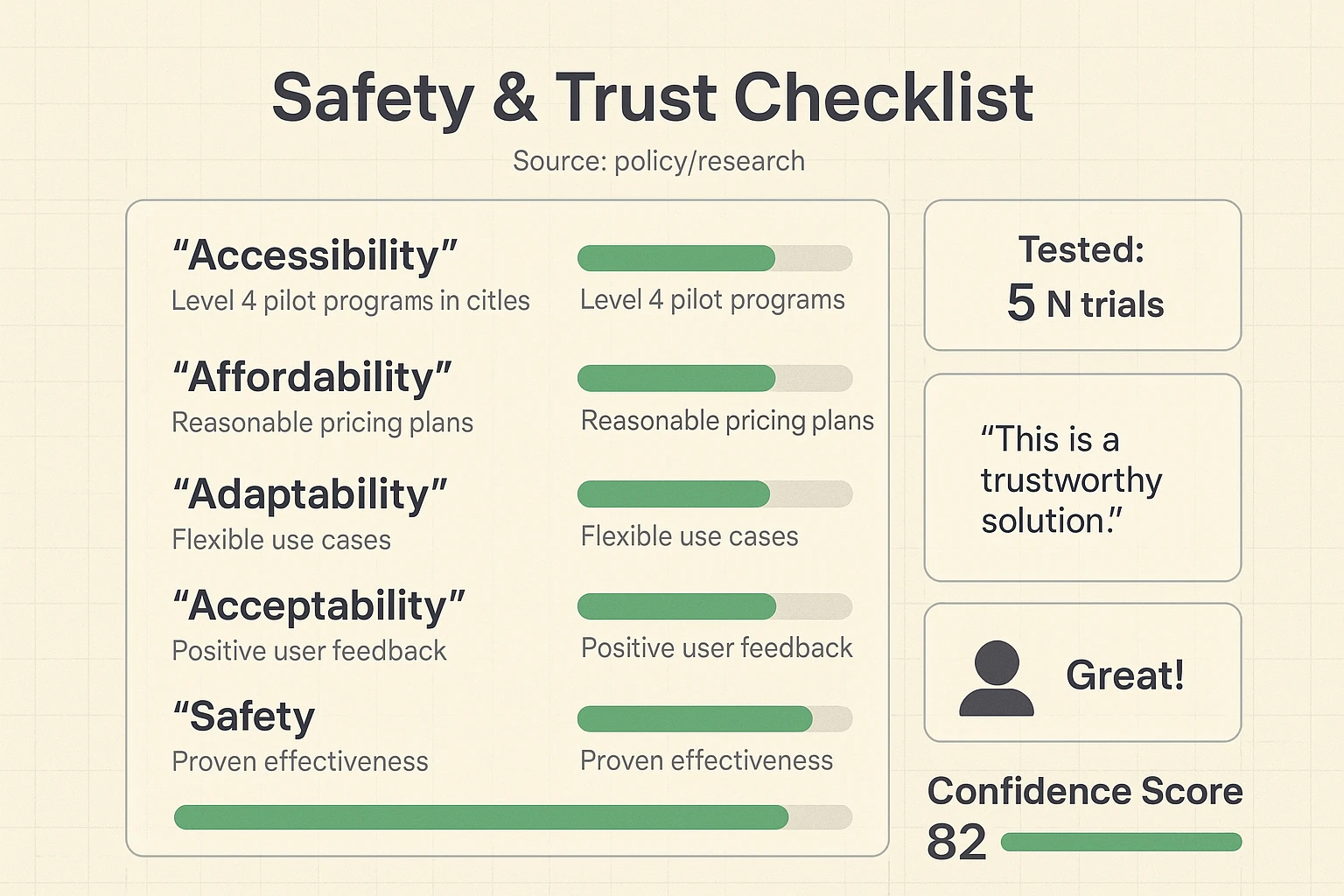
According to researchers analyzing age-friendly public transport, overcoming this hesitation comes down to the “5 A’s of Senior Friendly Transportation”: accessibility, affordability, adaptability, acceptability, and safety. If a vehicle doesn’t check all five of those boxes, it’s just an expensive, four-wheeled paperweight.
Fortunately, safety regulations are incredibly strict. Before these vehicles are ever allowed to pick up passengers, they undergo millions of miles of testing. The American Bar Association noted in 2023 that automated transport programs have a massive potential to significantly improve accessibility for older adults, provided the legal frameworks keep everyone secure.
Here at Senior Tech Cafe, we always look out for your digital privacy. And this is a big one. If a car is smart enough to navigate you to the pharmacy, the golf course, and your favorite secret donut shop, it is collecting a massive amount of data about your daily habits.
When evaluating an autonomous ride-sharing app or community shuttle program, take a moment to read the privacy policy. You want to know exactly who is tracking your location data and whether they are selling it to advertisers. You want a safe ride, not targeted ads for donut-flavored toothpaste following you around the internet.
Not all autonomous vehicles are created equal. Depending on where you live and what you need, you generally have a few different options to evaluate. Let’s break them down so you can decide which robotic chariot best suits your lifestyle.
Companies are currently operating fleets of self-driving cars in select cities. You use a smartphone app to call a car, it arrives at your curb, and you hop in the back.
These are typically small, electric vehicles that carry half a dozen people along a set route, like around a retirement community or a downtown shopping district.
These are cars you actually buy that feature advanced self-driving capabilities.
Owning a traditional car is shockingly expensive. When you add up the cost of car payments, insurance, gas, oil changes, and the occasional mystery bill from the mechanic, you are spending a small fortune just to let a piece of metal sit in your driveway 90% of the time.
Transitioning to autonomous ride-hailing could actually put money back in your pocket. Recent economic research (Sheldon, 2024) shows that autonomous vehicles are expected to drastically reduce transport costs per mile. Without having to pay a human driver, these ride-sharing services can offer fares that are significantly lower than traditional taxis or Ubers.
For a senior who only drives a few miles a week for groceries and appointments, ditching the personal car in favor of an autonomous service is a massive financial win. You get to stop paying exorbitant auto insurance premiums, and you never have to stand freezing at a gas pump ever again.
Before these vehicles can show up in every rural town and suburb, our infrastructure needs a bit of a facelift. Autonomous cars rely heavily on clear lane markings, functional traffic lights, and updated digital mapping.
City planners are currently working overtime to prepare our streets for this transition. We are seeing communities redesign drop-off zones to be safer for seniors with mobility devices to enter and exit self-driving shuttles.
As these pilot programs expand, expect to see more specialized features aimed directly at seniors. Think longer boarding times for those using walkers, built-in voice assistants to help you confirm your destination, and direct integration with medical facilities for seamless appointment transportation.
If an autonomous vehicle encounters a situation it doesn’t understand—like a flooded road or a bizarre construction zone—it is programmed to safely pull over and stop. Most services also have a remote human operator who monitors the fleet and can safely take over the vehicle’s controls or send a rescue vehicle to pick you up.
Not at all. While most ride-hailing services currently use a smartphone app, companies are actively working to make the process as simple as possible. Many community shuttles don’t require an app at all—you just wait at the designated stop and hop on.
This is a valid concern in our digital age. Automotive manufacturers treat cybersecurity as a top priority, using military-grade encryption to protect the vehicle’s driving systems. While no system is 100% impenetrable, the risk of a hacker taking over your grocery-run shuttle is incredibly low. Just remember to guard your own personal account passwords!
Making the leap to autonomous mobility doesn’t have to happen overnight. It is a gradual evaluation process. The goal is to retain your freedom, independence, and safety without the stress of managing a two-ton machine in traffic.
If you live in a city or a planned community that is currently testing autonomous shuttles or ride-shares, we highly recommend trying it out. Bring a friend, take a short trip to the local coffee shop, and see how it feels to let the robots do the heavy lifting. You might just find that the passenger seat is the best seat in the house.