Newsletter Subscribe
Enter your email address below and subscribe to our newsletter

Enter your email address below and subscribe to our newsletter
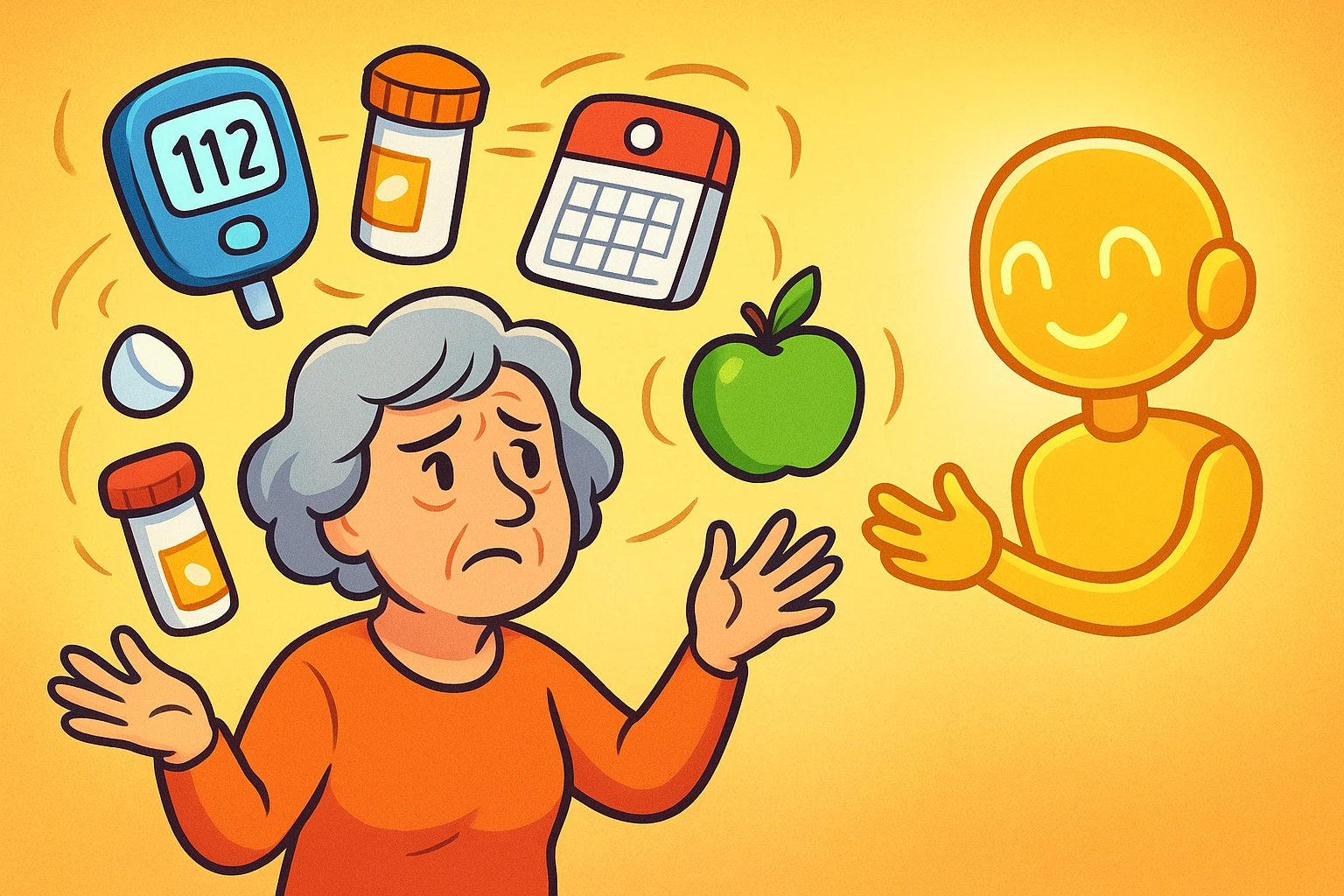
Let’s be honest. Managing a chronic condition like diabetes or heart disease can feel like a full-time job you never applied for. You’re juggling blood sugar logs, pill schedules, dietary restrictions, and doctor’s appointments. It’s enough to make you think your real job was being a circus plate-spinner. You prick your finger, and the number you see determines your mood for the next four hours. You eye a piece of cake like it’s a ticking time bomb.
It’s a constant stream of data, and you’re the underpaid, overwhelmed CEO trying to make sense of it all. What if you had a super-smart, ridiculously attentive assistant who could analyze all that data for you? An assistant who never sleeps, never complains, and can spot a potential problem from a mile away?
Well, that assistant is here, and it goes by the name of Artificial Intelligence, or AI. Now, before you picture a cold, calculating robot from a 1980s movie, let’s get one thing straight: AI in healthcare isn’t about replacing your doctor. It’s about giving you—and your doctor—a powerful new tool to make managing your health simpler, smarter, and a whole lot less stressful.
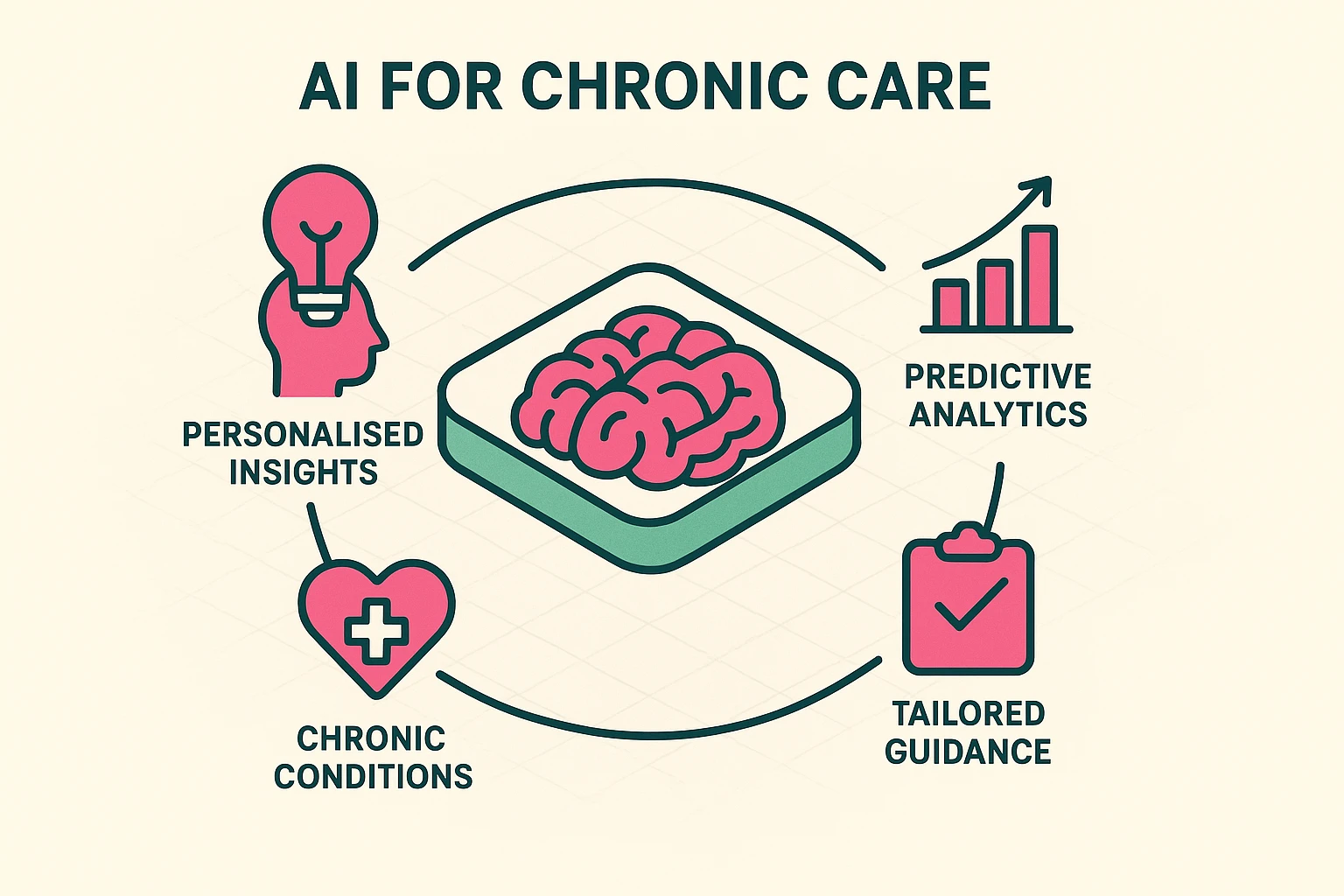
When we talk about AI, it’s easy to get lost in a fog of technical mumbo-jumbo. So let’s cut through the noise.
Think of AI as a brilliant detective. It takes all the clues—your blood sugar readings, your blood pressure, what you ate for lunch, how many steps you took—and puts them together to see the big picture. It uses something called machine learning, which is just a fancy way of saying it learns from patterns.
The more data it sees, the better it gets at predicting what might happen next. This is called predictive analytics. For example, it might notice that every time you eat a certain meal and walk less than 2,000 steps, your blood sugar spikes three hours later. It’s not magic; it’s just recognizing a pattern that would be nearly impossible for a human to spot in a sea of random numbers.
This isn’t about some generic, one-size-fits-all advice you could find on any website. This is about you. The AI learns your body’s unique rhythms and helps you make decisions tailored specifically to your health.
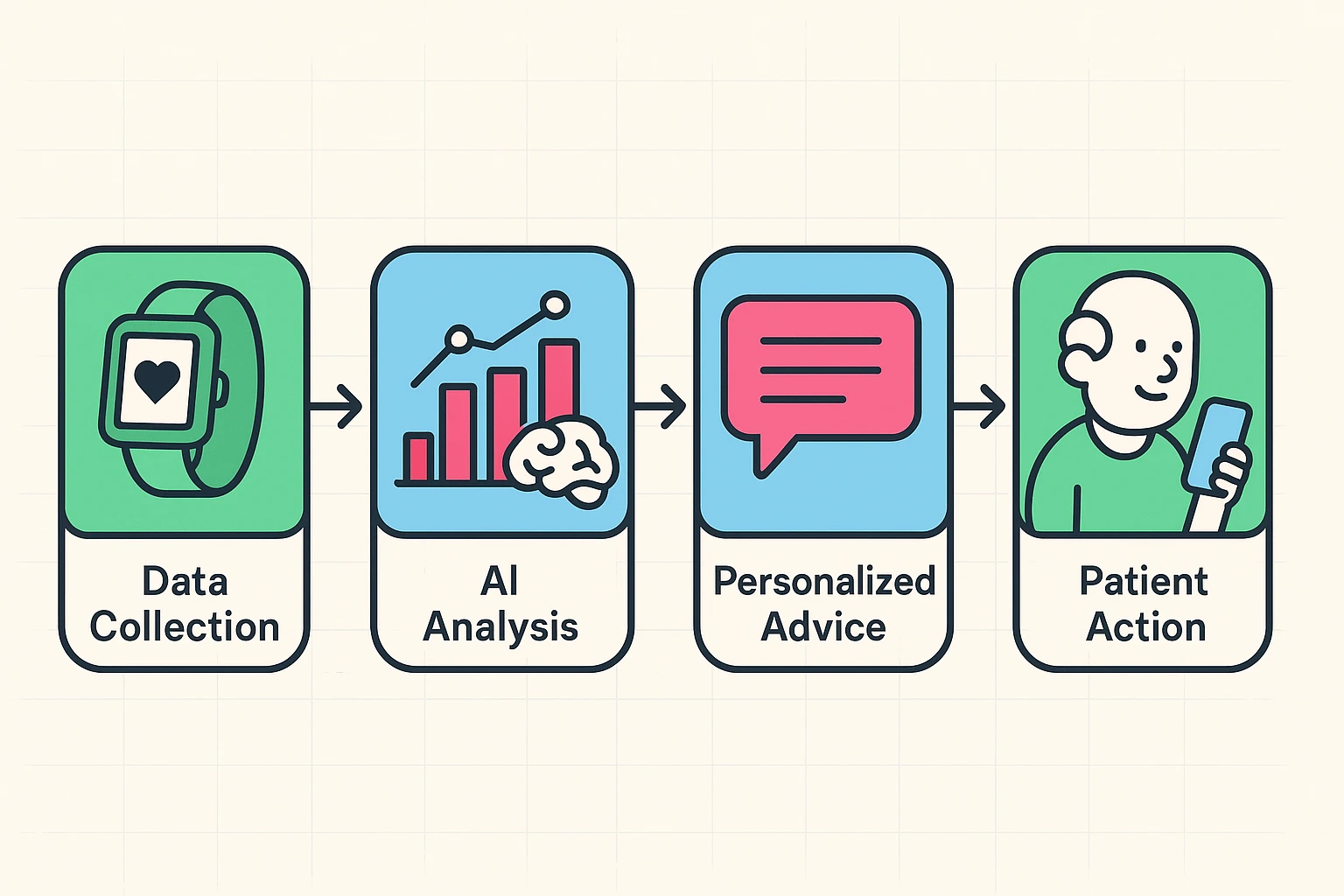
So, how does this all work in the real world? It’s less “sci-fi future” and more “helpful app on your phone.”
For anyone managing diabetes, life is a balancing act. AI-powered tools are like having a safety net.
When it comes to heart health, early detection is everything. AI is becoming a powerful ally in monitoring your cardiovascular system.
It’s completely normal to feel a little hesitant about handing over your health data to a computer program. Let’s clear the air and separate the facts from the fear.
Myth #1: AI is going to replace my doctor.Fact: Not a chance. AI is a tool for you and your doctor. Think of it as a super-detailed report that your doctor can use to make better, more informed decisions about your care. It handles the 24/7 data crunching so your doctor can focus on the human side of medicine.
Myth #2: My private health data will be all over the internet.Fact: Reputable health apps are bound by the same strict HIPAA privacy laws as your doctor’s office. Your personal information is encrypted and protected. The key is to use trusted, well-reviewed applications—we’ll get to how to choose one in a minute.
Myth #3: This stuff is too complicated. I need a computer science degree to use it.Fact: The whole point of these tools is to make your life simpler. They are designed to be user-friendly, with large fonts, clear instructions, and intuitive interfaces. If you can use an app to check the weather, you can use an AI health app.
Feeling intrigued? Getting started is easier than you think. Here’s a practical game plan.
Bringing this up with your physician can feel intimidating, but it’s a crucial step. Here are a few simple questions to get the conversation started:
It’s the use of smart computer programs to analyze your personal health data (like blood sugar, activity, and blood pressure) to give you personalized advice and early warnings, helping you stay healthier.
It can help by predicting potential problems before they happen, making sense of your health data, offering personalized tips on diet and exercise, and helping you and your doctor make better decisions together.
With reputable, FDA-cleared apps, yes. They are required by law to protect your health information, just like a hospital. Always check the privacy policy before you start.
Some are free, while others have a subscription fee or are covered by insurance. Many smartwatches and fitness trackers with these features have a one-time cost for the device.
Technology can feel overwhelming, but AI in healthcare is designed to put more power back into your hands. It’s not about giving up control; it’s about gaining a deeper understanding of your own body. This frees you up from being a full-time data analyst so you can focus on living your life.
And once AI helps you streamline your health management, you might be surprised by its other uses. Technology is opening up new worlds of possibility, and AI is at the heart of many of them. Some folks are even exploring creative hobbies powered by AI for seniors to express themselves in new ways.
Ultimately, these tools are simply that—tools. You are still the expert on your own body and the one making the final call. AI is just the smart, reliable sidekick you deserve to have on your team.