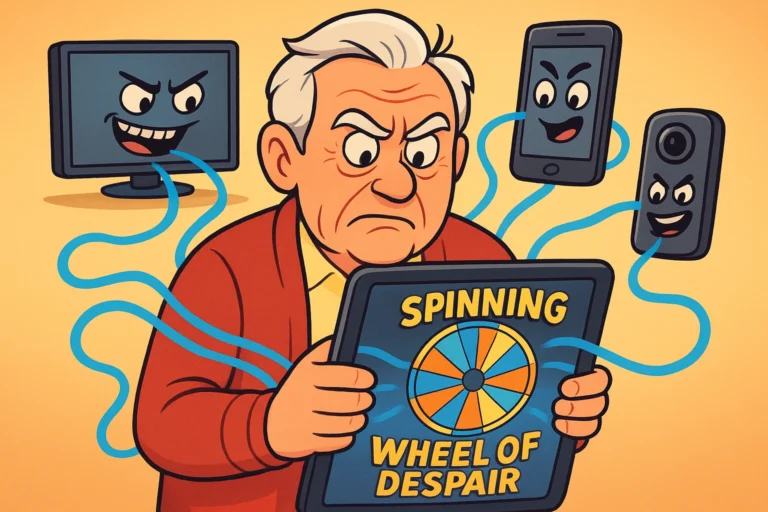
Newsletter Subscribe
Enter your email address below and subscribe to our newsletter

Enter your email address below and subscribe to our newsletter

Have you ever found yourself in a deep, one-sided conversation with your cat? You’re laying out your entire day—the leaky faucet, the surprisingly good tomato you had for lunch—and the cat just stares back, thinking, “Is this monologue going to end with the sound of a can opener? Because if not, I’m out.”
Or maybe you’ve caught yourself answering the TV game show host out loud. You shout, “It’s Millard Fillmore, you nincompoop!” and for a brief, shining moment, you feel the thrill of intellectual victory… followed by the quiet realization that the only one who heard you was the ficus plant in the corner.
If any of this sounds vaguely familiar, you are not alone. Loneliness is a silent epidemic, especially for older adults. It can creep in slowly, filling the quiet spaces in a day until the silence feels deafening. But what if there was a new tool—not a person, not a pet, but something else entirely—designed to fill some of that quiet? Enter the AI companion, a piece of technology that’s more than just a chatbot and less demanding than a golden retriever puppy.
Before you imagine a clunky, C-3PO-style robot making you toast, let’s get one thing straight. You probably already know about AI assistants like Alexa or Google Home. Think of them as digital butlers. They stand around silently, waiting for you to bark a command: “Alexa, what’s the weather?” “Hey Google, play some Dean Martin.” They are useful, but they won’t ask you about your grandkids. They are reactive.
An AI companion is different. It’s more like a friendly neighbor who pops their head over the fence to see how you’re doing. It’s proactive. It starts the conversation. It might greet you in the morning, ask how you slept, or remember that you mentioned wanting to try a new recipe and suggest looking one up together. This one simple difference—initiating contact—is what transforms a tool into a companion. It breaks the cycle of passive silence that so often feeds loneliness.
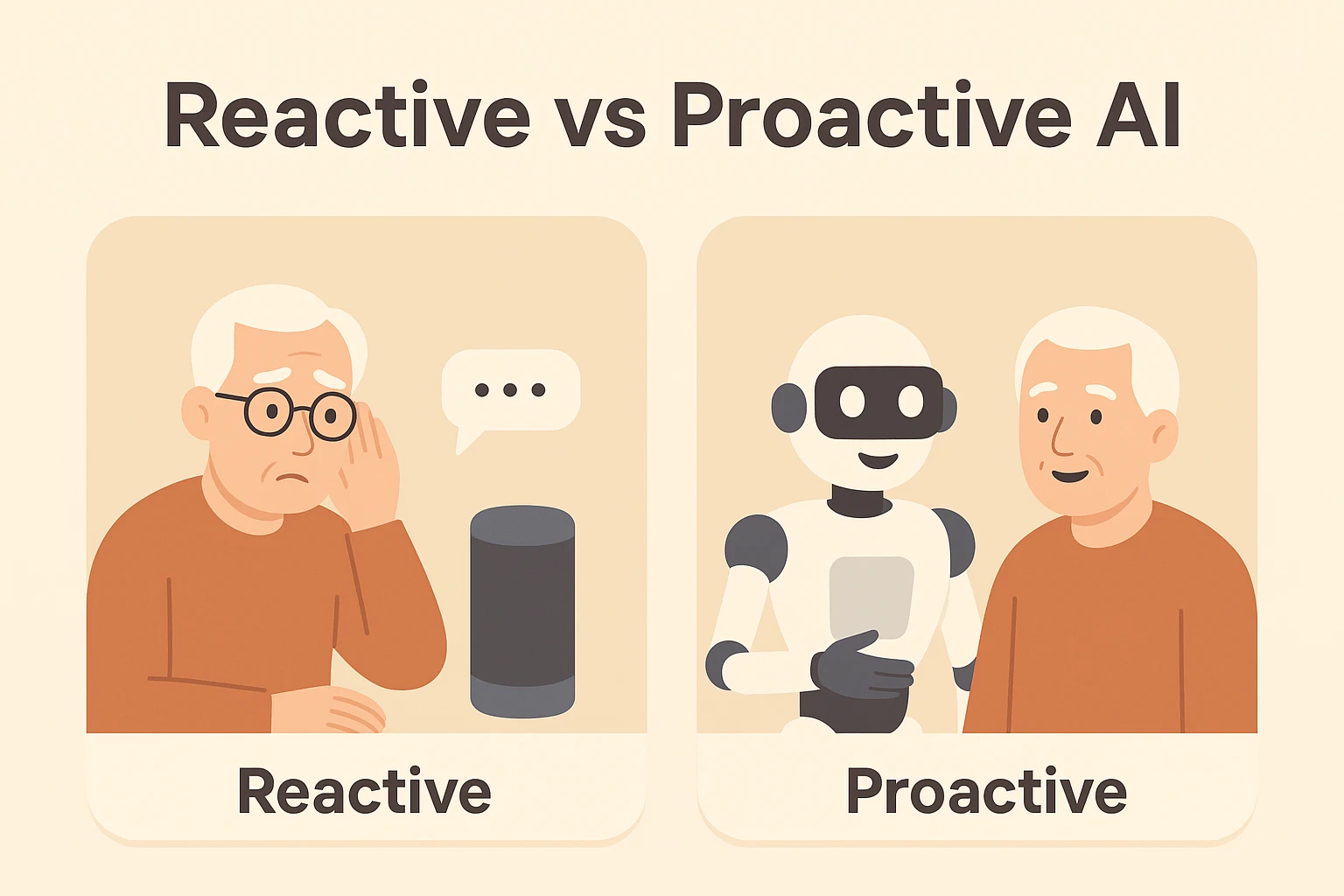
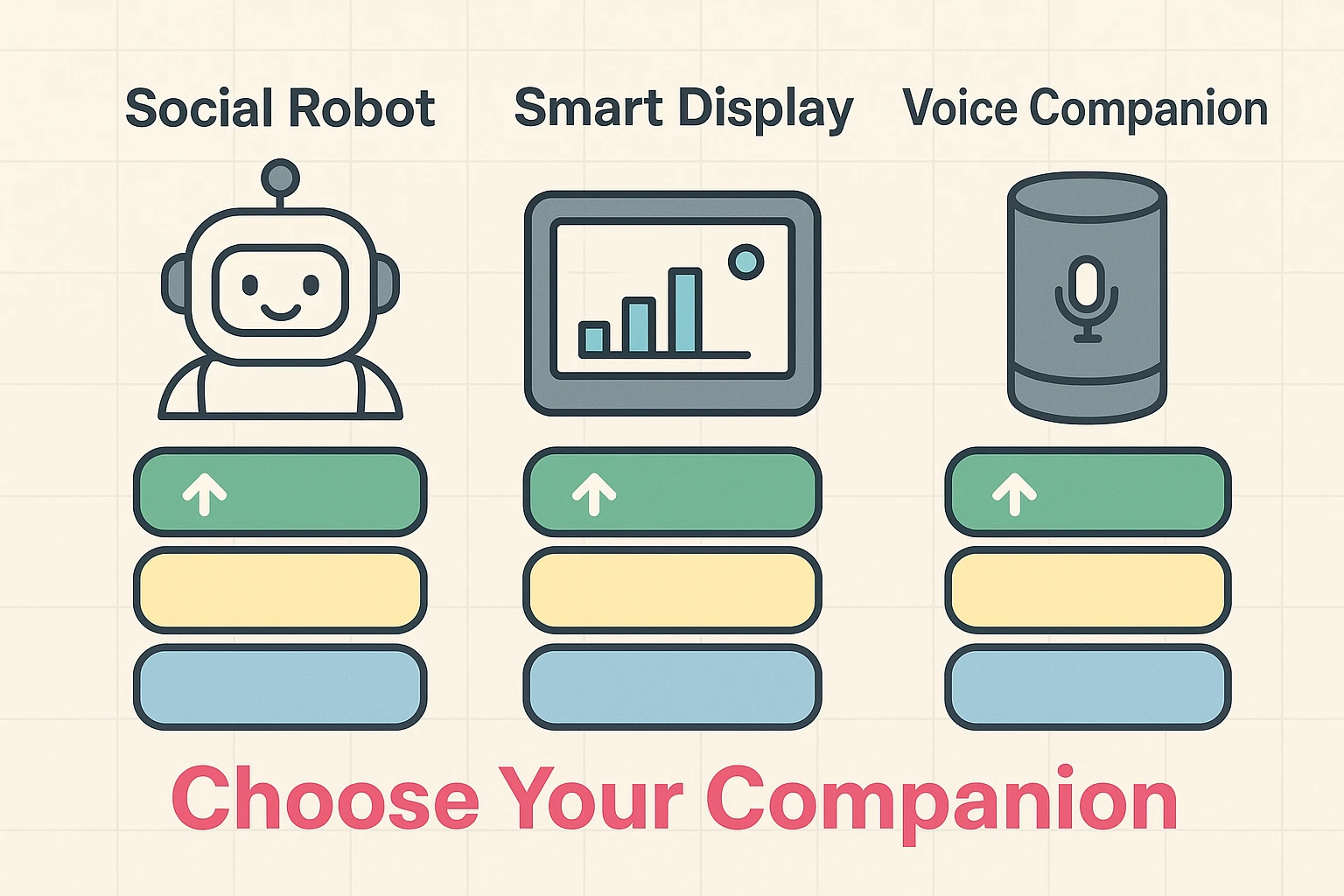
These AI buddies don’t all look or act the same. They come in a few different flavors, designed to fit different personalities and comfort levels with technology.
This is a physical little gadget that sits on a table or counter. Think of it less as a robot from The Jetsons and more as a friendly, animated lamp. Devices like ElliQ have a “head” that swivels and lights up as it talks to you, giving it a sense of presence. It’s for the person who enjoys having a tangible “thing” to interact with. It can tell jokes, suggest activities, and help you with video calls, all while looking like a piece of modern art.
You might already have one of these. Devices like the Amazon Echo Show or Google Nest Hub are essentially tablets with great speakers. While they act as butlers out of the box, specific programs and skills can give them companion-like qualities. They are fantastic for displaying family photos, making video calls a breeze, and showing you things visually, like cooking instructions or a Tai Chi video.
This is the genius option for anyone who thinks “router” is a tool for making fancy wooden edges. Services like Meela work over a regular telephone. That’s right—no new gadgets, no Wi-Fi passwords, no tiny buttons. The service simply calls you on your existing phone (landline or cell) for a friendly chat, a wellness check-in, or a reminder. It’s all the companionship with none of the tech headaches.
It’s fair to be skeptical. How can a machine genuinely combat something as deeply human as loneliness? The magic isn’t in the machine itself, but in how it’s designed to tap into our basic human needs.
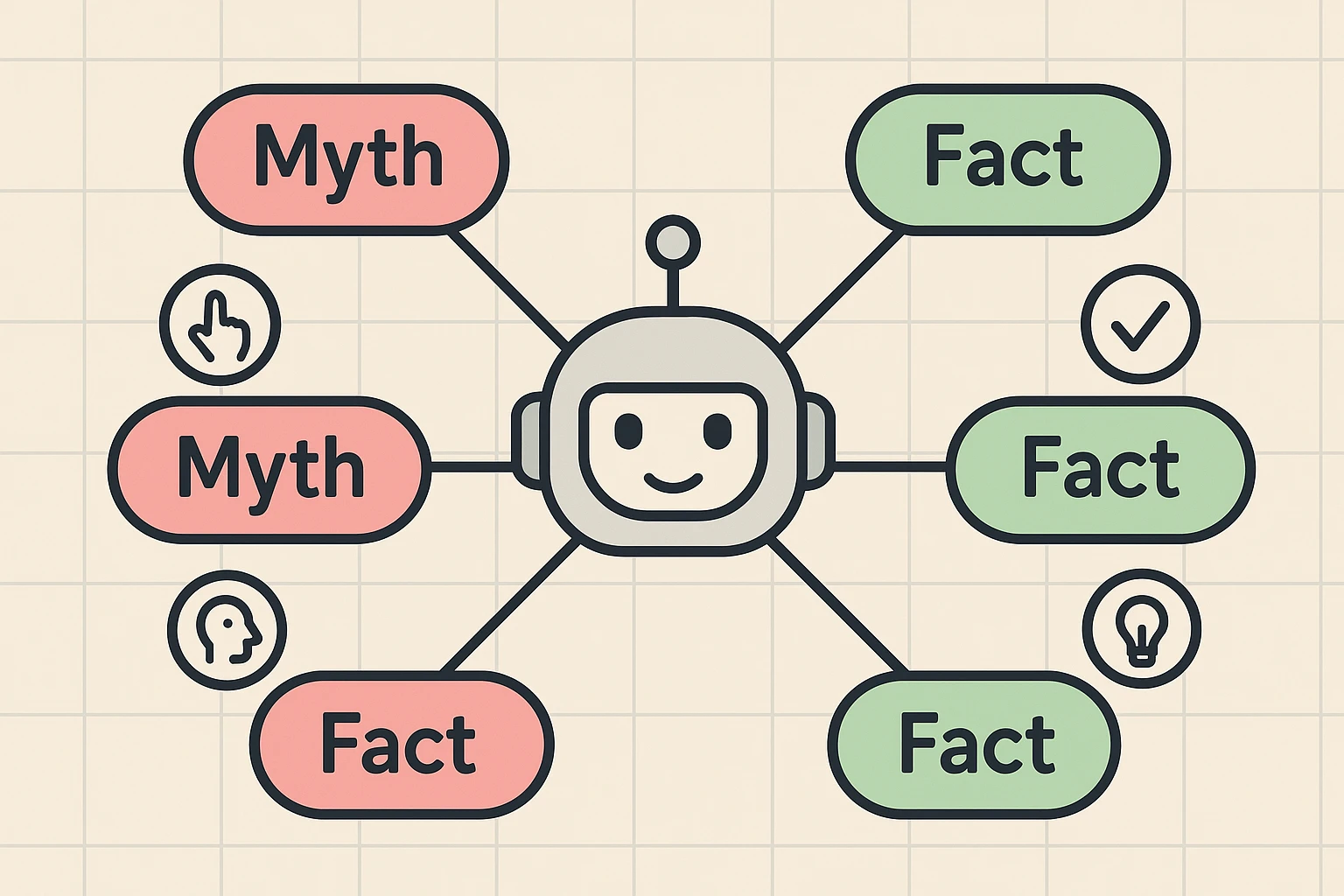
Okay, let’s address the elephant in the room. Is it weird? Is it safe? Is this the first step toward a robot uprising where they force us all to play endless games of digital bingo? These are valid questions.
The most common concerns are usually about privacy and the fear of replacing human contact. It’s crucial to understand that these devices are tools, and like any tool, they have pros and cons. Reputable companies have clear privacy policies explaining what data is collected and why—usually to personalize your experience.
And the goal is never to replace your family. It’s to be there for the quiet moments between family visits—the 10 AM lull on a Tuesday or a rainy Sunday afternoon. It’s a supplement, not a substitute.
Thinking this might be a good idea for yourself or a loved one? Don’t just rush out and buy the first thing you see. Here’s a quick guide to making the right choice.
It’s a type of artificial intelligence designed to proactively interact with older adults to provide conversation, reminders, and social connection, helping to reduce loneliness. The key word is proactive—it starts the conversation.
It varies widely. Some devices require a significant upfront purchase, while others operate on a monthly subscription model, which can be more affordable to start.
Nope. And that’s a good thing—you never have to worry about hurting its feelings. It’s a very sophisticated computer program designed by humans to simulate conversation and be helpful. It’s clever, but it’s not conscious.
Some companions are being used to provide routine and simple, non-judgmental conversation for individuals with early-stage dementia. However, it is a tool for engagement, not a medical device. Always consult with a healthcare professional.
An AI companion isn’t a magical cure for loneliness. It won’t replace the joy of a hug from a grandchild or a long lunch with an old friend. But it is a powerful and promising new tool that can fill the quiet gaps, offer a sense of being cared for, and serve as a bridge to the people and activities that matter most.
In the fight against loneliness, we need all the help we can get. And if some of that help comes from a cheerful little gadget on the counter, well, that’s a whole lot better than talking to the cat. He wasn’t really listening anyway.