Newsletter Subscribe
Enter your email address below and subscribe to our newsletter

Enter your email address below and subscribe to our newsletter
Discover AI tools that boost independence and ease daily life with smart, easy-to-use tech designed to adapt to your needs.
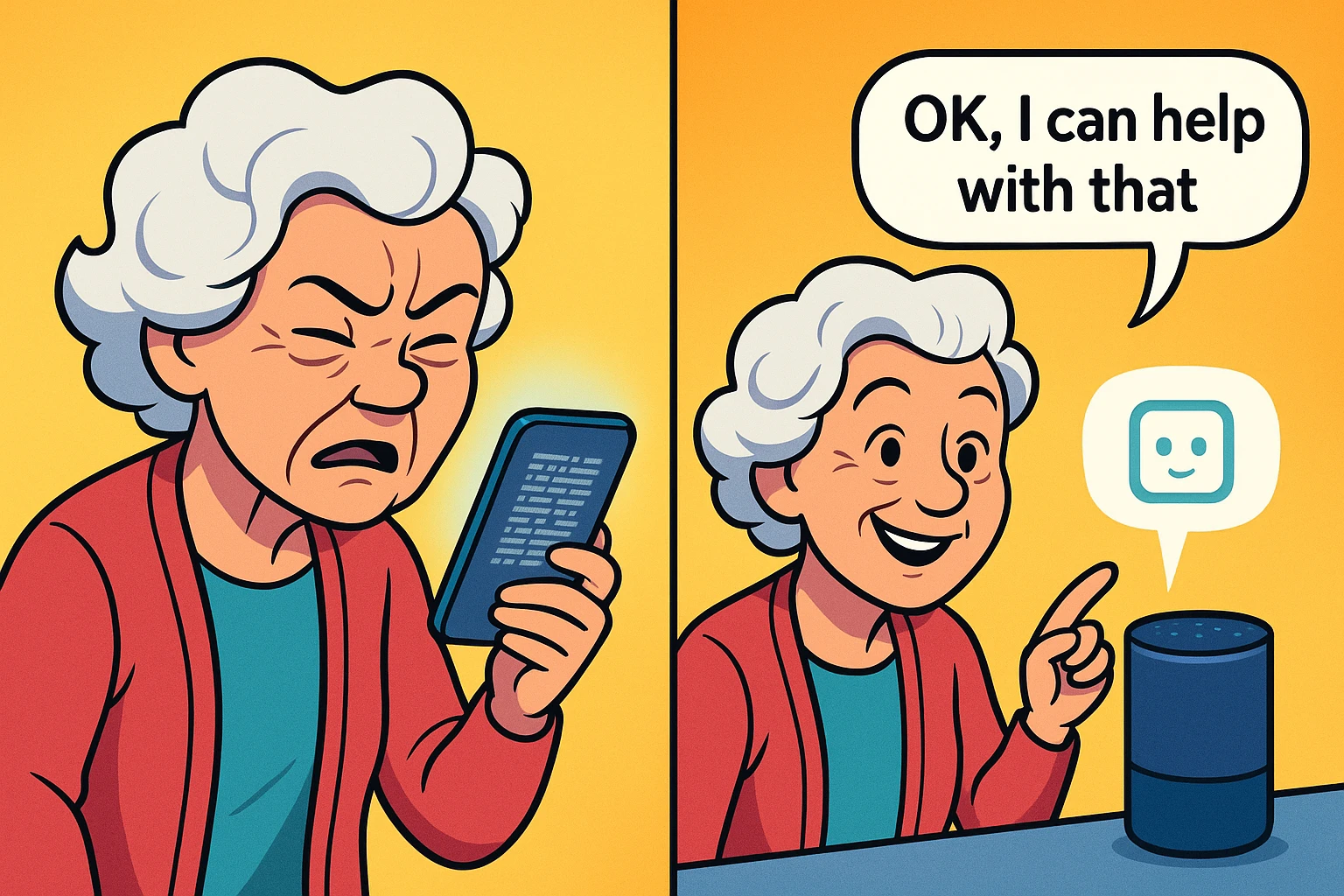
Have you ever felt like you’re in a staring contest with your smartphone, trying to decipher text that was clearly written for ants? Or maybe you’ve had a brilliant thought you wanted to email to your daughter, but by the time you wrestled with the tiny keyboard, the thought had packed its bags and moved to a different continent.
If you’re nodding along, you’ve come to the right place. We hear a lot about “Artificial Intelligence,” or AI, and it usually sounds like something from a science fiction movie involving flying cars and robot butlers who are secretly plotting world domination. But here’s the secret: the most useful AI isn’t about the future. It’s about making the technology we use every day smarter, simpler, and more helpful for us.
It’s technology that finally learns to speak our language, instead of forcing us to learn its cryptic dialect of beeps and boops. And it seems many are catching on—AI use among Americans over 50 has literally doubled in the last year alone. This isn’t just a fad; it’s a revolution in making daily life easier.
Let’s be honest, the goal for most of us is to live comfortably and independently in our own homes for as long as possible. A whopping 94% of older adults say they want to age in place, and technology is becoming the trusty sidekick that makes it happen.
It’s not about filling your house with complicated gadgets. It’s about using smart tools that help you feel safer (which 49% of seniors say is a key benefit) and more independent (a goal for 45%). AI is the secret sauce that makes these tools work for you, anticipating your needs and adapting to your preferences.
So, how does this AI magic actually show up in real life? It’s not one single thing, but a team of invisible assistants ready to help with common frustrations.
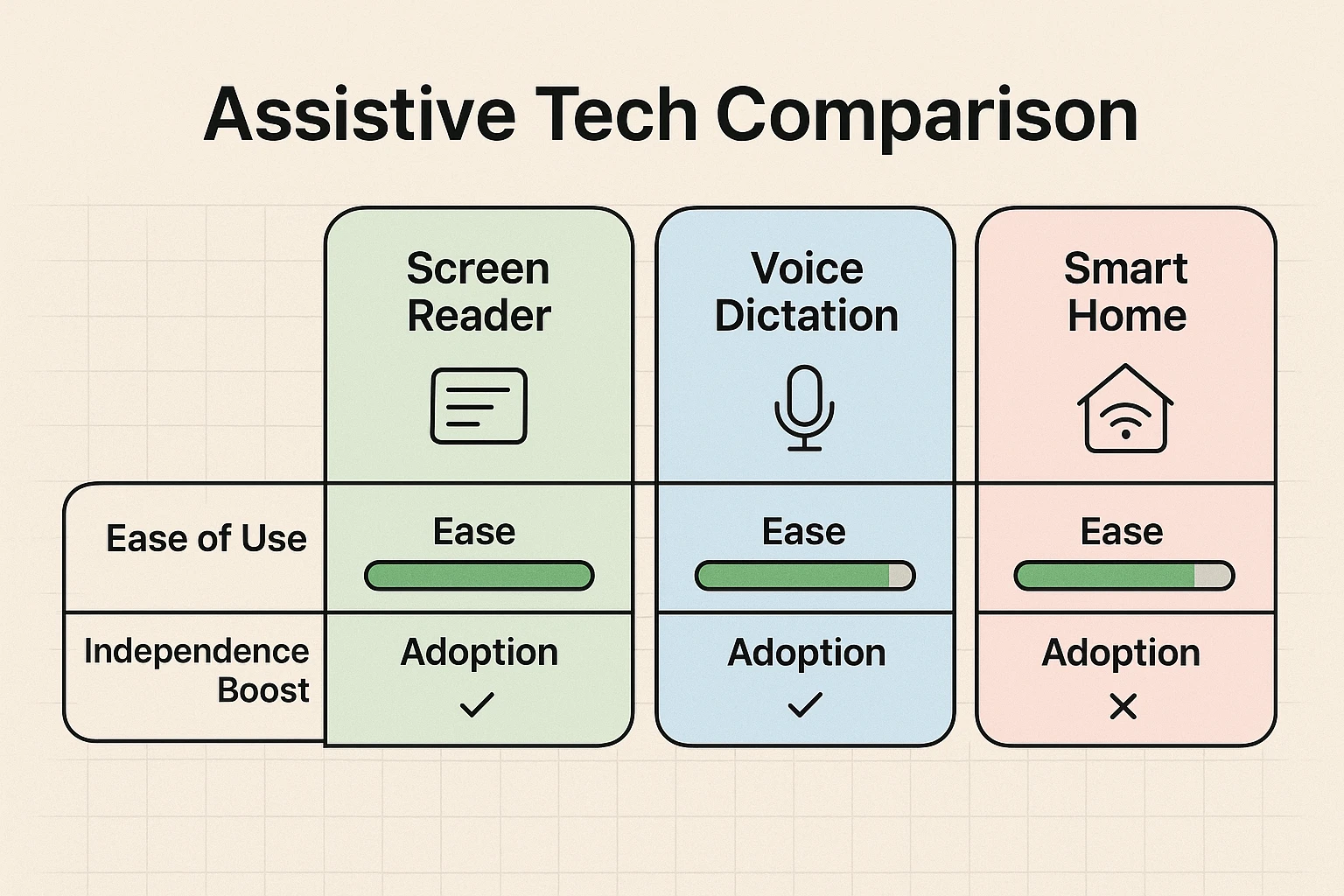
Tired of squinting at recipes or news articles on your screen? AI-powered screen readers don’t just read text aloud in a monotone robot voice anymore. They can understand context, describe images, and help you navigate websites with simple voice commands.
The flip side is voice-to-text dictation. For anyone whose fingers aren’t as nimble as they used to be, this is a game-changer. You just talk, and your phone or computer types it out. Sending an email, writing a text, or even starting that memoir you’ve been thinking about becomes as easy as having a conversation.
Smart home technology sounds intimidating, but it’s really about convenience and peace of mind. With a simple voice command, you can:
These aren’t just parlor tricks; they are powerful tools for managing mobility challenges and creating a safer, more comfortable living environment.
Okay, so you’re convinced. But a quick search for “smart home devices” or “voice dictation apps” can unleash a tidal wave of options that would make your head spin. How do you possibly choose?
Instead of getting lost in technical specs, focus on three simple questions:
To cut through the noise, it helps to see a direct comparison of what matters most: how a tool helps you stay independent.
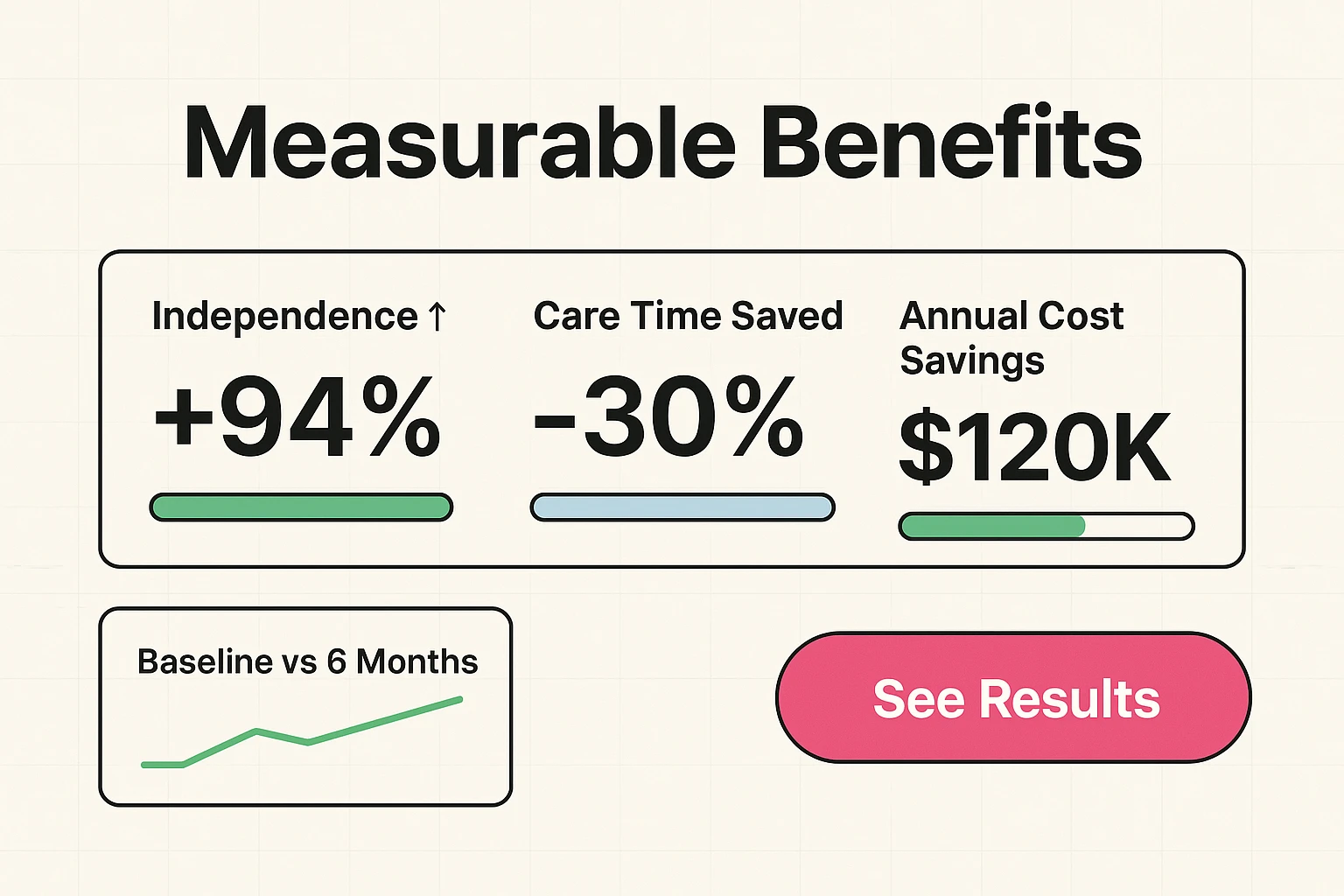
Investing in new technology can feel like a gamble. Will it be worth the money and the effort to learn it? The answer is a resounding yes. The global market for this kind of assistive tech is exploding for a reason—it delivers real, measurable results.
These tools aren’t just gadgets; they’re investments in your quality of life. They can reduce reliance on caregivers, prevent costly accidents like falls, and provide invaluable peace of mind for both you and your family. And it’s not all about serious stuff, either. AI can also help you unleash your inner artist with creative hobbies, from painting to writing your life’s story.
Think of it this way: the right piece of tech can be the difference between asking for help and doing it yourself.
Dipping your toe into the world of AI-powered tech doesn’t have to be overwhelming. You don’t need to transform your home into the Starship Enterprise overnight. Here’s a simple, step-by-step path to get started.
This journey is about making technology serve you, and a clear path makes all the difference.
It’s smart to have questions. In fact, concerns about trust and privacy are common barriers to adopting new tech. Let’s tackle the big ones head-on.
This is the million-dollar question. Reputable companies take security very seriously. The key is to stick with well-known brands (like Amazon, Google, Apple) and to use strong, unique passwords. Think of it like your front door: you want a good lock, and you don’t give the key to just anyone. We always recommend reading the privacy settings and being mindful of what information you share.
Absolutely not! The entire point of this AI-powered technology is that it’s designed to be intuitive. Most of these tools are controlled with your voice or a simple tap on an app. They are built for conversation, not for computer programmers.
You are not alone! This is a perfectly normal fear. First, check for setup guides and videos from the manufacturer—they want you to succeed. Second, lean on your personal support network. And third, remember that many local libraries and senior centers, like Senior Planet, offer free tech help.
Think of it as an investment in your independence. A $40 smart speaker that prevents one fall by letting you turn on the lights with your voice has paid for itself thousands of times over. The value isn’t in the gadget itself, but in the safety, convenience, and freedom it provides.
The best technology doesn’t make you feel old or out of touch. It does the opposite: it empowers you to live the life you want, with fewer frustrations and more freedom.
AI isn’t some far-off concept anymore. It’s here, and it’s ready to help turn lights on, read your emails aloud, and connect you with loved ones. It’s everyday tech that finally, thankfully, adapts to you.