Newsletter Subscribe
Enter your email address below and subscribe to our newsletter

Enter your email address below and subscribe to our newsletter

Remember the “good old days” of television? You had three channels, maybe four if the weather was nice and you wrapped enough aluminum foil around the rabbit ears. If you wanted to watch a movie, you drove to a store, spent 20 minutes arguing over whether to rent an action movie or a rom-com, and then prayed the previous renter was kind enough to “Be Kind, Rewind.”
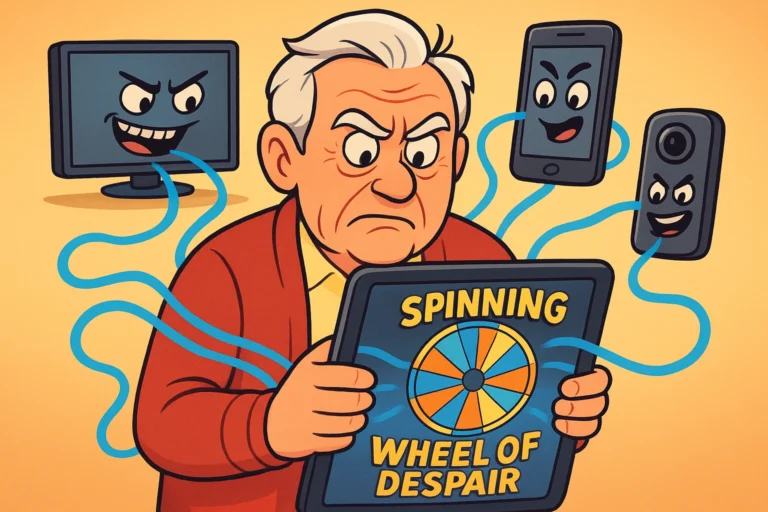
Fast forward to today, and we have the opposite problem. We have instant access to seemingly every movie, TV show, and song ever recorded. It’s a miraculous buffet of entertainment, but it comes with a side order of confusion. There are so many apps, dongles, subscriptions, and interfaces that simply trying to watch Jeopardy! can feel like you’re trying to launch a space shuttle.
If you feel overwhelmed, don’t worry. You aren’t the one malfunctioning; the system is just noisy. This guide is here to hand you the remote control—metaphorically speaking—and help you cut through the clutter. We’re going to look at how to pick the right services without going broke, how to find free stuff that is actually legal, and even how the creative folks among us (or your grandkids) are using this tech to make their own magic.
Think of streaming services like subscribing to magazines. You wouldn’t subscribe to Cat Fancy, Popular Mechanics, Vogue, and Field & Stream all at once unless you were a very confused fashion-conscious mechanic with a fishing cat. You pick what you actually read.
The streaming landscape is dominated by a few heavy hitters, each with its own personality. Netflix is the general store—it has a massive variety of movies and originals. Hulu is great if you want to watch TV shows the day after they air on cable. Amazon Prime Video is likely already included if you pay for Prime shipping (a perk many people forget they have!). Then you have specialized options like Disney+ for the grandkids (and let’s be honest, for us too) or HBO Max for prestigious dramas.
But how do you compare them without a spreadsheet and a headache?

The key is to ignore the “Fear Of Missing Out.” You do not need them all. In fact, many savvy seniors rotate their subscriptions. They pay for Netflix for two months, binge-watch The Crown, cancel it, and then switch to Apple TV+ to watch Ted Lasso. There is no contract, no cable guy coming to your house between the hours of 8 AM and next Tuesday, and no penalty for leaving.
Here is a sentence that usually sets off alarm bells: “You can watch thousands of movies for free.” Usually, that sentence is followed by a request for your credit card or a virus that makes your computer start speaking Russian.
However, in the world of streaming, legitimate free TV is making a massive comeback. These are called FAST services (Free Ad-Supported Streaming TV). The big names here are Tubi, Pluto TV, Plex, and Amazon’s Freevee.
How do they work? Exactly like the TV you grew up with. You watch a movie, and occasionally, you watch a commercial for laundry detergent. That’s the “price” you pay.
Research shows that services like Tubi host tens of thousands of movies and shows. You won’t find the brand-new blockbuster that came out last Friday, but you will find an endless supply of classics, westerns, documentaries, and sitcoms. If you are budget-conscious, these apps are the best kept secret in tech. No subscription fees, no passwords to remember, just click and play.
Maybe you aren’t just sitting on the couch. Maybe you’re a musician who wants to share your songs with the world, or perhaps you’re trying to understand what on earth your teenage grandchild means when they say they want to be a “VTuber.”
Technology hasn’t just changed how we watch; it’s changed how we create.
If you are recording music (or digitizing your old band tapes), you can’t just upload them and hope for the best. Streaming services like Spotify use “loudness normalization.” If your track is too quiet, nobody hears it. If it’s too loud, the computer squashes it down, making it sound muddy.
The industry standard target is an integrated loudness of about -14 LUFS (Loudness Units Full Scale) with a true peak below -1 dBTP. If that sounds like Greek to you, don’t worry. It just means you need to balance your volume so it plays nice with the algorithm. Getting this right is crucial because payouts per stream are tiny (often fractions of a penny), so you want every listener to have a good experience.
If your grandchild mentions they are streaming with a “VRoid model,” they haven’t joined a cult. They are using software to create a 3D cartoon avatar that moves when they move. It’s like a digital puppet show. This requires specific software (like VRoid Studio) and a decent computer setup. It’s a fun, creative way to interact online without showing your real face—a privacy feature we can actually appreciate!
The irony of “cutting the cord” on cable was supposed to be saving money. But if you subscribe to everything, you might end up paying more than you did for cable.
To keep your wallet happy, you need to be ruthless. Check your credit card statements for “zombie subscriptions”—services you signed up for to watch one specific show three years ago and forgot to cancel.
Also, look for bundles. Disney+, Hulu, and ESPN+ are often sold together for a discount. Your cell phone provider (like T-Mobile or Verizon) might even give you a streaming service for free just for paying your phone bill.
Finally, consider the “Family Plan” economics. Most services allow multiple “profiles” or simultaneous streams. If you are paying for the premium tier, make sure you are actually using those extra screens—or downgrade to a basic plan if it’s just you and the cat watching.
Usually, yes. But sometimes the built-in apps on your TV are slow and clunky. Many people prefer buying a dedicated stick, like a Roku or Amazon Fire Stick (roughly $30-$50). They tend to be faster, easier to update, and less likely to confuse you with 500 buttons on the remote.
This used to be common practice, but companies like Netflix are cracking down on it. They want everyone in a different household to have their own account. It’s annoying, but it’s the new reality. Be careful sharing passwords; if you get flagged, you might have to go through the hassle of resetting everything.
Unlike a DVD, if the internet goes down, the movie stops. However, many services allow you to “download” movies to your tablet or phone while you have Wi-Fi. This is a lifesaver for airplanes, doctor’s waiting rooms, or stormy nights when the Wi-Fi is acting temperamental.
Streaming is a tool, not a lifestyle. It’s meant to bring you joy, entertainment, and maybe a little bit of education (or just cat videos).
Don’t be afraid to experiment. Click buttons. Explore the free apps like Pluto TV before you spend a dime. And remember, unlike that gym membership you signed up for in 1998, these services are easy to cancel. You have the power. Now, go find that popcorn.