Newsletter Subscribe
Enter your email address below and subscribe to our newsletter

Enter your email address below and subscribe to our newsletter

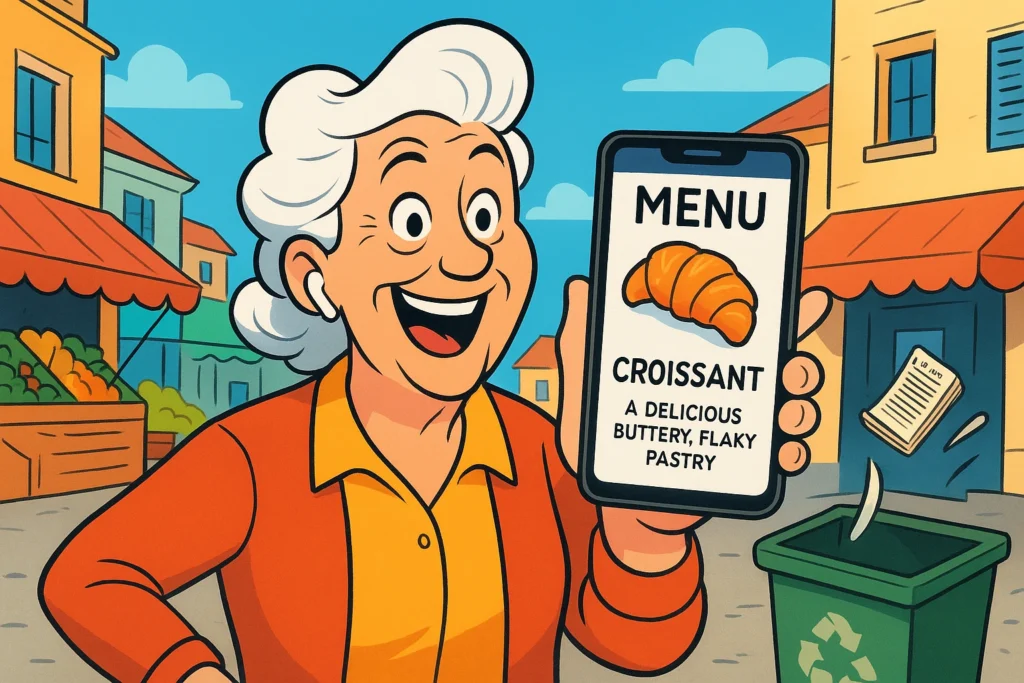
Have you ever stood in a charming European bakery, overwhelmed by the delightful smells, but completely paralyzed by the menu? You want a croissant. You know the word “croissant.” But everything else looks like a typo from a cat walking across a keyboard. You resort to the universal language of travelers: smiling, pointing, and hoping for the best. You might get that flaky pastry, or you might end up with a pickled herring tart. It’s a culinary coin toss.
For generations, the only tools we had were a pocket-sized phrasebook with font so small you needed a microscope, or frantically acting out charades in the middle of a busy street. (“Where is the… uh… big church with the bells?”) It was part of the adventure, sure, but also a little bit terrifying.
Well, get ready to toss that phrasebook in the recycling bin. Technology, which often feels like it’s designed by and for 15-year-olds, has finally produced something that feels like pure magic for the rest of us: real-time AI translators. Think of it as having a tiny, multilingual diplomat living in your phone or even your earbuds, ready to smooth over any communication bumps.
Before you imagine a tiny person with a stack of dictionaries inside your phone, let’s quickly demystify this. When we say “AI translator,” we’re talking about a smart program that uses Artificial Intelligence to translate languages on the fly. It’s built on a couple of clever ideas:
It’s the difference between saying “The car red is” and “The car is red.” One is confusing, the other is clear. NMT aims for clarity.

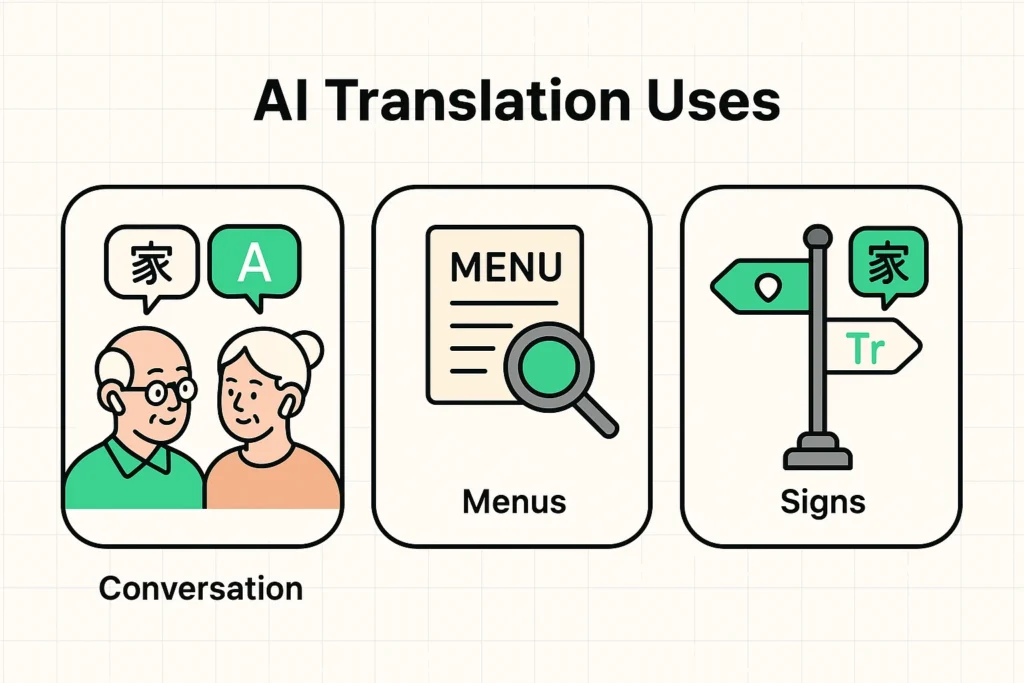
The wonderful thing about this technology is that it comes in a few different flavors, so you can pick what works best for you.
Imagine you’re on that dream trip to Italy. Instead of sticking to tourist traps where everyone speaks English, you can now wander off the beaten path with confidence.
This technology isn’t just a gimmick; it’s a tool that fosters independence and turns a potentially stressful experience into a delightful adventure. It gives you the freedom to be curious.
As amazing as this technology is, it’s important to remember that it’s not perfect. It’s more like a brilliant but very literal-minded assistant.
AI translators can sometimes struggle with:
The key is to manage your expectations. Use short, simple sentences. Speak clearly. And always keep a sense of humor about it. If the translation comes out weird, just smile and try rephrasing. After all, learning how to tell fact from fiction online is a useful skill, even when it’s your own phone doing the fibbing!
Ready to try the earbud magic? If you have a recent iPhone and a pair of modern AirPods (like AirPods Pro 2), setting it up is easier than you think.
It’s a simple process that unlocks a whole new way to interact with the world.

Mostly, yes. The AI needs to connect to its giant brain on the internet to perform the translation. However, some apps like Google Translate allow you to download specific languages for offline use. This is a lifesaver if you’re traveling somewhere with spotty Wi-Fi. Just be sure to download the languages you need before you leave home!
This is a great question. When you use a translation service, your words are sent to a company’s servers (like Google or Apple). These companies generally say they anonymize the data, but it’s a good reminder to be cautious. Avoid translating sensitive personal information like bank details or passwords. For most travel conversations, it’s perfectly safe, but it’s always smart to prioritize staying safe online.
Learning “please,” “thank you,” and “where is the bathroom?” in the local language is always a wonderful sign of respect and will be appreciated. Think of AI translators as your backup, not your replacement for good manners. Use them to handle the complex stuff you couldn’t possibly learn from a phrasebook.
For most people, starting with Google Translate is a great choice. It’s free, supports a massive number of languages (including camera and conversation modes), and is very user-friendly.
The world is a big, beautiful, and fascinating place. Language shouldn’t be a barrier that keeps you from exploring it. Real-time AI translators are more than just fancy gadgets; they are keys that unlock doors to new cultures, new foods, and new friends.
So go ahead, book that trip you’ve been dreaming of. Pack your bags, charge your phone, and step out into the world with the confidence of knowing you have a super-smart interpreter right in your pocket. You might be surprised at the connections you make when you can finally understand what everyone is saying. Now, go find that perfect croissant—no pointing required.