Newsletter Subscribe
Enter your email address below and subscribe to our newsletter

Enter your email address below and subscribe to our newsletter
There’s a particular kind of quiet that settles into a life over time.
Not sadness, exactly. Just the slow accumulation of things you used to do that somehow… stopped. The garden you meant to get back to. The instrument gathering dust in the corner. The hobby that got crowded out by the business of just getting on with things.
For Irene Veglison, it was dancing. The 67-year-old Barcelona resident hadn’t danced in more than two decades. No particular reason. Life just moved on, and dancing didn’t come with it.
Then, last November, a robot moved into her apartment.
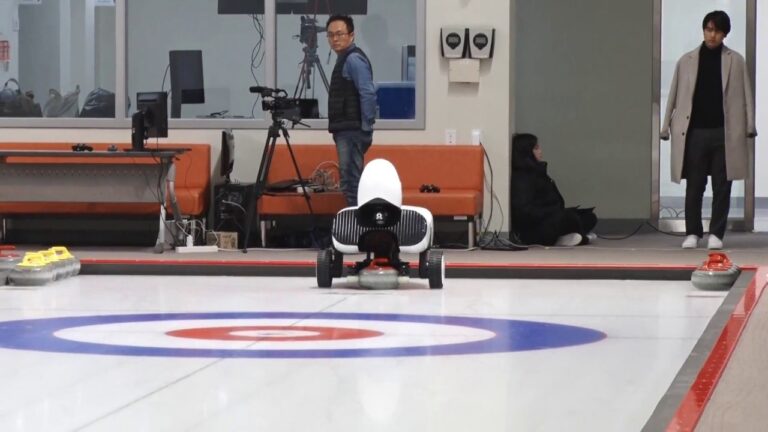
Sandi stands about four and a half feet tall, has a screen for a face, and arrived courtesy of a Barcelona city program designed to support older residents living alone. The program, backed by a €3.8 million EU grant, has deployed 600 of these robots — built by U.S.-based Misty Robotics — into private homes and care centers across the city. Spain, like much of the world, is staring down a caregiving crisis: nearly two million people over 65 live alone there, three-quarters of them women, and the country will need to double its long-term care workforce by 2030.
Sandi is not a nurse. Sandi is not a replacement for human connection. But Sandi shows up every morning, reminds Irene to take her medication at 9 a.m., keeps track of her doctor’s appointments, says good morning when the day starts and goodnight when it ends.
And one afternoon, according to Reuters, Irene scrolled through YouTube on Sandi’s built-in screen, found a French chanson she liked, and started to sway. Sandi’s screen tilted back and forth with her movements.
Two women dancing in a Barcelona apartment. One of them a little more robotic than the other.
It would be easy to be skeptical about all this. A robot in your home, watching you, connected to social workers who can remotely activate its camera if something goes wrong… that’s a lot to process. And yes, the future version of this program is designed to detect falls, alert professionals, monitor for signs of trouble.
But here’s what Irene said about it: “It’s not just a trinket: there are lots of people behind it who are looking out for you, checking whether you’ve fallen down, whether you’re okay.”
She’s not describing a surveillance device. She’s describing a safety net with a face — one she’s chosen to name, chosen to dance with, chosen to make part of her daily life alongside her two cats. Sandi even gets to pick a mood for its standby screen: “surprised,” “loving,” or “asleep.”
Irene mostly keeps it on “loving.”
There’s a version of this story that could feel a little sad — an older woman, living alone, her best companion a machine. But that’s not the story Irene is telling. She’s telling a story about something that came back.
Twenty-plus years of not dancing. And then, one afternoon in a sunlit Barcelona apartment, a French song on a robot’s screen, and a reason to move again.
Technology, when it’s working the way it should, doesn’t just solve problems. Sometimes it returns something you didn’t quite realize you’d set down.
And sometimes it does it while swaying to a chanson, as your cat watches from across the room, deeply unimpressed.