Newsletter Subscribe
Enter your email address below and subscribe to our newsletter

Enter your email address below and subscribe to our newsletter
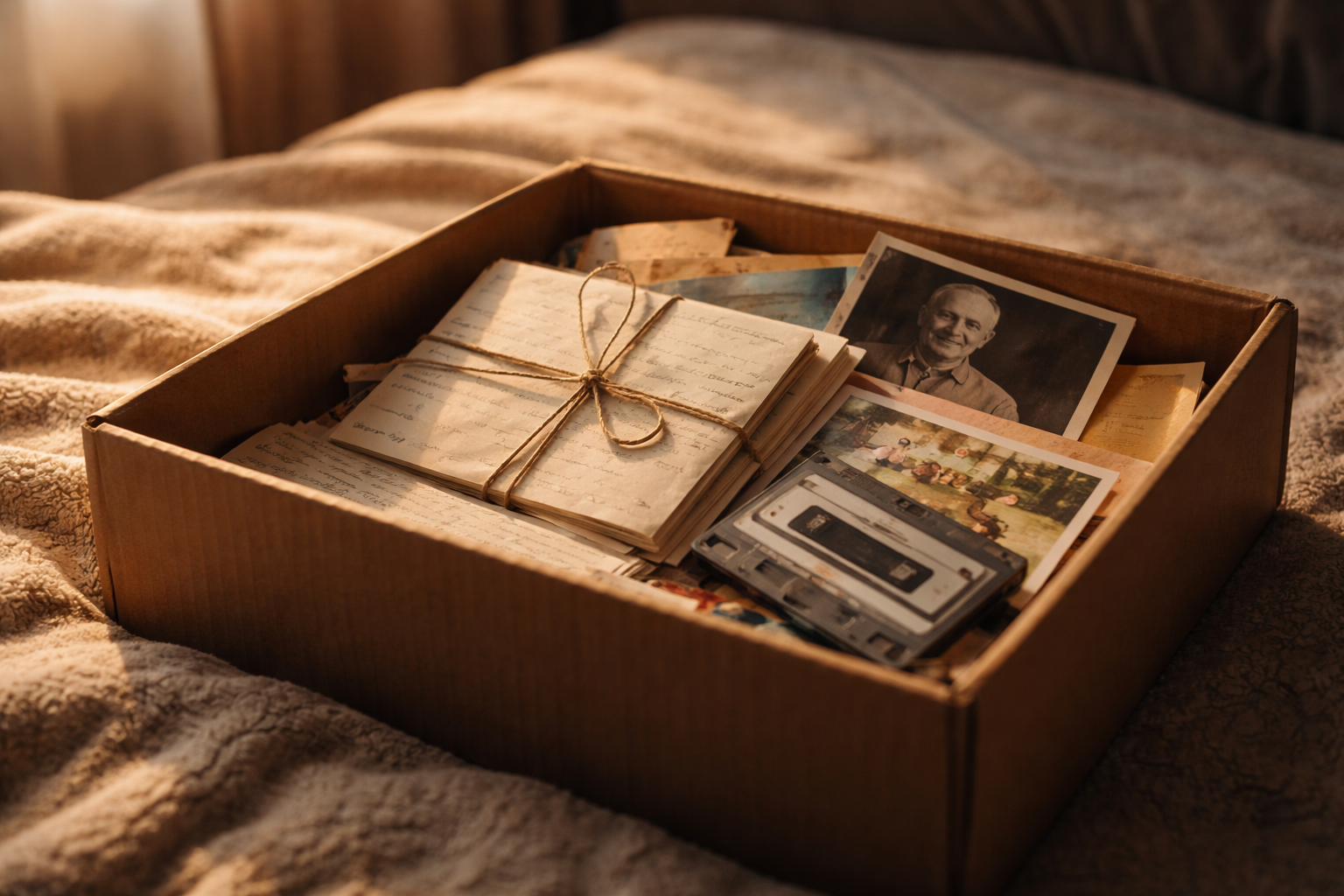
Most of us have a box somewhere. Maybe it’s in a closet, maybe it’s in the attic behind the Christmas decorations. Inside are letters. Cards. A few photos with curled edges. Maybe a voice on an old answering machine tape you can’t bring yourself to erase.
These things are precious. They’re also one-directional. You can read the letter, but you can’t write back. You can hear the voice, but you can’t ask it a question.
Dr. Muhammad Aurangzeb Ahmad wanted to change that.
Ahmad is a computer scientist and professor at the University of Washington. His father, Mushtaq Ahmad Mirza, passed away in 2013 at the age of 73.
Two years later, Ahmad’s youngest child was born. He thought about his own grandparents, who had died before he turned five. He barely knew them. And now his children would have zero memories of their grandfather.
So Ahmad gathered his father’s letters, text messages, and hours of audio recordings from conversations they’d had together. He fed it all into an AI model he built himself.
He called it Grandpabot.
Grandpabot isn’t a video or a slideshow. It’s a text-based chatbot that mimics Ahmad’s father’s personality, his humor, his storytelling style, the way he’d answer a question.
Ahmad’s children grew up interacting with it. When they were little, he’d type their questions. Now they type their own.
And here’s where it gets interesting.
During COVID, his youngest daughter had only ever seen an aunt through video calls on a smartphone. When she finally met her aunt in person, she was shocked. She genuinely thought her aunt lived inside the phone.
The kids applied similar logic to Grandpabot. They decided their grandfather lived in two places: the computer and Heaven. Sometimes they’d ask the bot to pass along a message to grandpa on the Heaven end of things.
If that doesn’t make you feel something, check your pulse.
Ahmad calls Grandpabot “a modern-day photo album,” just one that can talk back. His kids ask it questions they probably wouldn’t ask him. They’ve developed a familiarity with their grandfather that wouldn’t have been possible from stories alone.
But Ahmad is honest about something important: the bot is based on his version of his father. His older siblings remember a strict, traditional South Asian dad from the 1950s. Ahmad’s version? More like “the equivalent of an American hippie dad from the ’60s.”
Same man. Different lens. Grandpabot captures one angle, not the whole person.
Ahmad isn’t the only one doing this. “Griefbots,” AI simulations built from a person’s digital footprint, are a growing trend. Some companies already offer them as a service.
And Ahmad, the guy who literally built one, has concerns.
“The danger I foresee is that these companion bots can potentially be very addictive,” he told UW Bothell, “and people may start neglecting real people and real relationships.”
He’s also made a telling personal decision. When asked if he’s archived his own personality for his kids or future grandchildren to use someday, his answer was no. Not because the technology isn’t there. But because right now, he’d rather spend that time actually being there.
That might be the most important part of this whole story.
If you could talk to a parent or grandparent you’ve lost, even knowing it’s a simulation, would you want to? Would it bring comfort, or would it make things harder?
Would you want your own grandchildren to have a digital version of you someday?
There’s no wrong answer. Technology keeps handing us possibilities that our emotions haven’t quite figured out yet. This is one of them.
We’d love to hear from you.