Newsletter Subscribe
Enter your email address below and subscribe to our newsletter

Back in the day, if you wanted to take a trip down memory lane, you had to drag out the dreaded slide projector. You’d sit in a dark room watching dusty, upside-down pictures of Uncle Frank’s 1974 trip to the Grand Canyon while the machine hummed like an angry hornet. If you were really lucky, the bulb would burn out after ten minutes, sparing you from the remaining 400 slides of various rocks.
Fast forward to today, and the tech whizzes in Silicon Valley have invented a completely new way to revisit the past. It involves strapping what looks like a futuristic pair of ski goggles to your face to digitally teleport you anywhere in the world. It sounds a little goofy, and yes, you might look like a sci-fi movie extra while wearing it in your living room.
But beyond being a neat party trick, Virtual Reality (VR) is turning out to be a remarkable tool for seniors, especially those navigating early-stage dementia. It’s not just about playing flashy video games; it’s about unlocking memories that sometimes feel just out of reach. By placing someone inside a vibrant, immersive environment, VR can gently trigger positive memories and bring a little bit of magic back into daily life.
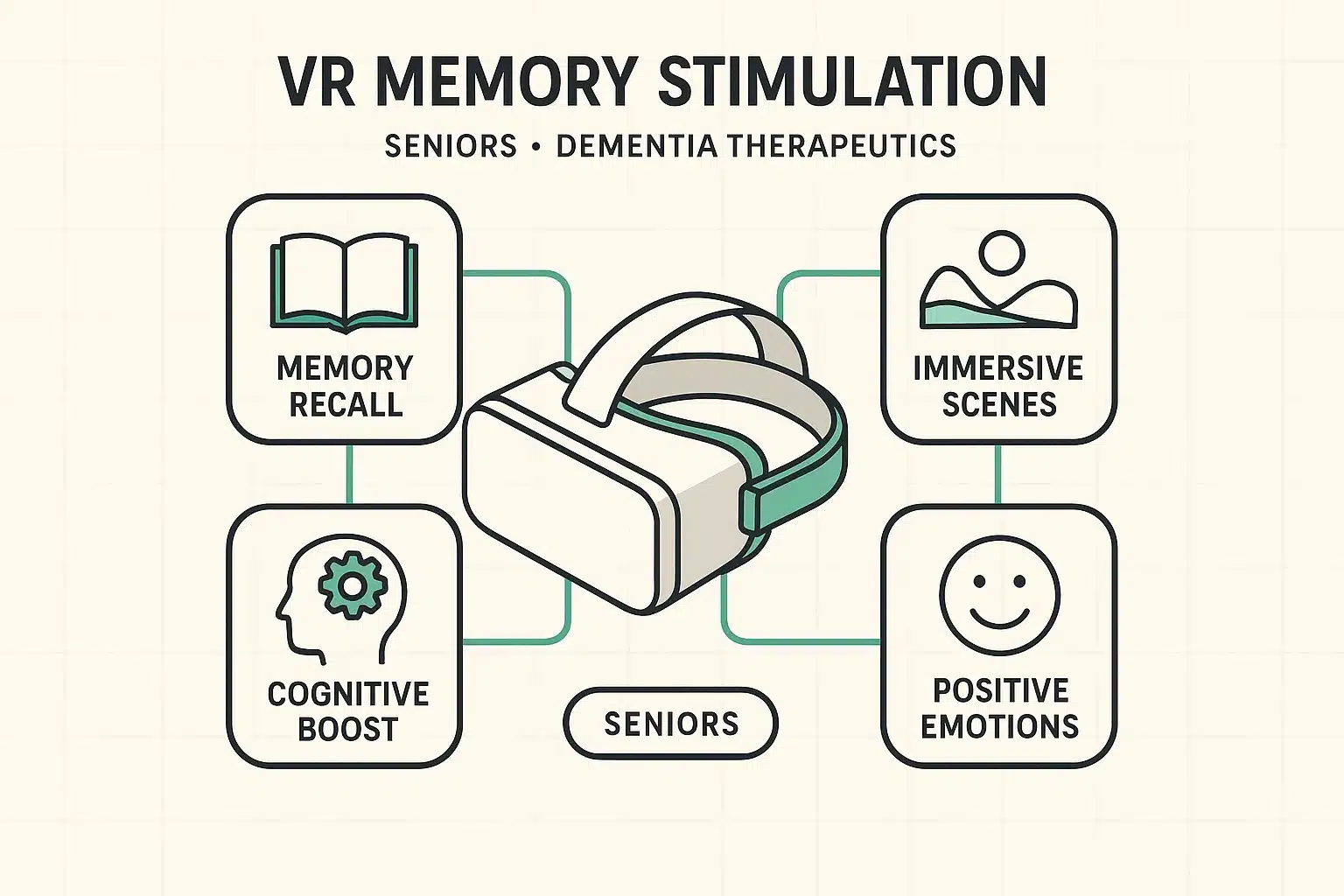
To understand why this works, we have to talk about how our brains store memories. Often, memories aren’t permanently erased by early-stage dementia; they are just locked behind a door where the key has been misplaced. A specific sound, sight, or spatial feeling can act as a skeleton key, suddenly swinging that door wide open.
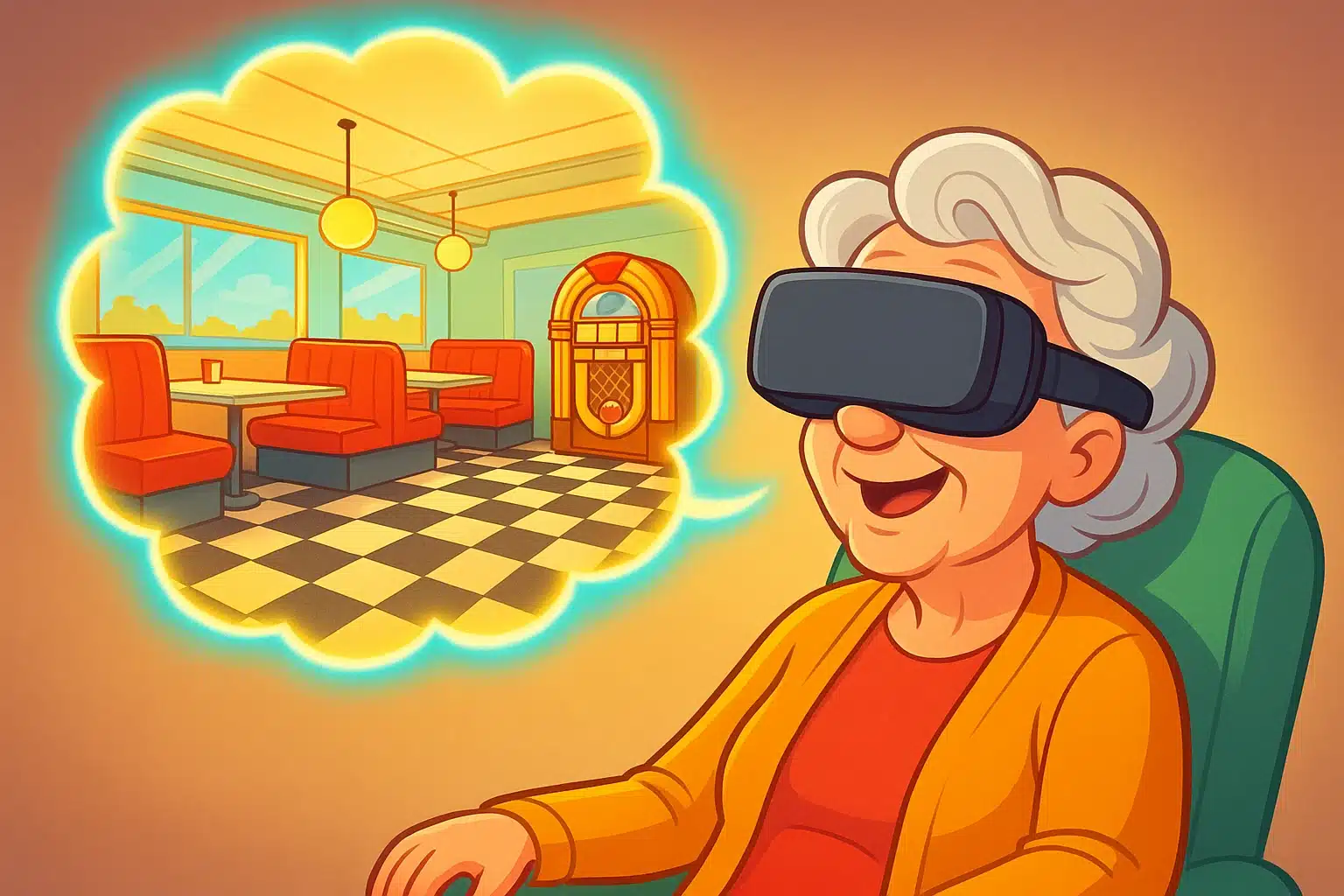
When you put on a VR headset, the screens are so close to your eyes that your brain actually believes you are in a new place. If the VR headset drops you into a recreation of a 1950s diner, complete with the sound of a jukebox and clinking milkshakes, your brain reacts as if you are truly sitting in a booth. This is called “Reminiscence Therapy,” and researchers have found it incredibly effective.
Instead of just looking at a flat, faded photograph of a childhood home, a senior can “stand” on the street using programs like Google Earth VR. They can look up at the trees, turn around to see the neighborhood park, and suddenly remember the name of the neighbor’s dog from 1962. It turns a passive attempt at remembering into a fully active, engaging experience that often brings smiles, stories, and a renewed sense of self.
Now, before you rush out and download everything on the digital store, let’s talk strategy. The goal here is gentle, positive stimulation, not an adrenaline rush. You want to avoid any virtual experiences that involve fighting zombies, riding rollercoasters, or dodging laser beams.
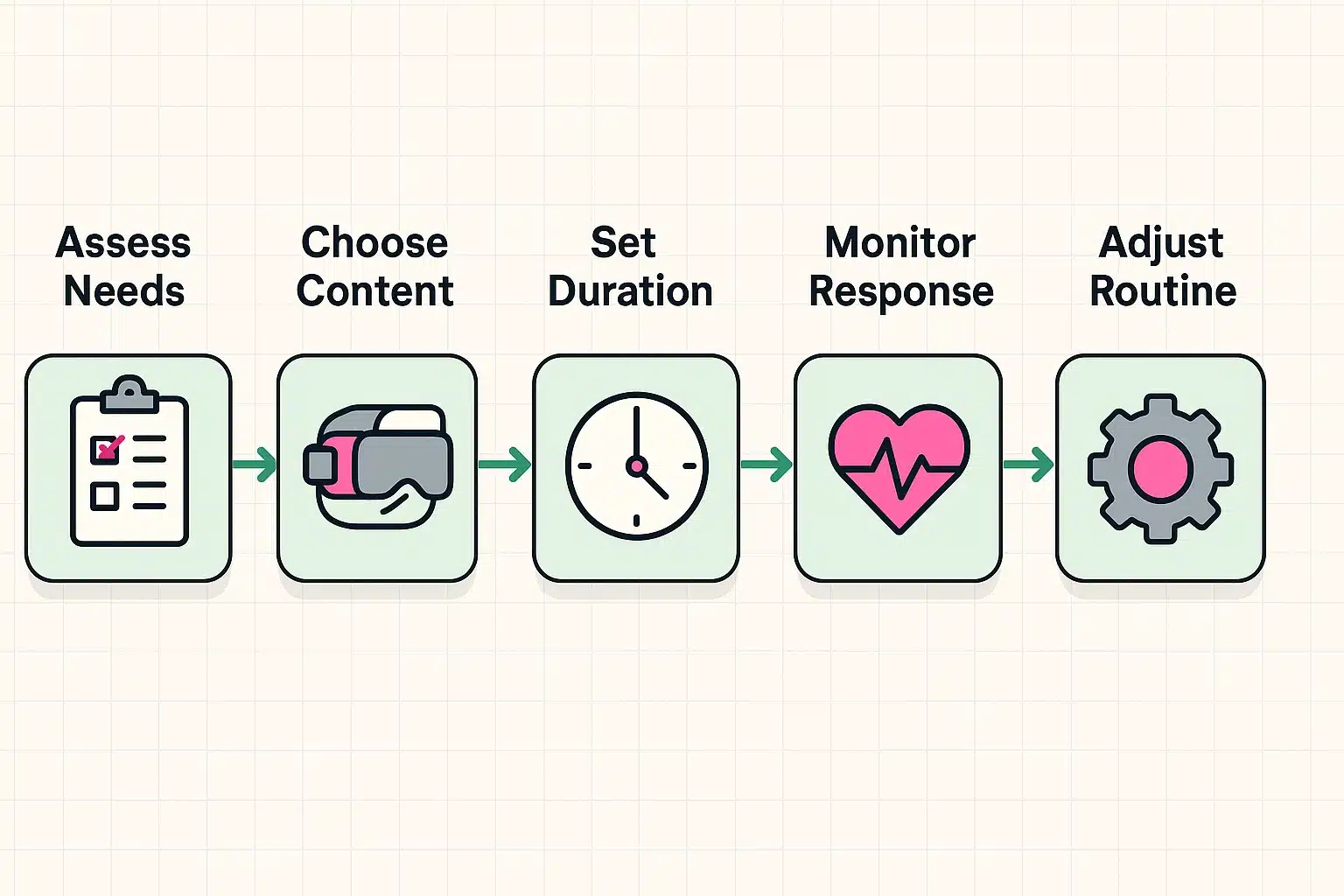
Start by thinking about the person’s life history and what brings them joy. Did they love hiking in the mountains, visiting the beach, or watching classical music concerts? There are specifically designed therapeutic VR programs tailored for seniors that offer guided, calming tours of nature reserves, historic cities, and museums.
It is also highly recommended to preview the content yourself before handing over the headset. You want to ensure the pacing is slow and the visuals are clear. A gentle boat ride down the canals of Venice might be the perfect afternoon getaway, sparking stories about a honeymoon taken decades ago.
Let’s address the elephant in the room: when you have a computer strapped over your eyes, you are entirely blind to your actual surroundings. You will not see the coffee table, the dog, or that rogue Lego your grandson left on the rug. Safety is the absolute top priority when introducing VR to anyone, especially seniors with cognitive challenges.
Rule number one of senior VR club: everyone stays seated. A sturdy, comfortable chair, ideally with armrests, provides physical grounding and prevents anyone from accidentally wandering into a wall while trying to pet a virtual puppy. It also helps trick the inner ear, significantly reducing the chances of motion sickness.
Caregivers should always stay right next to the person using the headset, talking them through the experience. Keep sessions short—around 10 to 15 minutes is the sweet spot. If the user seems overwhelmed or confused by the technology at any point, gently help them remove the headset and transition back to the real world with a cup of tea and a chat.
It can, which is why we highly recommend starting with very short sessions (5-10 minutes) and exclusively using experiences where you aren’t “moving” fast in the virtual world. Sticking to seated, stationary experiences—like sitting on a virtual beach or exploring a childhood street in Google Earth—keeps motion sickness at bay. If you feel woozy, simply take the headset off and wait for it to pass.
Thankfully, no! Today’s standalone VR headsets, like the Meta Quest, don’t require messy wires hooked up to a giant computer. You just charge them up like a cell phone, turn them on, and follow the simple on-screen prompts. However, for a senior with dementia, a caregiver or family member should definitely handle all the setup, downloading, and launching of the apps beforehand.
Yes! Developers are finally waking up to the fact that not everyone wants to play digital dodgeball. Companies like Rendever and MyndVR create content specifically designed for senior care, focusing on reminiscence therapy, animal interactions, and cultural exploration. These platforms are designed to be intuitive, calming, and cognitively beneficial.
Technology doesn’t always have to be about making things faster or more complicated; sometimes, it’s about making us feel more connected to who we are. Virtual reality offers a profound, modern way to honor the past and bring joyous moments to those facing the frustrations of dementia.
If you are a caregiver or family member, consider looking into introductory VR headsets or checking if local senior centers have VR therapy programs you can try out. Start a conversation with your loved ones about the places they’d most love to see again. Who knows? You might just find yourselves sharing a virtual sunset in Paris by next Tuesday, no passports or luggage required.