Newsletter Subscribe
Enter your email address below and subscribe to our newsletter

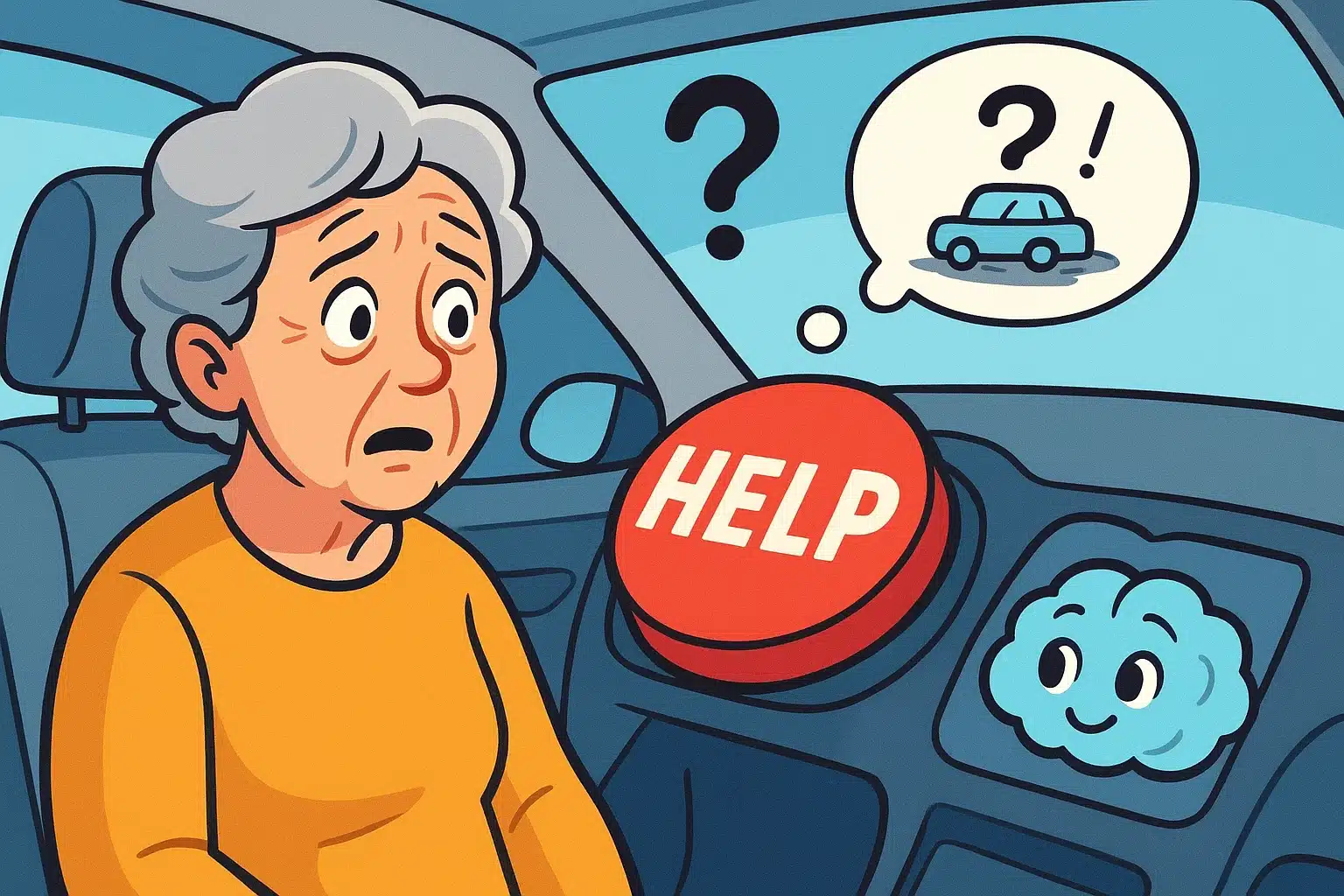
Let’s say you’re riding in a self-driving car, enjoying the futuristic novelty of having a robot chauffeur. Suddenly, the car hits a pothole the size of a baby grand piano and comes to a dead stop.
Who do you yell at? The dashboard? Do you roll down the window and shake your fist at a cloud?
For many seniors, the idea of giving up the steering wheel to a computer is terrifying enough. But what truly causes the most anxiety isn’t the driving part—it’s the what-ifs. What if the car gets confused by wet cement? What if you feel faint and need a doctor right now?
If you’ve ever found yourself asking these questions, take a deep breath. You are entirely normal for wondering what happens when a machine with no human driver runs into real-world chaos. Today, we are going to demystify the emergency protocols in autonomous vehicles (AVs). We will show you exactly how these high-tech chariots are programmed to keep you safe, secure, and entirely un-stuck when things go wrong.
When you drive your own car, you are the captain of the ship. You make the decisions, you avoid the squirrels, and you pull over if your tire blows out. Handing over that control feels unnatural, like letting someone else organize your kitchen cabinets.
But self-driving cars aren’t just empty metal boxes hurtling down the road blindfolded. They are actually surrounded by an invisible safety net made of three core layers. If you’ve ever set up alexa for seniors to turn on the lights or call for help at home, you already know that smart tech can be a great assistant.
A self-driving car takes this a step further. The car is equipped with 360-degree sensors, an automated “safe stop” reflex, and a living, breathing human being who is monitoring your ride remotely. Let’s look at exactly how this trio leaps into action during an emergency.
When humans get confused on the road, we sometimes do unpredictable things. We might slam on the brakes, swerve wildly, or yell colorful words at the car next to us. Self-driving cars do not have emotions, which means they do not panic.
Instead, they rely on a protocol with a very boring, technical name: the “Minimal Risk Condition” (MRC). To keep things simple, let’s just call it the “Safe Harbor” maneuver. If a self-driving car encounters a situation it doesn’t understand—like a flooded road, a massive detour, or a sudden mechanical failure—it is programmed to instantly find a safe spot to park.
It will gently pull over to the shoulder, a parking lot, or the safest nearby curb, and turn on its hazard lights. It never just shuts down in the middle of a busy highway. Once parked, the car immediately contacts its remote support center to figure out the next steps, keeping you safely out of traffic while the humans sort it out.
This is perhaps the biggest concern for senior riders: “What if I have a medical crisis and can’t speak?” In a normal taxi, you’d have to alert the driver. In your own car, you’d have to somehow safely pull over while in distress.
Self-driving companies are highly focused on this specific scenario. First, many modern AVs are equipped with interior sensors that can detect lack of movement or unusual distress. But even more importantly, you have direct, two-way audio access to a human “Remote Guardian.”
You probably already rely on a smart pill dispenser or an app as a daily medication reminder to keep your health on track. Think of the Remote Guardian as a similar health-safety backup. If you press the emergency button—or if the car detects a serious problem—this human operator speaks to you instantly through the car’s speakers.
If you are unresponsive, the human operator will automatically route the car to safely pull over, dispatch 911 directly to your exact GPS coordinates, and unlock the doors so first responders can reach you. It’s much faster than trying to fumble with your phone during a crisis.
We’ve all seen the viral news stories. A self-driving car accidentally drives into a freshly paved road, gets stuck in wet cement, and sits there looking confused while construction workers throw up their hands in despair.
These stories are funny, but they make us wonder what happens to the passenger inside. If you are ever the unlucky soul stuck in a “robot car fail,” you won’t be abandoned. This triggers what the industry calls a Support Dispatch.
The moment the car detects it cannot physically move, the Remote Guardian contacts you via the car’s screen and speakers. They will explain exactly what happened and dispatch an automated rescue team. Much like calling AAA, a physical support vehicle is sent to your location to retrieve you, get you into a replacement vehicle, and tow the confused robot car away.
One of the biggest myths about autonomous vehicles is that passengers are trapped inside a locked computer. In reality, self-driving cars like those from Waymo or Cruise are designed with large, clearly marked emergency buttons.
Usually located in the roof console above your head or right in front of you on a touchscreen, there is a “Help” button and a “Pull Over” button. You don’t need a degree in computer science to use them. Pressing the “Pull over” button tells the car to safely stop the ride and let you out at the next safest curb.
Pressing “Help” connects you to a real human instantly. While knowing how to trigger your iphone emergency sos is a great life skill to have in your pocket, the car’s built-in interface is actually designed to be even easier to reach in a panic.
No, a human is not staring at you through a camera during your entire ride—that would be incredibly creepy! However, a remote support team is monitoring the car’s status on a digital map. They only activate the internal cameras and microphones if an emergency is triggered, or if you press the “Help” button.
Usually, no. Remote operators do not “drive” the car with a video game joystick. Instead, they act like air traffic controllers. They give the car new instructions, like “pull over to the left,” or “take a different route,” and the car’s computer safely executes the driving maneuver.
Your cell phone is only needed to unlock the car and start the ride. Once you are inside, the car has its own cellular connection, microphones, and speakers. If your phone battery dies, you can still use the in-car touchscreens and buttons to contact support, change your destination, or end the ride.
Absolutely not. By law, passenger vehicles must have physical door handles that manually override the computer. Even if the car’s computer completely shuts down, you can pull the manual door latch and walk away. You are never physically trapped.
Self-driving cars can feel intimidating, mostly because they represent a massive leap from the way we’ve done things for the last century. But beneath the complex sensors and futuristic lasers, the safety philosophy is actually quite old-fashioned: When in doubt, stop safely and call for backup.
By understanding how these emergency protocols work, you take the mystery out of the machine. The next time you see a driverless car humming quietly down the street, you won’t have to wonder what happens when things go wrong. You’ll know that there’s an invisible safety net standing by—and that you always have the power to press the big button and talk to a human.