Newsletter Subscribe
Enter your email address below and subscribe to our newsletter

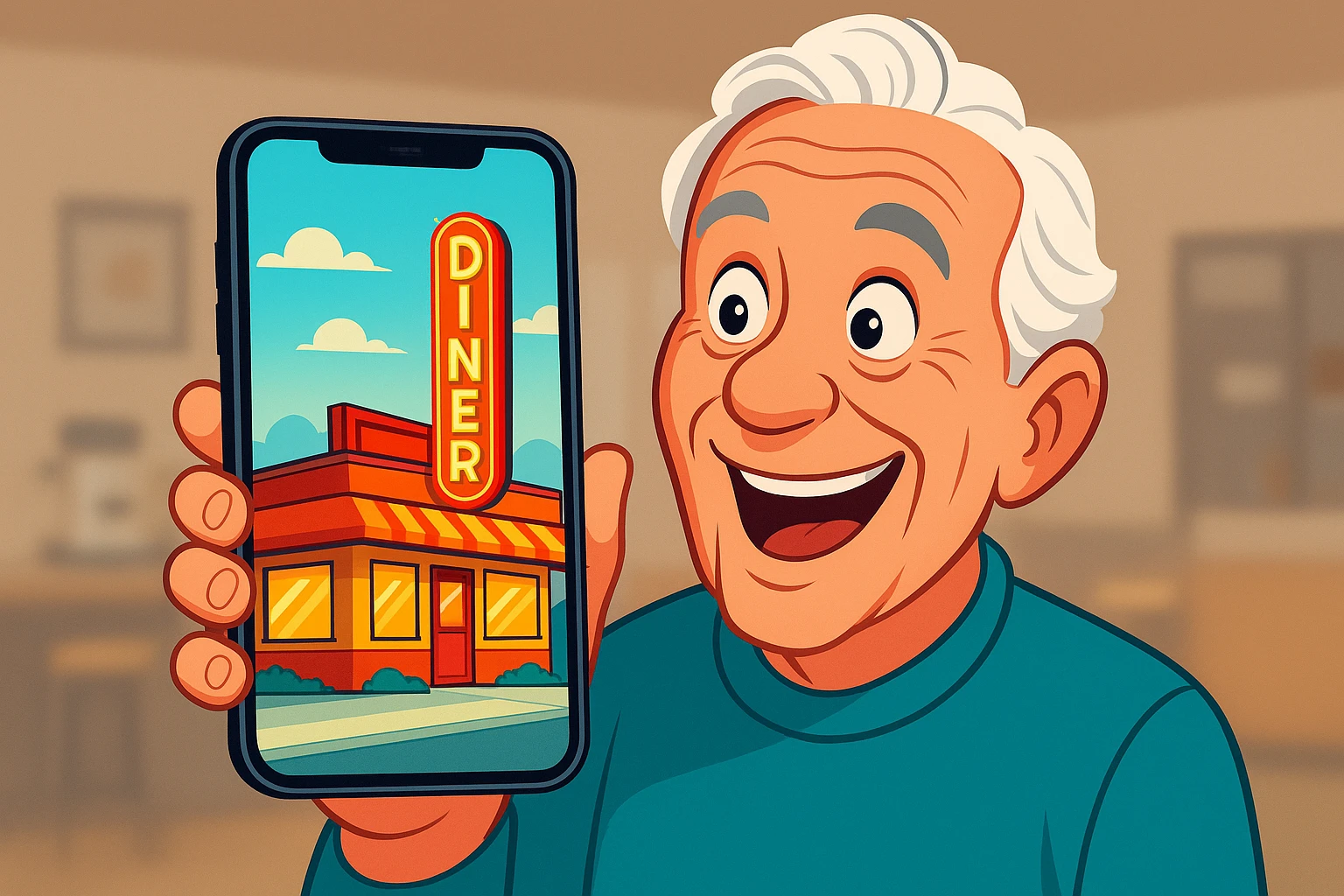
Imagine walking down your local Main Street. You want to point out the exact spot where the legendary 1970s diner used to be, but instead, you’re staring at a minimalist coffee shop that sells six-dollar lattes infused with avocado. You try to explain the majestic neon sign to your grandkids, but they’re just looking at you like you’re speaking ancient Greek. You could drag them to the local library’s microfiche machine, but let’s be honest: nobody has time to thread that giant spool of film anymore.
What if I told you that you could just point your smartphone at that coffee shop, and magically see the old diner spinning right there on your screen? It’s not science fiction, and you don’t need an engineering degree to do it. It’s a mix of Augmented Reality (AR) and something called a “Digital Twin.” And unlike the instructions for assembling a Swedish bookshelf, this technology is actually designed to make sense. Let’s take a stroll through the digital version of your neighborhood, no walking shoes required.
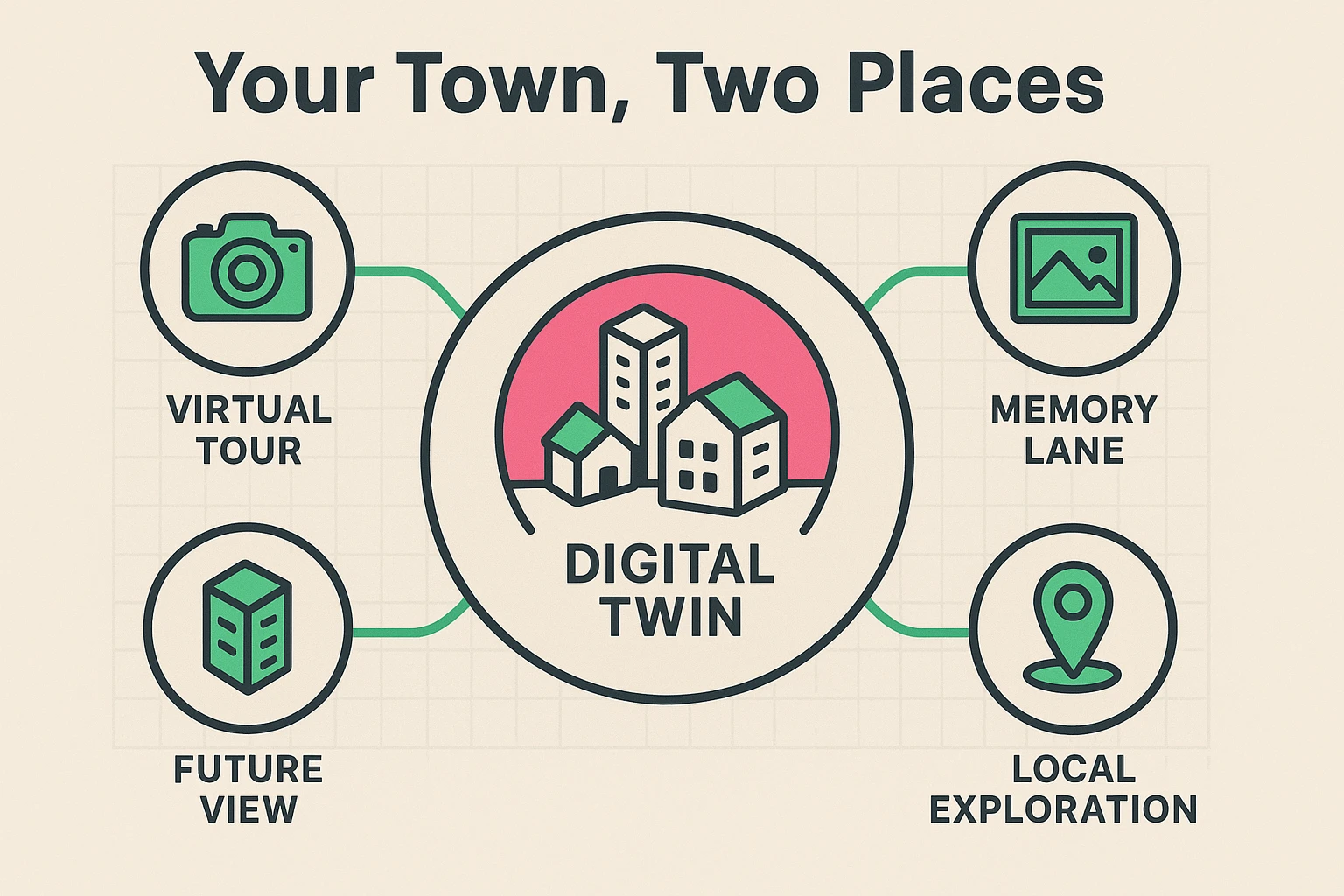
If you hear the phrase “Digital Twin,” you might panic and think someone has uploaded your personality to the internet. Rest easy, they haven’t. In the tech world, a Digital Twin is simply a highly accurate, living map of a physical place. Think of it like this: a regular virtual tour (like those generic Eiffel Tower videos) is like a photograph. It’s nice to look at, but it doesn’t change.
A Digital Twin, on the other hand, is like a mirror. If the city builds a new park bench in real life, it appears in the Digital Twin. Urban planners use these systems to figure out where to put traffic lights without causing a ten-mile traffic jam. But for us regular folks, these living maps are becoming a fascinating way to explore our own backyards from the comfort of our favorite armchair.
Now let’s talk about Augmented Reality, or AR. Tech companies love using the phrase “spatial computing,” which sounds like something NASA uses to parallel park the space shuttle. In plain English, AR simply means looking through your phone’s camera and seeing digital images layered over the real world.
Remember the Pokémon Go craze a few years back, where people were wandering into traffic to catch digital monsters on their phones? It’s the exact same technology, but we’re going to use it for something much more interesting than imaginary rodents. Cities and historical societies are now creating AR apps that let you stand on a street corner, point your phone, and see historical photos perfectly lined up with modern buildings. It’s literally a time machine in your pocket.
Sure, looking at old buildings is fun, but this technology is genuinely useful for everyday life. Let’s say you have some mobility concerns and want to visit a new neighborhood or park. Using a local digital twin or AR map on your tablet, you can essentially “pre-walk” the route to check for steep stairs, uneven sidewalks, or a glorious lack of park benches. It takes the guesswork out of your afternoon outing.
It’s similar to the convenience of smart home tech. Just as you might set up alexa for seniors to quickly check the weather forecast or lock the doors before a walk, you can use these digital maps to scout the terrain before you ever lace up your shoes.
Plus, it’s the ultimate “Town Hall 2.0.” Before a developer plops a massive, ugly apartment complex down the street, some cities are putting the 3D blueprints into their digital twin. You can see exactly what it will look like from your front porch and complain about it with stunning accuracy at the next city council meeting!
We wouldn’t be doing our jobs if we didn’t pause to be the wet blanket of caution. When you use AR apps or digital map tools on your phone, you are usually giving the app permission to use your camera and track your location. They need your location to know which historical photo to show you, which makes perfect sense.
However, they do not need your permission to track your every move and sell that data to someone trying to push targeted ads for orthopedic shoes. Always check the app’s permissions when you download it. If an app that shows you historical street signs suddenly asks for access to your contacts or microphone, click “no” and find a different app. We want to see the town’s history, not hand over our own.
Ready to give it a try? You don’t need to buy a $500 piece of futuristic headgear that makes you look like a cybernetic welder. Your trusty smartphone or tablet (iPad or Android) is all you need.
Start by downloading a free app like Google Lens or Google Earth. While they aren’t dedicated entirely to your specific town’s history, their “Street View” features often have a timeline slider that lets you see how your street has changed over the last 15 years. For the deeper historical dives, search your phone’s app store for “[Your City Name] History AR” or check your local historical society’s website. Cities from Kansas City to Cape Town are currently launching incredible interactive twin projects just for this purpose!
Absolutely not! While those headsets exist (and can be fun if you don’t mind a little motion sickness), local AR and digital twin projects are designed to work perfectly on the screen of the smartphone or tablet you already own.
It is, as long as you maintain what the experts call “situational awareness.” In plain English: don’t stare so intently at the 1920s digital version of a street that you walk directly into a 2020s telephone pole. Stop walking before you start looking.
Yes, it can be a bit of a battery hog because it uses your camera, screen, and internet all at once. If you’re not on Wi-Fi, it will use your cellular data. We recommend making sure your phone is fully charged before your digital time-traveling adventure!
Technology often feels like it’s pulling us away from the real world, trapping us in a web of endless scrolling and spam emails. But local AR and Digital Twins do the exact opposite. They take the smartphone in your hand and turn it into a magnifying glass for the world right outside your front door. So, the next time your grandkids visit, skip the dusty photo albums. Hand them a tablet, take them for a walk down the block, and show them exactly what the neighborhood looked like before the artisanal coffee shops took over!