Newsletter Subscribe
Enter your email address below and subscribe to our newsletter

Enter your email address below and subscribe to our newsletter
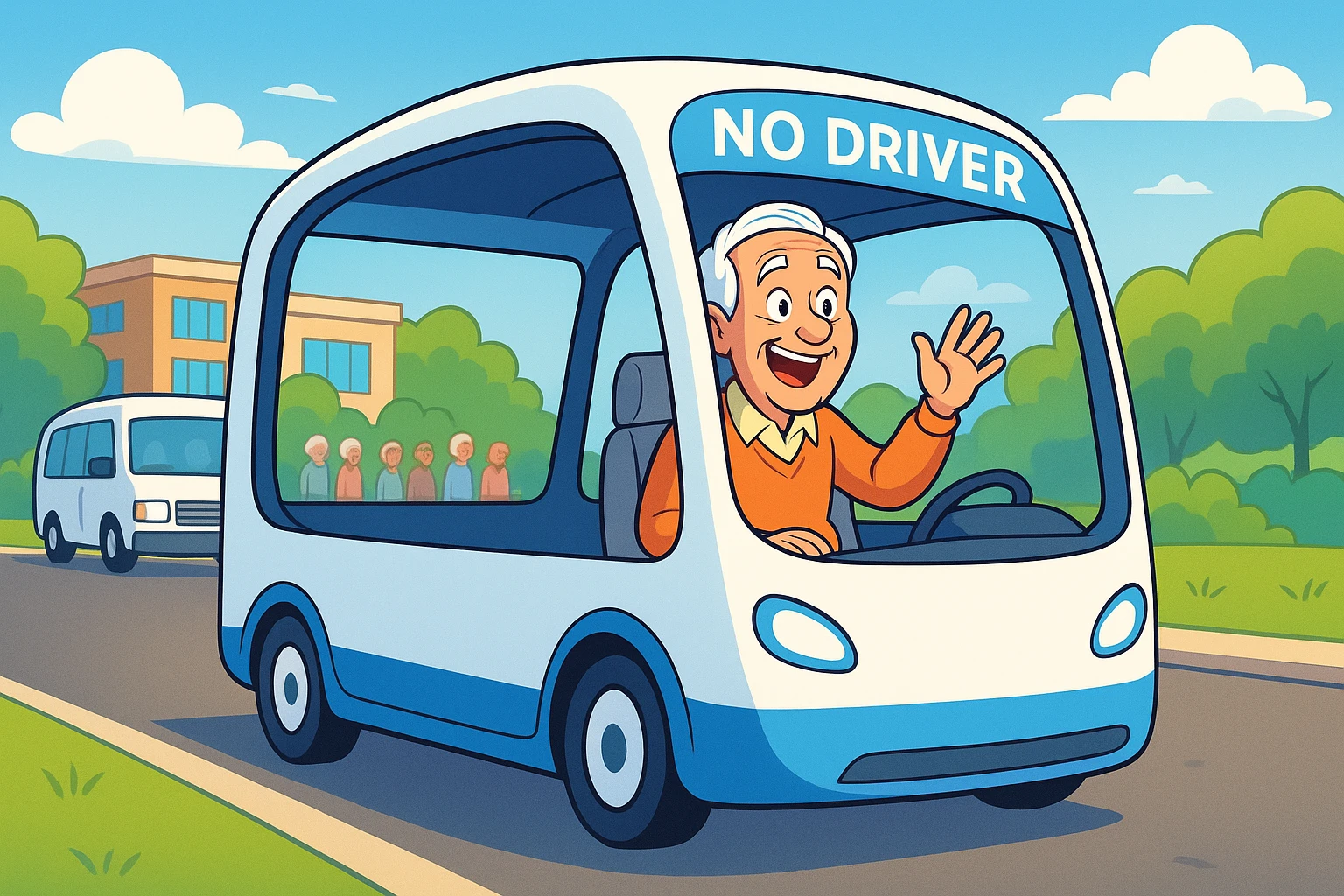
Imagine wanting to run a simple errand, like grabbing some milk from the community store or attending a Tuesday morning water aerobics class. In the old days, you had three choices. You could drive yourself, beg a relative for a ride, or take the infamous “community van.”
Ah, the community van. It’s essentially a rolling waiting room where you get the distinct privilege of touring twelve other people’s errands before finally arriving at yours. By the time you get to the pool, the water aerobics class is over, and it’s time for lunch.
If you are tired of feeling like your daily schedule is held hostage by a bus timetable, you are not alone. For many older adults, giving up the car keys feels like surrendering a massive chunk of independence. But what if you didn’t need a driver at all?
Enter the autonomous shuttle. It might sound like something out of a science fiction movie, but dedicated self-driving shuttle services are quietly taking over retirement communities across the country. And the best part? They are giving seniors their freedom back, minus the headache of parallel parking.
Let’s be honest: traditional senior transport often comes with a bit of a stigma. Nobody really wants to ride the big, clunky bus that broadcasts to the whole world that you’re on a supervised field trip to the pharmacy.
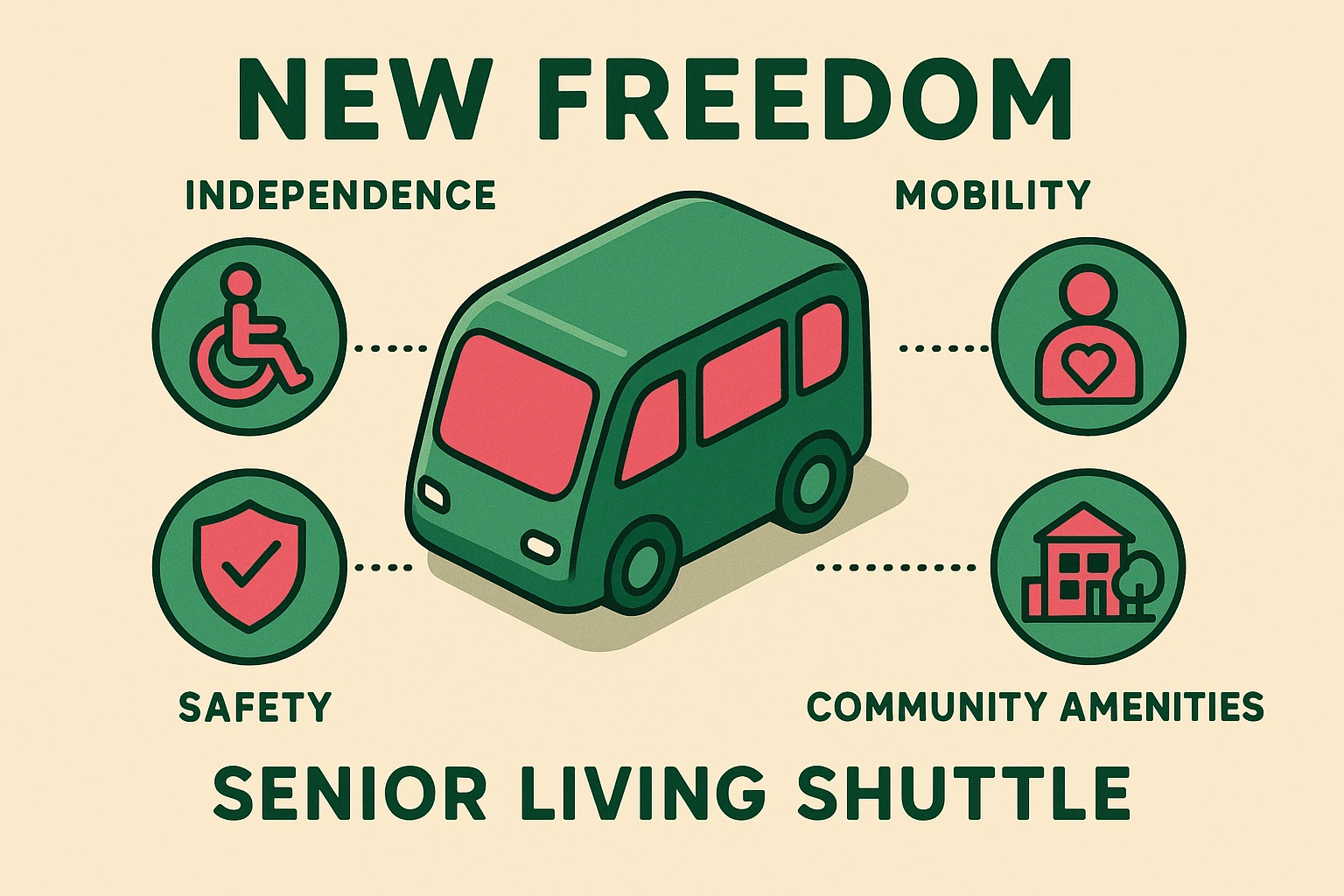
Autonomous shuttles flip this narrative completely on its head. Instead of feeling like a step backward in independence, riding in a sleek, driverless pod feels like an exclusive, high-tech perk. It replaces the “shame” of the community van with the quiet dignity of having your own personal, robotic chauffeur.
You decide when you want to go to the clubhouse, visit a neighbor, or hit the dining hall. The shuttle shows up, you hop in, and you’re off. It’s practical, dignified, and a fantastic conversation starter for when your grandkids come to visit.
If you are wondering how a vehicle without a human behind the wheel doesn’t immediately crash into a mailbox, it’s a valid question. The tech folks use intimidating phrases like “Lidar” and “Level 4 Autonomy,” but we can translate that into plain English.
Think of the shuttle’s technology as a superhero version of human senses. While we rely on two eyes and a pair of mirrors to drive, the shuttle is covered in sensors, cameras, and lasers (that’s the Lidar). These tools create a 360-degree, 3D map of everything around the vehicle at all times.
Unlike a human driver, the shuttle’s “eyes” never blink. It never gets distracted by a shiny billboard, it never tries to adjust the radio, and it certainly never spills hot coffee in its lap. “Level 4 Autonomy” simply means the vehicle drives itself completely, but only on specific, pre-mapped routes—like the roads inside your community.
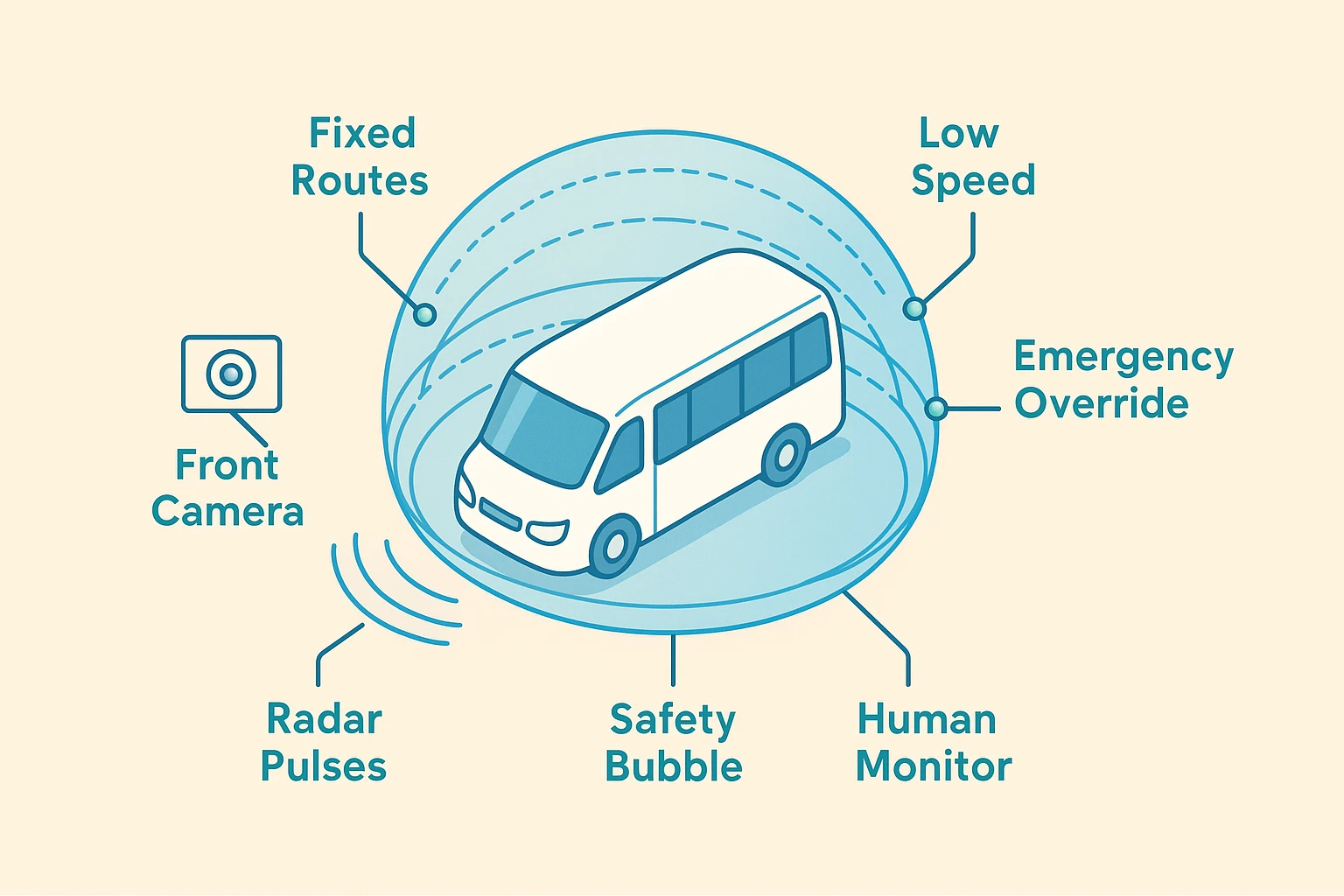
Safety is usually the biggest elephant in the room when we talk about self-driving cars. You’ve probably seen news stories about self-driving cars getting confused on busy city streets. But autonomous shuttles in senior living communities operate on what experts call a “Predictability Model.”
These shuttles aren’t dodging semi-trucks on a chaotic six-lane highway at 70 miles per hour. They are cruising along private, mapped community roads at a breezy 12 to 15 miles per hour. Because the environment is controlled, the shuttles know exactly where every stop sign, crosswalk, and curb is located.
If you’re still skeptical, science is actually on your side. According to research from the University of Florida’s College of Public Health, seniors’ trust in these vehicles jumps by 40% to 60% after just their first five-minute ride! It’s a lot like trying sushi for the first time. It sounds terrifying until you actually try it, and then you wonder why you waited so long.
So, what does it actually look like to use one of these robo-taxis? The process is designed to be as frictionless as possible, keeping accessibility top of mind.
First, you request a ride. Depending on your community’s setup, this could be through a smartphone app, a dedicated call button in your home, or even voice commands. In fact, if you’ve ever looked into setting up alexa for seniors to manage daily tasks, you’ll find that summoning your ride is becoming just as wonderfully hands-free.
When the shuttle arrives, it patiently waits. There is no impatient human driver tapping their watch while you gather your purse or fold up your walker. The doors open automatically, revealing a spacious, flat-floor cabin designed specifically for folks with mobility aids. You sit down, buckle up, and enjoy a smooth, quiet ride to the clubhouse.
It is completely natural to have questions before stepping into a vehicle that doesn’t have a steering wheel. Here are the most common questions seniors and their families ask:
You are never truly “alone” in an autonomous shuttle. Most systems feature a live remote human monitor who is tracking the vehicle’s progress at all times. There is also a highly visible, easy-to-reach two-way communication button (and usually a big red “STOP” button) right inside the cabin if you ever feel uncomfortable.
Yes! Unlike the backseat of your nephew’s cramped sedan, these shuttles are built with accessibility in mind. Most feature automated ramps, wide double doors, and secure tie-downs for wheelchairs.
This depends entirely on your specific community. Currently, most shuttles operate on a “closed-loop” within the property to guarantee safety. However, some advanced programs are beginning to map safe, low-speed routes to adjacent shopping centers.
At Senior Tech Cafe, we always keep an eye on privacy. Most shuttle services only require basic information (like your name and pick-up location) to function. However, always check with your community director about what data the transit company collects, and opt-out of any unnecessary data sharing if given the choice.
Giving up your personal vehicle doesn’t have to mean the end of your spontaneous trips to the community center. Autonomous shuttles offer a brilliant mix of cutting-edge technology and plain old-fashioned convenience.
If you or a loved one are looking into senior living communities, add “autonomous transit options” to your list of questions for the facility manager. It’s not just a fancy tech gimmick; it’s a genuine upgrade to your daily quality of life.
The next time you see one of these futuristic little pods humming down the street, don’t be intimidated. Give it a wave—it actually sees you!