Newsletter Subscribe
Enter your email address below and subscribe to our newsletter

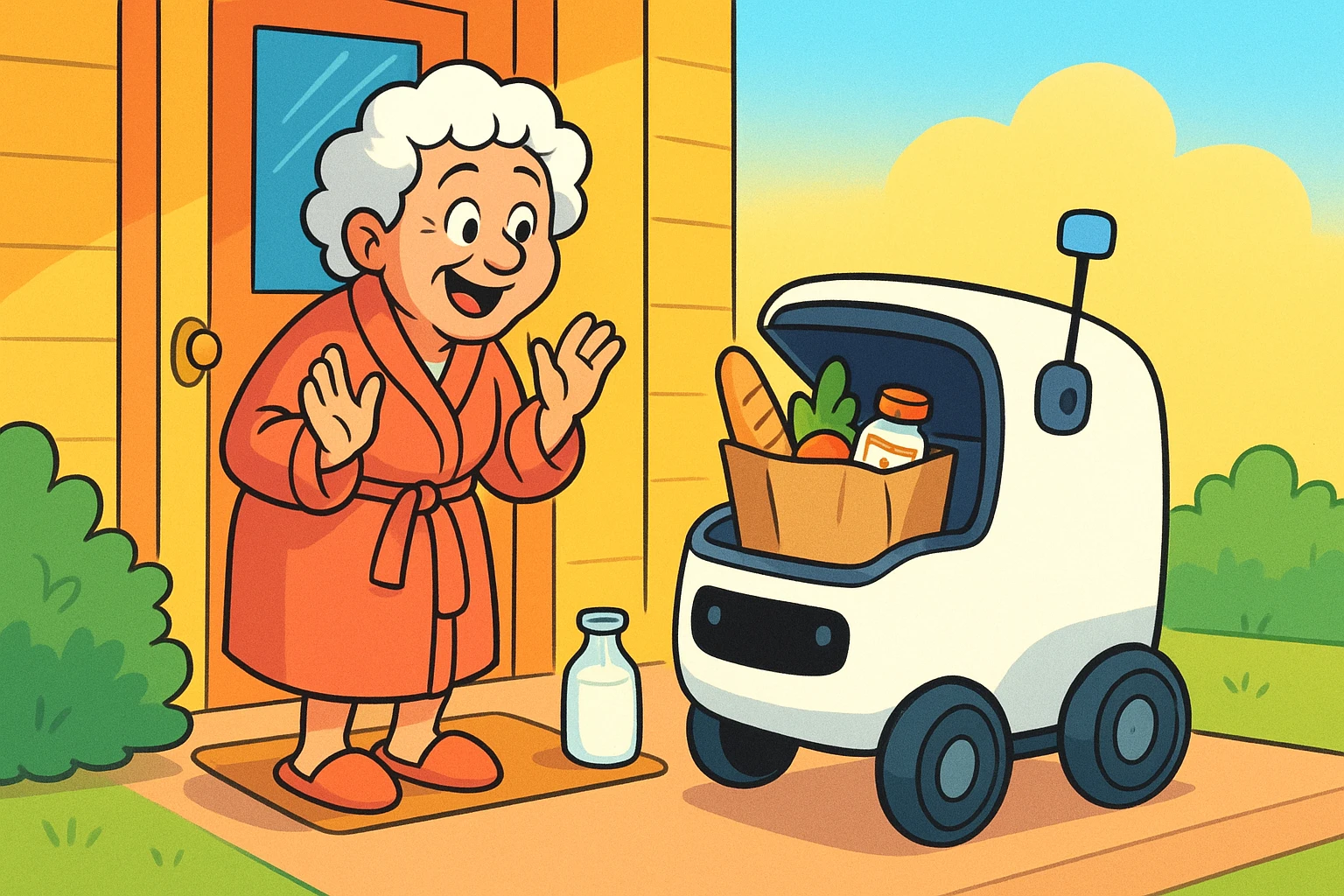
Remember when having groceries or other essentials delivered meant waiting for a person to show up at your door? Autonomous delivery is changing that familiar model.
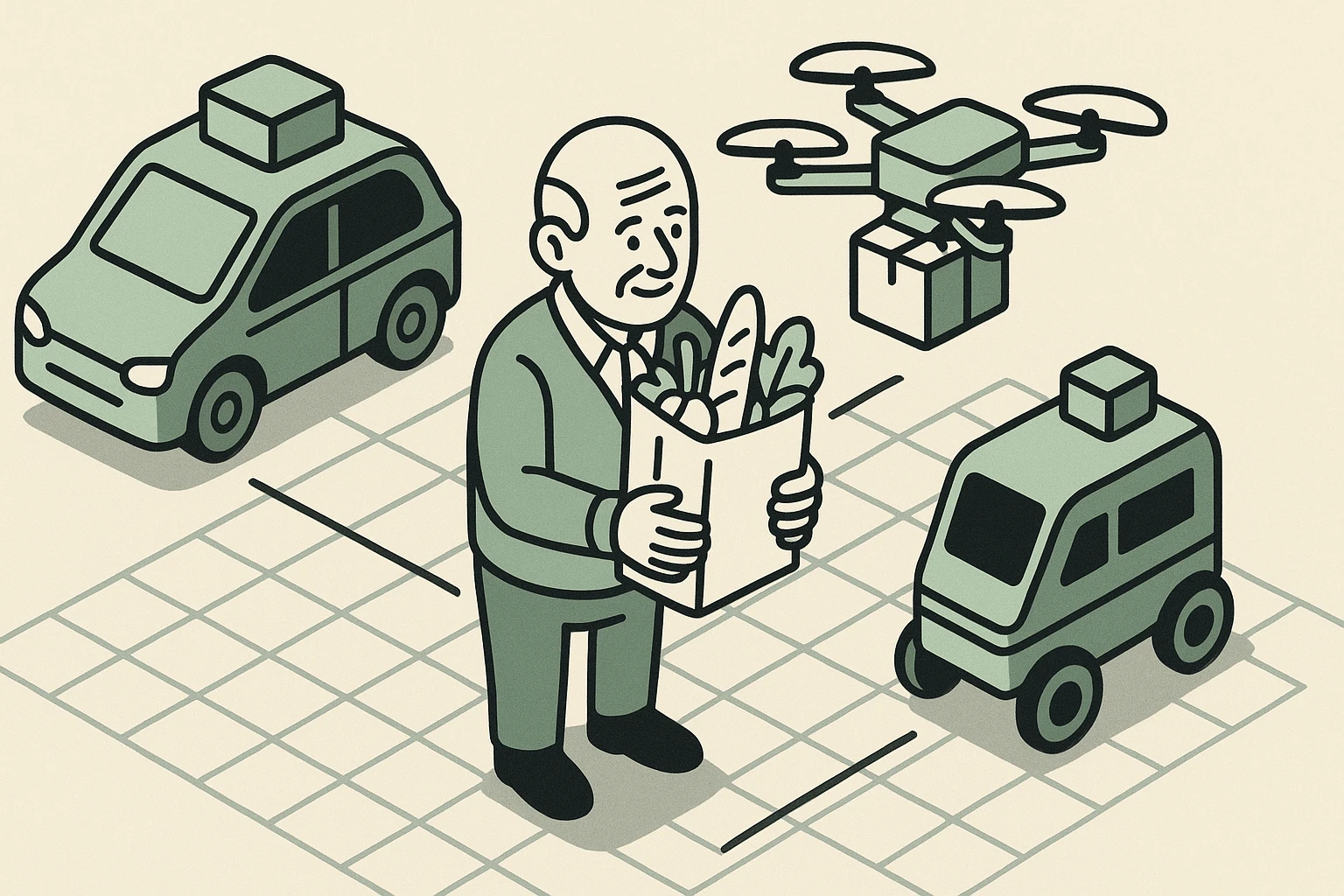
Today, companies are testing delivery robots, autonomous vehicles, and drones that can bring groceries, prescriptions, meals, and other everyday items directly to customers. The technology is still limited to certain areas, but these services are becoming a practical option in communities where they are available.
For older adults, the appeal goes beyond convenience. Getting to the store can become more difficult because of mobility limitations, vision changes, bad weather, limited access to transportation, or simply the physical effort involved in carrying heavy items home. Autonomous delivery can reduce some of those challenges while making it easier to manage everyday errands from home.
In this guide, we’ll look at how autonomous delivery works, the different types of services available, why they may be useful for older adults, and the privacy and security considerations to keep in mind before using one.
When you hear “autonomous delivery,” you might picture a shiny metal android knocking on your door and demanding you sign for a package. The reality is much less dramatic and a lot cuter. Right now, there are three main types of robotic delivery helpers hitting the streets.
First, we have sidewalk robots. Imagine a high-tech picnic cooler that suddenly sprouted wheels and decided to run errands. These little guys travel at a brisk walking pace along the sidewalk, carrying a few bags of groceries or takeout food. They have sensors to stop them from bumping into fire hydrants, stray dogs, or your ankles.
Next, there are autonomous vehicles. These look like regular cars, but nobody is sitting behind the steering wheel. They drive themselves from the pharmacy or grocery store and park right outside your house.
Finally, we have delivery drones. These are essentially mechanical birds that fly through the air and gently lower small packages—like a bottle of heart medication—into your backyard. It sounds like science fiction, but companies like Amazon and Walmart are already testing this in several states.
We already know that smart tech can make staying at home a whole lot easier. For example, using alexa for seniors has become a wildly popular way to set medication reminders or turn off the lights without getting out of your favorite armchair. Autonomous delivery is simply taking that same convenience and pushing it out the front door.
For older adults, getting to the store isn’t always a walk in the park. Maybe your eyesight makes driving at night a little dicey, or a bad knee makes walking the supermarket aisles feel like an Olympic event. Add in a sudden winter snowstorm or a summer heatwave, and a simple trip to get milk becomes a miserable chore.
Autonomous delivery takes the physical strain completely out of the equation. You order what you need on a computer or smartphone, and a machine brings it to you. It gives seniors a massive boost in independence, especially for those living in areas where public transportation is scarce or unreliable.
Here at Senior Tech Cafe, we don’t just blindly cheerlead for new gadgets. Every time you invite new technology into your life, it brings along a few privacy trade-offs. Autonomous delivery is no different, and it’s important to know what information you are handing over in exchange for a robot bringing you a loaf of bread.
First, let’s talk about cameras. These delivery robots and cars use multiple cameras and sensors to navigate the world without crashing into mailboxes. That means when the robot rolls up to your house, it is actively recording its surroundings. While companies claim they blur out faces, it’s still something to keep in mind if you happen to be retrieving your groceries in your bathrobe.
Second, there is your personal data. To use these services, you have to download an app, create an account, and input your credit card. The delivery company now knows exactly what medications you buy, what foods you eat, and what time you are usually home. Always check the app’s privacy settings and opt out of letting them sell your data to third-party marketers.
If a delivery robot service is available in your town, using it is surprisingly simple. You will usually start by downloading the company’s app on your smartphone or tablet. You shop for your items on the screen, just like browsing a digital catalog, and hit the order button.
When your robotic buddy arrives, it won’t ring the doorbell or politely clear its throat. Instead, your phone will ping with a notification that your delivery is outside. You’ll walk out to the curb or porch to meet it.
Now, how do you get your stuff out? Please don’t try to pry the robot open with a crowbar. For security reasons, the storage compartment stays locked during transit so nobody can steal your dinner on its way to you. You simply press a button on your phone app to magically pop the lid open, grab your items, and close the lid so the robot can trundle back home.
Absolutely not! One of the best perks of autonomous delivery is that robots do not have pockets, nor do they care about gratuity. You pay the flat delivery fee through the app, and that’s it.
The companies have planned for this. The compartments are securely locked until you unlock them with your personal smartphone. If a mischievous teenager tries to pick up the robot and run away with it, the robot will sound a loud, blaring alarm and immediately alert the company.
Not yet. Sidewalk robots and autonomous cars cannot climb stairs or turn doorknobs. You will still need to walk out to the curb or your driveway to retrieve your items. If you have severe mobility issues and cannot walk outside, a traditional human delivery driver is still your best bet.
Yes, they are packed with advanced safety sensors. If you step in front of a sidewalk robot, it will stop instantly to avoid bumping into you. Just treat them like you would a cautious bicyclist—give them a little space to do their thing.
Autonomous delivery isn’t available on every single street corner just yet, but it is expanding rapidly. Companies like Starship Technologies, Nuro, and Amazon are currently testing these services in select neighborhoods across the country.
If you want to see if robotic delivery has reached your neck of the woods, a quick internet search for “autonomous grocery delivery near me” will point you in the right direction. In the meantime, keep your phone charged, guard your passwords closely, and get ready for the day your neighborhood milkman gets a serious technological upgrade.