Newsletter Subscribe
Enter your email address below and subscribe to our newsletter

Enter your email address below and subscribe to our newsletter
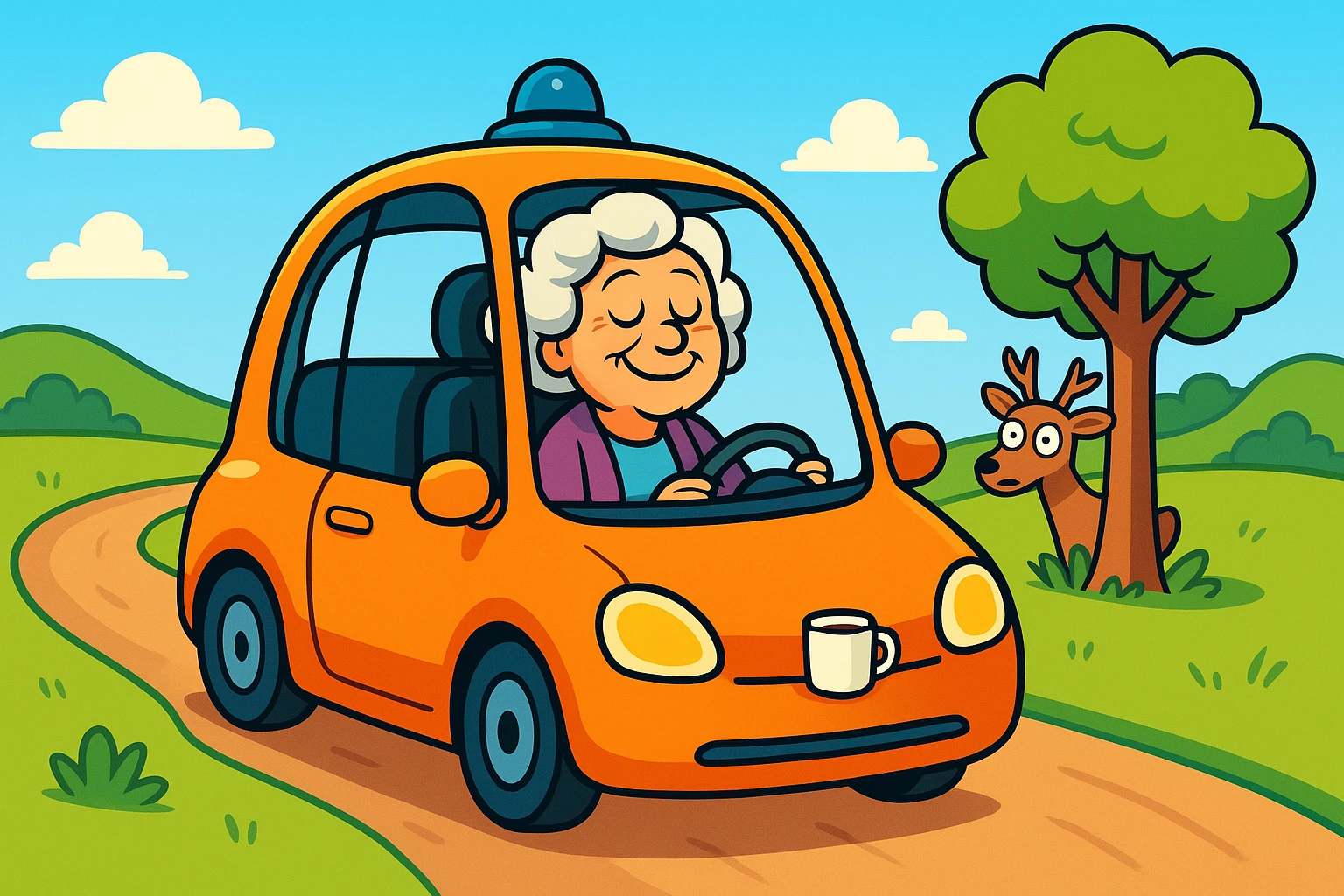
Picture this: You live out in the beautiful countryside. The air is fresh, the birds are singing, and your closest neighbor is a comfortable mile away. It’s pure bliss—until you realize you’re completely out of coffee. Suddenly, that peaceful rural isolation turns into a minor hostage situation.
You consider your options. You could drive yourself, but let’s be honest, your night vision isn’t exactly “owl-like” anymore, and the local deer population treats the county roads like a casual crosswalk. You could call your nephew to give you a lift, but he’s working and his truck smells vaguely of wet dog. You could call a taxi, assuming you want to wait three days and mortgage your house to pay the fare.
For years, this has been the grim reality of rural aging. But what if your next ride didn’t require bribing a relative or white-knuckling it down a gravel road in the dark? Welcome to the world of Autonomous Vehicles (AVs)—or as we prefer to call it, your very own digital chauffeur.
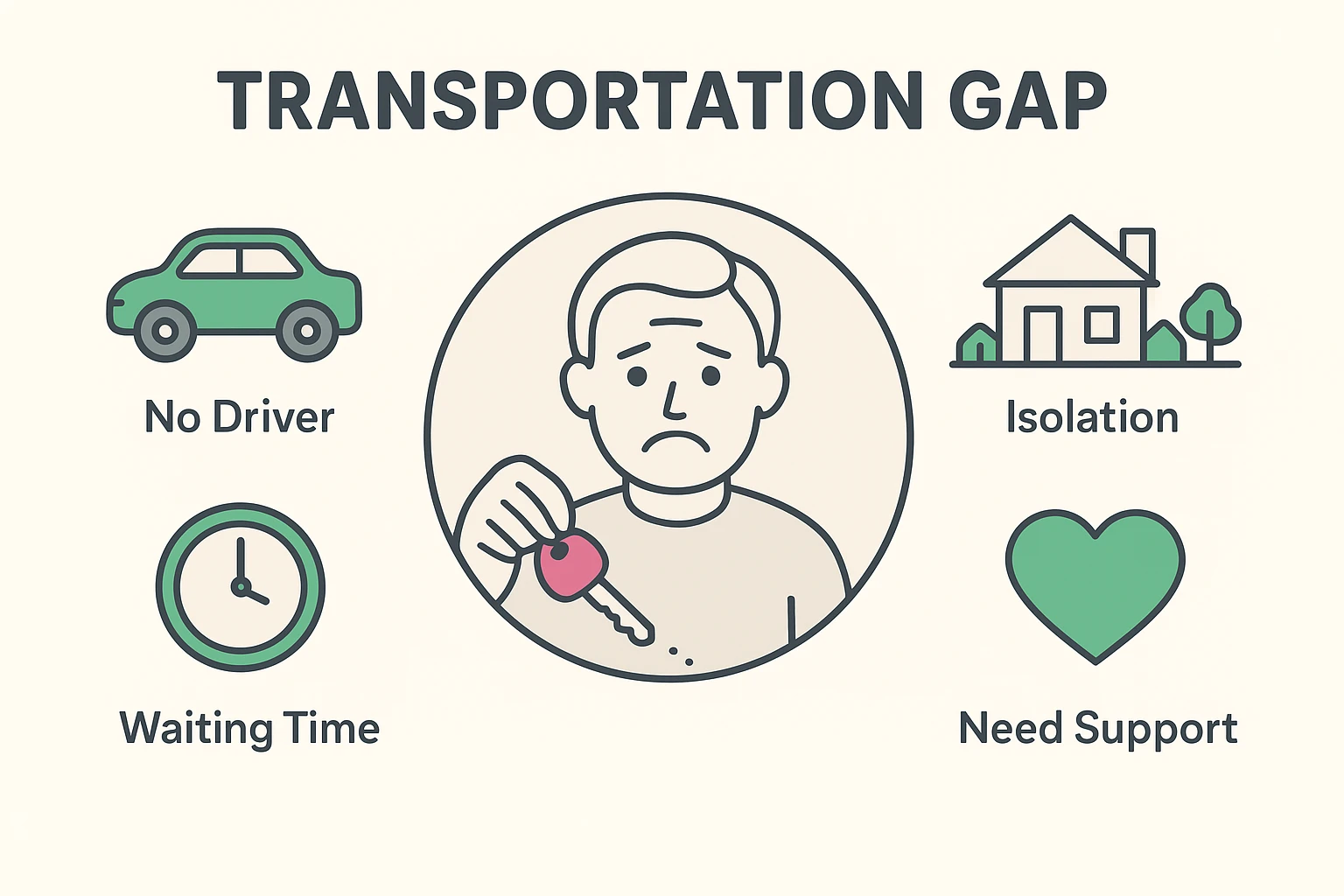
Nobody wants to hand over their car keys. It feels like handing over your independence, wrapped up in a shiny metal bow. In a bustling city, giving up the keys just means taking the bus. In rural areas, it often means staring at the wall until someone takes pity on you and offers you a ride.
According to the Rural Health Information Hub, transportation is a massive hurdle for rural seniors trying to get to medical appointments, run basic errands, or just meet friends for a slice of pie. Traditional solutions like volunteer driver programs or family favors are great, but they operate on someone else’s schedule. You deserve the freedom to buy a lottery ticket at 2 PM on a Tuesday without having to arrange it three weeks in advance.
This is exactly why the tech world is looking beyond city limits. The goal isn’t just to make cool gadgets; it’s about restoring personal dignity and giving you back the freedom of the open road.
When most people hear “self-driving car,” they imagine a tech-bro napping in a sports car while it hurdles down a California highway. That’s not what we’re talking about here. That’s what engineers call “Level 2 Autonomy,” which still requires a human to babysit the steering wheel and hit the brakes.
We are talking about Level 4 and Level 5 autonomous vehicles. Think of them as a highly trained, invisible butler who never speeds, never gets distracted by a shiny billboard, and absolutely never judges your music taste. You get in, tell the vehicle where to go, and it does all the heavy lifting.
Now, I can hear you thinking: “Sure, a robot car can drive on a perfectly paved city street. But what happens when it hits my unmarked gravel road during a snowstorm? Will it drive me straight into a cornfield?” It’s a completely valid fear!
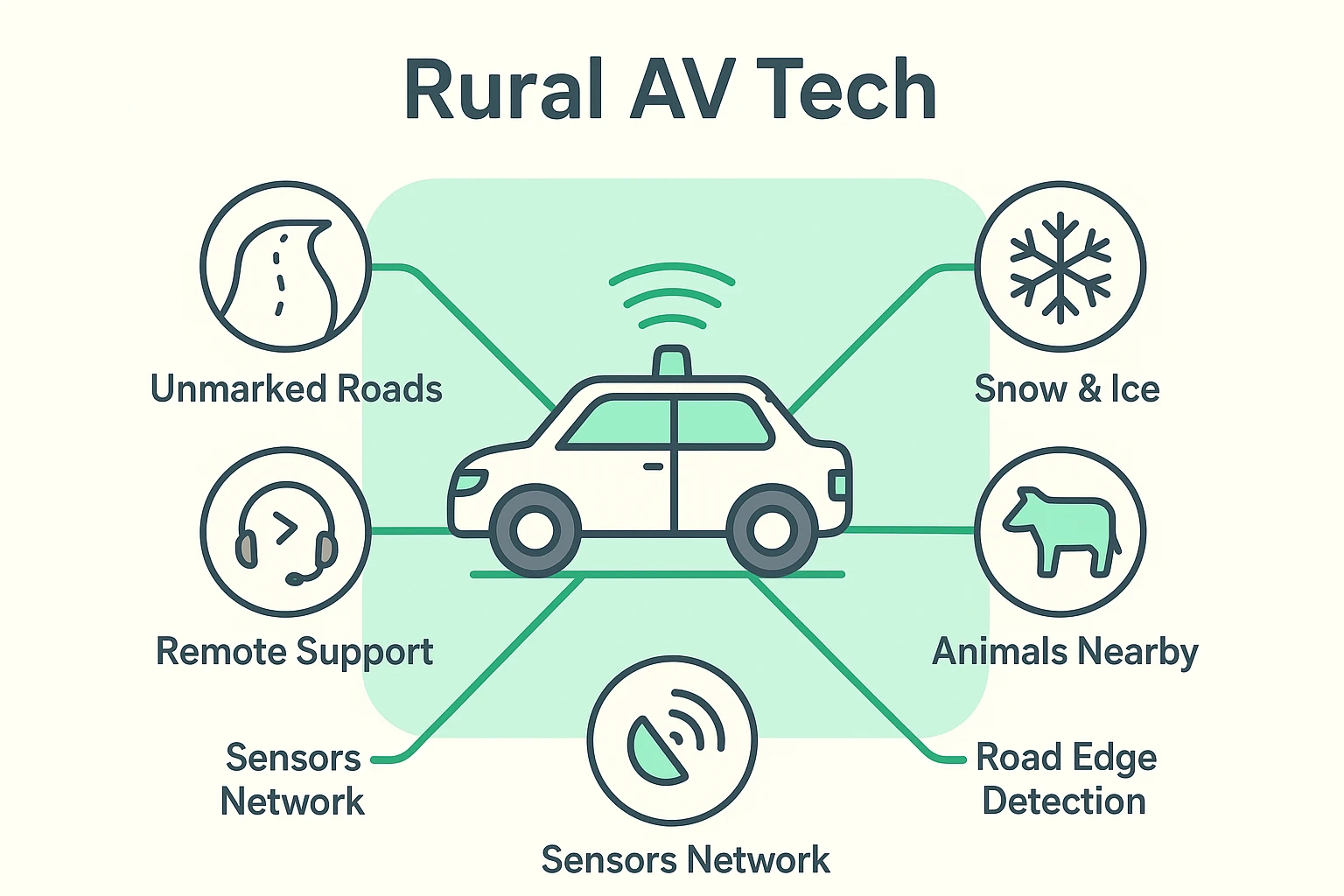
This is where the brainiacs at the University of Iowa’s ADS for Rural America program come in. They’ve been actively testing these vehicles on the exact kind of washboard gravel roads and harsh winter weather that would make a seasoned trucker sweat.
Here is the magical part: AVs don’t rely on frail human eyeballs. They use a technology called LiDAR, which is basically radar with lasers. Where we see a blinding blizzard or pitch-black darkness, the car’s sensors see a crisp, highly detailed 3D map of the world. It tracks the edge of a dirt road perfectly, even if the painted lines faded back in 1998.
If the idea of operating a high-tech robotic car makes you break out in a cold sweat, you can relax. The ultimate goal of “age-friendly design,” championed by organizations like AARP, is to make these vehicles easier to use than your toaster.
Forget about swiping through endless, confusing touchscreens while you’re trying to find the seat heater. Future rural AVs are moving toward a “voice-first” design. You’ll just speak out loud, say “Take me to Dr. Miller’s office,” and the car will politely agree.
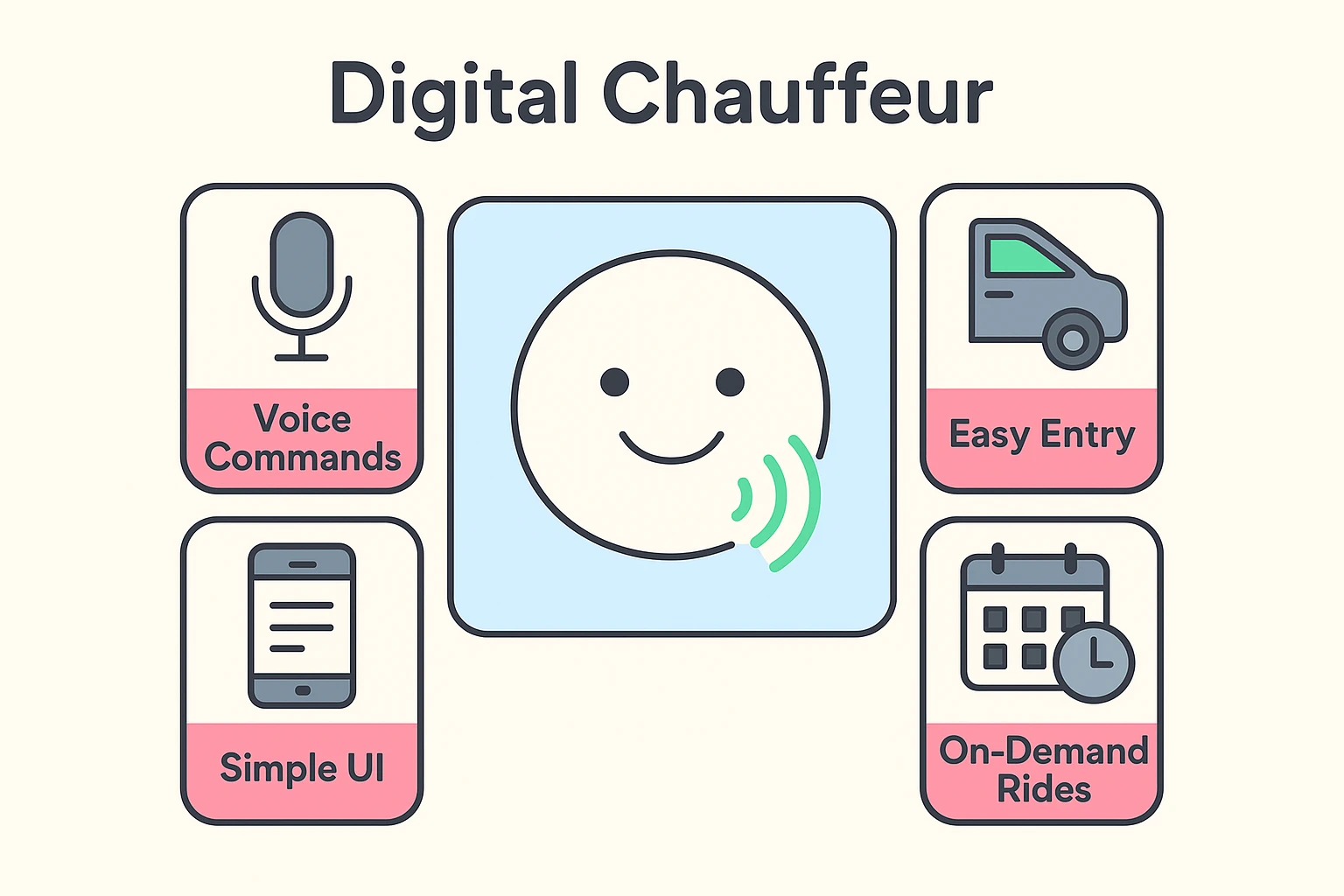
Many companies also plan to include a remote “concierge” button. It connects you to a real, live human who can help out if the vehicle gets temporarily confused by a rogue herd of cows crossing the road. They are also prioritizing “door-to-door” service, meaning vehicles designed with easier entry steps and plenty of room for walkers or wheelchairs.
So, how do we get these magical chariots out to your neck of the woods? It starts with local infrastructure. While autonomous vehicles are brilliant, they still need a little help from their environment to be perfectly safe and reliable.
Ask yourself a few questions: Does your county have decent cell service or broadband? Are your main town roads clearly mapped digitally? If your answer is “I think my flip phone just lost a bar,” your town has a little bit of homework to do before the robots arrive.
This is where you get to be an advocate for your own future mobility. Start chatting with your local town council or rural transit authority. Ask them if they are looking into autonomous pilot programs or applying for federal tech grants. Squeaky wheels get the grease—or in this case, the laser-guided robot cars.
To help you sound like a Silicon Valley insider at your next town hall meeting, here are three terms translated into plain English:
Privacy is a big deal to us! Most AVs do use internal cameras to make sure passengers are safe and haven’t fallen, but reputable companies anonymize this data. As these services roll out, we’ll be here to help you read the fine print on their privacy policies to ensure your business stays your business.
AVs have an onboard “brain” that stores all the maps and sensor data it needs to drive safely, even if it hits a massive rural dead zone. It won’t suddenly forget how to hit the brakes just because it lost its Wi-Fi connection.
Yes! While they are mostly cruising around sunny retirement communities in Florida and busy cities out West right now, pilot programs are actively testing them for rural expansion. The future is much closer than you think.
The leap from gripping a steering wheel to chatting with a voice-activated digital chauffeur might seem like science fiction, but it’s rapidly becoming science fact. You shouldn’t have to surrender your independence just because you live past the city limits.
For now, keep an eye on your local transit authorities, and don’t be afraid to voice your desire for better rural transportation options. Talk to your neighbors, share this article with your family, and start imagining what you’ll do with your reclaimed Sunday drives.
Stay curious, stay safe, and remember: technology is supposed to work for you, not the other way around.