
Newsletter Subscribe
Enter your email address below and subscribe to our newsletter


Have you ever looked at a guitar gathering dust in the corner and thought, “One of these days…”? Or maybe you have a French phrasebook that’s seen more action as a coffee coaster than a learning tool. The desire to learn something new never gets old, but the process sure can feel that way. Classes have rigid schedules, tutors can be expensive, and let’s be honest, sometimes you just want to ask the same “dumb” question seventeen times without getting a pitying look.
If only you had a personal tutor who was endlessly patient, knew practically everything, was available 24/7, and worked for free. It sounds like science fiction, but that’s pretty much what Artificial Intelligence (AI) can be for you. Before you picture a robot from The Jetsons making you dinner, let’s clear things up. Think of AI less as a walking, talking machine and more as a brilliant assistant living inside your computer or phone, ready to help you finally master chess, write your life story, or even figure out what’s eating your prize-winning tomatoes.
It’s your brain’s new best buddy.

Let’s get the scary stuff out of the way. When tech folks talk about AI, they use a lot of jargon that can make your eyes glaze over. But the truth is, you’re already using AI every day. When Google Maps reroutes you around a traffic jam or your phone suggests a word to finish your text message, that’s AI at work.
The new tools we’re talking about, like ChatGPT or Google Gemini, are just a more advanced, conversational version. You type a question in plain English, and it gives you a detailed answer. It’s like having a chat with a super-librarian who has read every book in the world.
But what about the risks? That’s a smart question. The fear that AI is too complex or a threat to your privacy is one of the biggest reasons people hesitate to try it.
The Myth: “AI is way too complicated for me. I need a computer science degree to use it!”
The Reality: Nonsense. If you can write an email or search for a recipe online, you have all the skills you need. These tools are designed to understand normal, everyday language. You don’t speak “computer,” and now, you don’t have to.
The Myth: “I’m worried about my privacy. I don’t want some robot knowing my business.
The Reality: This is a valid concern! The golden rule is to treat your AI chats like a public conversation. Don’t share sensitive personal information like your address, bank account details, or passwords. It’s a fantastic learning partner, not a digital diary or a financial advisor.
The best way to understand how this works is to see it in action. Let’s say you’ve always wanted to learn enough French to confidently order a coffee and a croissant on a future trip to Paris. Instead of buying a dusty book, let’s ask our new AI buddy for help.
Start with one of the free, popular options. Google Gemini or the free version of ChatGPT are perfect places to begin. Just go to their website and you’ll see a simple box where you can type.
This is the most important part. You don’t have to be formal, just clear. In the AI world, your instruction is called a “prompt.”
Think about what you want and just ask for it. You could type something like this:
“You are a friendly and patient French tutor. I am a complete beginner who knows zero French. My goal is to learn how to order a coffee and two croissants in Paris. Create a simple, 5-step lesson plan for me.”
In seconds, it will spit out a plan, likely starting with basic greetings, moving to numbers, and then the specific phrases you need.

Now the real fun begins. You can have a conversation with it.
Suddenly, you’re not just reading phrases from a book; you’re actively using them. And your AI tutor will never get tired of correcting you or starting over.
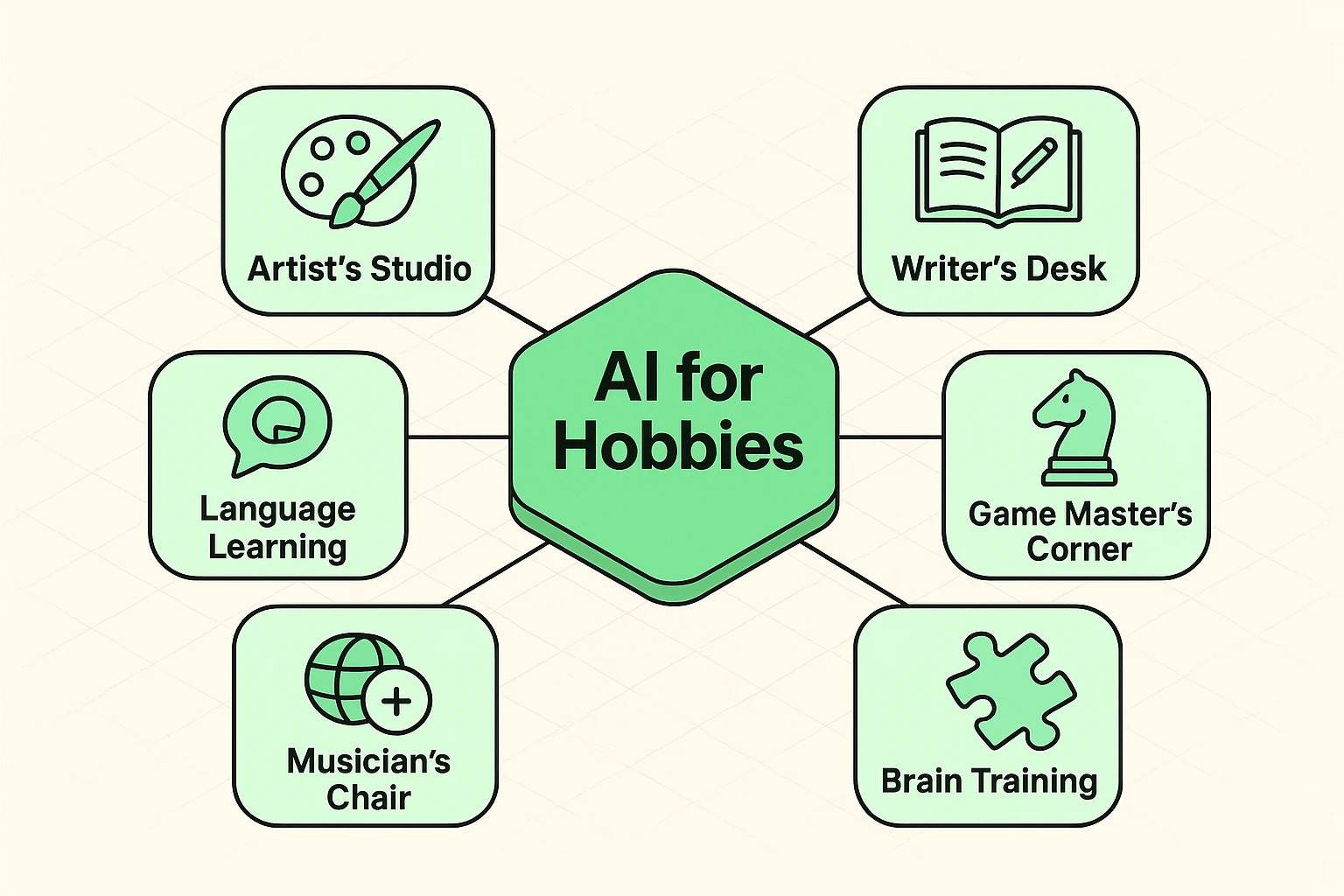
Learning a language is just the beginning. This AI-powered approach works for an incredible range of interests. Think of it as a workshop with an expert in every corner, ready to help you with whatever sparks your curiosity.
This is a fantastic question. Think of your AI buddy as a brilliant, incredibly fast researcher who sometimes gets things mixed up. For creative brainstorming, lesson plans, and practice, it’s amazing. But for important facts—especially related to health, history, or finances—it’s always wise to double-check the answer with a trusted source. It’s a creative partner, not a replacement for a doctor.
Absolutely! While it can’t pull the weeds for you (yet!), it can be an invaluable gardening consultant. You can ask it to create a planting schedule based on your specific climate zone, help you identify a mysterious bug that’s eating your roses, or give you a list of plants that will attract more butterflies.
To avoid getting overwhelmed, just start with one of the big, reputable names. Google Gemini, ChatGPT (from a company called OpenAI), and Microsoft Copilot are all excellent, free, and easy to use right from their websites.
The world is full of fascinating things to learn, and now, you have a tool that makes learning more accessible and fun than ever before. It removes the pressure of a classroom and lets you explore your passions at your own pace, on your own terms.
You don’t need to become a tech genius. You just need to stay curious. Pick one small thing you’ve always wanted to know more about—whether it’s the history of the Roman Empire, how to knit a scarf, or the rules of pickleball—and ask your new AI buddy a question.
You might be surprised at the conversation that follows.