Newsletter Subscribe
Enter your email address below and subscribe to our newsletter


By Chris Clark, founder of Senior Tech Cafe
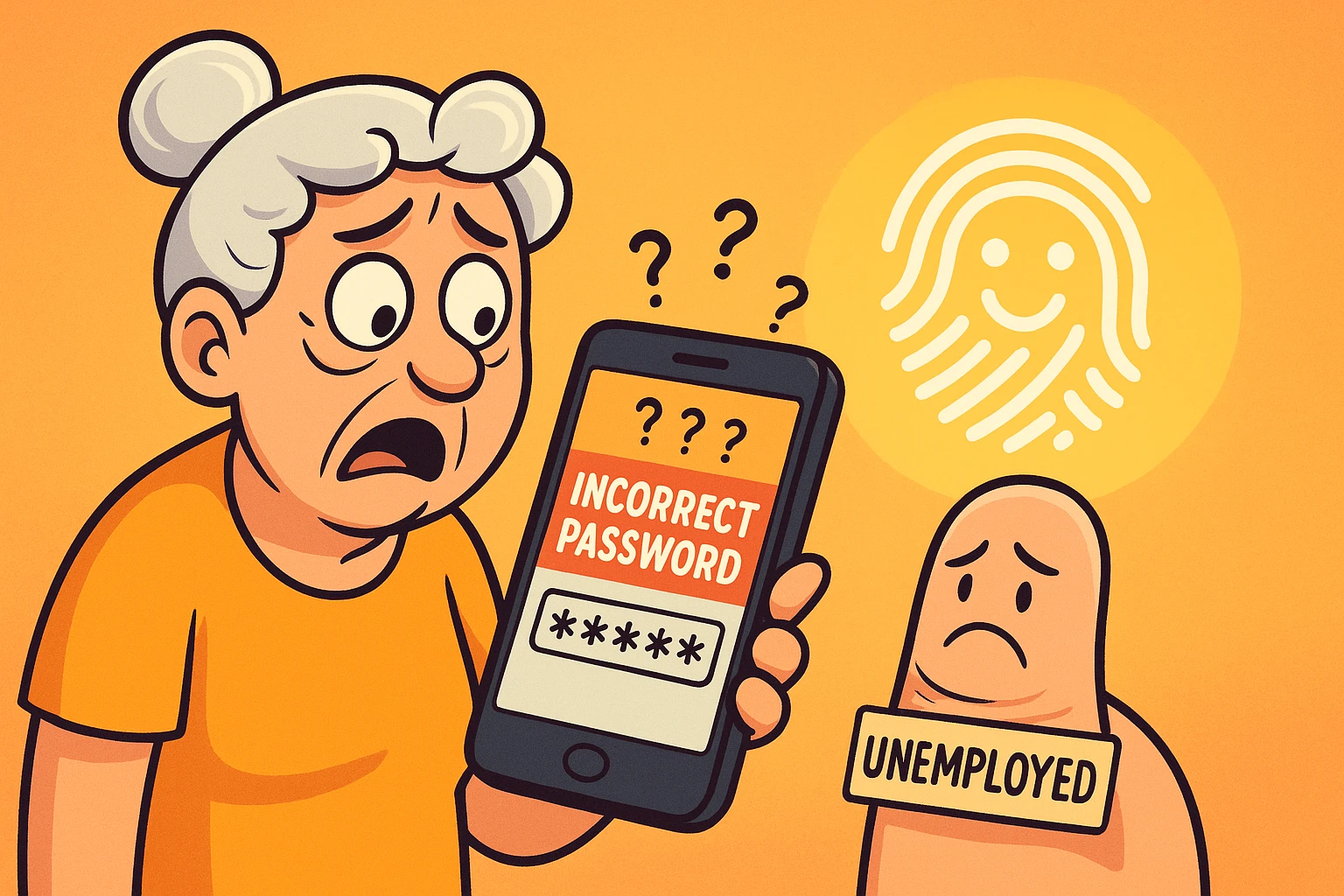
A grandparent scam runs on three things. Fear, secrecy, and a familiar identity. The goal is to get money moving before anyone in the family can check the story.
The caller might claim to be a grandchild, a lawyer, a police officer, or a hospital worker. The voice may sound right. The caller ID may look right.
That rush is the tell. Everything else is set dressing.
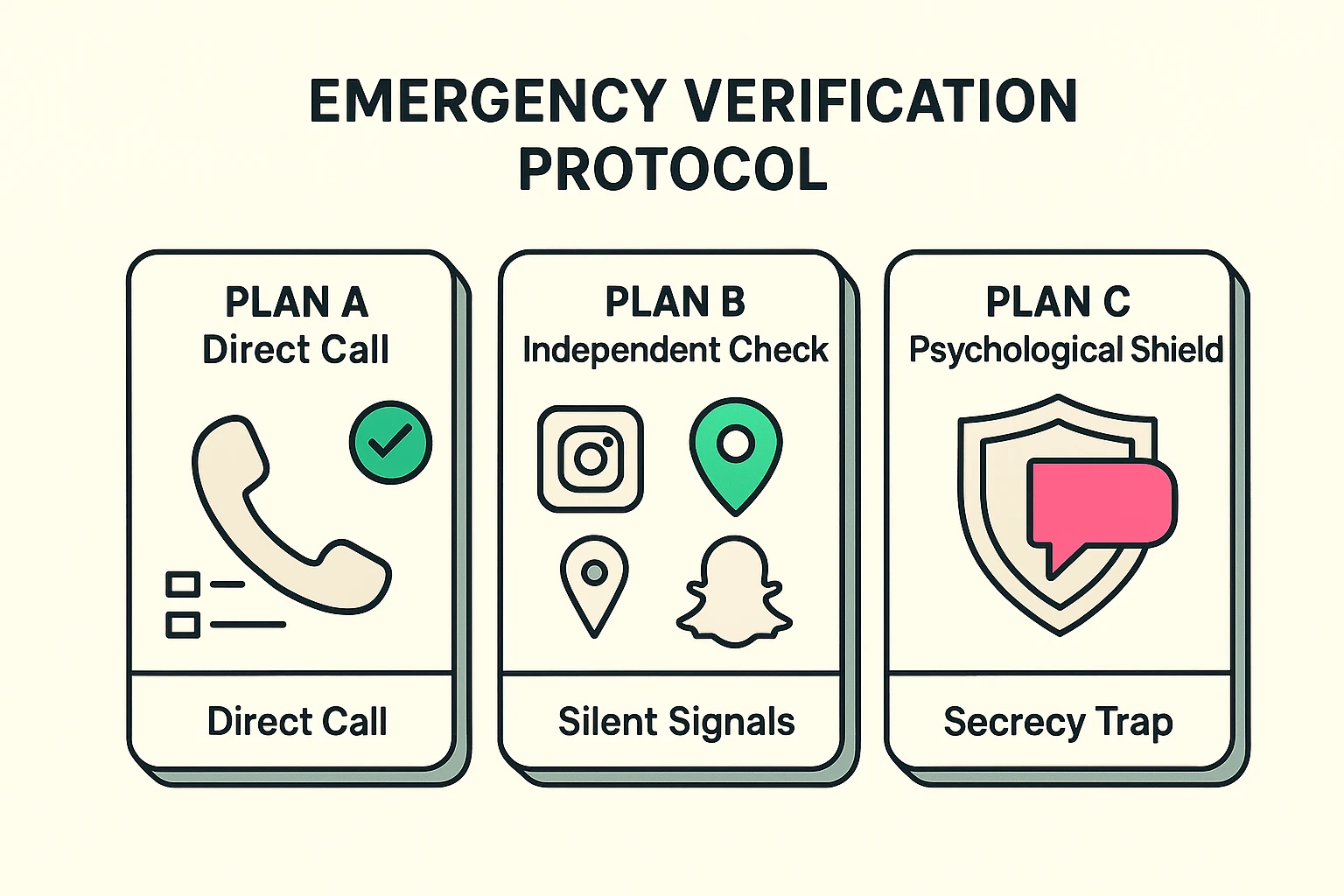
So don’t send money and don’t share information. Hang up, then call your relative on the number already in your phone.
If they don’t answer, call another family member who’d know where they are.
This one catches sharp people off guard, routinely.
The technology keeps changing. The pattern doesn’t.
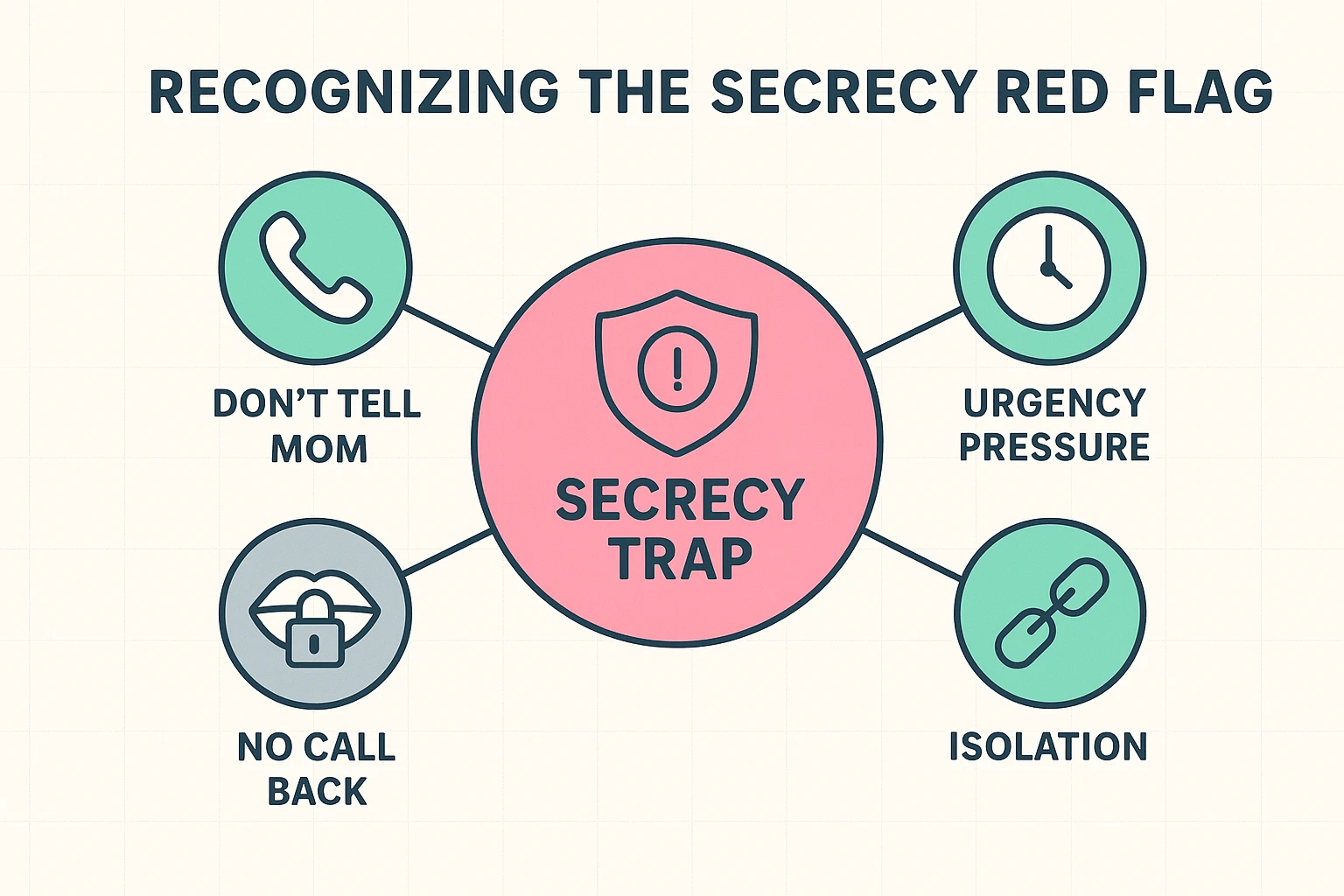
There’s an unexpected emergency. A demand for secrecy, usually framed as protecting somebody’s feelings. A payment that’s hard to reverse. And a reason the supposed relative can’t talk normally or be reached the usual way.
Those four turn up every time, whether the scam arrives by phone, by text, or in a voice that sounds exactly like your grandson.
Learn the four and the script stops working.
Because a real emergency survives a pause while you call somebody back. A script built on secrecy doesn’t.
Three steps, in this order.
First, end the incoming call. You can always call back.
Second, call your relative on the number saved in your contacts. Not a number the caller gave you.
Third, call a parent, sibling, spouse, caregiver or anybody else who’d know where that person actually is.
If the caller named a police department, a court, a hospital or a lawyer, look up that organization’s public number yourself and call it. Don’t treat a case number they supplied as proof of anything.
Caller ID isn’t proof. Social-media activity isn’t proof.
And if it really was your grandchild, you owe them an apology. That’s the cheaper mistake by a wide margin.
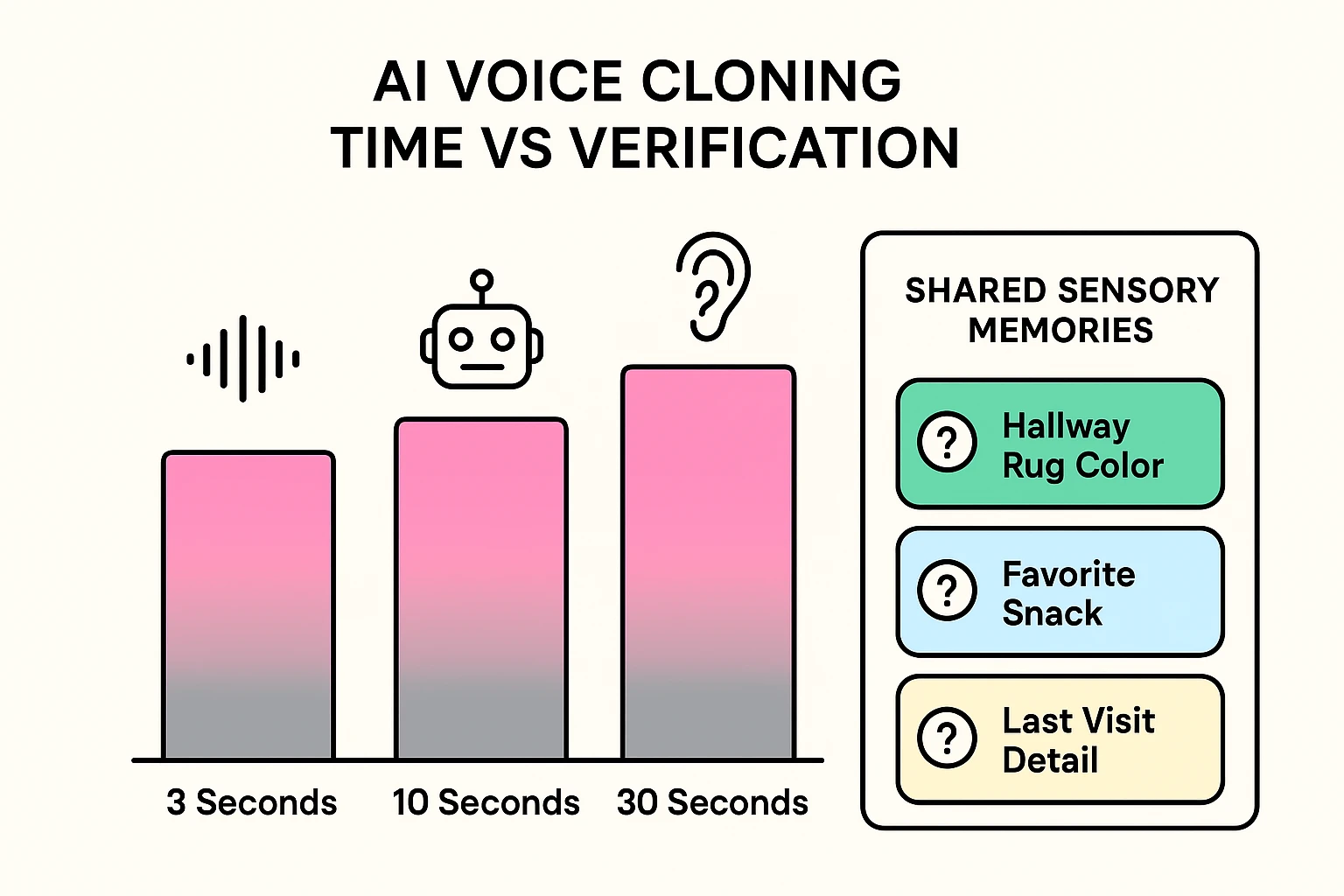
AI can imitate a voice from recordings that already exist. How much audio it takes varies by tool and recording, and it’s less than you’d like.
Learning to recognize AI-generated media more broadly helps here too, since the same tricks show up in photos and video.
So a familiar voice is a clue now, not identity proof.
You can ask a personal question whose answer isn’t posted anywhere. But don’t stay on the line to investigate, because staying on the line is what the call is for.
End it and do the independent checks instead.
Caller ID can be faked too, so a matching name or number changes nothing about the process.
And trusting a familiar voice isn’t foolish. It’s just no longer proof.
One conversation now saves a terrible afternoon later.
Pick two family contacts who can confirm an emergency, and save their numbers where everyone can find them.
Agree, out loud, that any urgent money request gets verified by a separate call. Even when the first caller sounds exactly right. Especially then, because that’s when you’ll want to skip it.
Set up a family phrase or a private question, a safe word only your people know. Treat it as one layer rather than the whole proof.
Then write the rule on a card and put it by the phone. Stop. Call back. Confirm with someone else. Never pay in secret.
Review it whenever phone numbers or caregivers change.
Speed matters more than a complete story here, so make your calls first and sort the details out afterward.
Contact the bank, card issuer, wire company, gift-card issuer, cryptocurrency exchange or payment app immediately, and ask whether the transfer can be stopped or flagged.
Our guide on how to verify an urgent bank fraud alert is worth a look too, in case a real alert follows a scam attempt.
Then preserve everything. The phone number, the messages, the receipts, the account details, the payment instructions.
Report it at ReportFraud.ftc.gov, and at IC3.gov for internet-enabled financial loss.
If the caller got account credentials or identity information, change the affected passwords and use IdentityTheft.gov to build a recovery plan.
And for what it’s worth, making these calls is exactly the right thing to be doing.
For the wider picture, our online safety for seniors guide covers scams, privacy and security together in one place.
It’s an impersonation scheme where a caller claims a grandchild or relative has an emergency and needs money fast, in secret, before anyone can check the story. The secrecy is the point. Keeping you off the phone with the rest of your family is how the whole thing works.
Don’t send money. Call another family member who can confirm where they actually are, and look up any hospital, court or police department the caller named and ring its public number yourself. An unanswered phone isn’t evidence of an emergency. People miss calls constantly, and a real crisis survives a check.
It can imitate a voice from recordings that already exist, so a familiar voice no longer proves identity. End the call and verify through numbers you already have and another trusted contact. Recognizing the voice doesn’t mean you were careless. It means the imitation was good. Verification settles it, not your ears.