Newsletter Subscribe
Enter your email address below and subscribe to our newsletter

Enter your email address below and subscribe to our newsletter
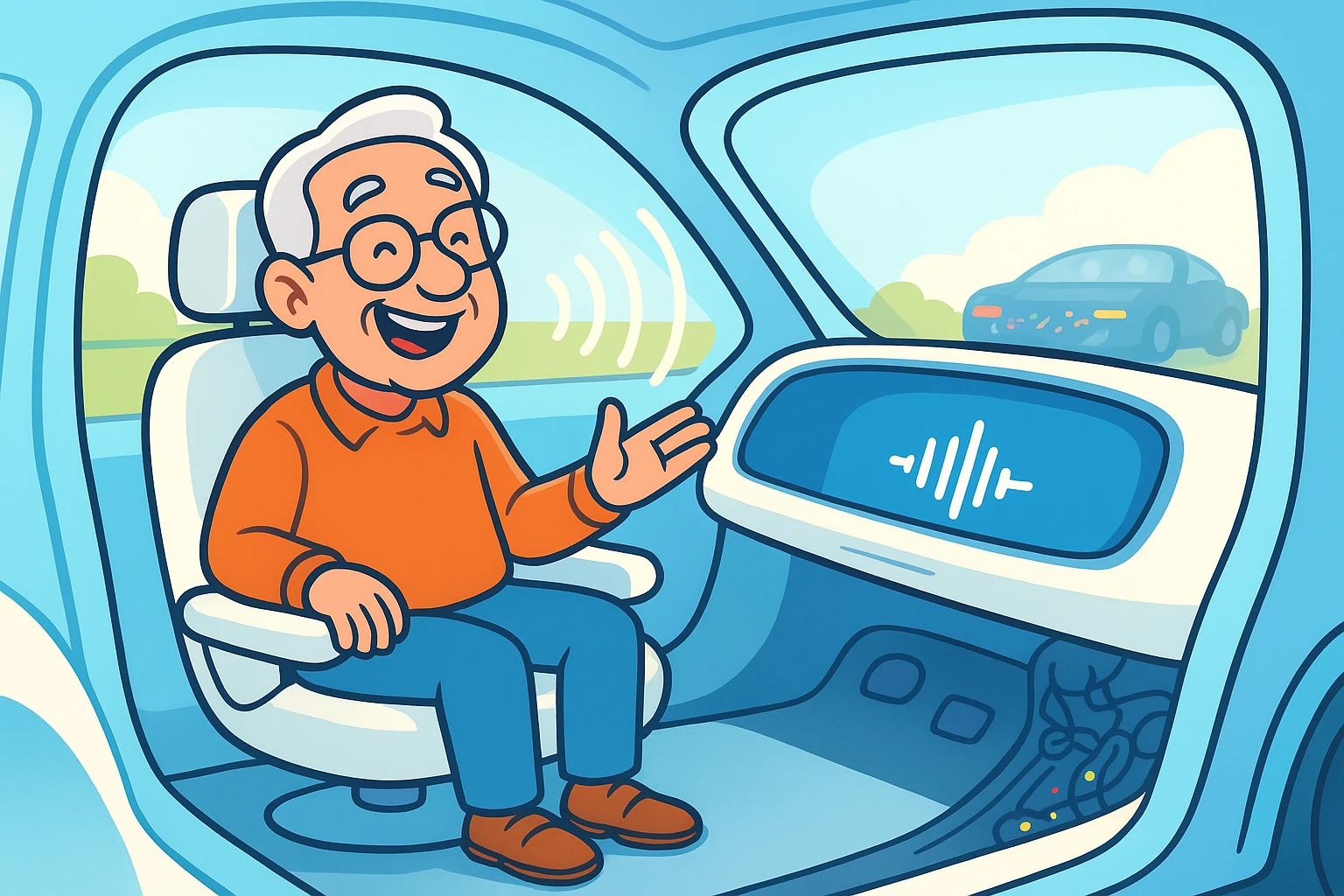
Remember the day you got your driver’s license? You probably felt like you had just been handed the keys to the universe. Fast forward a few decades, and the thrill is gone. The thought of parallel parking makes your neck ache, and your modern car’s dashboard has more confusing blinking lights than a Las Vegas casino.
Giving up the car keys is a terrifying thought. It feels like handing over your independence and agreeing to live on the schedule of a city bus or a well-meaning but perpetually late nephew. But what if you didn’t have to?
Enter the self-driving car. Yes, we are talking about actual robotaxis that chauffeur you around without you ever having to touch a steering wheel. But a car that drives itself is only helpful if you can actually get into it, tell it where to go, and not feel like you are locked inside a rogue spaceship. Today, we are looking at how future autonomous vehicles are being designed specifically with seniors in mind.
Tech companies like to throw around fancy terms like “functional accessibility.” In plain English, that just means building a car that doesn’t require you to be an Olympic gymnast to get inside.
The goal here is the “Autonomy Dividend.” That is an elegant way of saying these cars are meant to give you your freedom back. We’re talking about going to the grocery store, visiting friends, or escaping to the movies, all on your own schedule.
But to make this work, car makers have to bridge the gap between their high-tech wizardry and our very real human knees, eyes, and ears. It is not enough to just remove the steering wheel; the car has to be designed from the ground up for people who might use walkers, have poor eyesight, or struggle with touchscreens.
If you’ve ever yelled at a smart speaker because it played heavy metal instead of the weather forecast, you might be skeptical about a voice-controlled car. But the technology heading into autonomous vehicles is entirely different.
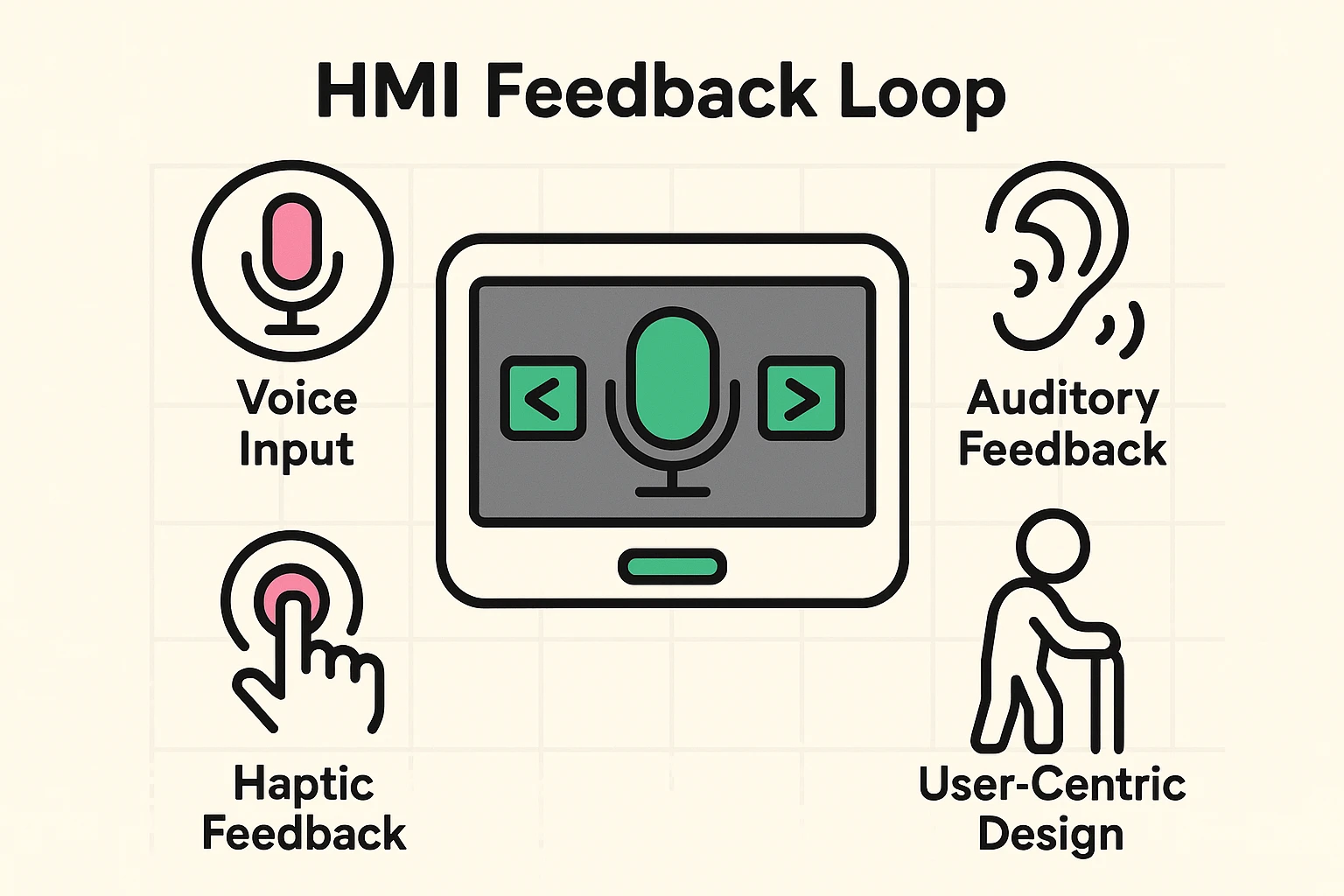
Engineers call it the “Human-Machine Interface,” or HMI. I prefer to call it “The Human-Car Conversation.” Instead of rigid, robotic commands, these new systems use advanced Natural Language Processing. This means the car actually understands conversational pauses, different accents, and even a slower speaking pace.
For seniors with visual impairments, this voice control isn’t just a neat trick—it’s the vehicle’s “eyes” speaking back to you. The car provides “Auditory Affirmation,” meaning it confirms every action out loud, so you are never left wondering what it’s doing.
Think about how useful Alexa for seniors has become in the home for turning on lights and checking the news. Now imagine that same helpful, multi-sensory feedback wrapped around you in a moving vehicle. The car might even use subtle haptic feedback—like a gentle vibration in your seat—to let you know you’ve arrived safely at your destination.
Have you noticed that modern cars seem to be designed for people who fold up like lawn chairs? Getting in and out often involves an awkward, groaning dance where you hope you don’t hit your head on the door frame.
Future autonomous vehicles are ditching the traditional car layout for what researchers call a “Universal Design Blueprint.” Since there’s no steering wheel, gas pedal, or bulky dashboard, the inside looks less like an airplane cockpit and more like a cozy living room on wheels.
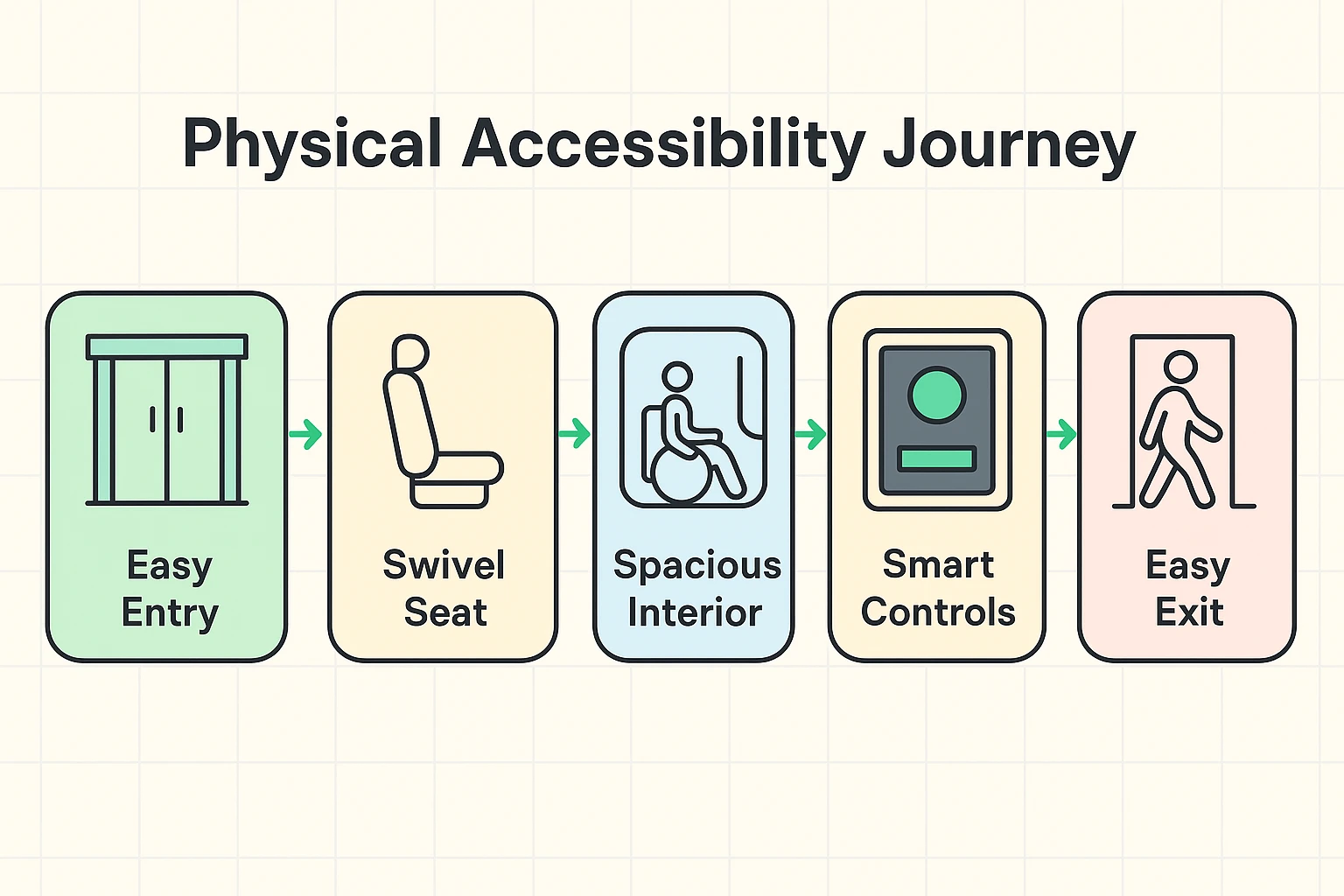
The holy grail of this new design is “Zero-Step Entry.” Picture extra-wide sliding doors, lowered floor sills, and seats that literally swivel outward to greet you. You just sit down, and the car gently rotates you into place without you having to twist your spine.
There’s also plenty of room to store mobility aids. Whether you use a cane, a walker, or a wheelchair, you won’t have to play a frustrating game of Tetris just to get your equipment into the backseat.
Okay, so the car listens to you and the seats swivel like a dream. But let’s address the elephant in the room: is this actually safe, and is it legal?
The auto industry uses a rating system called “SAE Levels” to describe how autonomous a car actually is. Don’t worry, there won’t be a pop quiz on this later. You really just need to know the difference between Level 4 and Level 5.
Level 4 means the car does all the driving, but only in specific, mapped-out areas—like a designated robotaxi zone in a major city. Level 5 is the ultimate goal: a car that can drive absolutely anywhere, anytime, in any weather, with zero human input.
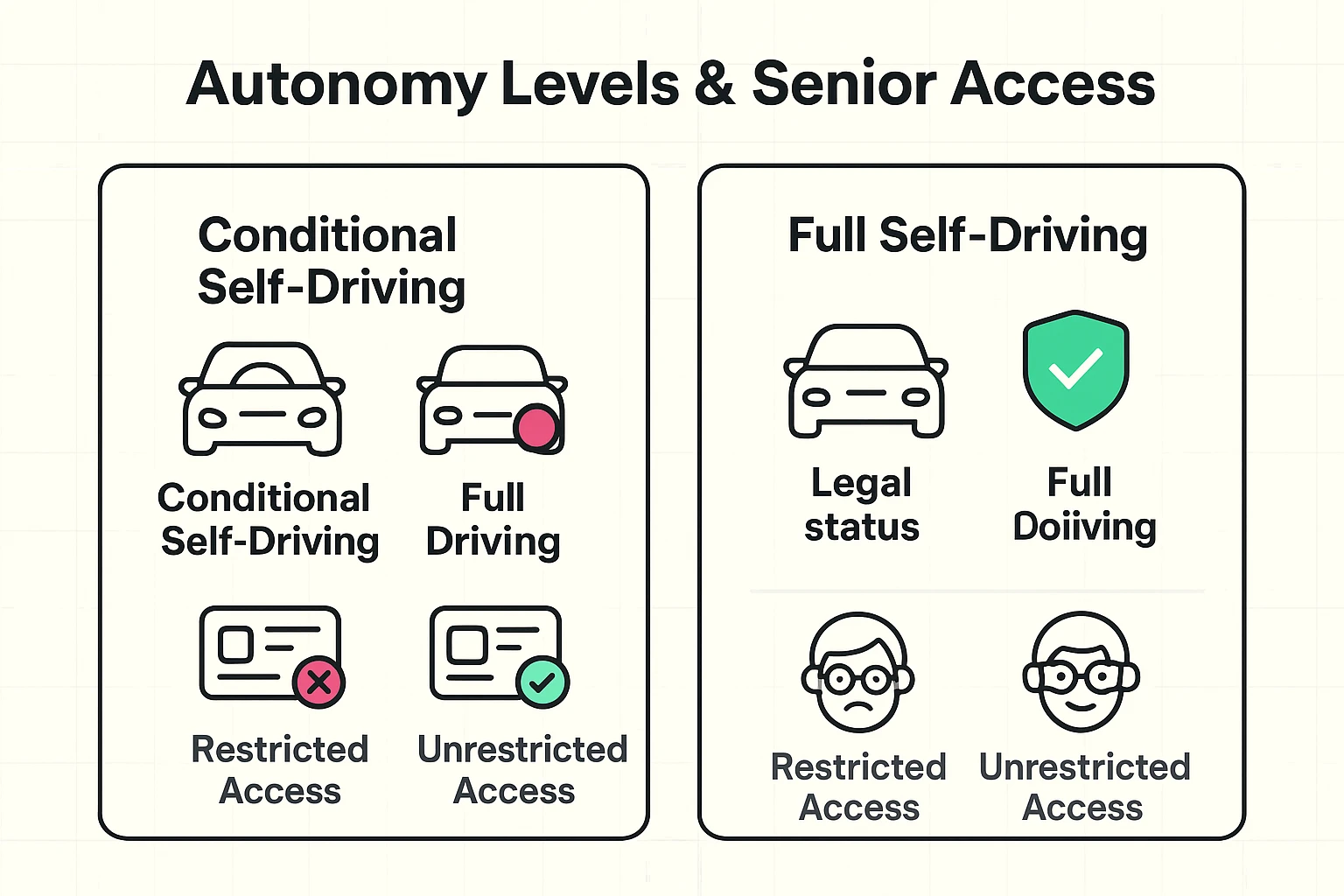
For seniors who can no longer pass a DMV vision test, this distinction is huge. In a fully autonomous vehicle, you aren’t the driver anymore; you are simply the passenger. You don’t need a license, and you don’t need to worry about taking the wheel if traffic gets tricky.
As for safety, these cars are programmed with heavy redundancy. If the voice system glitches out, there are backup touchscreens with massive buttons. If the whole system gets confused, the car is programmed to pull over safely and instantly contact a human support team.
Yes! In fact, companies like Waymo have successfully tested their fully autonomous vehicles with blind passengers. Using specialized smartphone apps and audio cues from the car, visually impaired seniors can hail, locate, and ride in these vehicles safely and independently.
Engineers know that technology isn’t perfect. If the voice system fails or just cannot understand your accent, cars are equipped with backup options. You’ll find tactile buttons, large-print touchscreens, and a big “Help” button that instantly connects you to a live human operator via video or audio.
Currently, most robotaxi services require a smartphone app to hail a ride. However, future universal design models are exploring call-in services or dedicated simple-button remote devices to summon a car. The goal is to ensure you aren’t locked out of the future just because you prefer a basic flip phone.
The transition to driverless cars isn’t just about cool technology; it’s about restoring a sense of freedom. By focusing on accessible interiors and intelligent voice control, the auto industry is building a future where getting older doesn’t mean getting stranded. While we might still be a few years away from having a robotaxi in every driveway, a car that chauffeurs you to the store and doesn’t complain about your music choices sounds like a pretty fantastic future.