Newsletter Subscribe
Enter your email address below and subscribe to our newsletter

Have you ever argued with an automated phone menu? You’re shouting “Representative!” into the receiver while a cheerful robot named Kevin insists on knowing if you’re calling about a billing issue or a recent order. It’s infuriating when it’s just your cable bill. But imagine if you were having that same argument about your healthcare.
Imagine it’s 2:00 AM. A smart sensor in the ceiling is supposed to watch for falls. You slip, but the computer decides you’re just doing some enthusiastic floor yoga and fails to alert the nurse. Who do you blame? The nurse? The ceiling? The programmer who lives in Silicon Valley and drinks kale smoothies?
Welcome to the brave new world of artificial intelligence in senior care. It’s supposed to make life safer and easier. But when the computer gets it wrong, we fall into a giant, confusing void known as the “Responsibility Gap.”
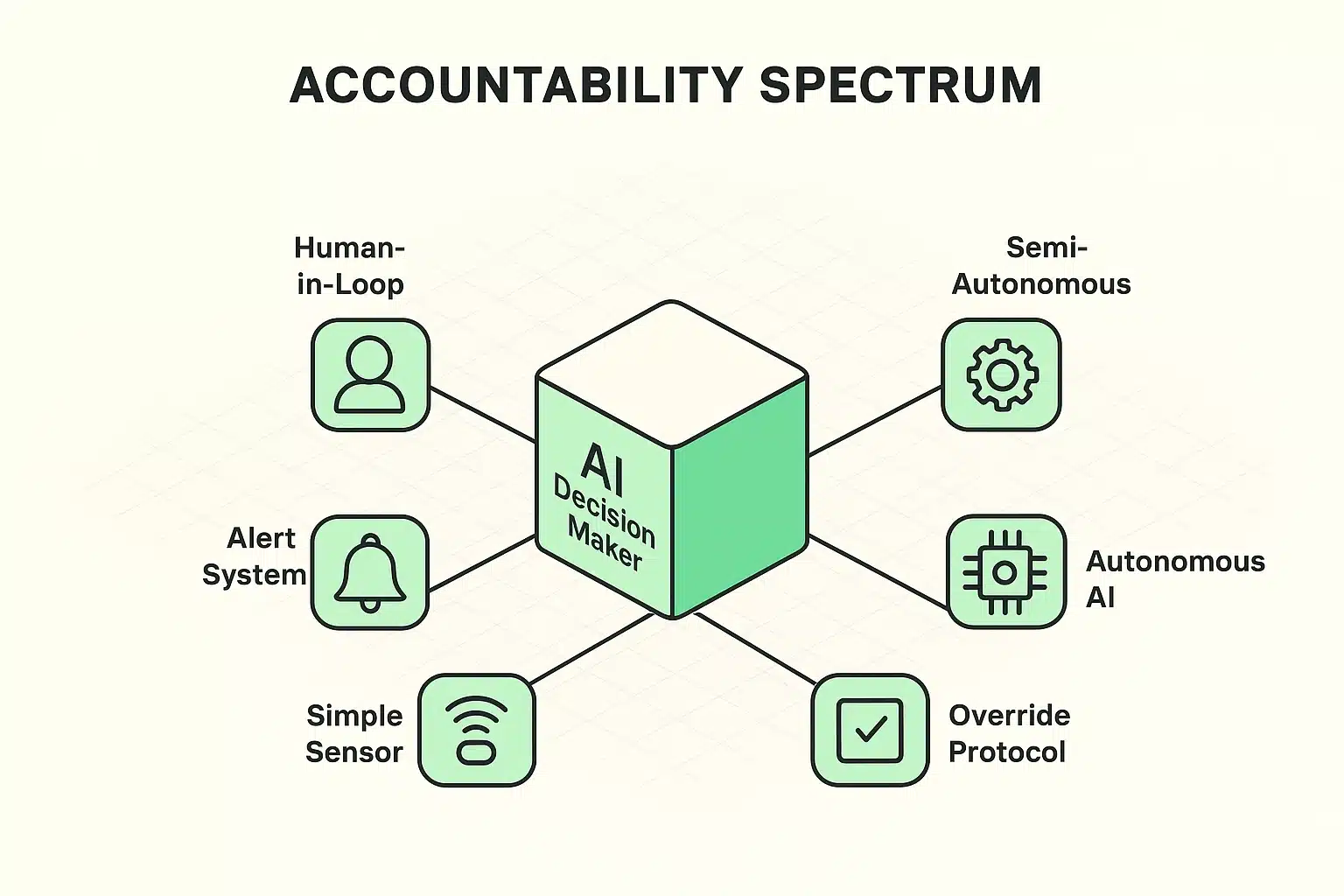
Back in the old days, if a human doctor made a bad call, you knew exactly who was responsible. You could look them in the eye and say, “Doc, I think you goofed.” Today, care facilities are using AI to predict when you might get sick, when you need to start hospice, or whether you can safely live alone.
But here is the million-dollar question: When an algorithm makes a life-altering care decision and a human just clicks “Accept,” who is legally and ethically on the hook? This is what experts call the Responsibility Gap. It happens because of a little psychological quirk called “Automation Bias.”
Basically, humans are naturally prone to trust machines. If a fancy computer screen says, “Everything is fine,” a busy nurse is highly likely to trust it, even if their own intuition says otherwise. The computer takes on an aura of absolute authority, kind of like a guy walking into a building wearing a high-vis vest and carrying a clipboard.
We can’t put a piece of software in jail, and we certainly can’t expect it to feel bad for cutting your physical therapy short. That’s why global health watchdogs and smart folks in lab coats insist on three pillars of AI ethics in senior care.
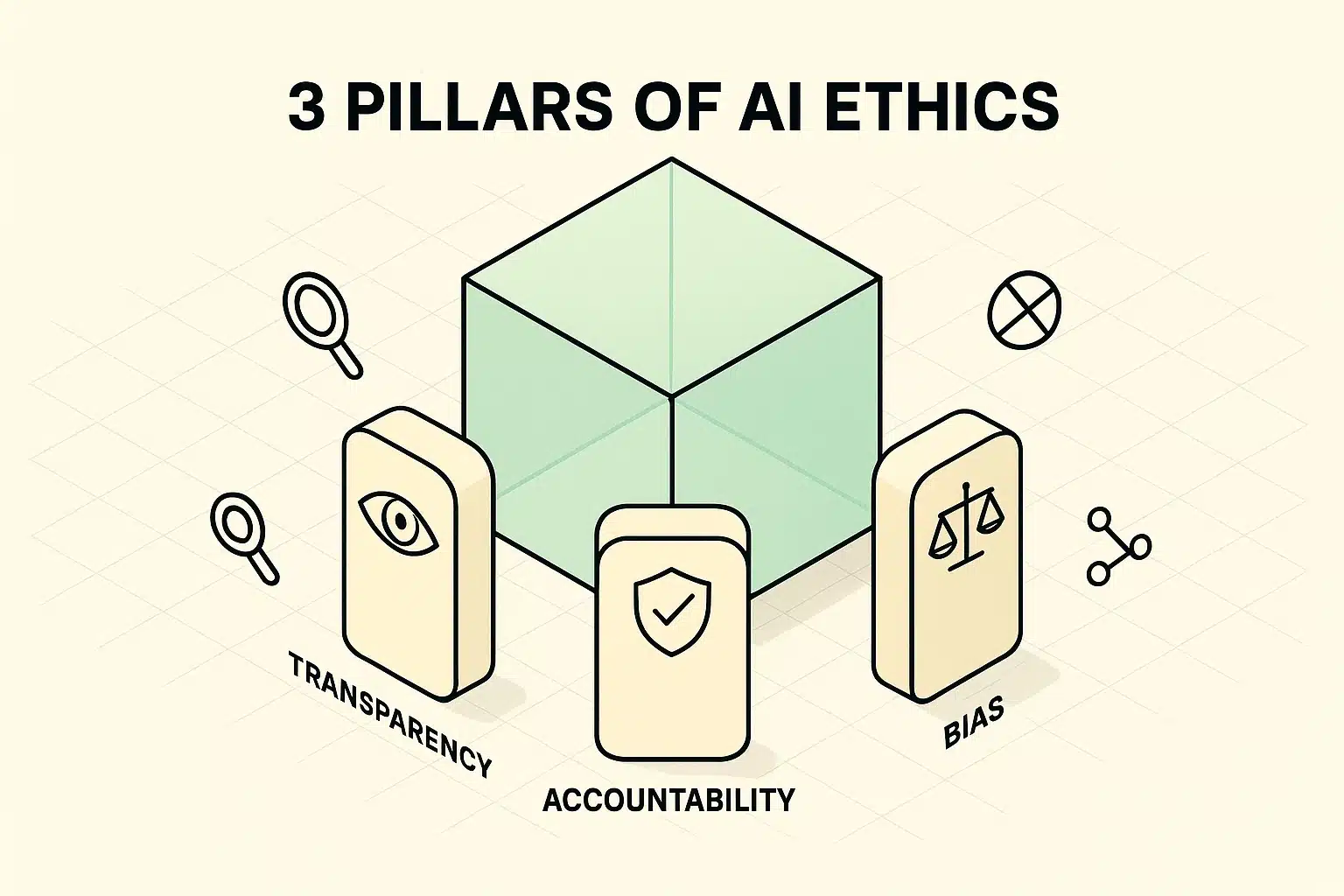
We have a major problem right now with what techies call “Black Box” AI. The computer spits out an answer—like “discharge this patient tomorrow”—but refuses to explain how it reached that conclusion. It’s like a teenager answering “Just because” when you ask why they ate the entire chocolate cake. We need “Glass Box” AI instead, which is technology that can actually explain its reasoning in plain English.
There is a fancy industry term called “Human-in-the-loop.” It means that a real, live, breathing human must be involved in the final decision. But how much involvement counts? If a nurse glances at an AI alert for two seconds before approving it, is the human really in the loop? True accountability means the human always has the final say, and they shouldn’t be penalized by their corporate bosses for overriding the machine.
Here is a scary truth: AI is not objective. It is only as smart as the people who train it. And if the people writing the code are 25-year-old gym rats who have never experienced joint pain, their algorithms might just suffer from “Digital Ageism.” An AI trained entirely on younger, healthier people might look at an 80-year-old’s slow-burn health patterns and panic, or worse, ignore a serious issue altogether.
Now, you might be thinking, “This sounds like science fiction. Surely nobody is letting computers make actual healthcare decisions yet.” I hate to be the bearer of bad news, but it’s already happening right under our noses.
Take the recent, real-world case involving a company called NaviHealth. Algorithms were being used by massive insurance companies to predict how long a senior needed to stay in a nursing home or rehab facility. The problem? The AI kept insisting patients needed far less care than their doctors recommended.
Instead of listening to the doctors, the insurance companies allegedly used the AI’s predictions to cut off Medicare coverage early. This is called “Algorithmic Denial.” It’s the dark side of using tech to save a buck, where cost-cutting algorithms replace human compassion, and seniors are left holding the bag.
So, how do we fight back? Do we smash the computers and go back to charting vital signs on stone tablets? No. We just need to ask better questions. If you or a loved one are moving into an assisted living facility or dealing with an insurance company, you need to be proactive. Treat their technology like a suspicious telemarketer.
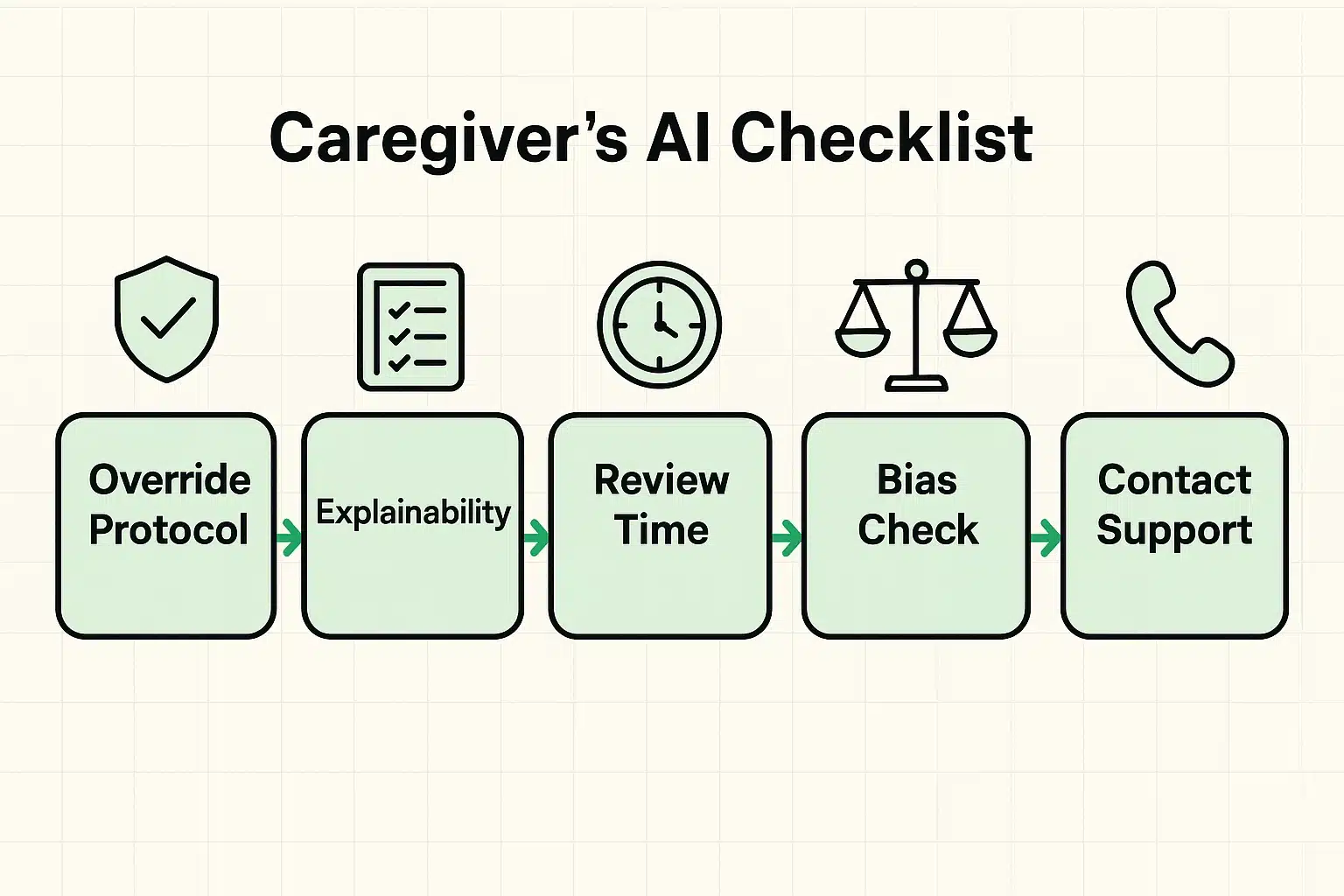
Here is your quick “Senior Care AI Bill of Rights” checklist to ask any care provider:
Yes, mostly! AI sensors for fall detection and medication reminders are fantastic tools that can vastly improve independence. They just shouldn’t be the only tool. Think of AI as an assistant to a human caregiver, not a replacement.
It means the computer can show its work. Instead of just giving a yes or no answer, an explainable AI tells the doctor exactly which blood test, heart rate spike, or daily habit led to its conclusion.
Nope. You can’t sue a line of code any more than you can sue your toaster for burning your bagel. Liability currently falls on the people using the AI (the facility or doctor) or the company that built it, though the laws around this are still very messy.
You have the right to ask! If a claim is denied or a care stay is cut short unexpectedly, immediately appeal it. During the appeal, ask your provider explicitly if an algorithmic prediction tool was used in their decision process.
Technology is amazing. We can video chat with grandkids in Australia, order groceries from the couch, and wear watches that politely remind us to stand up. AI has incredible potential to make senior living safer, more personalized, and a lot less stressful.
But at the end of the day, caregiving is a deeply human endeavor. An algorithm can crunch the numbers, but it can’t hold your hand, understand your pain, or know when a stubborn streak is actually a sign of discomfort.
As we navigate this new frontier of digital health, let’s make sure the robots are working for us, not the other way around. Stay curious, ask those tough questions, and never be afraid to demand that a real, live human gets the final say in your care.