Newsletter Subscribe
Enter your email address below and subscribe to our newsletter

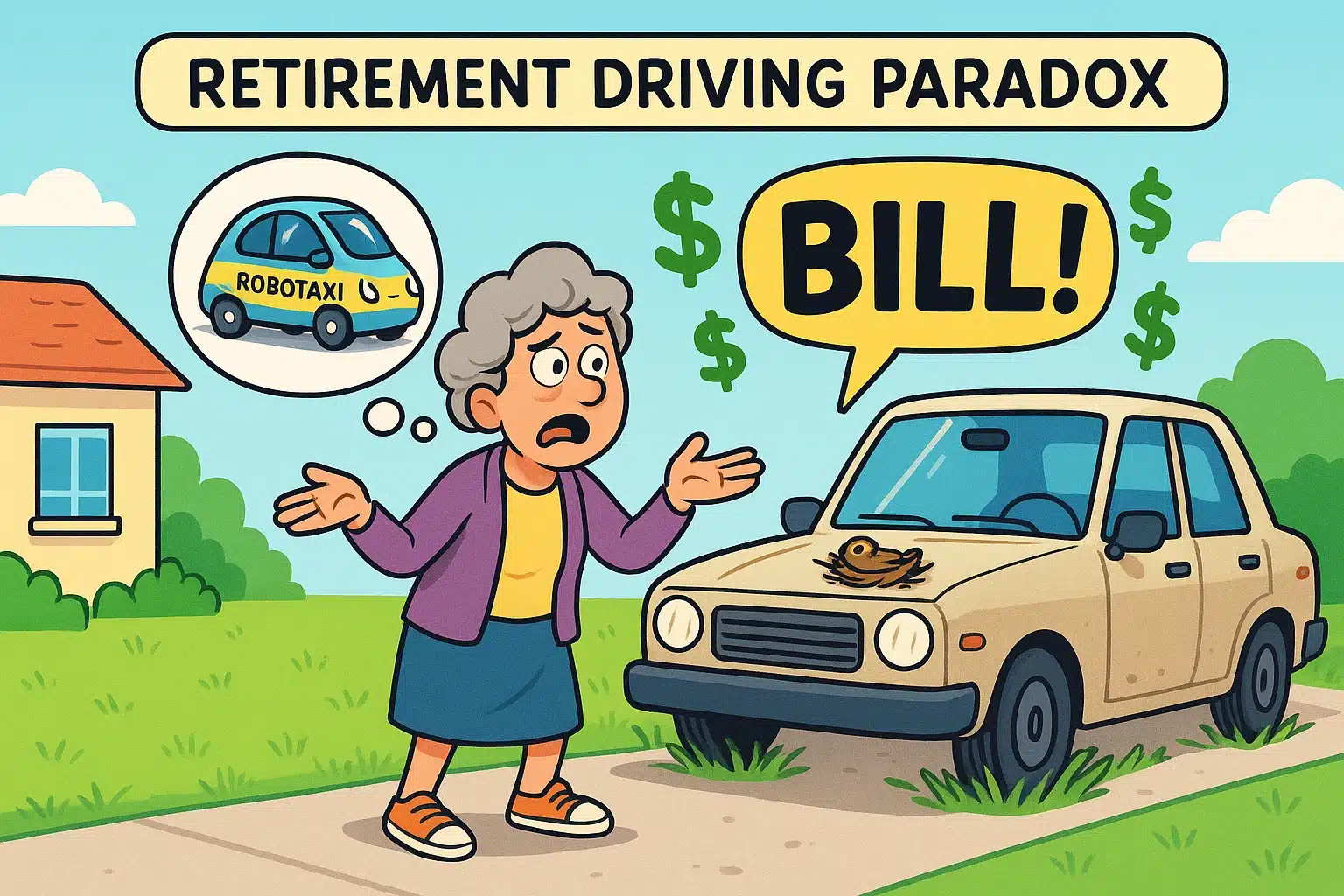
Have you ever looked out the window at the car sitting in your driveway and realized it’s basically an expensive lawn ornament? You pay for insurance, registration, maintenance, and the occasional wash, all so it can take you to the grocery store twice a week. If you were paying a human being that kind of salary just to sit in your yard, your neighbors would talk.
This is what we call the “Retirement Driving Paradox.” For many older adults, keeping a “safety car” in the driveway is actually their highest, sneakiest monthly bill. You might think holding onto those car keys saves you money, but the math often tells a completely different story.
Today, we are taking a plain-English look at the future of getting around. We are going to compare the true costs of your trusty old sedan against human-driven ride-shares like Uber, and the futuristic, self-driving “robotaxis” that are slowly taking over our streets.
Let’s talk about the “200-Mile Pivot Point.” Recent data suggests that if you drive less than 200 miles a month, the “sunk costs” of owning a car far exceed the cost of paying for rides. Between insurance, gas, and that weird rattling noise the mechanic can never quite identify, your cost-per-mile is astronomical.
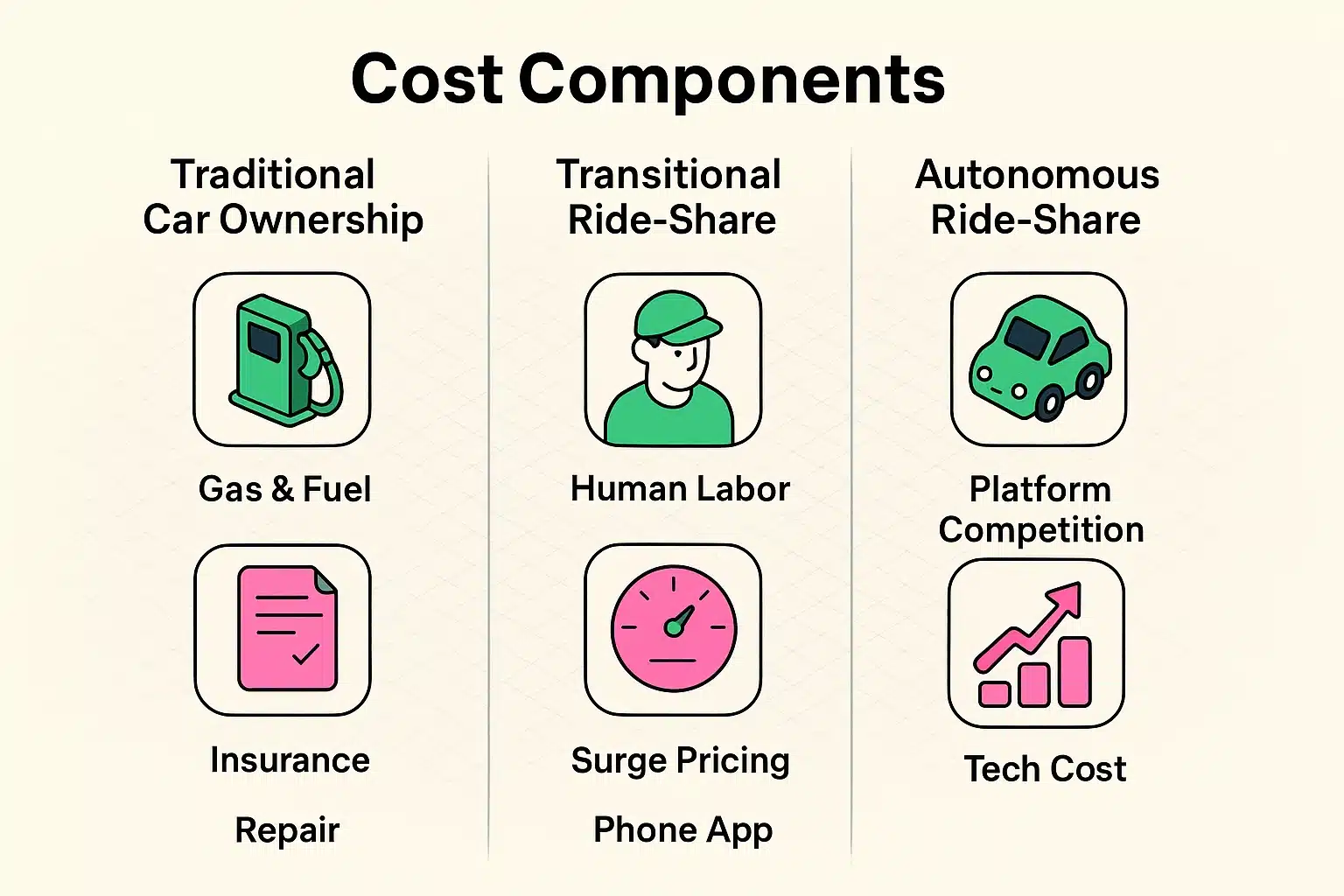
When you decide to hang up the keys, you generally face three pillars of transportation cost. The first is Traditional: the gas, insurance, repairs, and stress of owning your own car. The second is Transitional: services like Uber, Lyft, or local senior taxis, where you are paying mostly for human labor.
The third pillar is Autonomous: the self-driving robotaxi. Here, you aren’t paying a driver to listen to your favorite radio station. Instead, you are paying for high-end technology, which comes with its own unique set of financial rules.
Why do autonomous rides sometimes cost just as much, or even a few bucks more, than a regular Uber? The smart folks at the Yale School of Management use a brilliant analogy to explain this. They compare self-driving cars to a nuclear power plant, and human drivers to a gas turbine.
A self-driving car currently costs about $200,000 to build because of all the lasers, sensors, and computer brains inside it. It’s like building a nuclear plant—a massive upfront cost, but very cheap to keep running all day and night. Human ride-share drivers, on the other hand, are like gas generators.
Human drivers cost nothing to “build,” and they can just turn on their apps when it’s busy. But humans require a higher hourly wage. Right now, autonomous companies are charging slightly higher prices to pay off their expensive robot cars, but as the technology gets cheaper, that math is going to flip drastically in your favor.
One of the biggest hurdles to saving money with these new ride services isn’t the price—it’s the technology. Trying to summon a car using a smartphone app can sometimes feel like trying to defuse a bomb while wearing oven mitts. If you don’t use apps, does that mean you’re stuck paying for an expensive personal car forever?
Absolutely not. Companies are finally waking up to the fact that not everyone wants to tap a glass screen twenty times to go to the pharmacy.
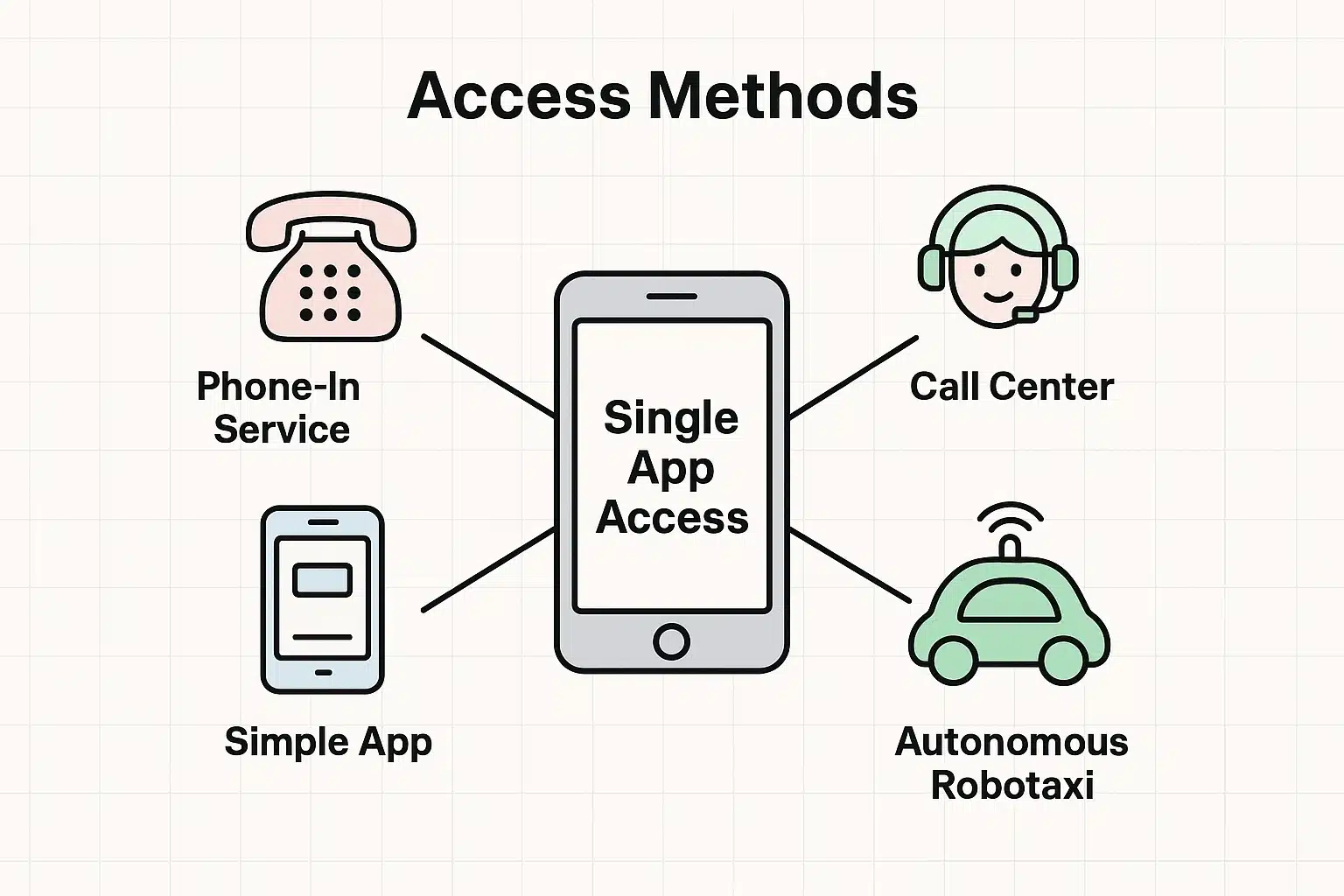
There are brilliant “bridge” services out there, like GoGoGrandparent, which let you call a standard 1-800 number to order a ride. A real human operator will dispatch an Uber, Lyft, or eventually an autonomous car straight to your door. If you’ve already mastered using alexa for seniors to check the weather or play your favorite oldies, using these simplified call-in services will be a walk in the park.
If you’ve ever tried to call a ride-share during a rainstorm or right at 5:00 PM, you’ve met the dreaded “surge pricing.” This is an algorithm’s way of saying, “Everyone wants a car right now, so we’re doubling the price.” Both human and robot ride-shares use this sneaky tactic.
The easiest way to keep your transportation budget low is to master the “Surge-Avoidance Map.” It simply means treating rush hour like it’s contagious. If you can schedule your doctor’s appointments for 10:30 AM instead of 8:30 AM, or do your grocery shopping at 2:00 PM, you can avoid peak pricing entirely.
By traveling during these “quiet hours,” you are practically guaranteed the lowest possible rate. For seniors on a fixed income, this simple scheduling tweak can save hundreds of dollars a year in transportation costs.
Right now, we are in an awkward “dual-platform” phase in many cities. You have traditional Ubers competing with self-driving fleets like Waymo or Tesla. Because the market is split, prices haven’t completely bottomed out yet.
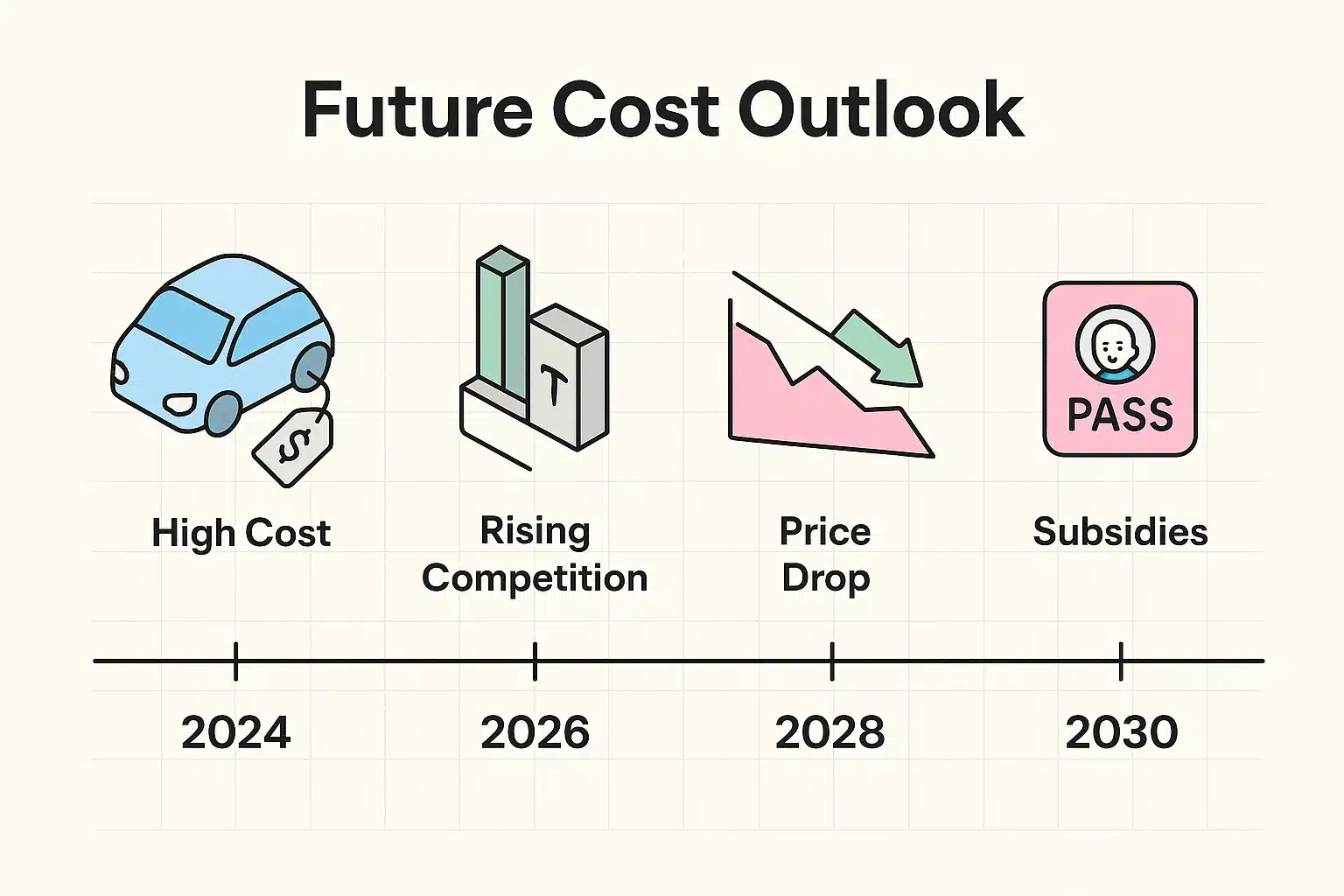
However, experts predict that by 2028, increased competition will drive autonomous ride prices down significantly. Without the need to pay human wages, the cost-per-mile of a robotaxi could easily drop to half of what an Uber costs today. Furthermore, because autonomous cars don’t get tired, text while driving, or get distracted by billboards, they are statistically proving to be incredibly safe.
This improved safety record means insurance companies and city governments will save money. Many experts believe these savings will eventually trickle down to older adults in the form of subsidized “Senior Mobility Passes.” Imagine paying a flat, low monthly subscription fee for unlimited, safe, self-driving rides around your town.
If you drive less than 200 miles a month, almost certainly. Add up your yearly insurance, registration, gas, and repair bills, then divide by 12. Most seniors find they are paying over $400 a month just to keep a car parked in their driveway, which buys a whole lot of ride-share trips.
You don’t need to be a tech wizard. Services like GoGoGrandparent act as a middleman, allowing you to call a regular phone number to order a ride. They handle the complicated app part and monitor your ride for safety, while you just wait by the curb.
Currently, traditional Medicare does not cover routine transportation to medical appointments, whether it’s an Uber or an autonomous car. However, some Medicare Advantage (Part C) plans are beginning to offer transportation allowances. Always check with your specific provider to see if you have a transit budget included in your plan.
Prices are projected to drop significantly over the next few years. Right now, companies are paying off the high cost of building the technology. Once those costs are covered, the lack of human driver wages means the savings will be passed directly to the consumer.
Transitioning away from owning a personal car is a big decision, both emotionally and financially. It’s completely normal to feel a bit hesitant about trusting a computer to drive you to the dentist. But knowing the true financial breakdown gives you the power to make the best choice for your budget.
Take a few minutes this week to calculate your true monthly car expenses. You might be surprised to find that letting a robot do the driving isn’t just a scene from a science fiction movie—it might just be the smartest financial move you can make.