Newsletter Subscribe
Enter your email address below and subscribe to our newsletter

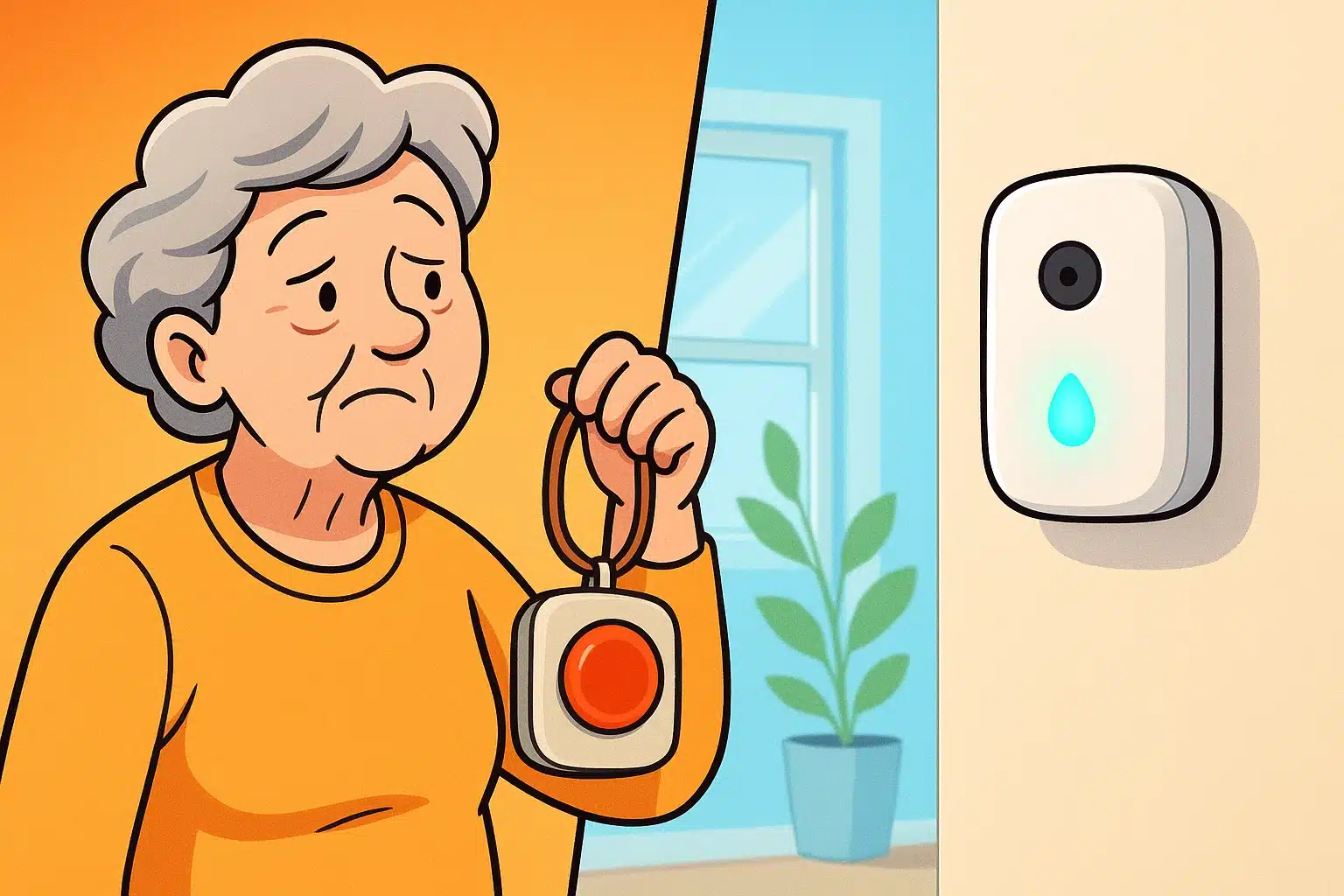
We all remember the classic 1980s commercials. An older woman is lying on the living room floor, staring at the ceiling, yelling into a clunky plastic pendant, “I’ve fallen, and I can’t get up!” While those ads spawned a thousand bad jokes, the underlying fear they played on was very real.
The solution back then was essentially strapping a glorified garage door opener around your neck. It was bulky, it was ugly, and for many seniors, wearing it felt like wearing a neon sign that said, “I’m losing my independence.” So, what did people do? They left the button on their nightstands, where it served wonderfully as a coaster for water glasses, but failed miserably at saving lives.
Fast forward to today. What if your guardian angel didn’t require a lanyard, didn’t need you to push a button, and never judged you for eating ice cream at 2 AM? Welcome to the era of robotic guardians.
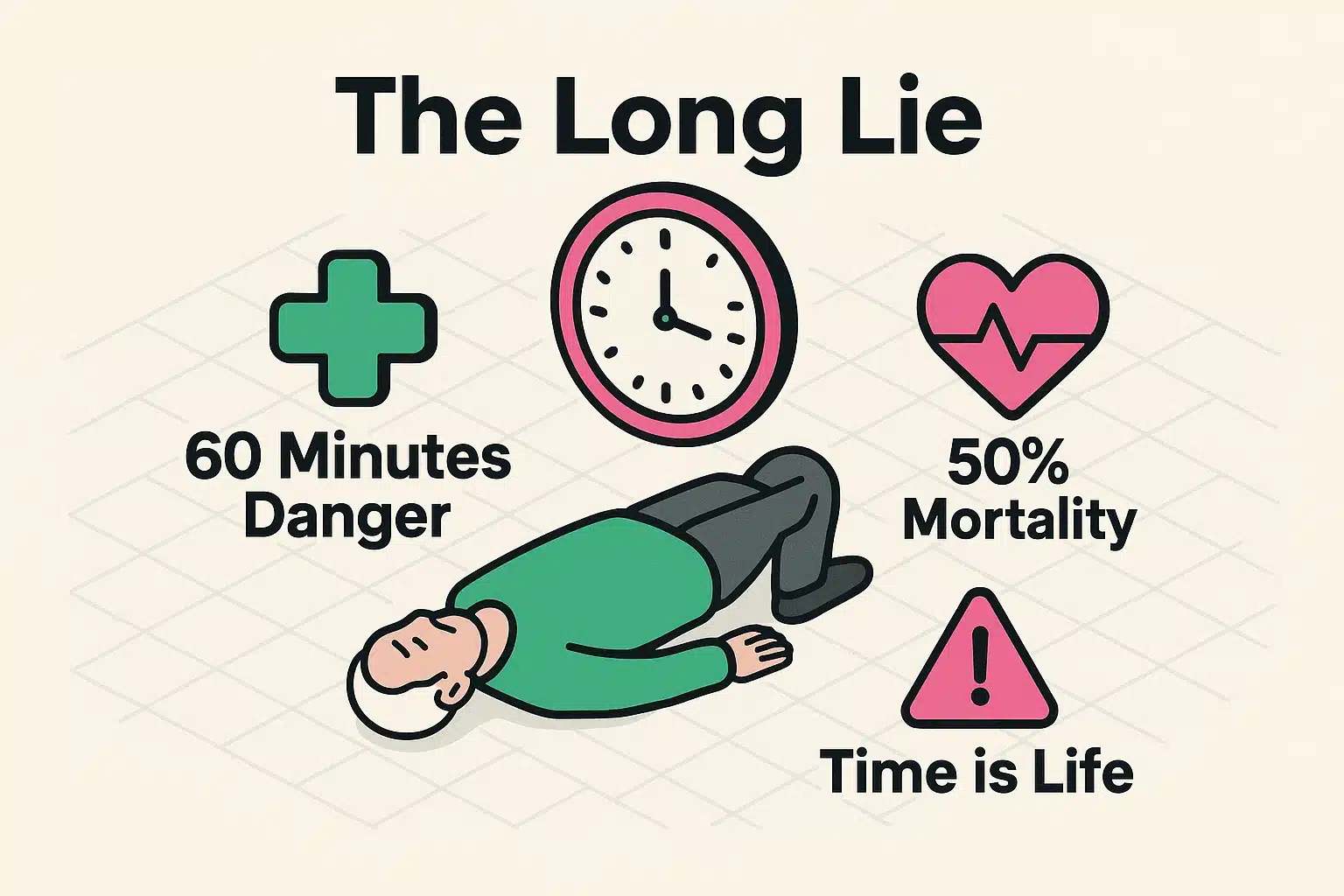
Before we talk about the cool technology, we need to talk about why we need it. Medical professionals have a terrifying term for what happens when someone falls and can’t get help: the “Long Lie.”
If you fall and are stuck on the floor for more than an hour, the health risks skyrocket. Dehydration, muscle damage, and severe complications set in fast. In fact, medical research shows that 50% of seniors who suffer a “long lie” face severe health consequences within six months. Seconds matter, but old-school buttons rely on you being conscious and able to physically press a button to get help.
If you happen to hit your head, or if your pendant is sitting safely on the bathroom counter while you’re in the shower, that button is about as useful as a chocolate teapot. We needed a system that acts proactively, not reactively.
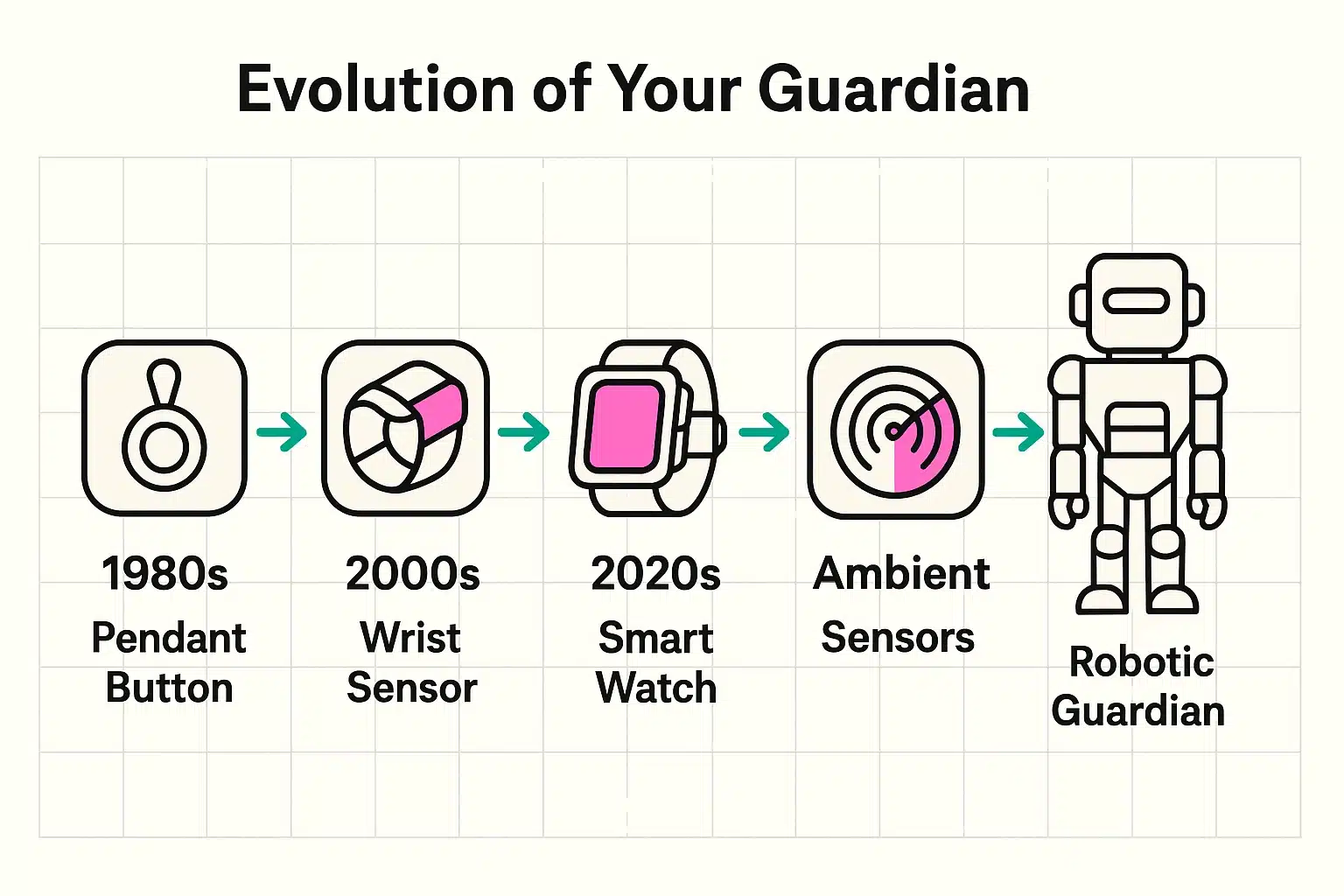
To understand how far we’ve come, let’s look at the “Senior Tech Spectrum.” It started with those basic wearable buttons. Then, technology got a bit smarter with wearable smartwatches.
If you already have a smartphone, setting up your apple emergency sos is a fantastic first step. A modern smartwatch measures the impact of a fall right on your wrist. However, there is a catch. Wrists move a lot.
If you talk with your hands or aggressively whisk pancake batter, a wrist-mounted sensor can easily get confused. This can lead to false alarms, sending paramedics rushing over while you’re just enjoying Sunday breakfast. That’s why the industry is moving toward ambient and autonomous robotic solutions. They don’t rely on your wrist; they rely on monitoring the entire room.
When you hear “robot camera,” you might picture a creepy sci-fi movie where the computer decides to take over the house. Nobody wants to feel like they’re being spied on in their pajamas.
Fortunately, modern robotic guardians use technology that protects your physical body while also fiercely protecting your privacy. Instead of traditional cameras, many use LiDAR (which measures distance using harmless, invisible lasers) or Radar (which bounces radio waves to detect movement, much like a submarine).
Even the robots that do use Artificial Intelligence (AI) vision employ a brilliant privacy feature called “Edge Processing.” This means the robot’s “brain” is completely self-contained. It analyzes your movements right there in your living room and instantly deletes the data. No video is ever uploaded to the internet or sent to a creepy tech company. What happens in the robot, stays in the robot.
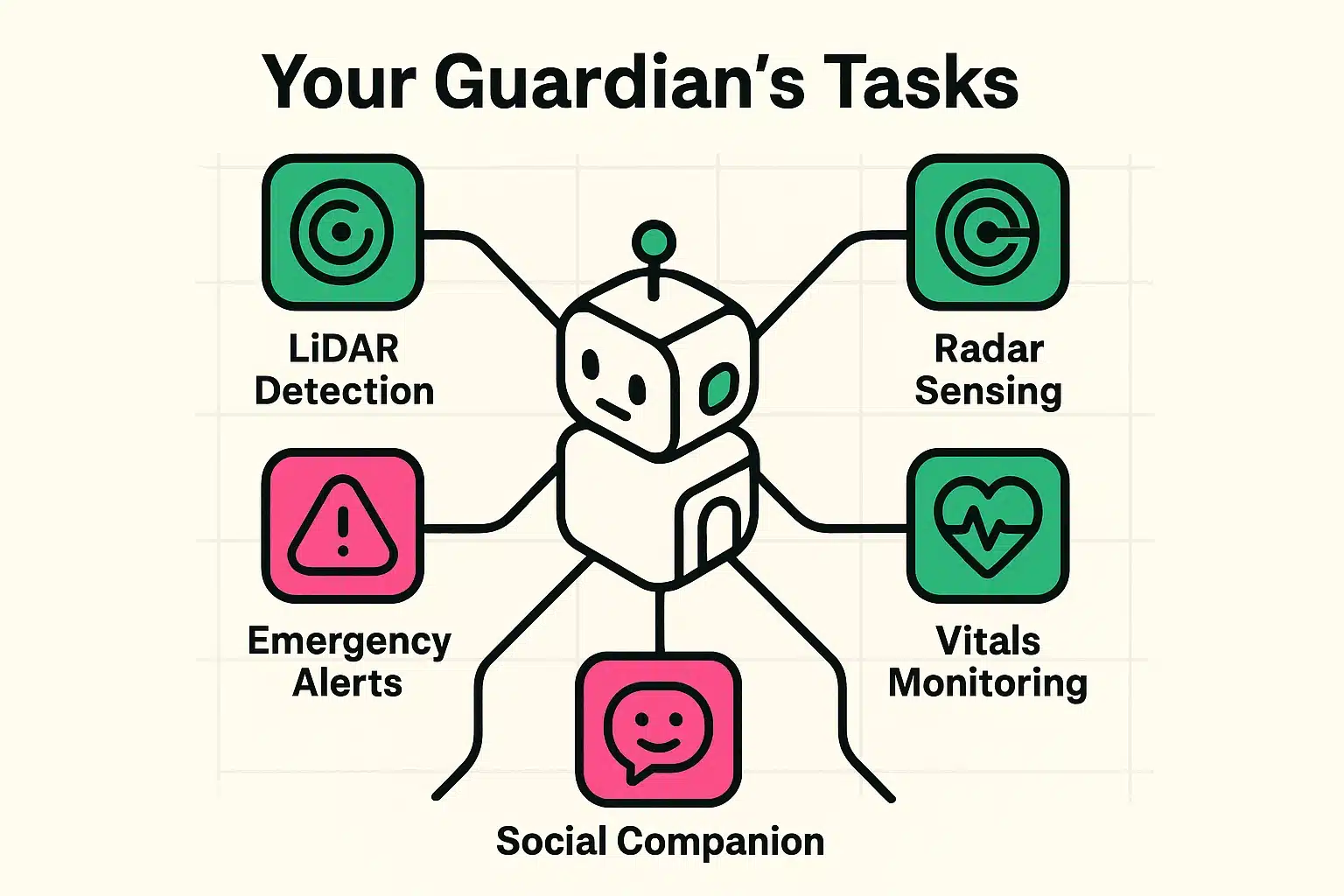
Here is the real “aha” moment: basic pendants only know you’ve fallen after you hit the floor. A robotic guardian can actually detect a fall before it happens.
Because these silent guardians monitor your room continuously, they learn your normal walking speed and rhythm. If the robot notices that your gait has become slower or that you’re shuffling more than usual over a few weeks, it can alert you or your family.
By catching these subtle changes, you can address mobility issues with a doctor before an emergency ever takes place. It’s the difference between wearing a seatbelt and having a car that automatically stops before you rear-end the person in front of you.
There is a surprising link between loneliness and fall risk. When seniors live alone and feel isolated, they tend to move around less, leading to decreased muscle tone and balance.
Some of the newer robotic systems double as social companions. They can suggest playing a trivia game, remind you to take your medication, or even prompt you to do light stretching. This combats the “errand and loneliness cycle,” keeping your mind sharp and your body moving.
By engaging with a friendly, talking companion, you naturally stay more active around the house. And an active senior is a senior who is far less likely to suffer a devastating fall.
Deciding to invite a digital guardian into your home is a big step. When evaluating your options, you’ll want to think about your specific living situation.
Absolutely not! These are autonomous devices. Think of them like a very smart, very stationary loyal dog. You don’t need a joystick to operate them; they monitor the environment automatically using their built-in sensors.
This is a great question. Most standalone robotic companions cannot climb stairs (the technology just isn’t there yet without making them incredibly expensive and heavy). For multi-story homes, you’ll want a system that includes secondary wall-sensors for the upstairs areas.
Yes! Almost all modern robotic emergency systems allow you to customize your “escalation list.” You can set it to call your spouse first, your adult children second, and emergency services only if nobody answers.
It depends on the model, but the best systems have a built-in cellular backup (just like a cell phone). If your home internet drops, the robot connects to a cellular tower to make sure you’re never left unprotected.
Embracing safety technology shouldn’t mean sacrificing your dignity or feeling like you’re under constant medical surveillance. The beauty of these modern robotic guardians is that they reframe safety from a “medical alert” to a proactive luxury.
You aren’t wearing a sign of decline around your neck; you’ve simply hired a brilliant, silent digital butler whose only job is to look out for you. And frankly, any butler that promises never to judge you for eating pie for breakfast is a butler worth keeping around.