Newsletter Subscribe
Enter your email address below and subscribe to our newsletter

Picture this: You’ve just spent good money on a state-of-the-art medical alert pendant. It has GPS, fall detection, and probably the ability to order a pizza if you press it exactly three times.
You give it to your loved one (or strap it to your own wrist), feeling like a tech-savvy hero. You are now officially protected by the wonders of modern science!
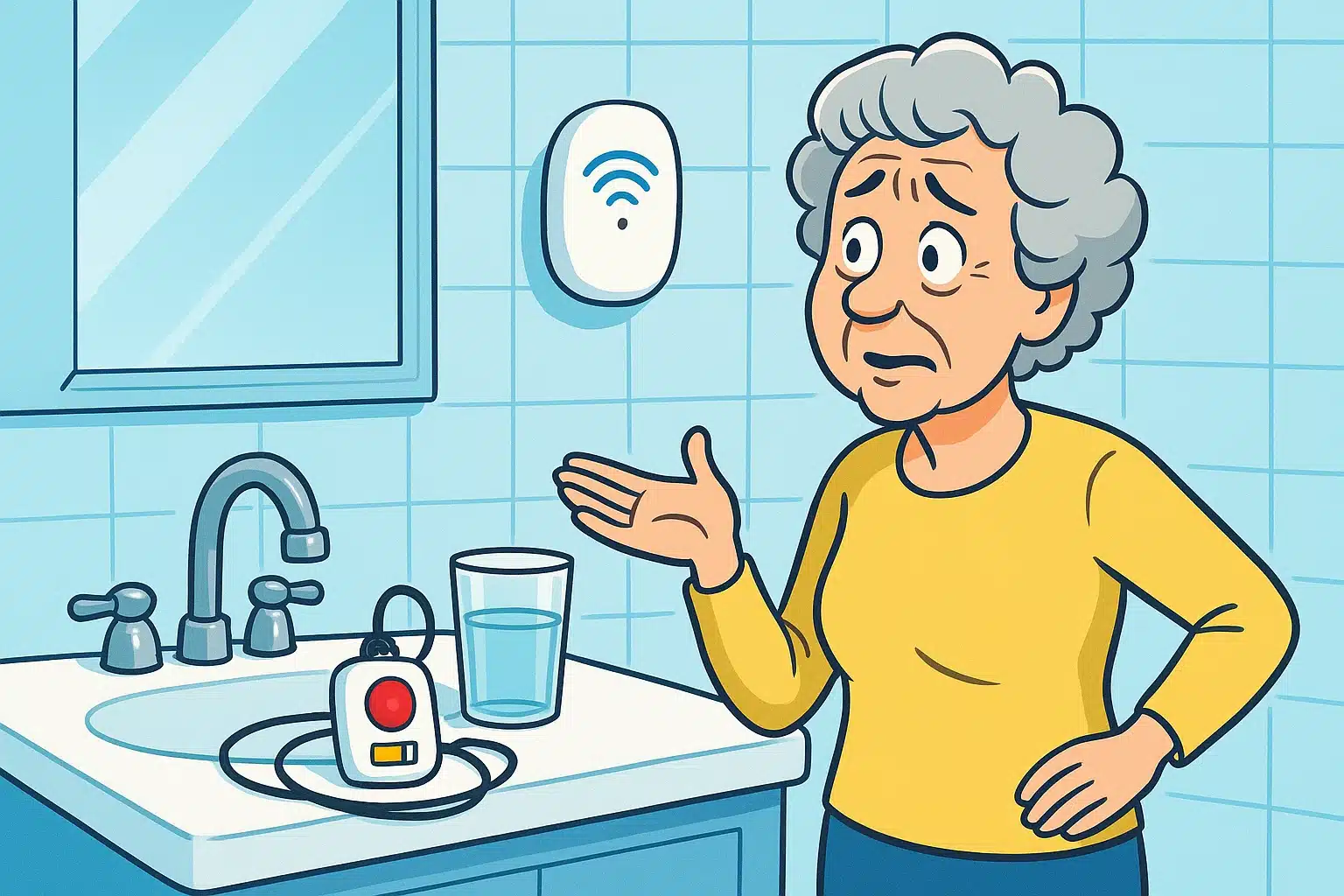
Cut to two weeks later. Where is this marvel of modern engineering? It’s sitting on the bathroom counter, quietly guarding a tube of generic denture cream and a half-empty glass of water.
If this sounds familiar, you are not alone. The biggest failure in senior fall detection isn’t a glitch in the technology. It’s the fact that humans are wonderfully stubborn creatures who forget to wear things, hate charging batteries, and despise feeling like a “patient” in their own home.
The statistics are sobering: about 1 in 4 seniors falls each year. Yet, research shows that only about 20% of folks who own a medical alert device actually wear it consistently.
Why? Because nobody wants a flashing plastic necklace announcing to the world that they might tip over. There’s a stigma attached to traditional medical alerts that makes people quietly tuck them away in a drawer.
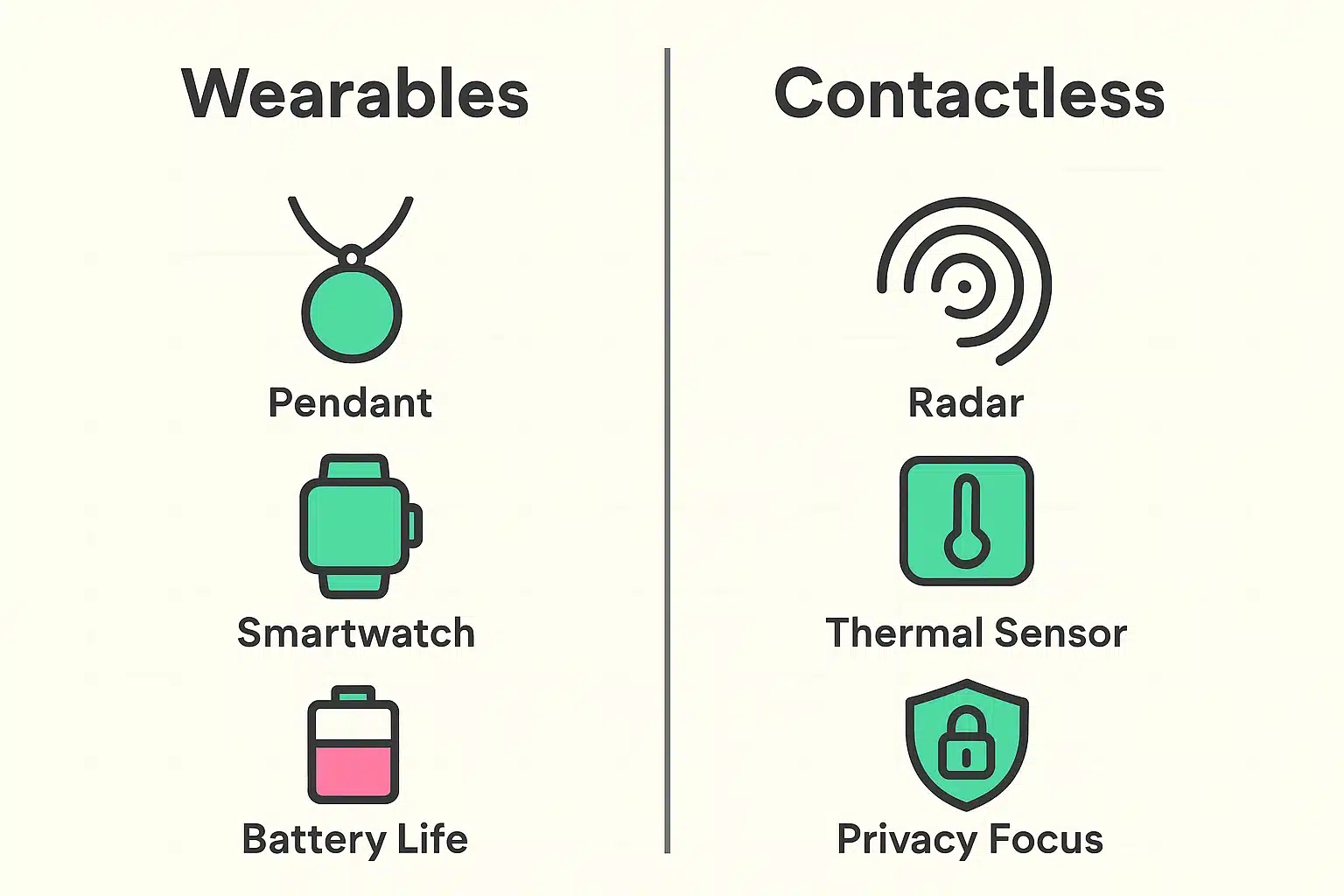
Furthermore, we run into the dreaded “Battery Burden.” Remembering to charge a smartwatch every single night is just one more chore to add to a list that already includes remembering where you put your reading glasses. If a device is sitting on a charger during a 2:00 AM trip to the bathroom, it can’t call for help.
To choose the right tech, we need to understand how it actually works. Traditional wearables—like smartwatches and pendants—use a tiny gizmo called an accelerometer.
Accelerometers are basically impact detectors. They are waiting for a sudden, jarring motion followed by stillness. If you trip over the rug and go down hard, the watch screams for help.
But what if you don’t crash? What if you feel dizzy, grab the wall, and slowly slide to the floor? Accelerometers often completely miss the “slow slide.” They just think you decided to sit down really close to the baseboards.
This is where contactless sensors enter the chat. Contactless tech doesn’t rely on impact. Instead, it uses things like thermal heat mapping or mmWave radar (which bounces invisible radio waves around the room like a high-tech bat). These sensors monitor posture. If your posture goes from “standing” to “lying on the kitchen tiles,” the sensor triggers an alert—no impact required.
Here is a fun fact that isn’t actually fun: roughly 80% of falls happen in the bathroom. The floors are wet, the tiles are slippery, and there are sharp corners everywhere.
Here is the paradox: the bathroom is the exact place where seniors are most likely to take their wearable devices off. Even if a watch says it’s water-resistant, most folks instinctively unbuckle it before hopping in the shower.
So, do we put a camera in the bathroom? Absolutely not. We want to be safe, but we certainly don’t want Big Brother watching us bathe.
This is the beauty of contactless radar and thermal sensors. They offer a strict “No Camera” promise. They don’t see faces or bodies; they just see a blob of heat or a stick-figure of radio waves. You get complete privacy in your most vulnerable moments, combined with top-tier protection.
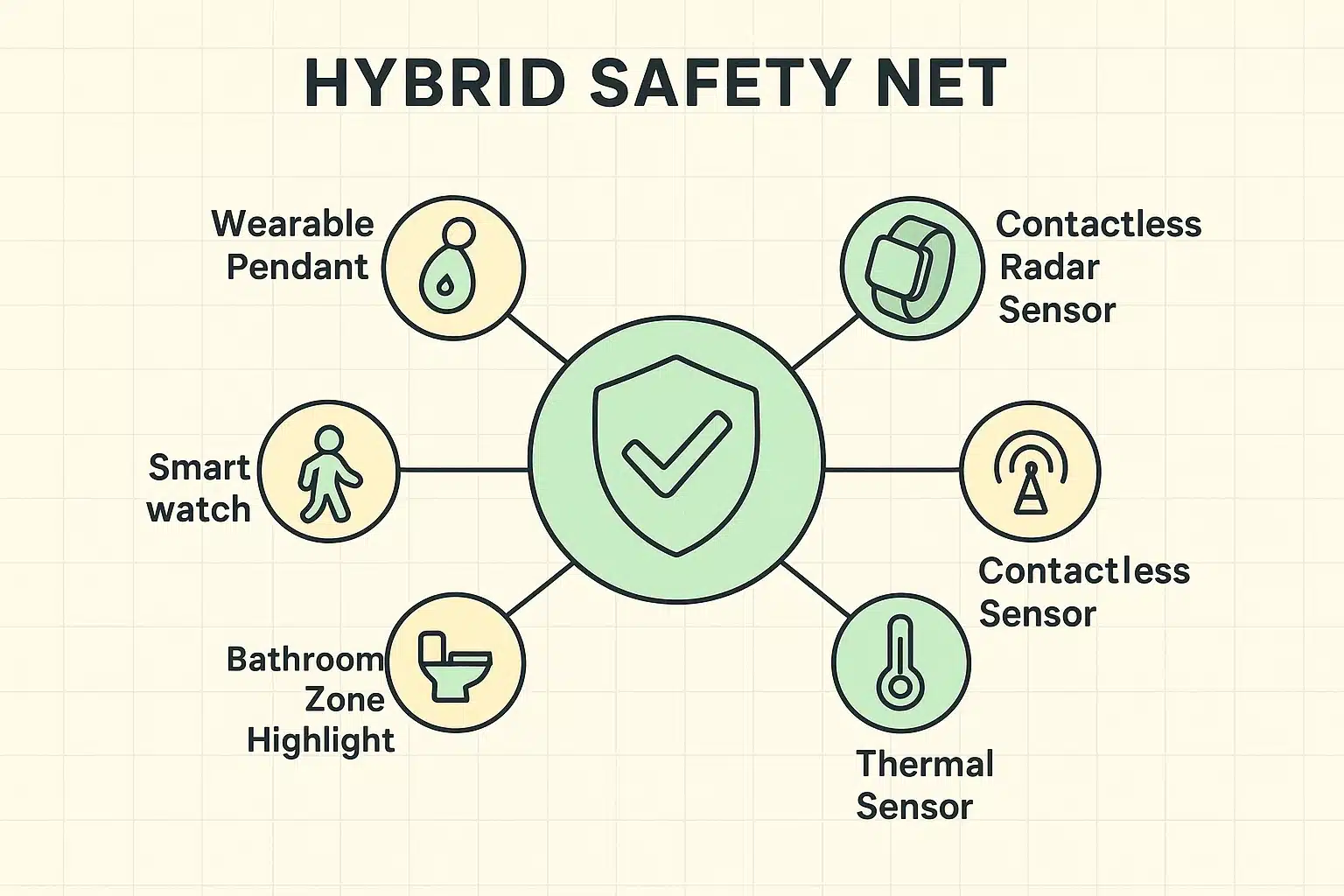
Instead of arguing over which single device is best, the smartest move is to build a Hybrid Safety Net. This means using different tools for different jobs, based on your specific lifestyle.
Think of it like dressing for the weather. You wouldn’t wear a snowsuit to the beach, and you shouldn’t rely on a single piece of tech to protect you everywhere.
A hybrid model typically puts contactless sensors in high-risk privacy zones—like the bedroom and bathroom. They are always on, never need charging, and can’t be forgotten. Then, you use a wearable smartwatch or pendant for when you’re out gardening, walking the dog, or checking the mail.
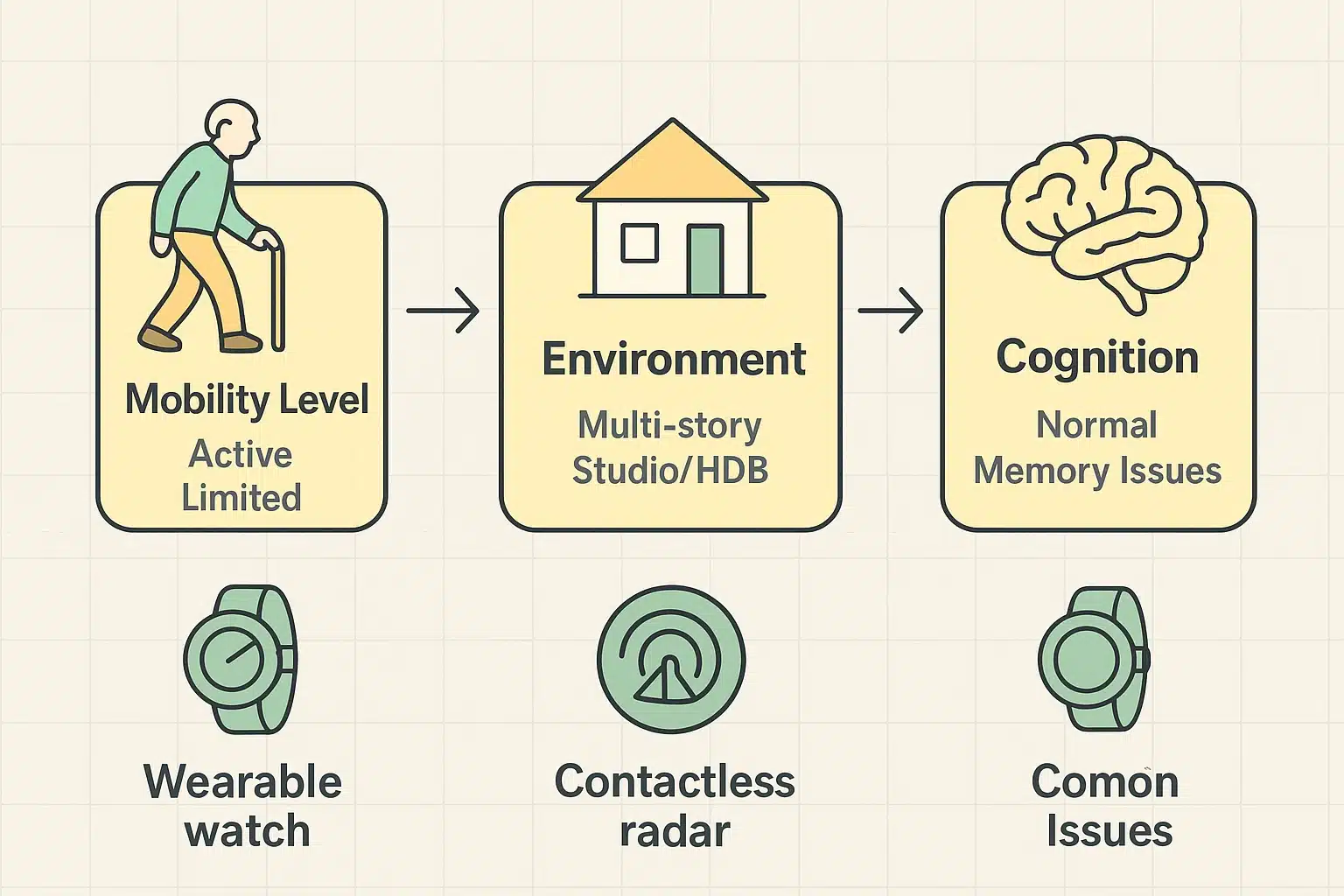
How do you mix and match this technology? It all comes down to evaluating three main factors: your mobility, your memory, and your living space.
If you happen to be reading this from Singapore, you have a massive advantage when it comes to affording this tech. The government actively encourages aging safely in place through substantial subsidies.
Before you spend a dime, look into the Seniors’ Mobility and Enabling Fund (SMF) administered by the Agency for Integrated Care (AIC). If you meet the criteria, you can receive significant financial support to install these systems in your HDB flat.
Your Quick SG Checklist:
Most modern contactless sensors use AI to tell the difference between a 150-pound human and a 70-pound dog. However, if your dog learns to walk on two legs and wear a trench coat, all bets are off.
Generally, yes. Contactless sensors usually require a stable home internet connection to send alerts. Some wearable pendants have built-in cellular connections (like a cell phone), meaning they work anywhere there’s a signal.
Ah, the classic “false alarm.” Most wearables will give you a 15-to-30-second warning beep before they call emergency services. This gives you plenty of time to tap the screen and say, “I’m fine, I’m just clumsy with my jewelry.”
Technology shouldn’t feel like a punishment for getting older. It should feel like an invisible butler whose only job is to make sure you’re safe.
Start by taking a walk through your home. Identify your personal “danger zones” (hello, slippery shower floor) and ask yourself honestly: Will I actually wear a device in this room?
If the answer is no, it’s time to look into contactless sensors. By mixing and matching the right technology, you can protect your privacy, ditch the nagging fear of a fall, and get back to enjoying your home in peace.