Newsletter Subscribe
Enter your email address below and subscribe to our newsletter

You know that thing a song can do to you?
You’re standing in the cereal aisle, minding your own business, and the speakers overhead start playing something from 1962. Suddenly you’re not holding a box of bran flakes. You’re seventeen, you’re at a dance, and you can smell the gymnasium.
Music does this to all of us. It grabs you by the collar and yanks you back through the decades whether you asked it to or not. One song, and you’re there again.
Now imagine that power aimed at something much bigger than a grocery run.
There’s a nonprofit called the Songs of Love Foundation. They’ve been around since 1996, and in that time they’ve written more than 47,000 original songs. Not covers. Not greatest hits. Brand new songs, each one made for a single person, stuffed with the details of that person’s actual life. Their name. The people they love. The music they grew up dancing to.
For most of the foundation’s history, that was a labor-intensive thing to pull off. Writing a custom song from scratch for one human being takes time.
So this year they tried something new. They teamed up with an AI music tool called Suno and launched what they’re calling the Memory Initiative. It’s the first national program of its kind, and it’s pointed squarely at folks living with Alzheimer’s, dementia, and other forms of memory loss.
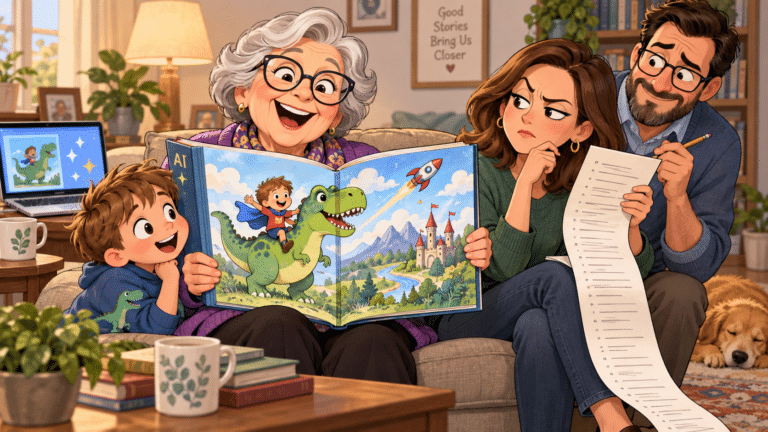
Here’s the idea. A family shares the story of their person. The favorite songs, the wedding, the old hometown, the names of the grandkids. Then, with the help of AI, the foundation turns all of that into a one-of-a-kind song written about that person, in the musical style that once filled their living room.
And the whole thing is free to families. No catch.
Here’s the part that gets me.
Memory loss is cruel in a very specific way. It takes the recent stuff first, then keeps reaching backward, peeling away names and faces and finally the words themselves. Families describe the heartbreak of sitting with someone they love and feeling like the person has gone somewhere they can’t follow.
But music plays by different rules.
Researchers have known for a long time that music reaches parts of the brain that memory loss leaves alone. A melody can slip past the locked doors. Which is why caregivers will tell you about a parent who hasn’t spoken a full sentence in months, who suddenly hums along. Who smiles. Who taps a foot. Who says a word. Who, for the length of one song, seems to come back.
That’s what the families in this program are reporting. Their loved ones engaging, lighting up, connecting in ways they hadn’t in years. Not because the disease paused. Because the right song found a way in.
Let’s be honest about something. When most people hear “AI” attached to a story, they brace for the worst. Robots taking jobs, fake photos, a chatbot confidently telling you that Abraham Lincoln invented the toaster.
This is the other thing AI can do.
It didn’t replace the human heart of this work. The love still comes from the family who knows that Mom always cried at that song, that Dad called everyone “kiddo,” that they honeymooned in a town nobody’s heard of. AI just took that pile of precious details and helped shape it into music faster than a person could on their own. It handled the heavy lifting so the people could focus on the remembering.
A tool. Pointed at something tender. Doing exactly what we’d hope a tool would do.
We tend to think of memory as a filing cabinet. Facts in folders. Pull the right one when you need it.
But anyone who’s loved someone through dementia knows it isn’t really like that. What lingers longest isn’t the facts. It’s the feeling. The warmth. The sense of I know this, I am safe here, I am still me.
A song can hand that back, even for a few minutes. Even after the names have slipped away.
And if a little help from a clever piece of software means more families get those few minutes, more smiles, more foot-taps, one more chorus hummed by someone they were afraid they’d already lost?
Then play it again.