

By Chris Clark, founder of Senior Tech Cafe
Deepfake scams use video, audio, or images made with artificial intelligence to impersonate someone real, such as your son, your bank, or a famous investor, so you’ll send money or hand over personal information.
Here’s the thing about scammers: they’re lazy. They’ve always been lazy. In the past, that meant laughably bad grammar in emails (“Dear Esteemed Sir, kindly send me your Social Securitys”).
Now? They’ve outsourced the work to AI. Instead of getting caught by typos, you’re staring at an email that looks like it came straight from your bank’s fraud department. Or a voice on the phone that sounds exactly like your son asking for money. Or documents so polished they’d pass the DMV eye-roll test.
Welcome to the new age of identity theft, where the crooks are armed with supercomputers instead of crowbars. Scary? Yes. Unstoppable? No. You’ve got something better than their toolkit: common sense, a skeptical eyebrow, and a few easy habits that keep your identity where it belongs, with you.
AI identity theft is the same old scams (impersonation, forgery and good old-fashioned lying) wearing a brand-new, shockingly realistic mask.
Instead of a poorly written email from a “Nigerian Prince,” you get a perfectly crafted message from your bank, or a video call from a loved one that looks and sounds real. The rules for spotting phishing scams still apply. You just can’t count on the typos anymore.
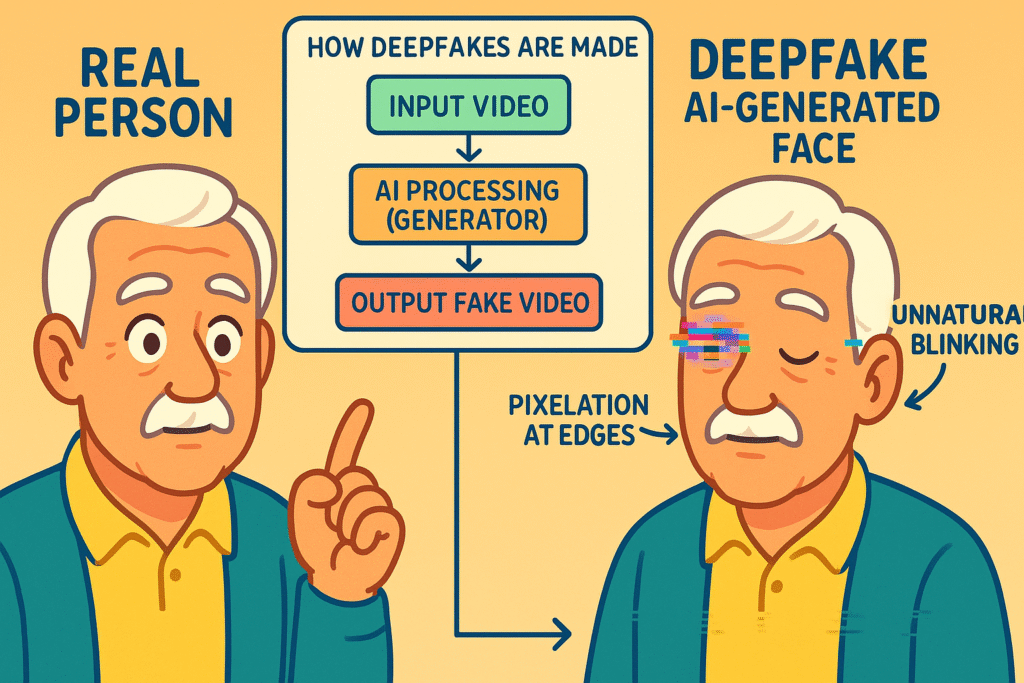
The word sounds like something from a sci-fi movie, but the idea is simple. A deepfake is a realistic fake video, photo or recording made by AI.
One common way to make one uses two computer programs. The first, call it “The Forger,” studies thousands of pictures and videos of a person, say your favorite movie star. It learns every angle of their face, how they blink and how they sound. Then it starts creating fake videos of that star saying things they never said.
The second program, “The Detective,” looks at The Forger’s work and tries to spot the fakes. The two go back and forth, millions of times, with The Forger getting better at fooling The Detective, until the fake is nearly impossible to spot.
That’s a deepfake: a digital puppet that can be made to do or say anything.
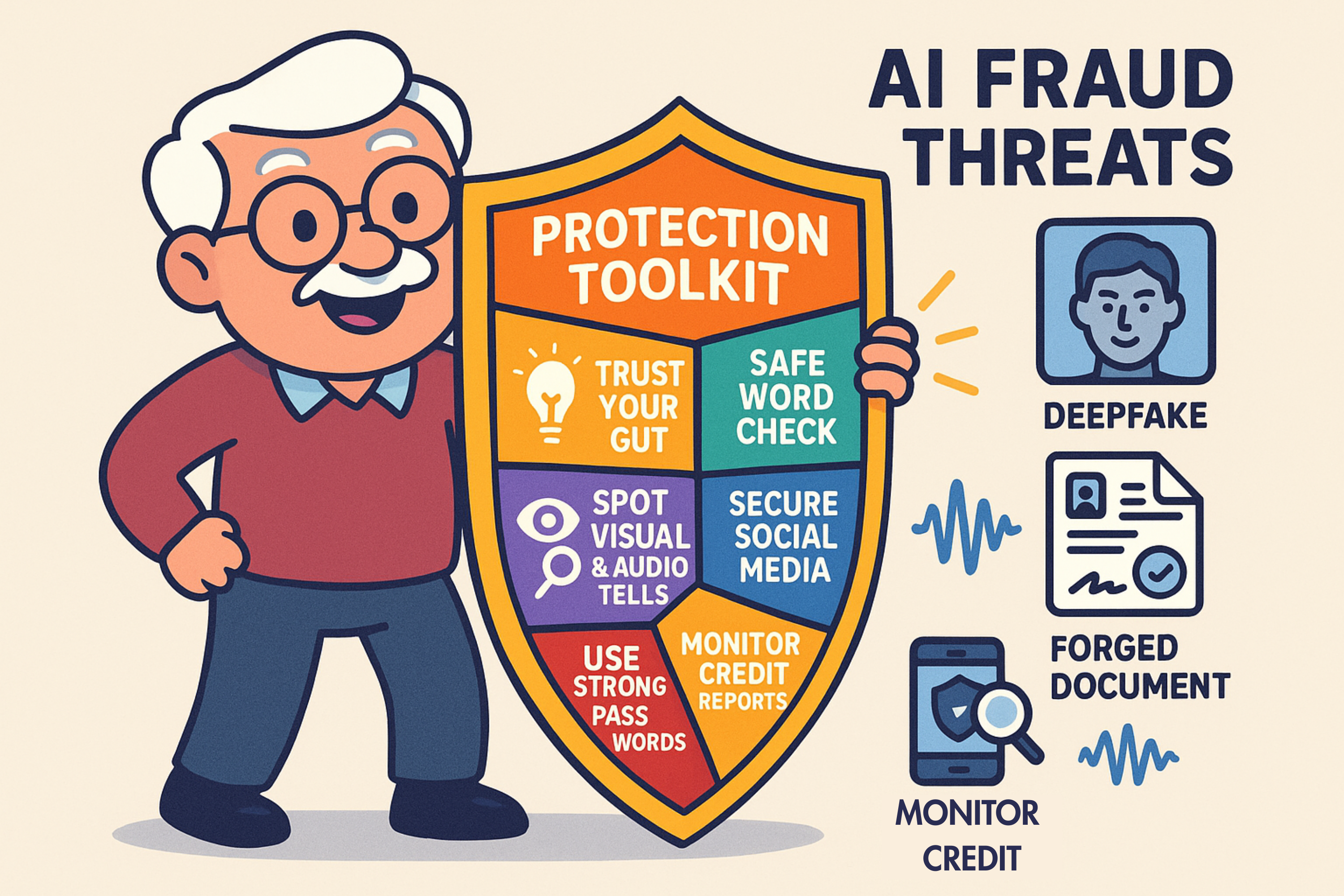
This tech isn’t just for video. Scammers use AI to make fake documents too: a driver’s license with your name and someone else’s picture, fake bank statements, or utility bills that look crisp and official. The FBI has warned that criminals now generate fake IDs this way. This is a huge leap from the days of fuzzy photocopies.
Deepfake identity theft works the other way round from most scams. Instead of faking someone you trust, the crooks fake you. A cloned clip of your voice, a fake ID in your name, or an AI-edited photo of you can be used to open a credit card, get past a bank’s identity check, or take over an account you already have.
Criminals use these powerful tools to run the same old plays, because unfortunately they still work. Here are the most common ways AI turns up in scams.
As we mentioned, scammers only need a few seconds of a person’s voice to create a convincing clone.
Where do they get it? A public video on Facebook, a cheerful voicemail greeting, or even a clip from a local news story.
They use this cloned voice to call you, pretending to be a family member in a desperate situation, counting on your love and panic to make you act before you think.
Remember those scam emails filled with typos and awkward grammar? Those were easy to spot.
AI, however, is a grammar nerd. It can write flawless, personalized phishing emails that look exactly like a real fraud alert from your bank or a shipping notification from Amazon.
They might even reference a recent purchase to seem more legitimate, tricking you into clicking a dangerous link.
This one is sneaky. Instead of stealing your entire identity, scammers create a synthetic one.
They take a real piece of information, like your Social Security number, and combine it with completely fake details, like a made-up name and address.
They use this “Frankenstein” identity to apply for loans or credit cards. Since the name is fake, the denial letters don’t come to you.
The scammer builds up the credit of this phantom person for months before maxing out all the accounts and disappearing, leaving a mess that’s tied to your good name.
Most chatbots are the good guys. They’re the digital receptionists that book your doctor’s appointment, check your order status at 3 a.m., or answer basic questions on your bank’s website.
Scammers build bad ones. Their bots pose as customer service, a charming match on a dating site, a financial advisor with a can’t-miss investment, or a grandchild in trouble. Their goal isn’t to help you. It’s to rush you into handing over money or personal information.
Don’t count on catching them by their chatter. Modern bots can make small talk about the weather and ask about your day. Watch what they want instead:
If a chat sets off your alarm bells, stop responding. You don’t owe a bot good manners. Close the window, block the account, and contact the company through its own website or the number on your card.
This all sounds terrifying, I know. It can feel like we’re living in an episode of The Twilight Zone.
But here’s the good news: you avoid deepfake scams by checking the request, not the face. If a call, video or message asks for money, a code or personal information, stop and contact the person or company through a number or account you already trust. A family safe word, a skeptical gut and sharing less online do the rest.
None of that needs a fancy piece of software, and all of it works no matter how good the fake is.
Even the most advanced AI scam still relies on one thing: emotional manipulation.
They want you to feel scared, rushed, or excited. They create a sense of urgency—“You have to send the money now!”—so you don’t have time to think.
If a call, email, or text message makes your stomach clench, that’s your built-in fraud detector going off. Listen to it.
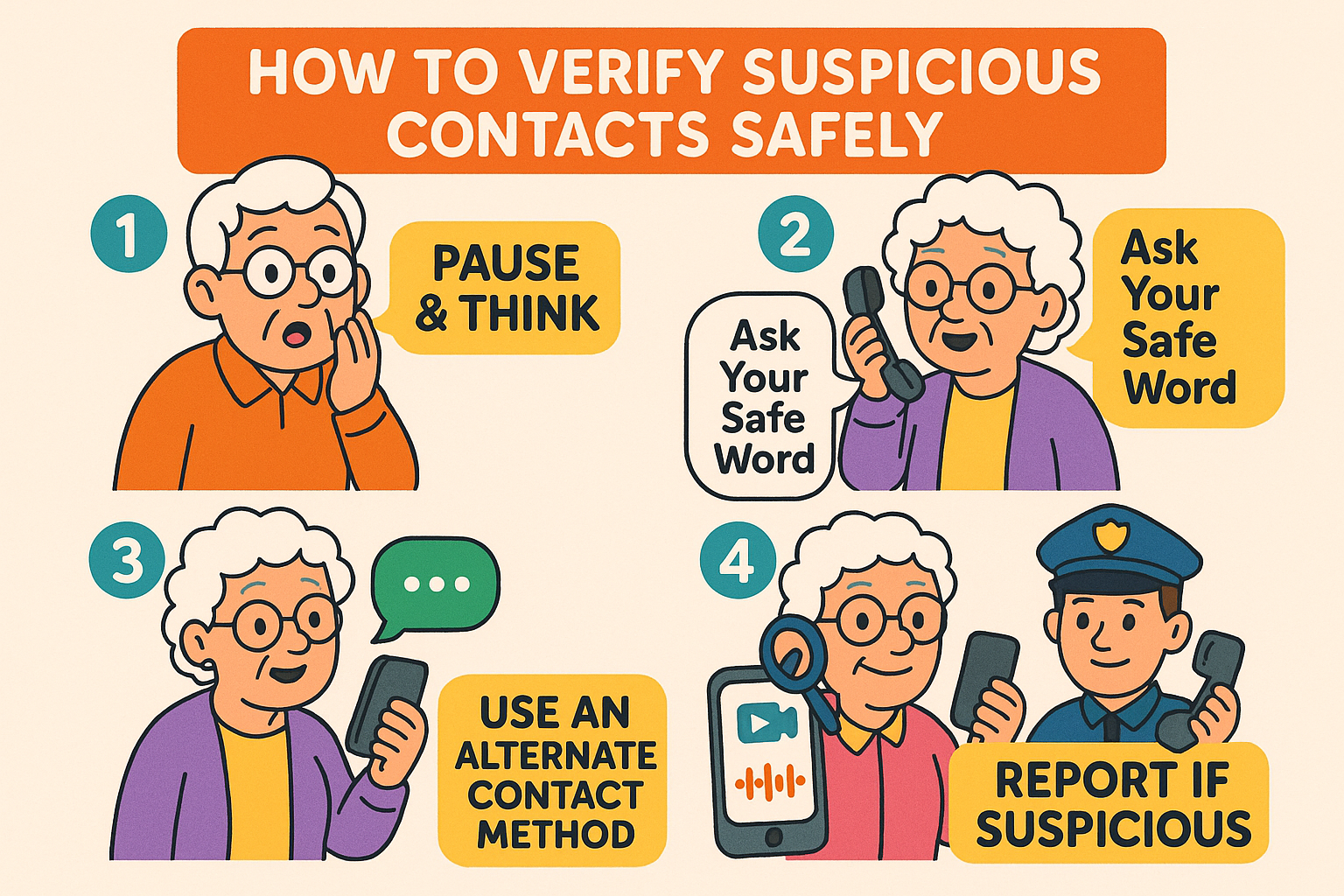
If you get a frantic call from a loved one asking for help, stay calm and do this: hang up and call them back on the number you know is theirs. No matter what they say (“My phone is broken!”), hang up and call their real number.
For an even better defense, agree on a family safe word, or a silly question only the real person could answer. Something like, “What was the name of crazy Uncle Larry’s poodle?” A scammer won’t have a clue. Your real grandson will. The FBI recommends exactly this, and here’s more on checking an urgent request from a grandchild.
To spot deepfakes, look and listen for small things that don’t add up. The FBI suggests watching for:
Now the bad news. The best deepfakes show none of these, and they get better every year. Trying to out-squint the computer is a losing game. Use the clues as a bonus, not a test: if a video or call asks for money or personal information, verify it another way, however real it looks. Here’s more on spotting AI-generated images and videos.
Scammers use what you share online as the raw material for their fakes. Every public photo, video and personal detail is another tool for them.
The best defense? Don’t give them so much to work with. Go through your social media accounts and tighten your privacy settings. On Facebook, for example, you can make your account private and limit your past posts to friends only. Think twice before posting a video where you clearly say your name and other personal details.
Deepfake scams use video, audio or images made with artificial intelligence to impersonate someone real, such as a relative, a bank employee or a celebrity, so you’ll send money or share personal information. The fakes can look and sound convincing. The giveaway is usually the request: something urgent, secret, and paid in a way that’s hard to reverse.
AI identity theft is when criminals use artificial intelligence to impersonate you or someone you trust. They clone voices, generate fake videos and photos, write convincing messages, and create fake documents such as driver’s licenses. The goal is the same as ordinary identity theft: to get your money, your accounts or your personal information.
Look for odd details such as distorted hands, strange teeth or eyes, mismatched shadows, lip movements that lag the voice, or a flat, unnatural tone. But the best deepfakes show none of these. If a video or call asks for money or personal information, verify it through a number or account you already trust.
Stop responding, and don’t click links or send money. Contact the person or company through a phone number or website you already know is real. If you lost money or shared personal information, call your bank, visit IdentityTheft.gov for a recovery plan, and report the scam at ReportFraud.ftc.gov.
Scammers take it from public sources: social media photos and videos, voicemail greetings, online interviews, company websites and data breaches. A few seconds of audio or a handful of photos can be enough to build a convincing fake. The less you and your family share publicly, the less they have to work with.
Technology will keep changing, but staying safe still comes down to a few timeless habits. Slow down. Verify through a number or account you already trust. Share less of yourself online.
The scammers may have fancy new tools, but they’re no match for a smart, savvy person who refuses to be rushed. For the rest of the checklist, start with our online safety guide for seniors.