
Newsletter Subscribe
Enter your email address below and subscribe to our newsletter


Ah, the trusty plastic Monday-through-Sunday pill box. It’s a marvel of medical organization, right up until the moment you accidentally drop it on the kitchen floor. Suddenly, you find yourself playing a high-stakes game of “Is this my blood pressure medication or a rogue breath mint?”
If this scenario raises your heart rate, you are definitely not alone. Medication management is one of those universal aging hurdles that sneaks up on you. You start with one daily vitamin, and before you know it, your morning routine requires the logistical planning of a moon landing.
Enter the robotic medication dispenser. Now, before you start picturing a shiny metal android aggressively spoon-feeding you capsules, relax. These devices are simply smart, secure, and highly organized boxes designed to take the guesswork out of your daily doses.
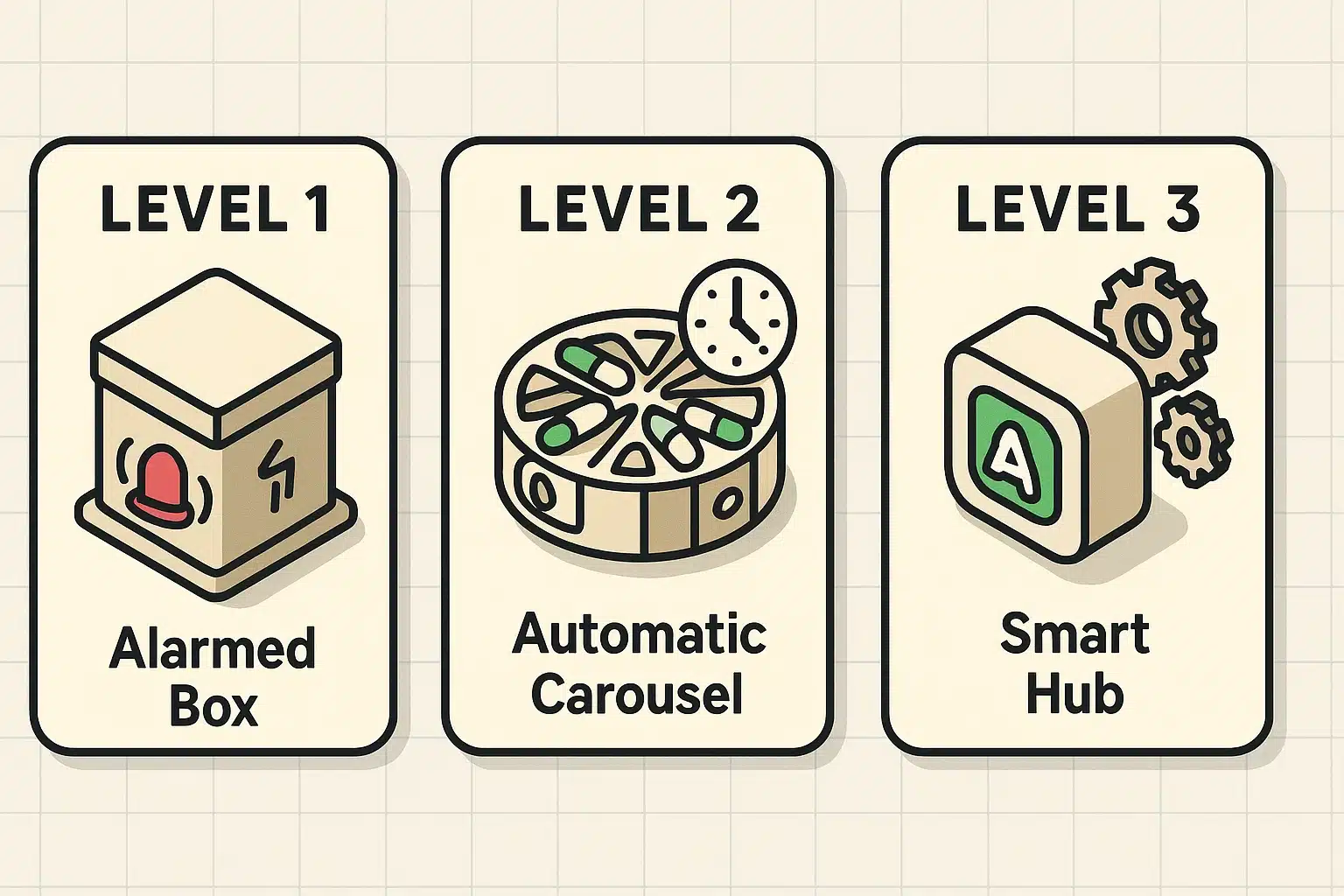
When we talk about automated dispensers, we are looking at a spectrum of technology. The simplest is Level 1: The Alarmed Box. It’s essentially a standard pill organizer that flashes or beeps until you open it. It’s low-cost, but it still requires you to pop open the right little plastic door without spilling everything.
Next up is Level 2: The Automatic Carousel. Imagine a tiny, secure lazy Susan for your pills. At the scheduled time, the carousel spins to the correct slot, unlocks a small window, and sounds an alarm. You tip the device over, the pills fall into your hand, and the alarm stops. It’s practically foolproof and keeps eager hands from accidentally taking tomorrow’s dose today.
Finally, we have Level 3: The Smart Hub. These are the fancy gadgets (like Hero or Pria) that store weeks of pills in bulk. At pill time, they internally sort the correct doses and drop them into a little cup, like a highly specialized coffee maker. If you miss a dose, it sends a text message to a designated family member so they can check in on you.
At this point, you might be thinking, “I still haven’t figured out how to program my microwave clock. How am I supposed to operate a robot?” Here is the beautiful secret about modern medication robots: you don’t have to.
These devices are designed so that the tech-savvy caregiver (like a son or daughter) handles all the complicated app setup and pill loading. Your only job as the user is to listen for the friendly chime, grab the little cup of pills, and swallow them.
Much like setting up Alexa for seniors, the heavy lifting is done once on the backend. After that, the daily interaction is incredibly simple. You don’t need a degree in computer science to take your medicine safely.
While these robots are brilliant, we need to talk about the messy reality of human behavior. In the caregiving world, this is known as the “Mouth Gap.” This refers to the vast, treacherous distance between the dispenser dropping the pill and the senior actually swallowing it.
Many families buy a high-end dispenser, see the app report “Medication Taken,” and breathe a sigh of relief. Meanwhile, the senior took the pills out of the machine but placed them on a nearby saucer, wrapped them in a napkin, or accidentally dropped them down the sink.
To bridge the Mouth Gap, caregivers need a daily protocol. This might mean using a simple smart camera in the kitchen just to visually confirm the medication was swallowed, or doing a quick “saucer check” during a daily phone call. Remember, the robot dispenses the pills; it doesn’t watch you swallow them.

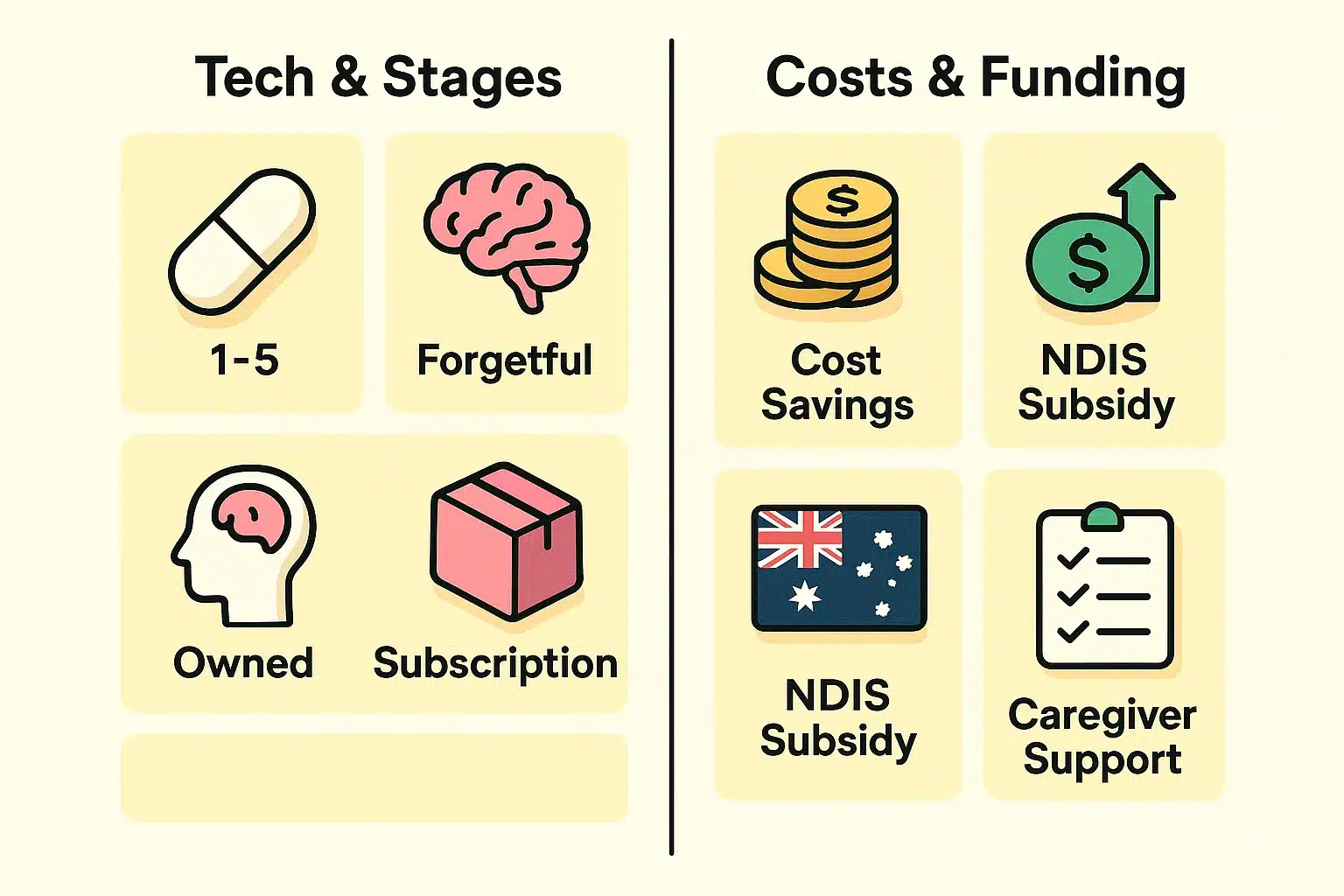
Robotic dispensers are fantastic for early-stage cognitive decline or general forgetfulness. If you frequently find yourself wondering, “Did I take my pill or did I just dream about taking it?”, an automated carousel is a lifesaver. It completely eliminates the risk of double-dosing.
However, for seniors in the later stages of dementia, a sudden, beeping, flashing robot can actually be terrifying. Instead of seeing a helpful tool, a person with advanced dementia might view the dispenser as a noisy, confusing alien invader. They might try to unplug it, pry it open with a butter knife, or hide it in the closet.
Before investing in a smart hub, it’s crucial to assess “dementia readiness.” If your loved one is already highly suspicious of new objects in the home, a robot might cause more stress than it cures. In those cases, human intervention is the safest, most comforting option.
Let’s address the elephant in the room: the cost. Some of these smart hubs cost $300 to $400 upfront, or require a $30 monthly subscription. Your first instinct might be to clutch your wallet and say, “For that price, I’ll hire a town crier to yell at me when it’s pill time!”
But here is what industry experts call the “Economic Flip.” Medication mismanagement is one of the leading reasons seniors are forced to move into Assisted Living facilities. When you compare a $400 dispenser to paying $1,500 or more per month for medication management services in a care facility, the robot suddenly looks like the bargain of the century.
Furthermore, depending on where you live, you might not have to pay entirely out of pocket. While traditional US Medicare rarely covers automated dispensers, certain Medicare Advantage plans might. For our Australian readers, many electronic dispensers can be fully funded through the NDIS (National Disability Insurance Scheme) or a Home Care Package.
If you are the designated family “pill loader,” you need a solid strategy to keep the robot running smoothly. First, beware the gummy vitamins and large, chalky half-pills. These are notorious for jamming the delicate internal gears of Smart Hub dispensers.
Second, what about medications that don’t fit in a robot, like liquids, eye drops, inhalers, or PRN (as-needed) painkillers? You’ll need to create a hybrid system. Keep the daily solid pills in the robot, but set up a simple [medication reminder] on your loved one’s smartphone for the liquids.
Finally, always have a power outage plan. Most Level 2 and Level 3 dispensers come with battery backups that last a few hours to a few days. Still, it is a good idea to keep a physical, printed list of all medications securely attached to the fridge just in case the robot ever loses its mind.
Don’t panic! The vast majority of robotic dispensers, from carousels to smart hubs, have built-in battery backups. If the power cuts out, the battery kicks in to ensure alarms still sound and pills are still dispensed for anywhere from 24 hours to a week, depending on the model.
Level 2 Carousels handle them perfectly because you manually place the items in a little pie-slice tray. Level 3 Smart Hubs, however, hate gummies and half-pills. Gummies stick together, and the dust from half-pills clogs the machine’s internal sorting sensors.
In the US, standard Original Medicare (Part A and B) generally does not cover robotic medication dispensers. However, you should check your specific Medicare Advantage plan or long-term care insurance, as some offer allowances. In Australia, NDIS and My Aged Care packages frequently fund these devices under “assistive technology.”
Robotic dispensers are meant for daily, scheduled medications. For PRN (pro re nata, or “as needed”) medications, keep them in their original bottles in a safe place. Trying to program an unpredictable, as-needed pill into a strict robotic schedule will only cause frustration for everyone involved.