
Newsletter Subscribe
Enter your email address below and subscribe to our newsletter

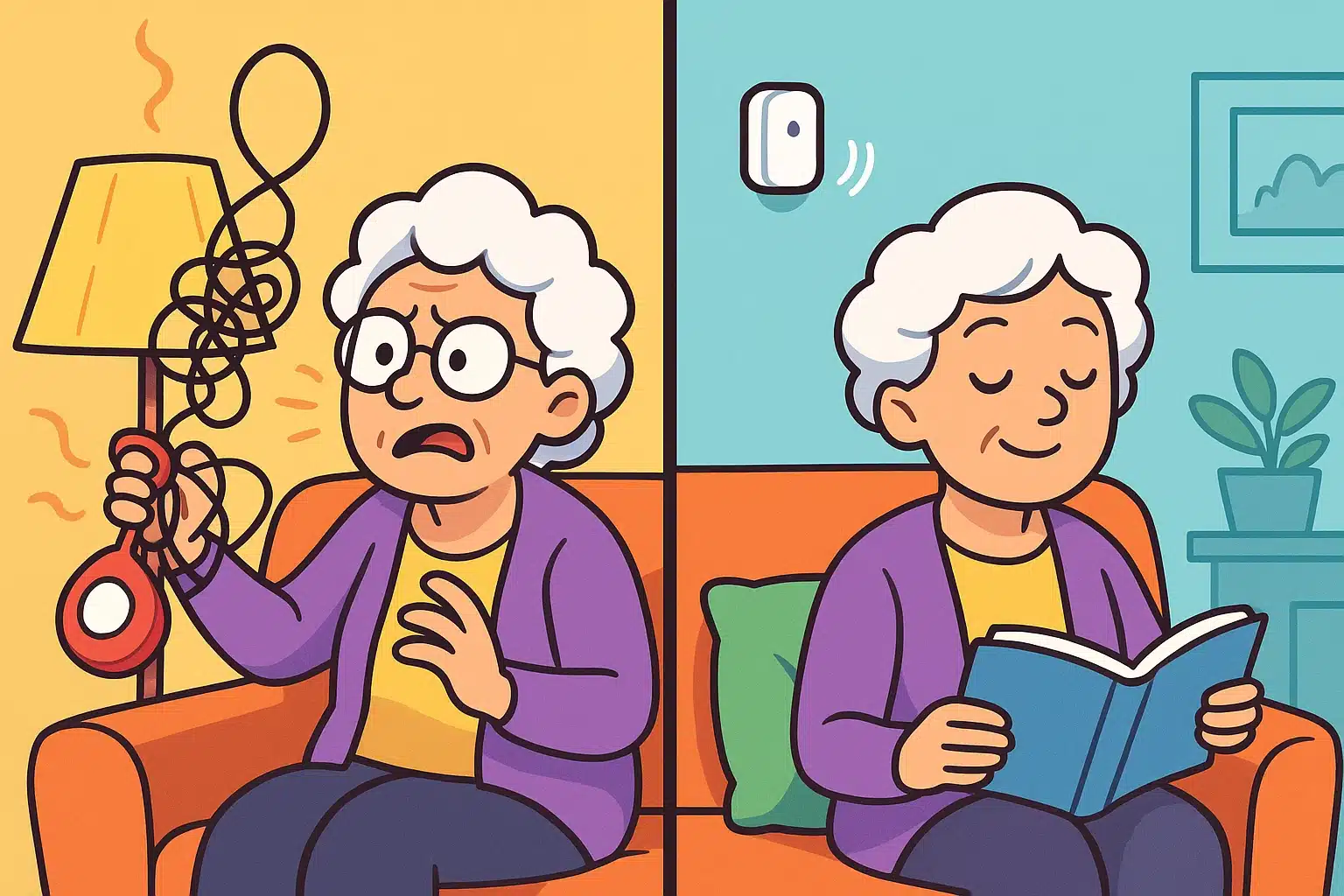
Remember the classic commercial with the lady on the floor shouting, “I’ve fallen, and I can’t get up!”? It convinced millions of us that safety was just a wearable button away. But let’s be honest: expecting anyone to wear a clunky, uncomfortable plastic lanyard 24/7 is like expecting them to enjoy a mandatory 6 AM polka-dancing class.
The truth is, those panic pendants usually spend their time sitting gracefully on the nightstand, dangling from a bathroom hook, or lost forever in the couch cushions. You could probably train a carrier pigeon to fetch help faster than someone remembering to strap on a medical alert button for a 3 AM bathroom trip.
If this sounds familiar, you are not alone. There is a massive gap between the safety tools we buy and the ones we actually use. Thankfully, technology has finally figured out that the best safety device is the one you don’t have to remember to wear.
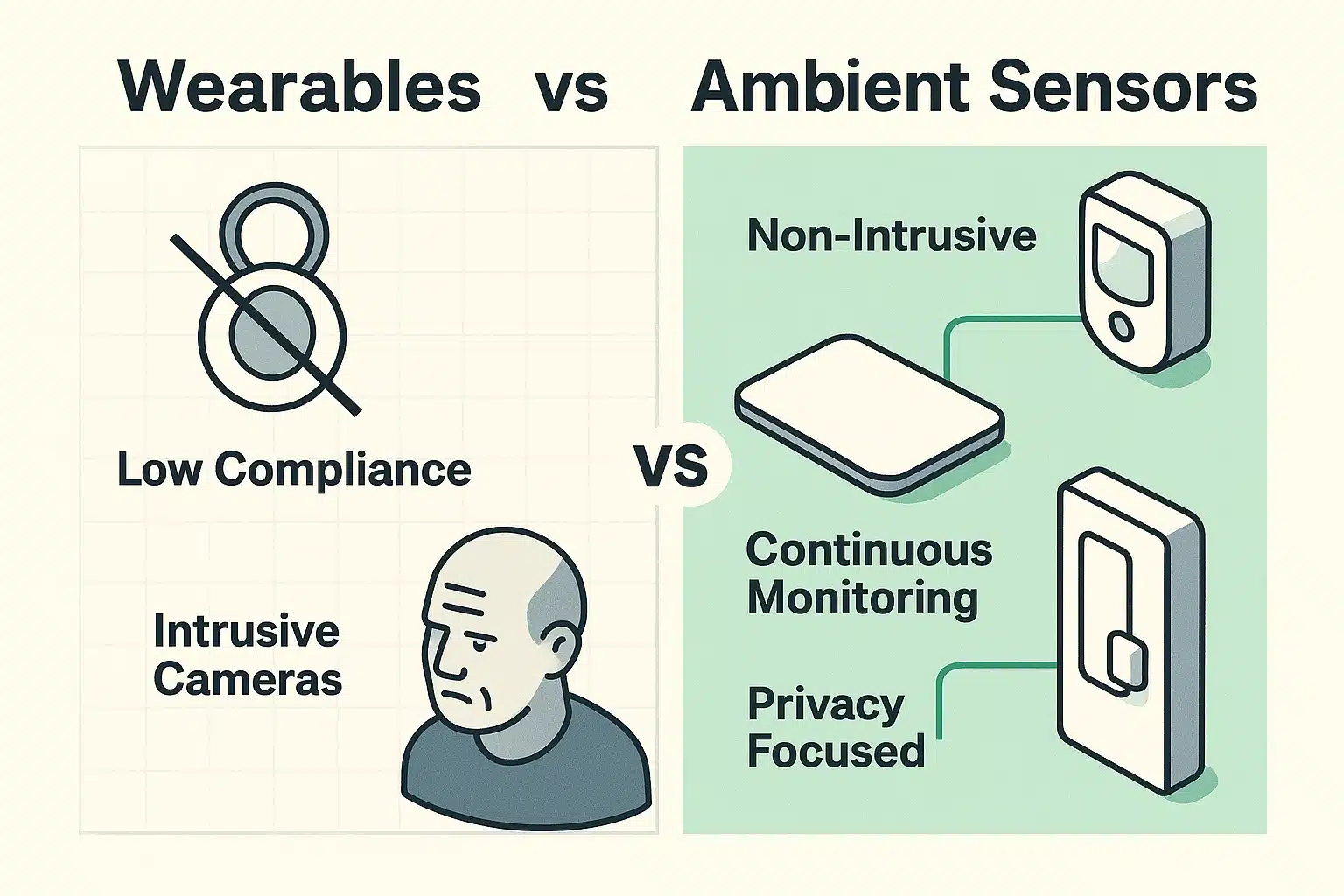
The modern tech world calls this the “Crisis of Compliance.” Studies show that during high-risk times—like getting out of bed in the middle of the night—up to 80% of seniors aren’t wearing their emergency pendants. We buy these gadgets for peace of mind, but what we’re actually getting is the “Illusion of Protection.”
For older adults dealing with forgetfulness or early-stage dementia, a wearable device is practically useless. If you can’t remember where you put your reading glasses, you certainly aren’t going to remember to charge a digital necklace every Tuesday.
This is where a brilliant new concept called “Ambient Sensing” steps onto the stage. It’s essentially a Digital Caregiver that lives in the background of your home. It doesn’t need to be worn, it doesn’t need to be charged by the user, and most importantly, it isn’t a creepy camera watching your every move.
When people hear “sensors,” they immediately picture a high-security prison or a sci-fi movie where a robotic voice says, “Unauthorized entry detected.” Relax, it’s nothing like that. Ambient sensing relies on three basic, highly un-creepy pieces of hardware:
1. Passive Infrared (PIR) Sensors: These are your basic motion detectors. They don’t see faces, clothes, or whether you decided to eat ice cream at midnight. They just detect heat movement. And yes, smart PIR sensors have “pet immunity,” so your golden retriever jumping on the sofa won’t trigger a 911 call.
2. Contact Sensors: These are little magnetic strips you stick on doors, cabinets, or the refrigerator. When the door opens, the magnet separates, and the system knows the door was opened. It’s a remarkably simple way to know if someone is eating regularly or if the front door opened at 2 AM.
3. Radar (mmWave) Sensors: This sounds like something out of a submarine, but it’s just incredibly precise technology. Radar sensors bounce invisible, harmless waves around a room. They can detect the difference between a person standing up, lying down, or suddenly falling—all without using a camera lens.

The true magic of ambient sensing isn’t in the hardware; it’s in where you place it. We call this the Sensor Placement Blueprint. By putting specific sensors in specific rooms, you start to catch hidden health risks before they turn into emergencies.
For instance, a contact sensor on the refrigerator door monitors hydration and nutrition. If that door hasn’t opened in 24 hours, it’s a massive red flag. A bed pad sensor can monitor sleep patterns or warn a caregiver if someone gets out of bed and doesn’t return within a reasonable timeframe.
Just like a reliable medication reminder helps ensure the right pills are taken at the exact right time, passive sensors help ensure daily physical routines are staying safely on track. It transforms an ordinary house into a safety net.
Here is the “Aha!” moment where ambient sensing truly outshines traditional pendants: it predicts problems before they happen. Let’s talk about the bathroom.
Frequent nighttime urination (clinically known as Nocturia) is one of the leading causes of nighttime falls. If a motion sensor notices that a senior is suddenly using the bathroom five times a night instead of their usual one, it sends a gentle alert to the caregiver.
Why does this matter? Because a sudden spike in bathroom trips is a classic early warning sign of a Urinary Tract Infection (UTI). In seniors, UTIs often cause extreme confusion, dizziness, and ultimately, falls. By treating the sensor data as a “vital sign,” you can catch the UTI and get antibiotics before the fall ever happens.

Whenever we talk about monitoring, the dreaded “Big Brother” fear creeps in. And rightly so! No adult wants their adult children, or a tech company, spying on them.
This brings us to the ultimate benchmark: The Bathroom Test. If a monitoring device feels too invasive to put in a bathroom, it’s too invasive, period. Cameras completely fail the Bathroom Test because they strip away a person’s dignity.
Passive sensors, however, pass with flying colors. A motion detector doesn’t stream video; it just logs a digital blip that says, “Movement detected at 2:14 AM.” You maintain complete privacy and dignity, while still providing loved ones with the peace of mind that you’re up and moving around safely.
If you’re ready to ditch the clunky plastic necklace, you generally have two routes. The first is the DIY route, using open ecosystems like Amazon Alexa routines or smart home hubs. These are affordable and highly customizable, but they require a bit of tech-savviness to set up the alerts properly.
The second route is a managed professional service (like EnvoyatHome or StackCare). These closed ecosystems do all the heavy lifting for you. They use Artificial Intelligence to “learn” a senior’s normal routine over a few weeks, and then automatically alert caregivers if something seems off—like a severe decline in walking speed.
Neither option is wrong. It simply depends on your budget and whether you want to play IT director on the weekends.
Absolutely not. Passive Infrared (PIR) and Contact sensors physically cannot record images or video. They are as blind as a bat. They only know if heat is moving or if two magnets have been separated.
No. Unlike smart speakers (like an Amazon Echo or Google Home), ambient safety sensors do not have microphones. Your complaints about the ending of your favorite TV show will remain completely private.
Most modern motion and radar sensors come with “pet immunity.” They are calibrated to ignore the movement of animals under a certain weight (usually around 40-50 lbs). So, unless you have a pet tiger roaming the halls, you should be fine.
This is a great question. Most professional ambient monitoring systems have built-in cellular backups and battery backups. If the Wi-Fi drops, the system seamlessly switches to a cell tower connection, keeping the safety net intact.
Technology doesn’t have to be intimidating, and safety doesn’t have to be invasive. By shifting our focus from wearables to ambient sensing, we can honor a senior’s desire for independence while practically eliminating the fear of the “unseen fall.”
If you’re looking to upgrade your home safety—or the safety of a loved one—start by looking at the daily routine. Identify the highest-risk areas, like the bathroom and the stairs, and consider starting with just a simple motion sensor to test the waters.
Technology should work for you, not the other way around. Keep exploring, stay curious, and remember: you don’t need a PhD in computer science to make your home a safer place to live!