Newsletter Subscribe
Enter your email address below and subscribe to our newsletter

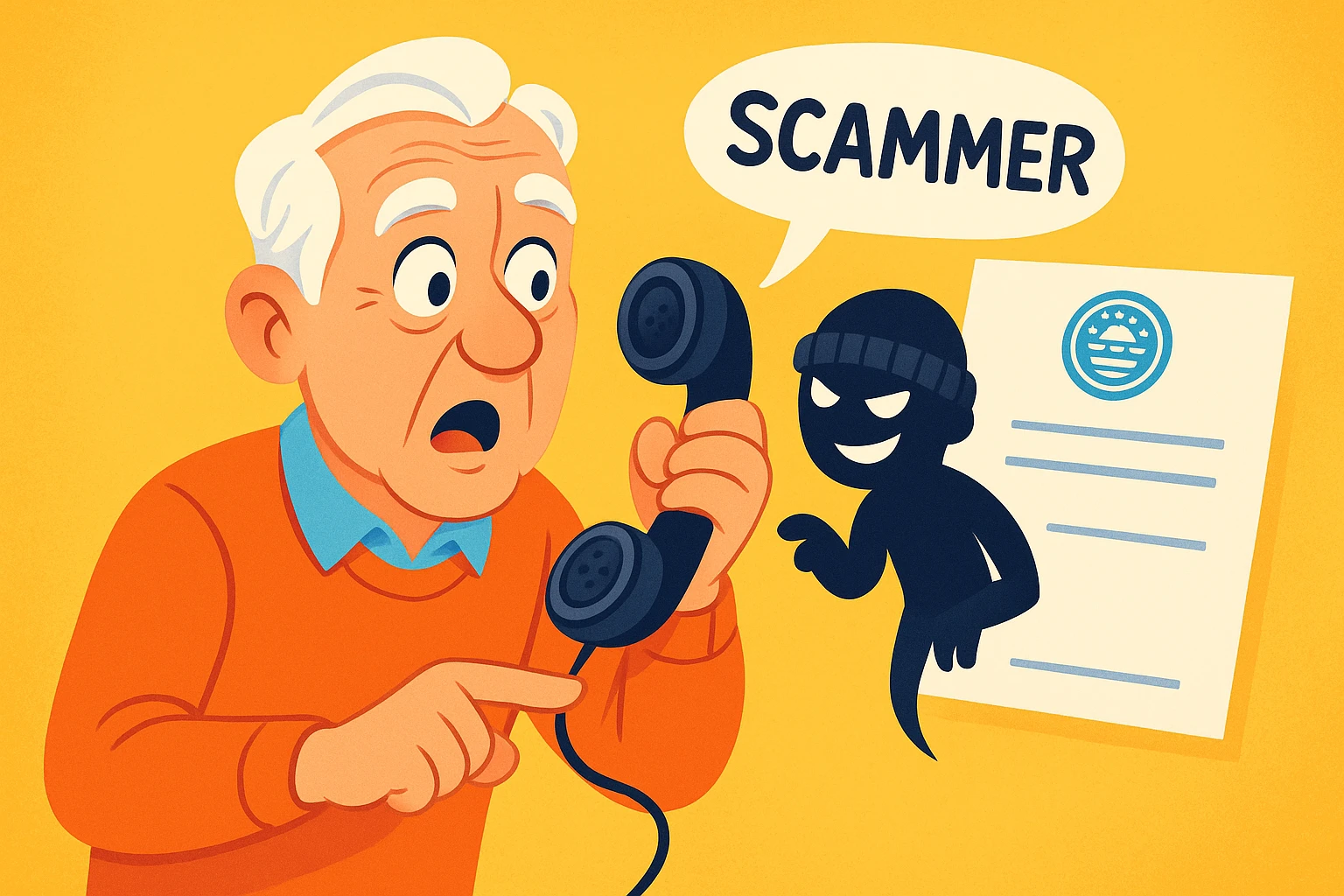
Let’s talk about the telephone. Back in the good old days, a ringing phone meant a friend wanted to chat, or maybe someone was calling to excitedly tell you that you’d won a beautiful new set of encyclopedias. Today, answering the phone is more like playing a game of digital Russian Roulette. It could be your grandkids, or it could be a robot aggressively warning you that the warranty on your 1998 Honda Civic has expired.
But there’s a third type of call that isn’t just annoying—it’s genuinely terrifying. You pick up the receiver, and a stern voice informs you that they are from the Social Security Administration, Medicare, or the IRS. They claim your Social Security number has been “suspended” due to suspicious activity, or that you’re about to be arrested by federal marshals for back taxes.
Your heart drops into your socks. Suddenly, you’re trying to frantically remember if you accidentally committed federal fraud last Tuesday between your morning coffee and a crossword puzzle. Take a deep breath. You are not going to jail, and your Social Security number isn’t suspended (mostly because that’s not a real thing). Let’s look at how to easily tell the real government from the phonies, so you can hang up with complete confidence.
If there is one thing the federal government loves more than confusing tax forms, it’s the United States Postal Service. Agencies like the Social Security Administration, Medicare, and the IRS are essentially old-fashioned pen pals.
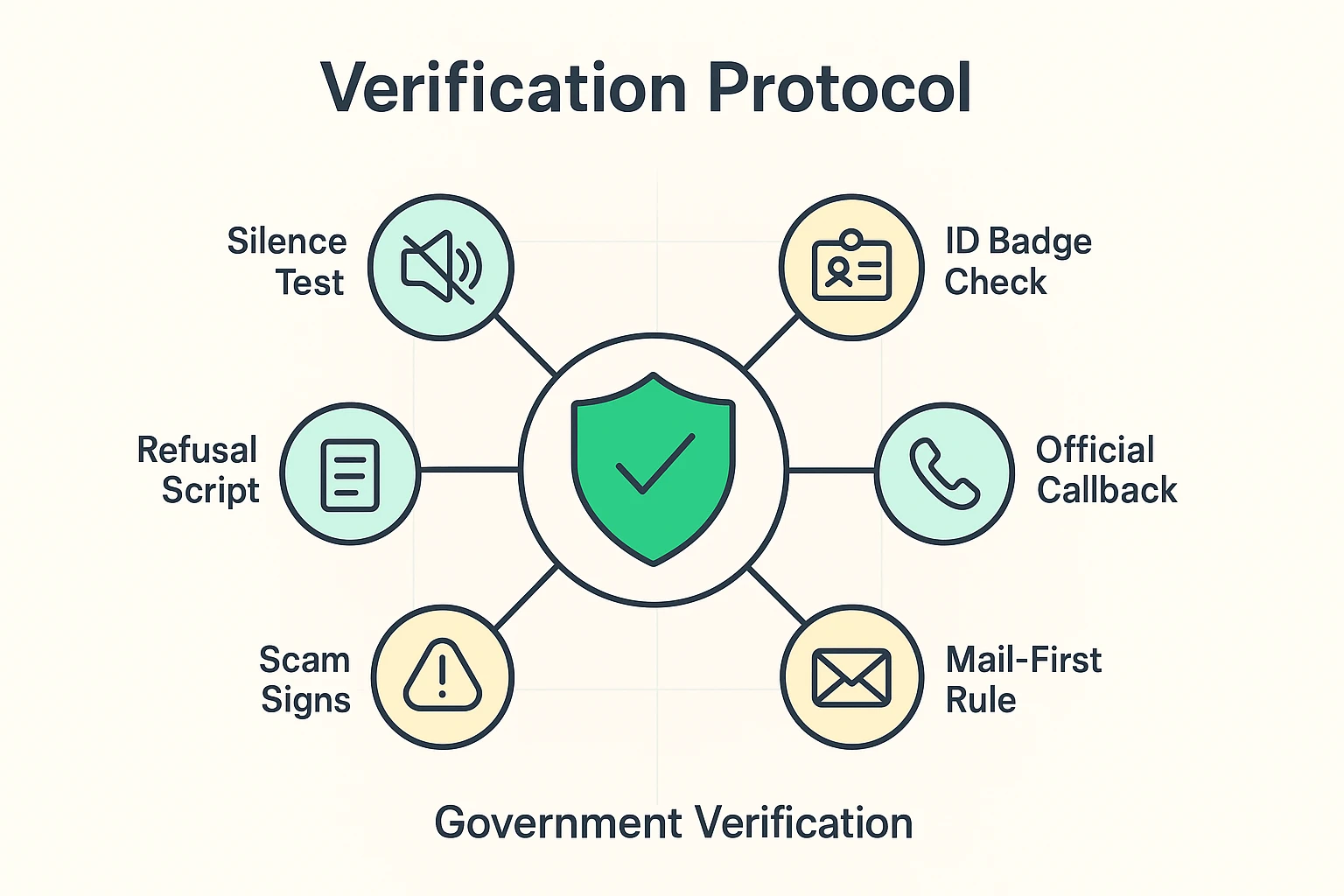
The “Mail-First” rule is your ultimate shield. The government will almost never call, text, or email you out of the blue to demand money or threaten arrest. If there is a genuine problem with your accounts or your taxes, they will send you a physical letter on official letterhead first.
If you haven’t received a letter from them through the regular mail, the person on the phone is 99.9% likely to be a scammer. They are likely sitting in a busy call center halfway across the globe, hoping to buy a new sports car with your retirement fund.
You might be thinking, “But the Caller ID clearly said ‘Medicare’!” or “It had a Washington D.C. area code!” I hate to break it to you, but Caller ID is about as trustworthy as a toddler with a chocolate-covered face claiming they didn’t eat the last brownie. Scammers use cheap technology to fake the name and number that pops up on your screen.
This digital sleight of hand is called “spoofing.” They do it to build a false sense of trust before you even say hello. Once you answer, they use modern tactics that have evolved way beyond asking for iTunes gift cards.
Today’s popular trick is the “Safety Account” scam. They tell you your money is in danger and instruct you to move your funds into a “protected government account” for safekeeping. Spoiler alert: It’s absolutely not a government account.
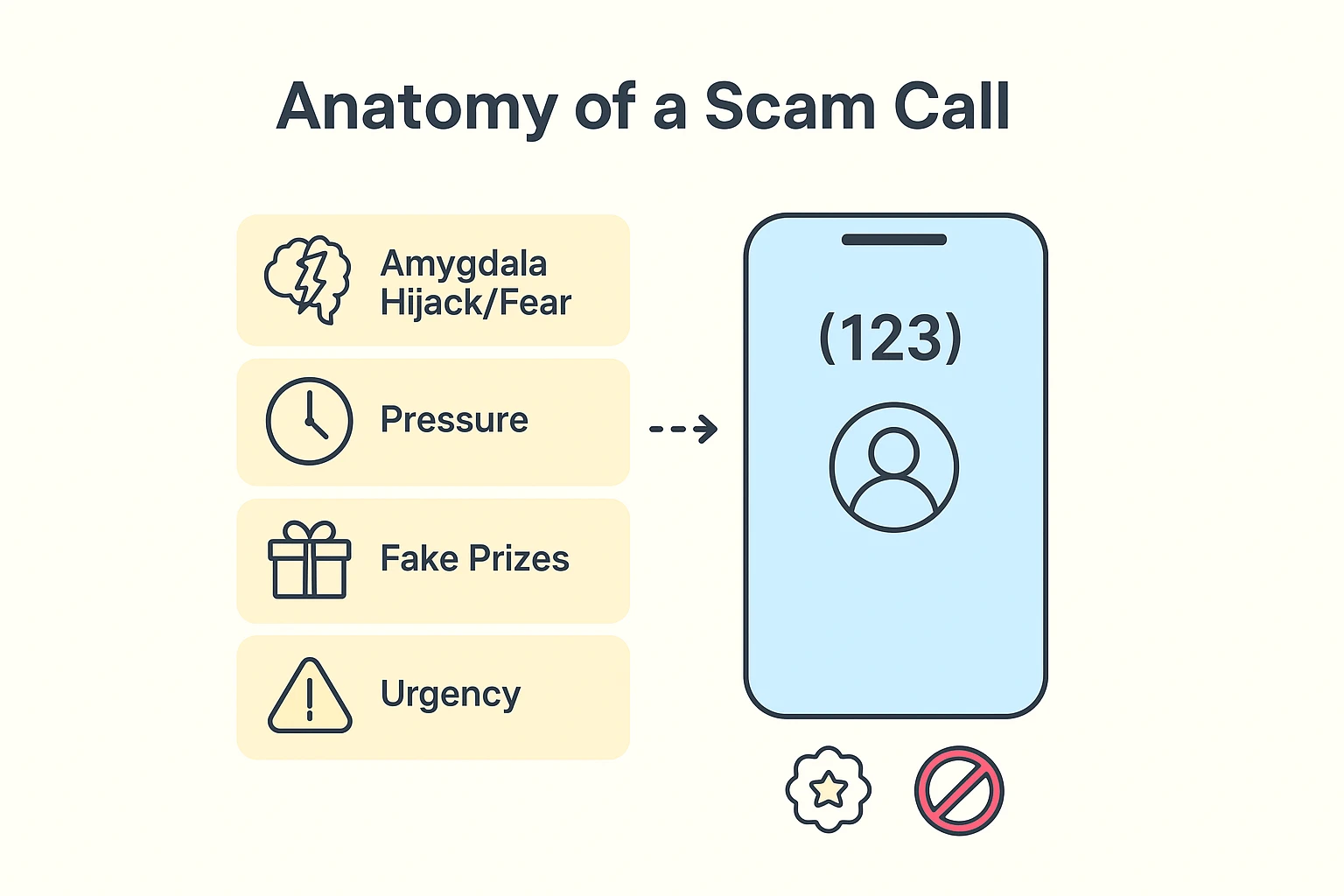
Scammers rely on something fancy called an “amygdala hijack.” That’s a biological term meaning they scare the living daylights out of you so you stop thinking logically. If someone tells you a warrant is out for your arrest, your brain immediately goes into panic mode.
The scammers want you acting fast, without thinking, so you don’t realize their story makes zero sense. The most powerful tool you have in your arsenal is the simple act of pausing.
If a caller is rushing you, insisting you cannot hang up the phone, or aggressively threatening you—pause. Take a deep breath. That high-pressure tactic is the ultimate proof that they are trying to scam you.
Instead of just worrying about the latest scam trend on the evening news, you need a proactive system. Think of it as a digital safety protocol for your home.
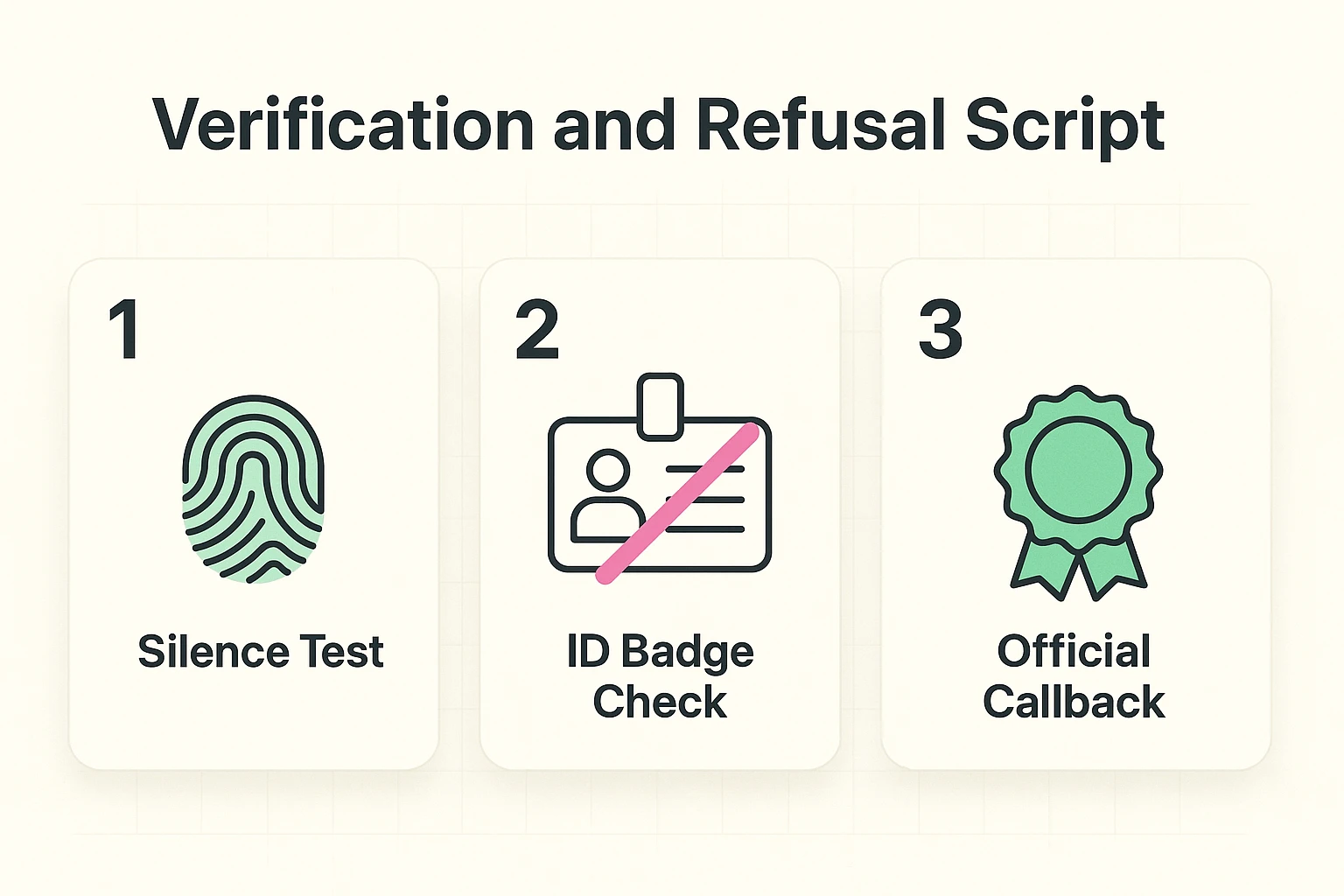
Step 1: The Silence Test. Scammers hate dead air. If you pick up the phone and don’t say anything, automated robocalls will often just disconnect on their own. If it’s a real person rushing into a terrifying script, just listen without reacting.
Step 2: The Identification Check. Scammers will sometimes text or email a photo of a “badge” to prove they are real. Let me be perfectly clear: No government employee will ever send you a selfie with their badge. If you’re looking for extra help spotting these digital fakes, using a bitdefender scam detector can act like a handy virtual security guard to catch malicious links.
Step 3: The Official Callback. If you are genuinely worried that the call might actually be real, just hang up. Do not use the phone number the caller gave you. Look up the official number for the agency (like the 1-800 number printed right on the back of your Medicare card) and call them directly yourself.
Sometimes the hardest part is figuring out how to politely end the conversation without feeling rude. We were all raised to be polite, but remember that scammers do not deserve your good manners.
Here is your official “Refusal Script” that you can write down and keep right by the phone. When the caller says there is an urgent problem with your account, say: “I do not handle these matters over the phone. I will contact the agency directly through their official number. Do not call this number again.”
Then, click. Hang up the phone. You don’t need to wait for their response, and you certainly don’t need to apologize.
If you accidentally gave out your personal information, don’t beat yourself up. These scammers are seasoned professionals who run these cons all day, every day. They are very good at manipulating human emotions.
First, call your bank immediately to freeze your accounts if you shared any financial details. Then, head over to IdentityTheft.gov to report the incident and get a free, step-by-step recovery plan.
If the scammer somehow tricked you out of passwords or access codes, you might find yourself locked out of your own accounts. For example, if you are struggling with a two factor authentication lost phone scenario because a scammer compromised your device, you’ll need to take immediate steps to secure your main email and cellular provider accounts.
Absolutely not. Your Social Security number is yours for life. It cannot be “suspended,” “cancelled,” or “frozen” by anyone, no matter what an angry robot on the phone tells you.
Hang up immediately. Medicare is not issuing new plastic, microchip, or gold-plated cards. They will never call you uninvited to update your card or ask you to verify your current Medicare number over the phone.
You might have heard rumors about scammers recording you saying “Yes” to authorize fake charges. While the threat of this specific trick is sometimes exaggerated in chain emails, it’s always best practice to give short, non-committal answers or simply hang up on suspicious callers.
Remember, your telephone is a device meant for your convenience, not a tool for scammers to terrorize you in your own living room. You are in complete control of the conversation. You never owe a stranger on the phone an explanation, your time, or your hard-earned money.
The next time your phone rings and it’s someone claiming to be “Officer Steve from the IRS,” you can just chuckle to yourself, deploy your handy new refusal script, and hang up.
Then, go right back to enjoying your day. Maybe finally look up that banana bread recipe. You’ve earned it!