Newsletter Subscribe
Enter your email address below and subscribe to our newsletter

By Chris Clark, founder of Senior Tech Cafe
Is it safe to use a debit card online? Usually, yes, but a credit card is safer, because when a thief uses your debit card, the missing money comes straight out of your checking account while the bank sorts it out.
Say you’re sitting in your favorite armchair, ready to buy a delightful set of copper-bottomed pans from a website you found on Facebook. You reach into your wallet and pull out two shiny pieces of plastic. One says “Debit.” The other says “Credit.”
To the untrained eye, they look identical. They both have 16 numbers, an expiration date, and a security code that practically requires an electron microscope to read. But on the internet, these two cards are as different as a heavily armored tank and a golf cart made of cheese.
Which one to use is one of the most common questions we get, right up there with “Why does my printer hate me?” Here’s the answer, and what to do if a card gets hacked anyway.
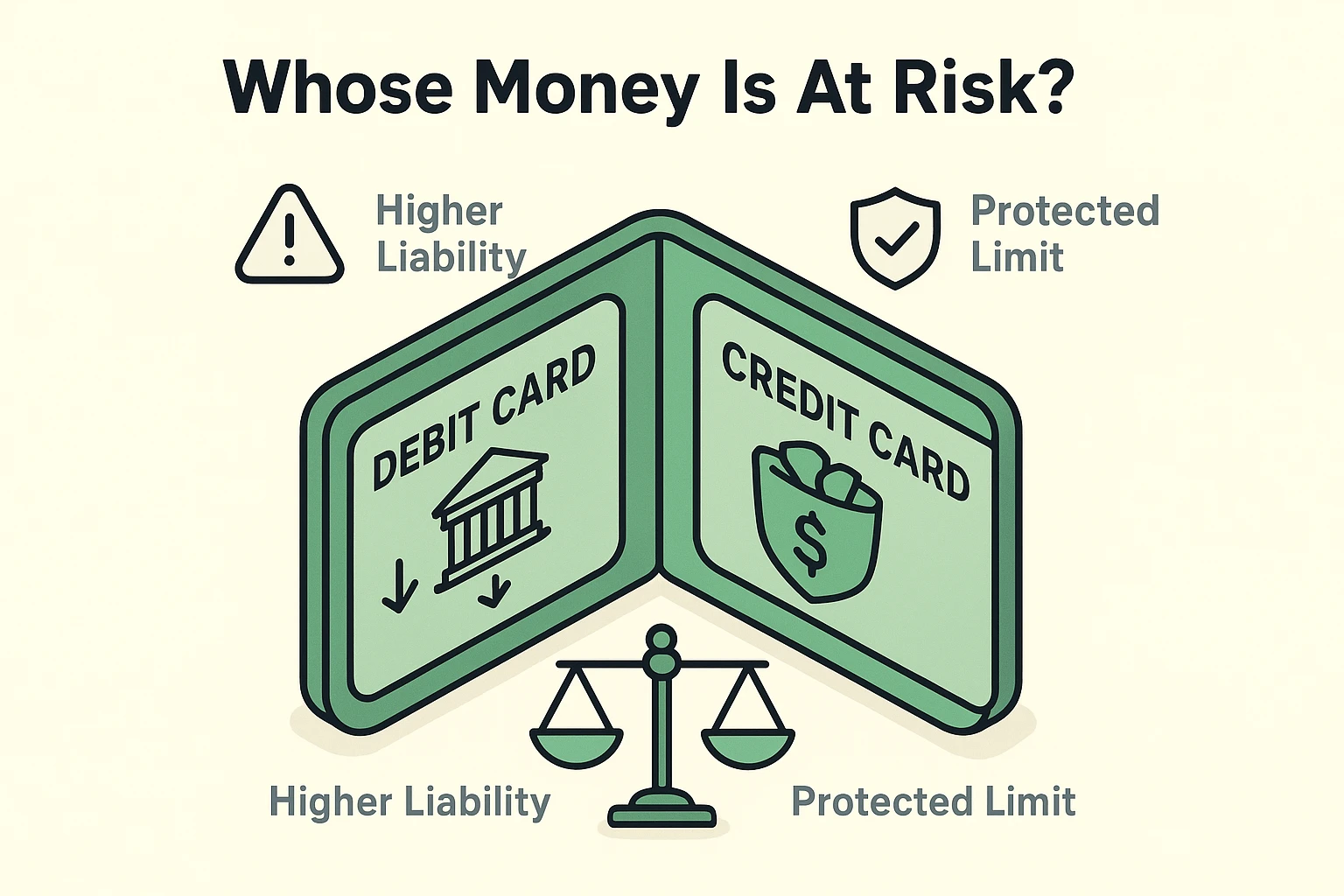
Is it safer to pay by credit card? Yes, and the reason comes down to whose money is on the line.
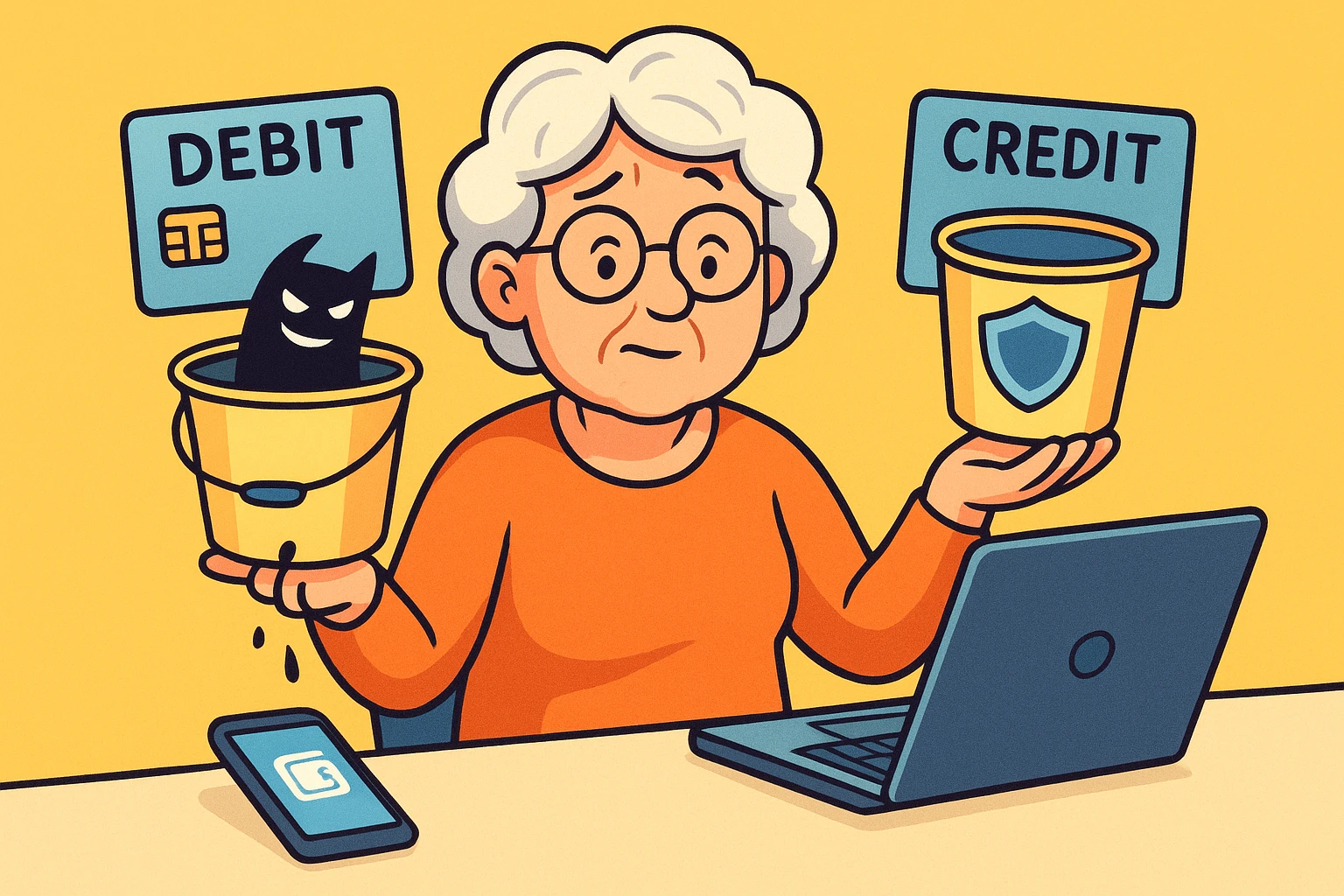
Think of your bank account as a giant bucket of water. It holds your savings, your mortgage money, and the funds you need for groceries this week.
A debit card is like sticking a drinking straw directly into that bucket. If a scammer gets your debit card number, they can drain it before you’ve finished your morning coffee. That sets off a domino effect: your mortgage payment bounces, your electric bill is late, and you’re racking up overdraft fees like they’re going out of style. You’ll very likely get the money back, but it can take a while.
A credit card is a separate bucket that belongs to the bank. If a scammer steals from it, they’re spending the bank’s money, not yours, and your own bucket stays untouched while the charge is disputed.
Federal law treats the two buckets differently, too:
Visa and Mastercard also promise zero liability on most debit cards. That helps, but it’s a company policy with conditions, not the law, and the money can still be missing from your account for days while the bank investigates.
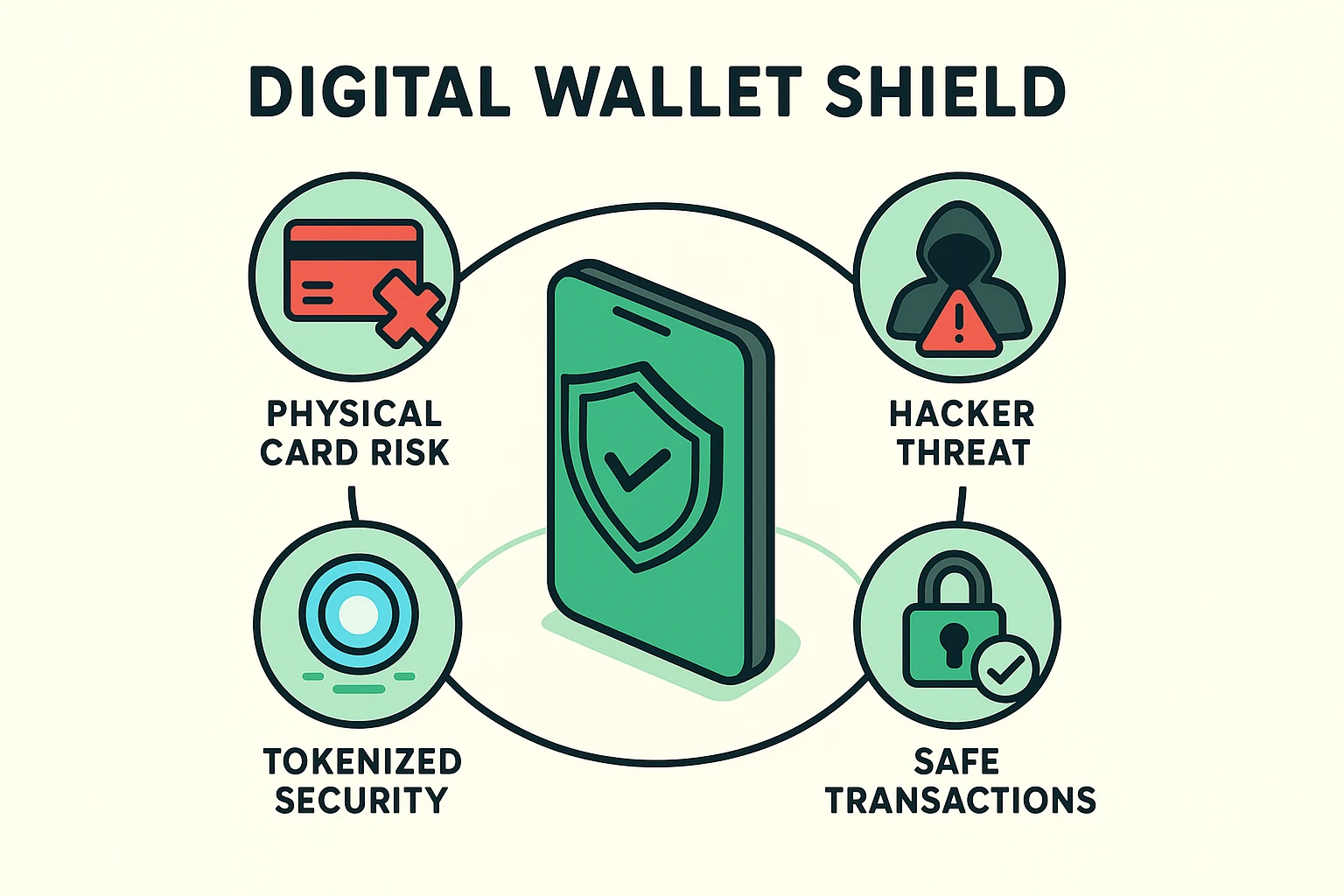
So credit cards are legally safer. There’s a way to make them safer still: a digital wallet, like Apple Pay or Google Pay on your phone.
Now, I know what you’re thinking: “I barely trust my physical wallet not to get lost in the couch cushions. Why would I trust my phone with my money?” It’s a completely fair question. The answer is that a digital wallet never hands over your real card number.
When you pay with Apple Pay or Google Pay, the store gets a stand-in number assigned to your phone, plus a security code that changes with every purchase. Your actual card number never changes hands. It works like giving the cashier a single-use key that opens exactly one lockbox for exactly one purchase, then evaporates.
Even if a hacker breaks into that store’s computers months later, all they’ll find is a pile of useless, evaporated keys. Your real card number was never there to steal.
Now for the treacherous waters of peer-to-peer (P2P) payment apps like Venmo, Cash App and Zelle. They’re fantastic for splitting a dinner bill with friends or sending your grandson a quick $20 for mowing the lawn.
Using them to buy things from strangers online is exactly like handing an envelope of cash to a guy in a dark alley who promised to mail you a toaster. Once you hit “send,” that money is gone, and getting it back is about as likely as winning the lottery twice on a Tuesday.
Here’s the crucial difference between fraud and a scam. Fraud is when someone steals your card and buys a television without your permission; the bank will usually step in and refund it. A scam is when someone tricks you into hitting “send” yourself. Because you technically authorized the payment, the bank will often shrug and say, “Sorry, you pressed the button.”
Zelle itself says to use it only with people you know and trust, and it offers no protection for payments you authorized. PayPal covers eligible purchases only when you pay with the Goods and Services option. So keep payment apps for people you know, and use a credit card for everyone else.
If you spot a charge you didn’t make, or realize the “customer service rep” you just paid was a scammer, work through these steps in order. They’re the same for a debit card, only more urgent.
If someone claiming to be your bank called you about fraud before any of this happened, check whether that bank fraud alert is real before you do anything they say.
You might be wondering how anyone got your card number while the card sat safely in your wallet. Sometimes it’s a data breach at a store. Often it’s simpler: someone talked you out of it. The Federal Trade Commission boils those scams down to four signs:
If anyone asks you to buy gift cards to settle a problem, hang up. Legitimate businesses don’t take gift cards as payment for back taxes, and neither does the IRS.
Yes, with sites you already trust, like your utility company or a big retailer you’ve used for years. The catch is that debit card fraud takes money from your own checking account while the bank investigates. For shopping with new or unfamiliar sites, a credit card or a digital wallet is the safer choice.
That’s a sensible worry. One workaround is a credit card you use only for online purchases and pay off in full every week or every month, so you never pay interest. You get the stronger fraud protection without carrying a balance. Setting up an automatic full payment from your bank means it’s never forgotten.
PayPal is generally safe for buying things online when you pay with the Goods and Services option, which comes with PayPal’s Purchase Protection for eligible items. If a seller asks you to use Friends and Family to avoid a fee, walk away. That option isn’t covered by Purchase Protection, so you’d have little hope of getting your money back.
Usually, yes, if you report it quickly. Federal law caps what you owe for unauthorized credit card charges at $50, and at nothing if only the number was stolen. Debit card losses are covered too, but the money is missing from your account while the bank investigates, and waiting too long to report can cost you.
Usually not. If someone stole your debit card number, your bank will cancel that card and send you a new one with a different number, and your account and routing numbers stay the same. If you also gave a scammer your online banking login or account details, ask the bank whether a new account makes sense.
Paying online doesn’t have to feel like walking through a digital minefield in clown shoes. A few simple tweaks to how you pay go a long way.
Remember our golden rule: keep your debit card tucked safely away for ATM visits, and let your credit card do the heavy lifting online. If your bank offers it, a Paze account is another way to check out without typing your real card number. For more on shopping without getting burned, see our guide to safe online shopping for seniors and the rest of our online safety guide for seniors.
Your life savings took a long time to build. Keep them in your own bucket.