Newsletter Subscribe
Enter your email address below and subscribe to our newsletter

You know you’re living in the future when your vacuum cleaner has an opinion on where the dog sleeps. But lately, tech companies are pushing past robotic vacuums and pitching something a little more sci-fi: robot caregivers.
Imagine sitting in your living room, enjoying a cup of coffee, when a plastic companion named “Kevin” rolls in to remind you to take your blood pressure medication. It sounds like a lost episode of The Jetsons, but it’s becoming our reality. We are in the midst of a “Silver Tsunami,” meaning people are living longer, and there simply aren’t enough human caregivers to go around.
On one hand, having a robotic helper sounds great. Who wouldn’t want a tireless assistant that never complains about your taste in daytime television? But trusting a machine with senior care raises a mountain of questions. When does helpful tech cross the line into creepy surveillance? And can a microchip ever replace the warmth of human connection? Let’s unplug the jargon and look at what’s really going on.
Before we debate the ethics, let’s clear up what we’re actually talking about. When we say “robot caregiver,” we aren’t talking about Arnold Schwarzenegger in The Terminator spoon-feeding you oatmeal. (Though, to be honest, that would be a hilarious way to start the morning).
Instead, these robots fall into a few different camps. You have “Assistive” robots, which are basically glorified mobility aids that help you stand up without throwing out your back. Then you have “Social” or “Companion” robots.
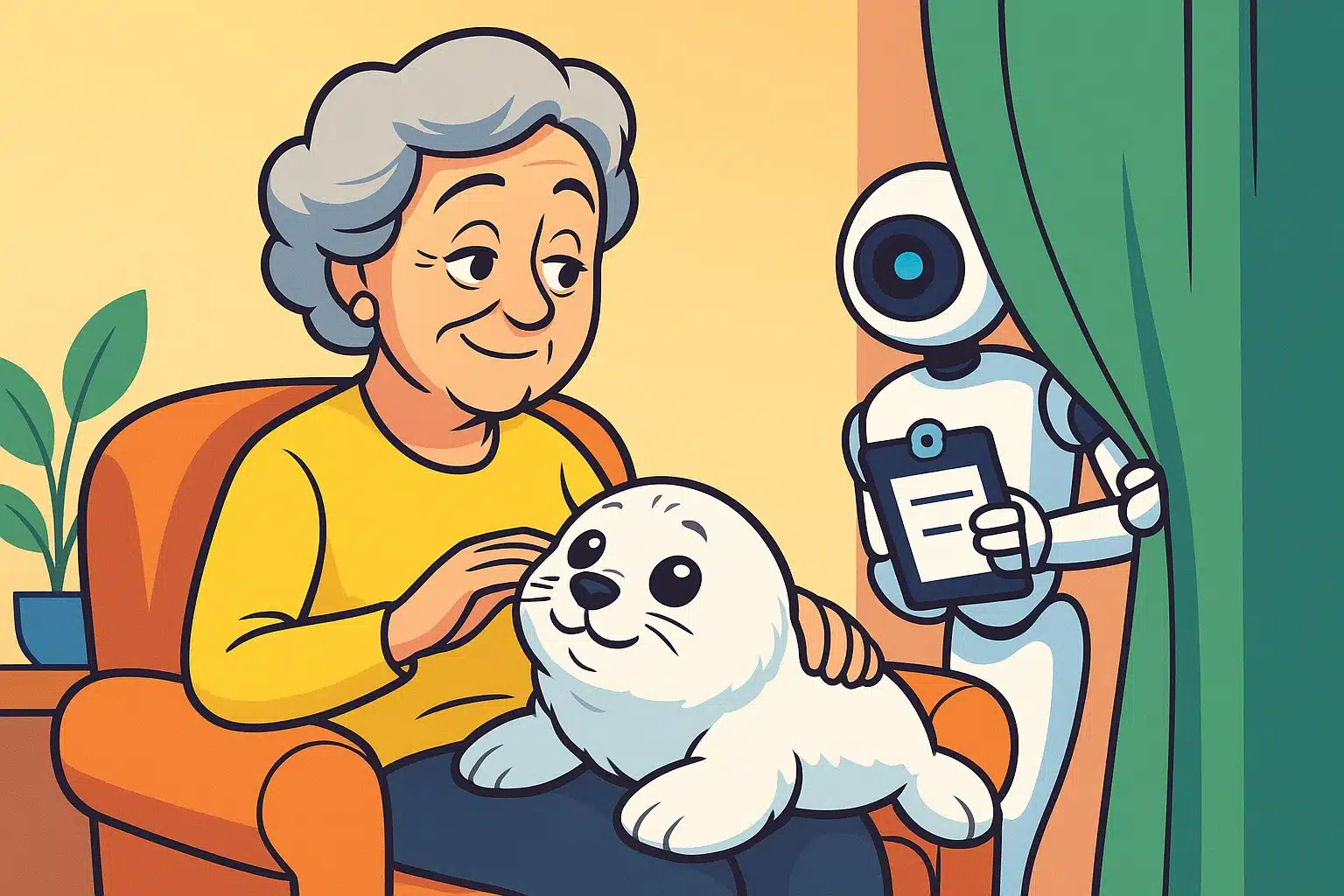
Companion robots, like the famous PARO (which looks like a fluffy baby harp seal), are designed purely for comfort. They coo, they blink, and they respond to your touch. They don’t dispense pills, but they do dispense warm fuzzies. But this is exactly where the ethical waters start getting a little murky.
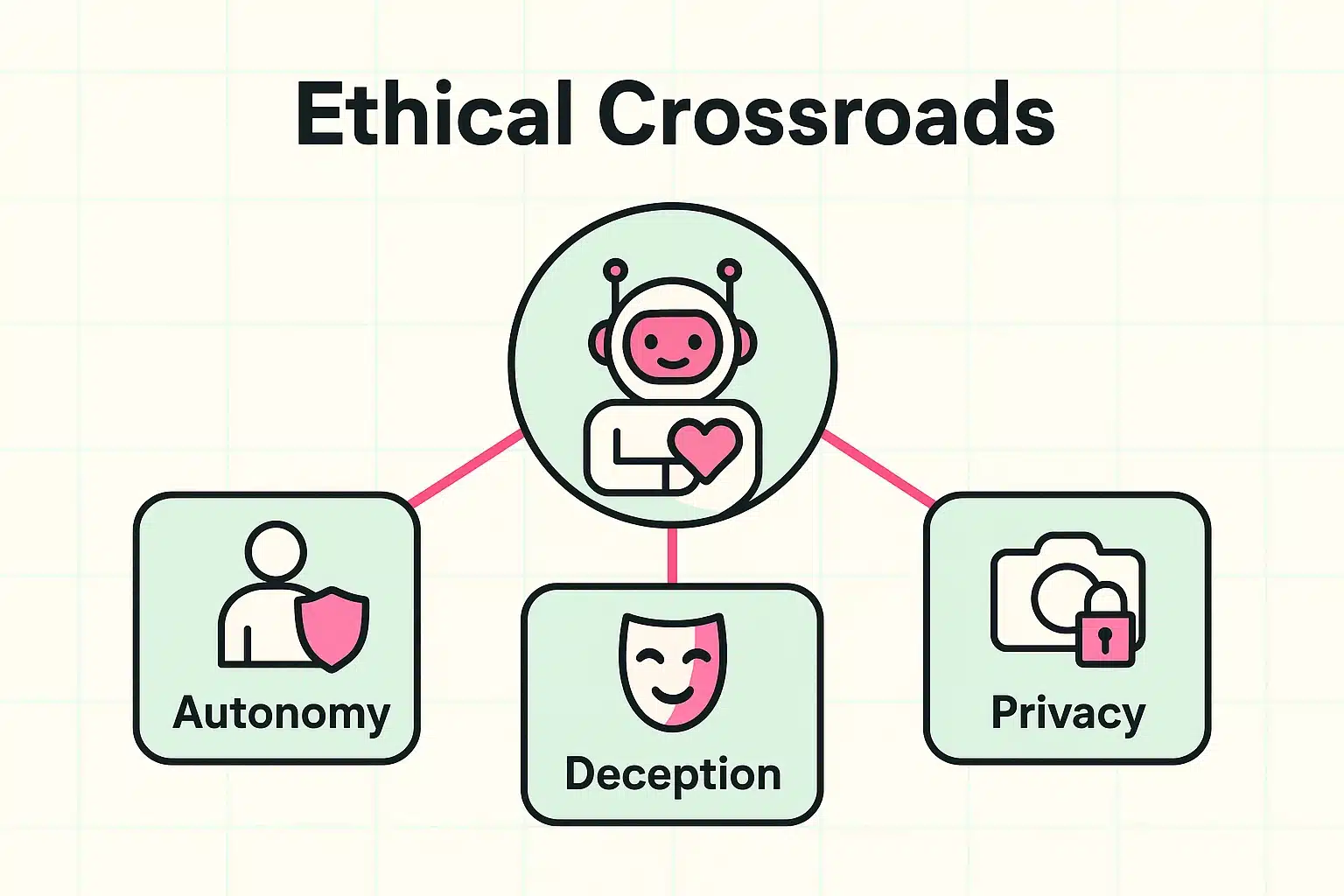
Bringing an artificial brain into your home requires navigating a few major ethical speed bumps. While tech companies love to focus on the flashy features, we need to focus on how these machines actually impact our daily lives and our dignity.
Let’s talk about “techno-animism.” That’s a fancy academic term for a very simple human habit: our brains are hardwired to treat moving, blinking objects as if they are alive. (Admit it, you’ve yelled at your toaster when it burned your bagel).
When a senior, particularly one with dementia, holds a robotic seal and believes it’s a real pet, is that okay? Ethicists pull their hair out over this. Is it cruel deception to let someone love a machine? Or is it a harmless, therapeutic comfort that reduces anxiety without the risk of a real dog chewing up your favorite slippers? There’s no easy answer, but it’s a tightrope families have to walk.
A good robot should help you do things for yourself, not treat you like a toddler. If a robot brings you a glass of water when you could have easily walked to the kitchen, it might be robbing you of your independence and exercise.
On the flip side, if an AI constantly nags you to eat your vegetables or go to sleep, it crosses the line from “helpful assistant” to “electronic nagging spouse.” Tech should enhance your freedom, not put you under house arrest.
This is the big one. To work properly, many of these robots use cameras, microphones, and motion sensors. They watch you. They listen to you.
When does a camera designed to detect a fall turn into a surveillance device broadcasting your living room habits to a corporate server in Silicon Valley? Knowing exactly where your data goes is the difference between feeling safe and feeling spied on.
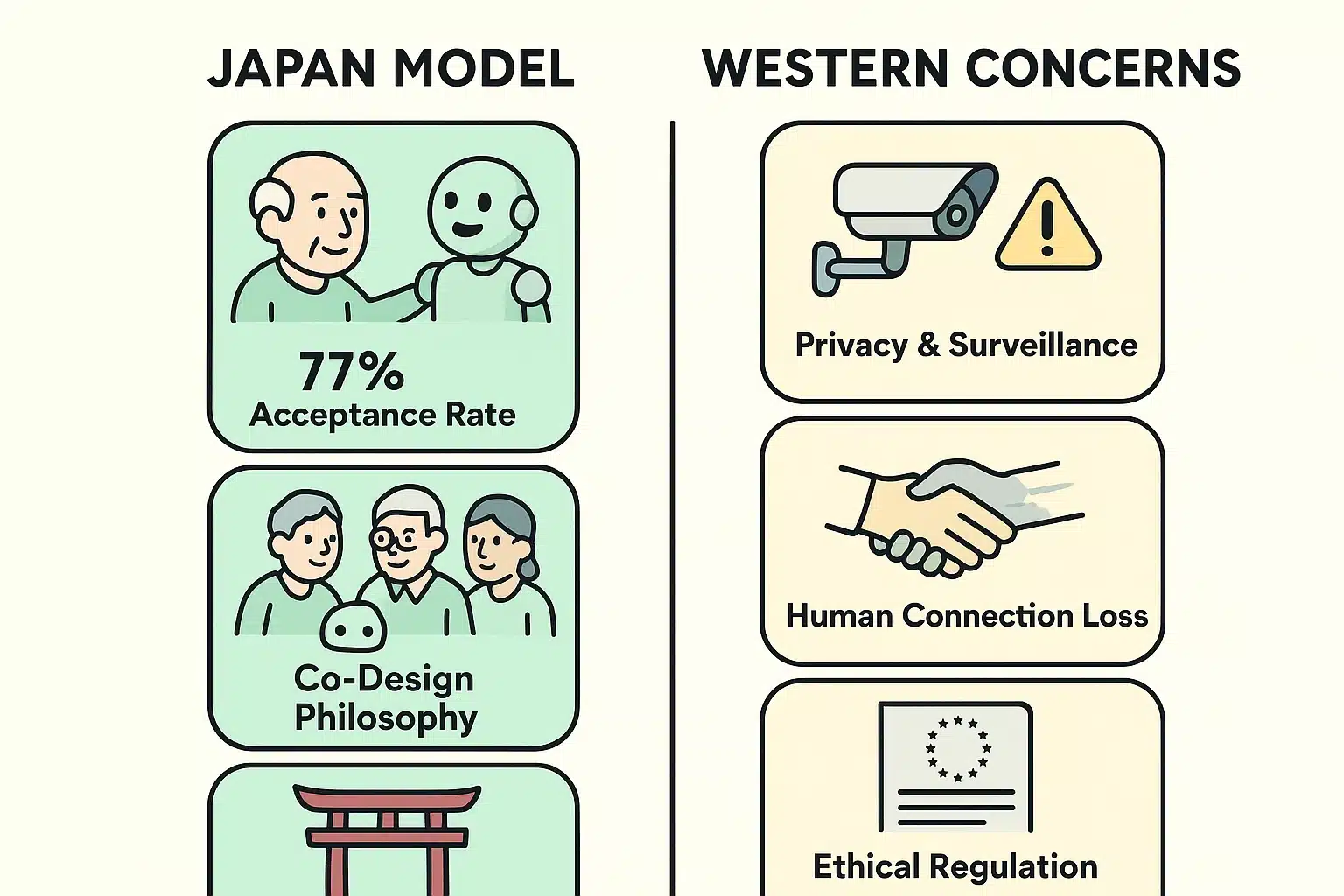
If you want to see the future of senior tech, look at Japan. They boast a whopping 77% acceptance rate for care robots. Meanwhile, in the West, we still eye our smart speakers like they might be plotting against us in the middle of the night.
Why the difference? It comes down to a philosophy called “Co-Design.” In Japan, tech companies don’t just build a robot in a secret lab and force it on seniors. They invite older adults into the design process from day one.
Seniors actually help build the tech they will use, ensuring it respects their dignity and solves real problems. Here in the West, we often fall into the trap of designing tech for seniors, rather than with them. There’s a massive difference between being handed a complex gadget by your well-meaning kids and choosing a tool that genuinely makes your life easier.
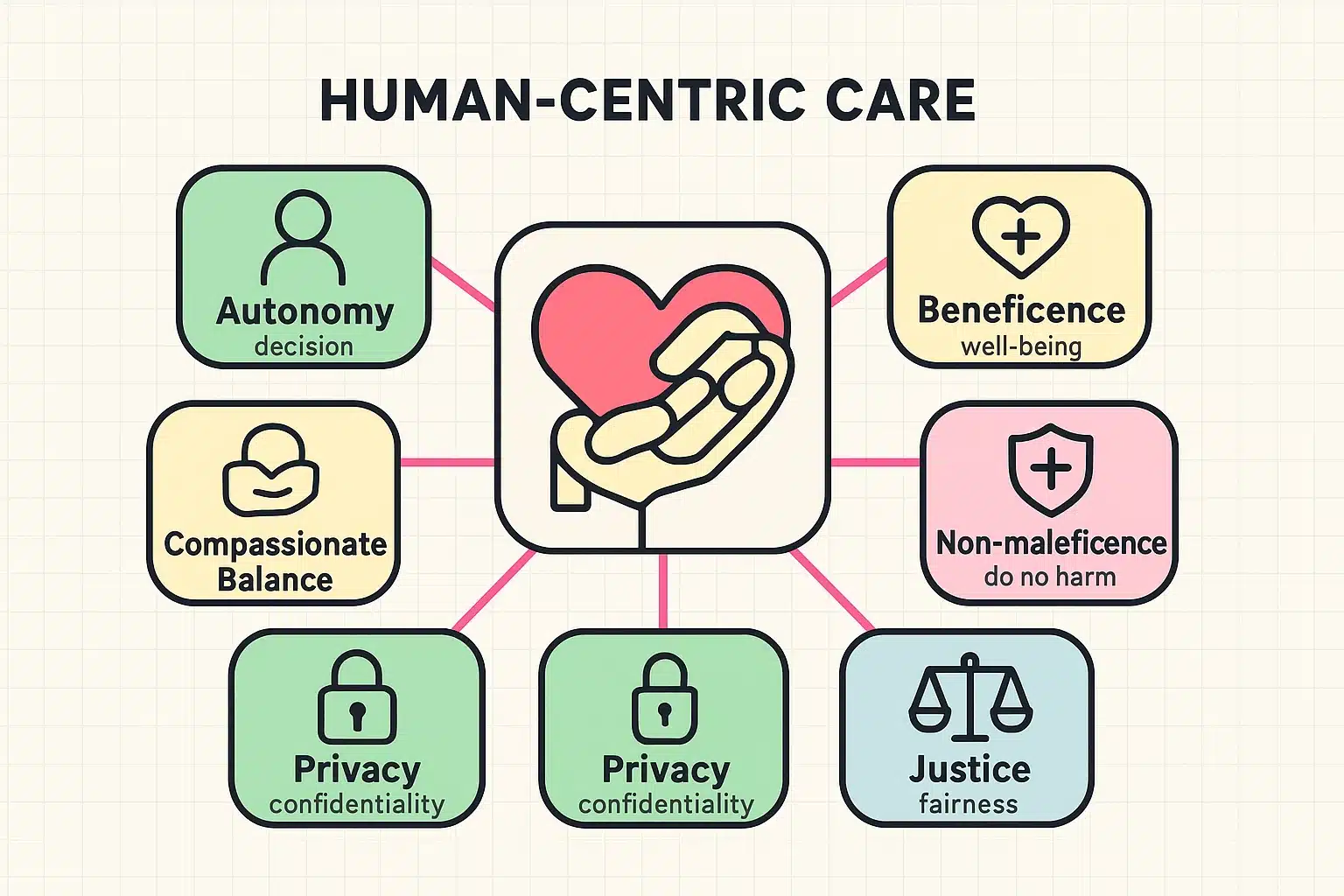
So, how do you navigate this brave new world without losing your mind—or your privacy? If you or your family are considering some high-tech help, you need a game plan. Before bringing a robot into your home, run through this quick checklist:
Will this gadget free up a human caregiver’s time so they can sit and chat with you, or is it an excuse for them to leave the room entirely? Tech should prevent human burnout, not replace human connection.
Ask the uncomfortable questions. Is this device connected to the internet? Can I turn the camera off when I want to walk around in my bathrobe? If the company can’t give you a straight, plain-English answer about where your data is going, walk away.
If you try a robotic companion on a trial basis and it doesn’t work out, what happens when it goes away? Taking a robot away from someone who has grown deeply attached to it can be genuinely heartbreaking. Make sure you have an exit strategy.
Absolutely not. Think of them as eager assistants, not doctors. They can remind you to take a pill or drink water, but they can’t diagnose your cough or prescribe medication. You and your doctor are still the boss.
Actually, research shows the opposite! Engaging with social robots can stimulate the brain, reduce anxiety, and encourage seniors to talk more. Just treat it like doing a fun crossword puzzle, not a total replacement for calling your friends.
No. The goal is to tackle the global “crisis of care” by handling the mundane tasks—like fetching items or monitoring for falls. This gives human nurses and family members the energy to do the important stuff, like holding a hand or sharing a laugh.
At the end of the day, a robot is just a tool. It’s a very fancy, occasionally chatty tool, but a tool nonetheless. It’s neither inherently good nor evil.
The ethics of robot caregivers don’t depend on the microchips inside them; they depend on the humans using them. As long as we prioritize dignity, demand clear privacy controls, and keep a sense of humor about the occasional technological hiccup, we can navigate this new frontier safely.
So, if a robotic seal ever rolls into your life, go ahead and give it a pat on the head. Just make sure you know exactly where the “off” switch is. Ready to learn more about keeping your digital life secure while embracing the future? Keep exploring our guides to stay one step ahead of the tech curve.