Newsletter Subscribe
Enter your email address below and subscribe to our newsletter


By Chris Clark, founder of Senior Tech Cafe
Car privacy is about the data your car collects on you, from where you drive to how hard you brake to what’s on your phone, and who the car company passes it to. If your car connects to the internet, and most newer ones do, the short answer to “Is my car spying on me?” is yes, at least a little.
While your best friend might forget your birthday or what kind of coffee you like, your car? It remembers everything.
How fast you drive, where you go, how hard you brake, maybe even how many times you’ve belted out “Sweet Caroline” at a red light.
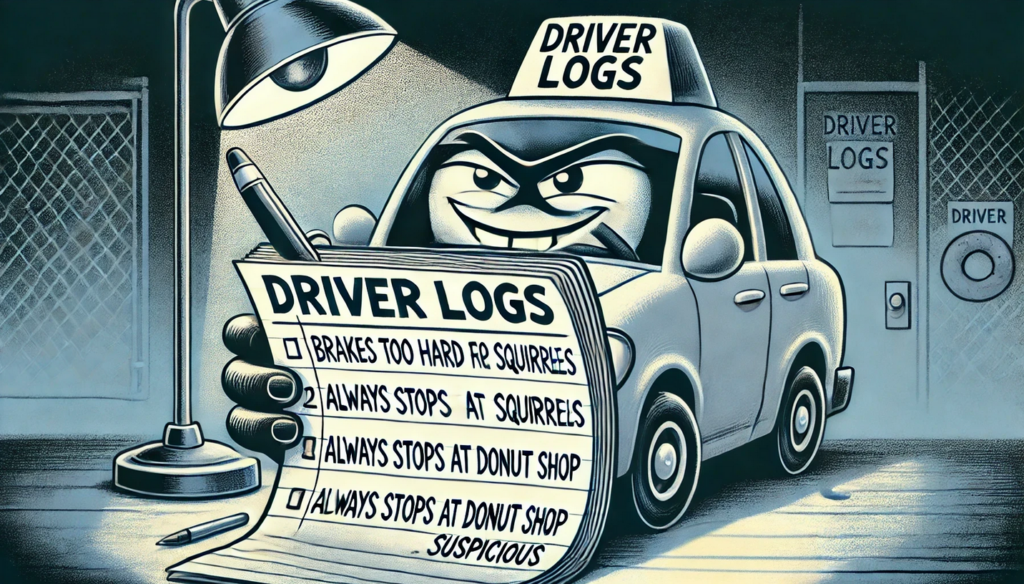
Welcome to the age of the “snoopy car,” where vehicles aren’t just modes of transportation anymore. They’re data-collecting spies on wheels. And unlike a good old-fashioned nosy neighbor who peeks through the blinds, your car isn’t just being curious. It’s taking notes.

Not all cars are snoopy in the same way. Some manufacturers just want to know if your engine is running smoothly. Others, well… they want a little more. Here’s what’s on the record for a few of the big names:
The real kicker? Unlike your grandchildren’s social media posts, which you can choose not to look at, you get very little say in whether your car collects this information. Much of it happens whether you like it or not, and some of it ends up with data brokers you’ve never heard of.
Now, you might be thinking: Okay, my car is nosy, but is that really a problem?
Short answer: Yes. Here are a few reasons why:
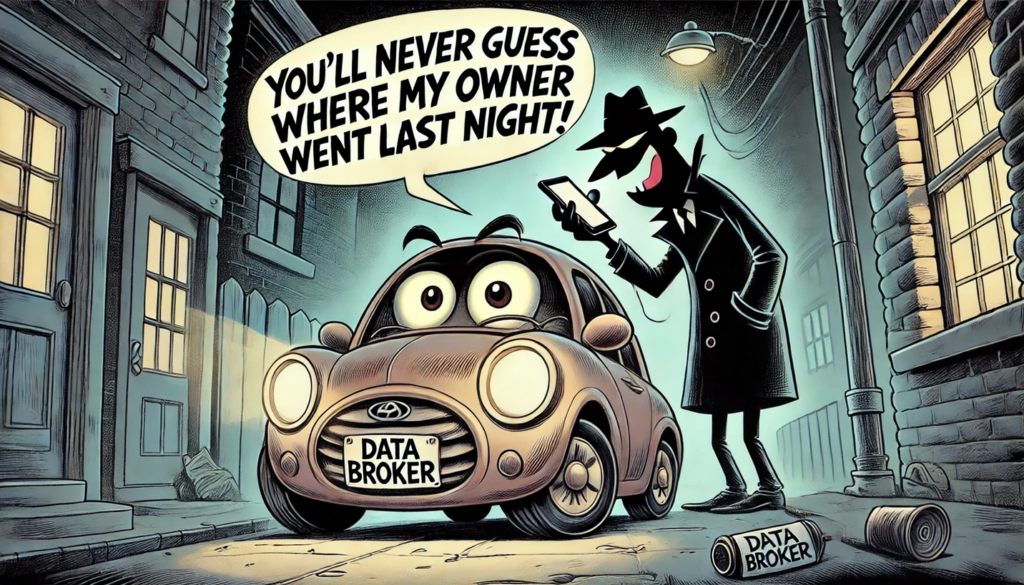
Your car’s treasure trove of information tends to land in three places:
Here are a few of the red flags all this collecting and sharing raises:
At the end of the day, most of us have no idea where this information ends up or how long it’s kept. It’s like throwing your diary into the wind and hoping it lands somewhere safe.
There’s still no national privacy law in the US written for car data. A handful of states, including California, now give you the right to see what a company holds on you and ask it to delete it. Everywhere else, the car company’s own policy is about as comforting as a screen door on a submarine.
None of this is hypothetical. Investigators already use car data to reconstruct crashes and check where a car was and when. Useful in a criminal case, maybe. The bigger issue is that most drivers don’t realize this data is being collected and shared in the first place.
To find out if your car is spying on you, run a free vehicle privacy report with your car’s VIN, then check the car’s privacy settings and ask the main consumer reporting company for your driving file. Together they take about 15 minutes and show what’s collected and whether it has already traveled.
Here’s how to do each one.
A vehicle privacy report is a free lookup at vehicleprivacyreport.com, run by a company called Privacy4Cars. Type in your car’s 17-character VIN (it’s on your registration and your insurance card) and it shows what kinds of data the maker says it collects, shares and sells for that model. It won’t show your own trips, but it tells you what you’re dealing with.
Most connected cars have a privacy or connectivity menu on the dashboard screen, and the maker’s phone app often has more. On newer Fords, for example, it’s Vehicle, then Settings, then Privacy. In the Toyota app, tap Account, then Data Privacy Portal. Menu names differ by brand and model year, so search the maker’s support site for “privacy settings” plus your model if you can’t find it.
LexisNexis, the consumer reporting company that received GM drivers’ data, will send you a free consumer disclosure report showing what it holds on you, including any driving data. Request it at consumer.risk.lexisnexis.com or by calling 1-888-497-0011. Verisk, the other company GM used, says it no longer sells driving-behavior reports.
You don’t need to go back to a horse and buggy to protect your privacy. There are several ways to keep your smart car from being a blabbermouth, and none of them involve crawling under the hood with a wrench (well, mostly).
Here’s how to put the brakes on unwanted surveillance.
Car companies aren’t exactly shouting from the rooftops about their data collection. But if you dig, usually in the owner’s manual, the car’s settings screen or the maker’s phone app, you’ll find what your car tracks and where that data goes.
Two things to look for:
If you’re feeling ambitious, search for your car maker’s privacy policy online. You may be surprised (and horrified) at what you find.
Bonus tip: Paste the policy into an AI chatbot like ChatGPT and ask it to list what the policy says about collecting, sharing and selling your data. It’s much faster than reading the legalese yourself, though it’s worth checking anything alarming against the policy itself.
You wouldn’t sell your old smartphone without erasing your photos, texts and cat videos. Your car holds a surprising amount of the same stuff, and it’ll hand all of it to the next driver.
Before the car leaves your driveway:
It’s the same idea as wiping an old phone or computer before you let it go.
Many car makers offer some way to opt out of data collection. They just don’t make it easy. Here’s what works:
One warning: some services stop working when you opt out. If you really love remote start, check what you’re switching off.
If you’re serious about cutting off your car’s ability to “phone home,” you can have its built-in cellular connection switched off. Toyota calls this part the Data Communication Module, or DCM, and will deactivate it if you ask (press the SOS button or call Toyota’s customer care).
What it does:
What it costs: the SOS button, automatic crash notification and roadside-assistance calls stop working too, along with remote start and the app. For a driver who lives alone or drives country roads, that’s a real trade-off, not a footnote. Ask the maker to switch it off rather than pulling fuses yourself, which can take other systems down with it.
You don’t have to give up all your privacy to drive a modern car. Here’s what you can do this week:
Laws are playing catch-up, so for now drivers have to take control of their own data. For more ways to keep your information to yourself, see our online safety guide for seniors.
Because at the end of the day, your car should take you places, not take your personal information along for the ride.
It can if the data reaches them. Some car makers have shared driving data with consumer reporting companies such as LexisNexis, whose reports insurers use, or with insurers directly. You can request your free LexisNexis consumer disclosure report to see what’s on file, and decline insurance sharing in your car’s app.
It stops the car from sending data, but it costs you. Turning off the built-in cellular connection also turns off emergency features like automatic crash notification and the SOS button, along with remote start and the phone app. The car still stores some data inside itself, so wipe it before you sell.
It’s a free lookup from a company called Privacy4Cars at vehicleprivacyreport.com. You type in your car’s 17-character VIN, which is on your registration and insurance card, and it shows what kinds of data the car’s maker says it collects, shares or sells. It takes about a minute.
Use the factory reset option on the car’s screen, usually under Settings, to clear paired phones, contacts, saved addresses and garage door codes. Then remove the car from your account in the maker’s app and cancel any connected services, so the new owner can’t see your trips or control the car.